
The Regata Storica is not just a scenic parade on the Grand Canal, nor a race to follow while waiting for the first arrival. It is a visual code in motion: different boats, assigned colors, recognizable roles, ancient gestures adapted to the contemporary city. Watching it while understanding what passes on the water means reading Venice from a precise perspective, where maritime history, popular competition and public representation intertwine. Before cheering, it is worth learning to distinguish the procession from the races, the parade boats from the racing boats, the sporting hierarchies from the signs of belonging.
Before watching: what the Regata Storica is
The Regata Storica is not just a race on the Grand Canal: it is a public representation of Venetian memory. It combines the historical procession, with boats and costumes that evoke the Venice of the Serenissima, with Venetian-style rowing competitions, the standing technique, facing forward, born from the need to move through shallow and busy canals.
The best-known symbolic reference is the welcome of Caterina Cornaro, Queen of Cyprus, who in 1489 ceded the island to the Republic of Venice. But the habit of competing by boat is older: regattas were tests of strength, skill and prestige among crews, districts, families and trades.
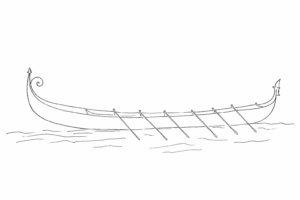
To understand it, it is worth watching it as an orderly ceremony: first rank, history and power parade; then the rowers enter the scene, divided by categories and boats. Colors, positions and types of hull help you read who is competing, who is representing and who is celebrating the city on the water.
The procession: reading the boats before the race
Before the competitions, the historical procession offers an essential key to interpretation: it is not a simple decorative backdrop, but an ordered sequence of roles. The bissone, long and richly adorned boats, advance like moving stage sets on the Grand Canal. Their function is not to race, but to represent: they carry colors, coats of arms, costumed figures and references to ceremonial Venice.
The costumes refer above all to the period of the Serenissima’s maritime and diplomatic power. Doge, dignitaries, ladies and participants should not be read as generic masks: they indicate hierarchies, embassies, public apparatuses. It is useful to observe who stands at the center of the boat, who controls the oar, who is shown frontally to the public along the banks.
Slowness also matters. In the procession, rowing serves to display control, symmetry and prestige; in the race, instead, it will become power, rhythm and endurance. Understanding this difference helps avoid confusing celebration and competition: the bissone tell of the city staging itself, while the racing boats announce the technical and sporting test that will follow.
Racing hulls: mascarete, caorline, pupparini, gondolini
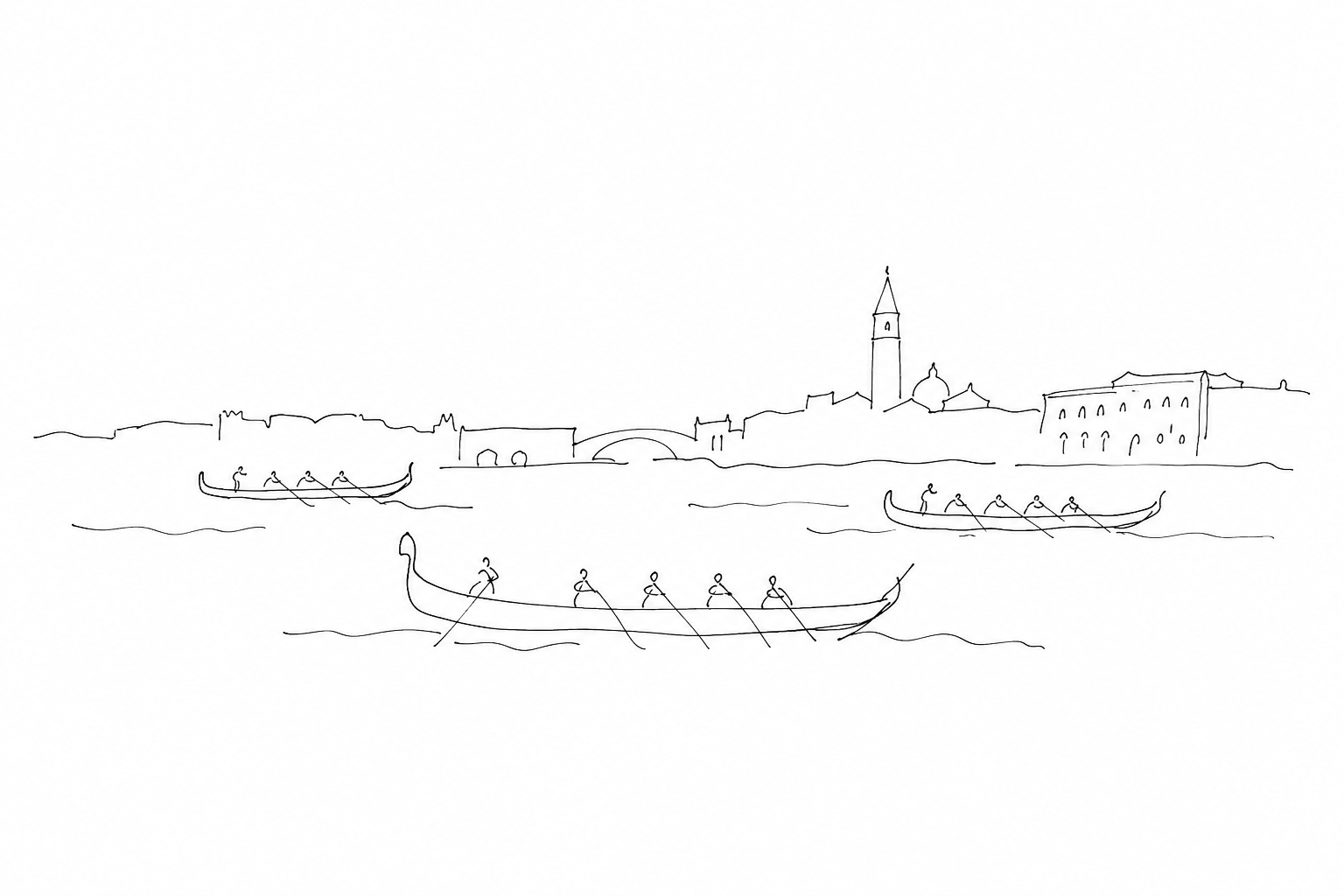
When the sporting trials begin, the overall view should be read by type of hull and number of rowers. The mascarete are light, flat-bottomed and maneuverable: in the Storica they are associated with the women’s two-oar competition, where quick response and clean trajectories count.
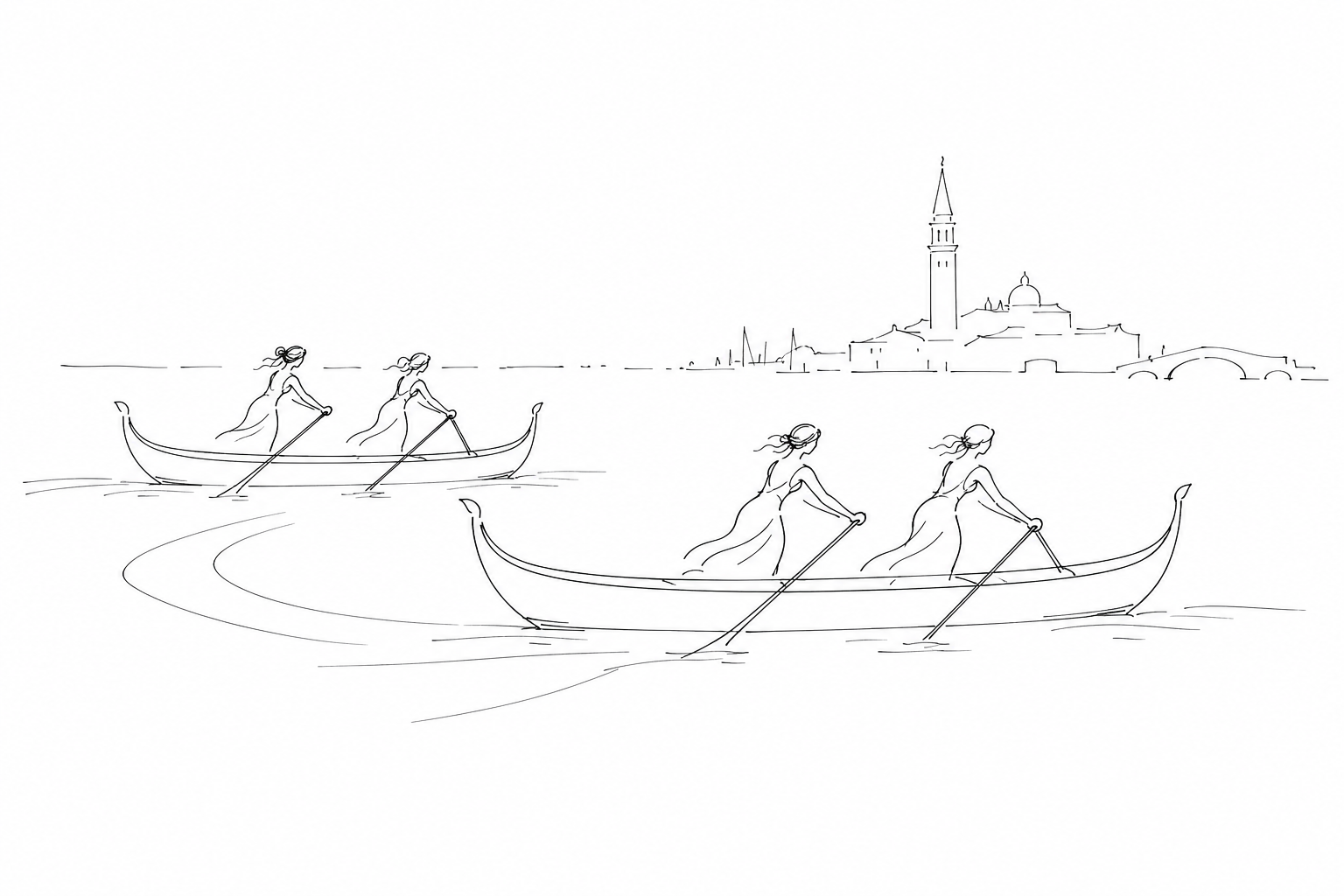
The caorline, on the other hand, have greater volume and six rowers. They originate from a lagoon work boat: on the water they show collective power, steady rhythm and the ability to hold the course without waste.
The pupparini are sharper and more technical, traditionally linked to young rowers. Observing them helps you understand the training of future champions: posture, balance and coordination are worth as much as strength.
The gondolini are the most anticipated hulls: narrow, lively, designed for speed. Here the sporting hierarchy is at its highest, because the champions of Venetian-style rowing compete.
The colors are not decoration: they identify the crews and allow you to follow overtaking, gaps and positions. They do not automatically indicate a sestiere; above all, they serve to read the challenge on the water.
Colors, flags and hierarchies on the water
To understand who is leading, it is not enough to look at the hull in front: you need to follow the visual lane number, that is, the chromatic sign assigned to the crew, and compare it with fixed points along the Grand Canal. A real gap is measured when two hulls pass the same bridge, landing stage or pole, not when they seem close from an oblique perspective.
The most readable phases are the start, the turn around the stake and the stretch toward the machina, the floating structure linked to the finish and the awards ceremony. On the bend, whoever is on the inside may seem favored, but must maintain trajectory and rhythm; whoever remains on the outside can prepare a recovery with a longer and cleaner stroke.
In the end, the placements recognized by the traditional pennants count: red for first, white for second, green for third, blue for fourth. They are symbolic prizes, but they also help the public read the final hierarchy without getting lost among shouts, applause and crossing wakes.
Following the Regata Storica carefully changes the way you look at the Grand Canal: no longer a simple backdrop, but a racecourse, a civic stage and a floating archive of techniques, rowing families and urban memory. Recognizing a caorlina, a pupparino or a gondolino, understanding why a color matters and how a crew is arranged, allows you to enter the rhythm of the event without reducing it to a postcard. The beauty remains evident, but becomes more legible: in the trajectories, in the waiting, in the details of the boats and in the still-living relationship between Venice and its water.
Related Posts
The mascareta: small, agile and Venetian, long before the regatta photos
History and use of the mascareta, a light boat created for rii, canals and the lagoon.The caorlina: the transport boat that became a protagonist of historic regattas
Origins, shape and role of the caorlina: from a working boat of the lagoon to a symbolic presence in Venetian regattas.
Voga alla veneta for beginners: trying to row the way it is really done in the lagoon
A clear guide to understanding voga alla veneta: gesture, boats, lagoon and first trials.Questions Answered
What is the Regata Storica beyond just a race?
It is a public representation combining history, procession, and Venetian rowing competition.How do the different boat types affect the race?
Each hull type has unique characteristics affecting speed, skill, and crew categories.What do the colors and flags represent in the Regata Storica?
Colors identify crews mid-race; pennants indicate final placements.How can viewers distinguish between the procession and the race?
Procession rowing is slow and ceremonial while race rowing is fast and rhythmic.
Follow the thread of water
Want to move from this story to others that explain the lagoon beyond postcard views?
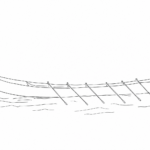 The caorlina: the transport boat that became a protagonist of historic regattasOrigins, shape and role of the caorlina: from a working boat of the lagoon to a symbolic presence in Venetian regattas.
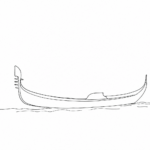 The Ships Pavilion: seeing Venice from the side of boats, not postcardsA route through the Ships Pavilion, among the Arsenale, historic boats and Venice seen from the water.
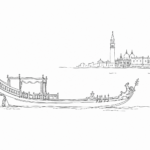 The Bucintoro: the ceremonial ship with which Venice staged its powerHistory, function and images of the Bucintoro, the doge’s ship used in the Marriage of the Sea.
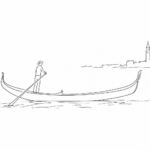 The mascareta: small, agile and Venetian, long before the regatta photosHistory and use of the mascareta, a light boat created for rii, canals and the lagoon.