
The traghetto da parada is one of the simplest and least showy ways to understand Venice from its main axis: the Grand Canal. It is neither a gondola ride nor a vaporetto, but a short, ancient, and still everyday crossing, designed to connect banks that bridges do not reach. In just a few minutes you enter an urban geography made of stazi, landing places, shared gestures, and low perspectives on the water, where palaces, markets, and calli are read from a Venetian point of view.
What the traghetto da parada is
The traghetto da parada is the most essential, and at the same time most Venetian, way to cross the Grand Canal. It is not a panoramic gondola ride: it is a short crossing service from one bank to the other, created to connect points where bridges are far away and where daily life requires a shortcut on the water.
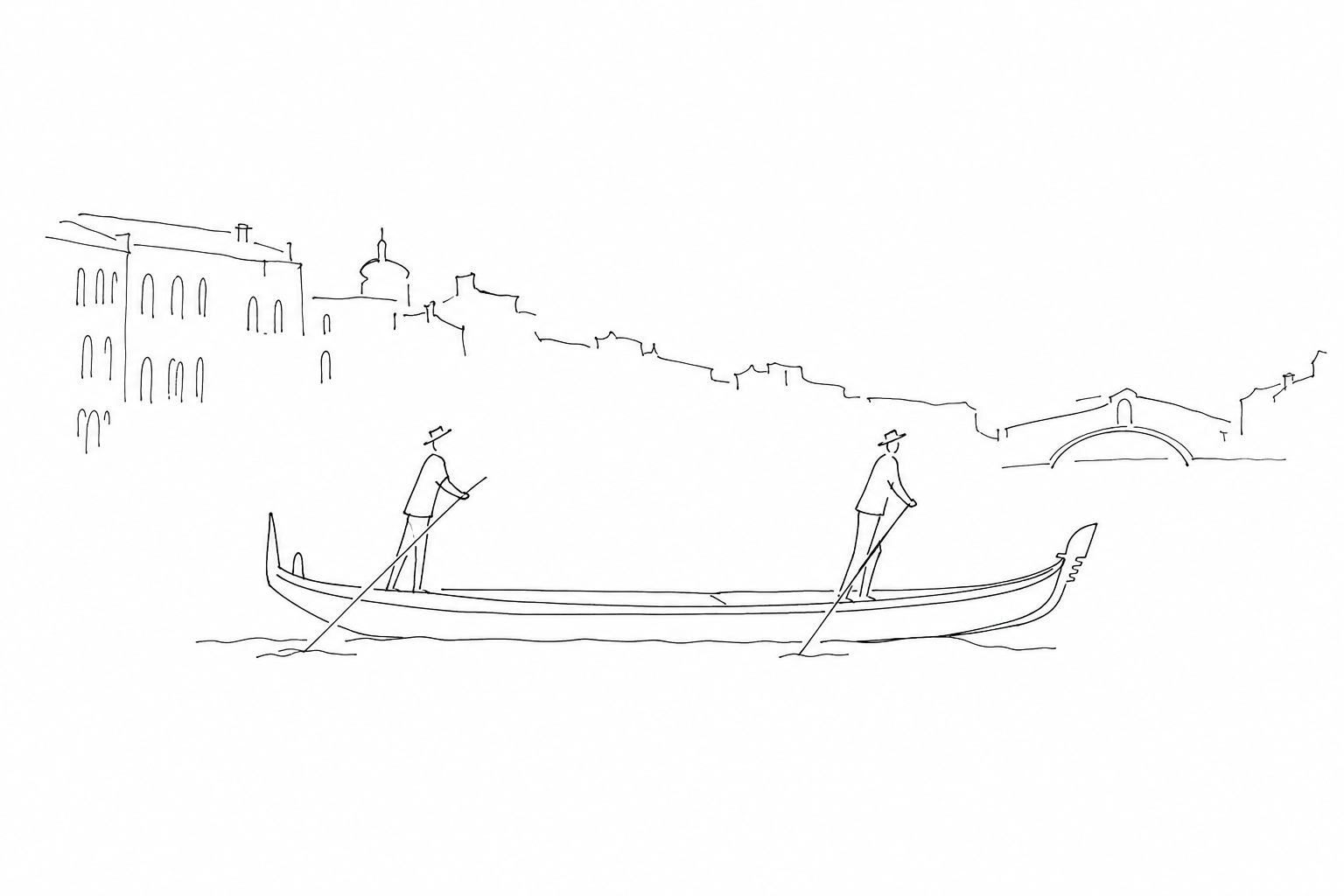
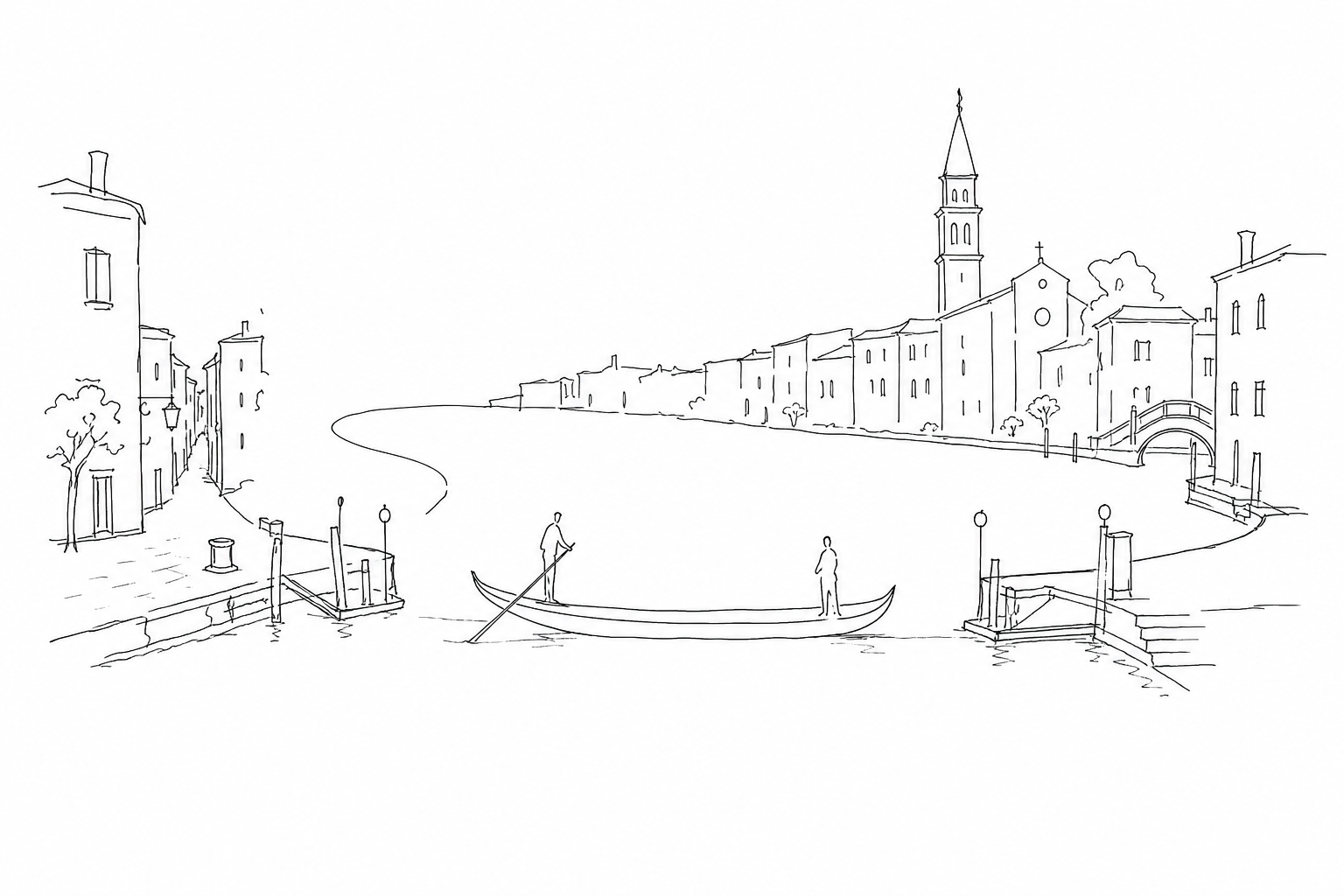
The boat resembles a gondola, but has a different function. It is usually more sober, without the decorative apparatus intended for tourism, and is operated by gondoliers who work on a fixed route. Passengers board at the parada, that is, the landing point, and in a few minutes reach the opposite bank of the Grand Canal.
The main distinction is therefore its use: the tourist gondola invites you to stay on the water, observe palaces and rii, and enjoy a slow experience; the traghetto da parada, instead, serves to shorten a walking route. It is a small urban gesture, practical and ancient, that reveals a Venice made of crossings, local habits, and concrete geography. Operational details such as active routes and service methods should always be checked on site.
Why Venice still needs it
The urban value of the traghetto da parada can be understood by looking at a map: the Grand Canal is a long curve of water that cuts through the city, while bridges are few and concentrated in precise points. Between one bank and the other, even a few dozen meters can become a much longer walk, especially for those who work, run errands, or move between markets, schools, offices, and workshops.
This quick passage keeps an ancient Venetian logic alive: not only connecting monuments, but stitching neighborhoods together. The boarding stations, often called stazi, are in places of everyday use, near campi, calli, and banks where the city is not scenery but route. The gesture is essential: get on, cross, get off.
For this reason the service should not be read as folklore. It is a small public and customary infrastructure, entrusted to the skill of the boatmen and their knowledge of the canal’s currents. Even when a tourist gondola dominates the imagination, here what matters is the efficiency of the connection and the continuity of an urban habit.
Stazi, banks, and crossings to know
To get your bearings, the stazio should not be sought like a normal vaporetto stop: it is often a small landing place on a bank, recognizable by the presence of the boatmen and by local signs. The best-known points are found where the passage truly shortens the walking route between opposite sestieri.
- Santa Sofia and the Pescaria area: useful for connecting Cannaregio and the Rialto market area, avoiding a long walk toward the bridge.
- San Tomà and Sant’Angelo: connects San Polo with the San Marco area, in a central stretch much used by residents and workers.
- San Samuele and Ca’ Rezzonico: helps to read the relationship between the banks of San Marco and Dorsoduro, near palaces overlooking the Grand Canal.
The prudent rule is simple: consider these landings as traditional urban services, not as attractions with guaranteed availability. Before planning a crossing, check on site or through updated municipal sources which stazi are operating and under what conditions.
On board: correct gestures and details to notice
The crossing is short, but requires attention. Approach the boat only when the boatman signals: the edge can move because of passing waves and the current. Board one at a time, without stopping at the entry point, and keep bags or backpacks close to your body so as not to bump other passengers.
- Stability: stay where you are directed. If traveling standing up, your feet should be firmly planted and your weight distributed; if you are asked to sit down, do so without arguing.
- Movements: avoid taking photographs by leaning out to the side. Even a small sudden shift changes the balance of the boat.
- Right of way: let those already on board get off first, then board quickly: the landing is not designed for long stops.
During the crossing, observe the voga alla veneta: the rowers work standing up, reading current, waves, and traffic. Notice the forcola, the shaped oarlock that allows the oar different pushes, and look at the façades of the palaces from below: water portals, worn steps, and mooring poles tell of the everyday use of the city.
Using a traghetto da parada means crossing the Grand Canal with restraint, accepting the rhythm of an essential and fragile service, tied to the life of the city more than to its representation. It is enough to know the active stazi, board carefully, and observe without haste: the movement of the gondoliers, the façades seen from the water, the continuity between one bank and the other. It is a minimal gesture, but it tells a great deal about Venice: a city that, before being visited, must still function.
Related Posts
Vaporetto line 1: crossing the Grand Canal like a slow museum on the water
An outline for describing vaporetto line 1 as a slow reading of the Grand Canal, among palaces, sestieri, stops and urban details.Piazzale Roma: where Venice truly begins, just when the cars end
Piazzale Roma is Venice’s practical boundary: cars, buses and taxis stop, then bridges, rii, calli and the rhythm of the lagoon city begin.
The squero of San Trovaso: the gondola boatyard that seems to come from Cadore
History, form and function of the squero of San Trovaso, the Dorsoduro boatyard with an Alpine-house façade.Questions Answered
What is a traghetto da parada?
It is a short ferry crossing service across the Grand Canal for locals.Why does Venice still need the traghetto da parada?
Because bridges are few and scattered, and short water crossings save time.Where are the main traghetto stazi located?
They are at points like Santa Sofia, San Tomà, and San Samuele connecting opposite sestieri.What are the correct boarding behaviors on a traghetto?
Board when signaled, keep balance, avoid sudden moves, and watch the rowers’ technique.
From gondolas to waterborne crafts
Which details reveal the work needed to keep a city built on the lagoon moving?
 How a gondola is made: ferro, asymmetry and details that are not decorationBow ferro, hull asymmetry, forcola and finishes: the gondola read as a precise machine, not as Venetian ornament.
 The Venetian remèr: oars and forcole, the craftsmanship without which the gondola does not moveWho the Venetian remèr is, how oars and forcole are made, and why the movement of the gondola depends on these pieces.
 The mascareta: small, agile and Venetian, long before the regatta photosHistory and use of the mascareta, a light boat created for rii, canals and the lagoon.
 Regata Storica: how to watch it while understanding boats, colors and hierarchies on the waterA guide to reading the Regata Storica: procession, boats, colors, flags and racing logic on the Grand Canal.