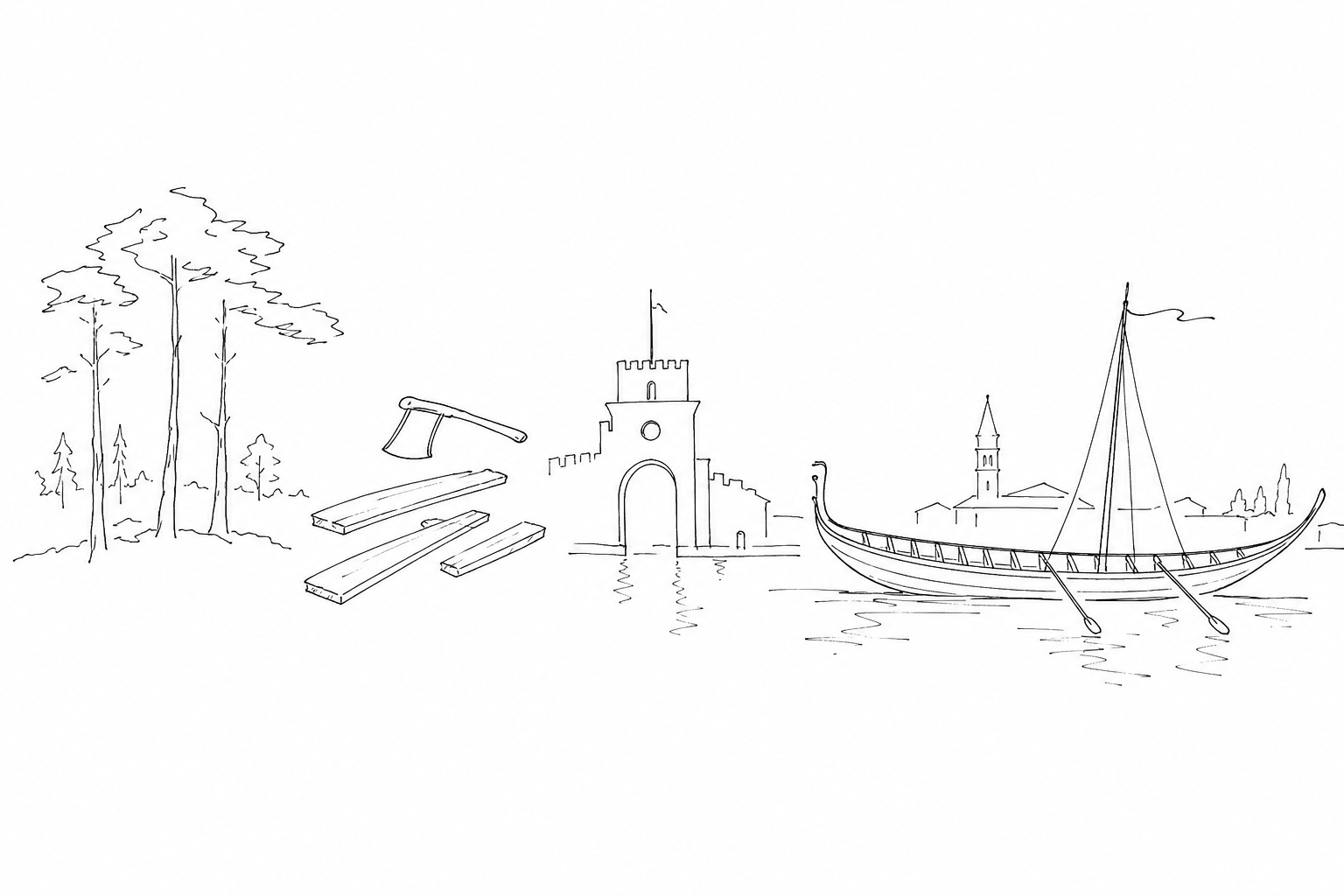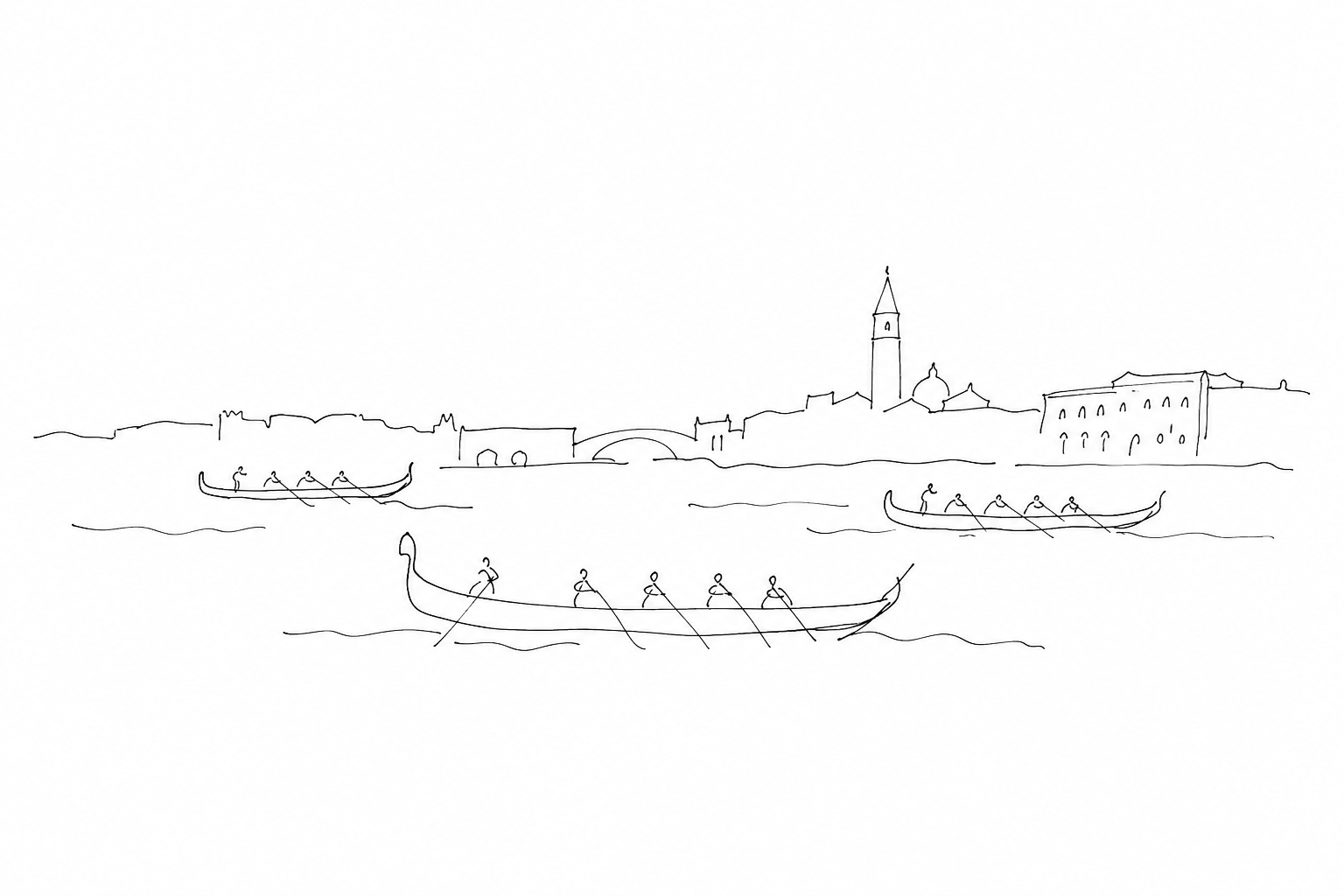
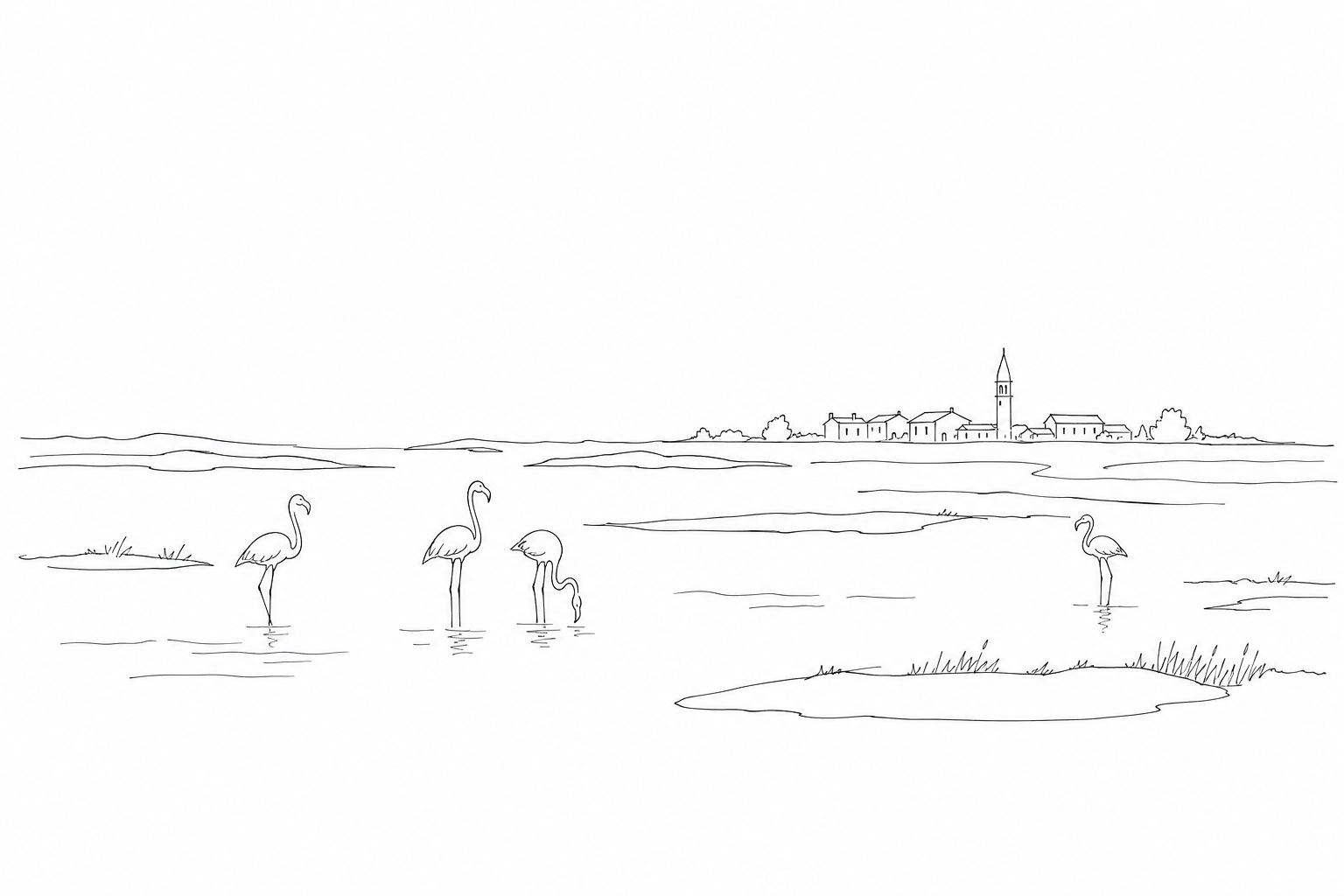

The caorlina is one of the most recognizable boats in the Venetian tradition, but its history began far from the orderly scene of regattas. Before becoming a competition boat, it was a working tool: solid, spacious, suited to shallow waters and to daily routes between islands, markets and shores. To observe it is to read a piece of practical Venice, made of transport, goods, oars and repeated gestures. Its shape is not decoration, but a precise response to a complex environment such as the lagoon.
What the caorlina is
The caorlina is a traditional boat of the Venetian lagoon, born as a working vessel before becoming a recognizable presence in historic regattas. The name refers to Caorle, a coastal town linked to fishing and lagoon trade, but its use extended to Venice, the islands and the inland waterways.
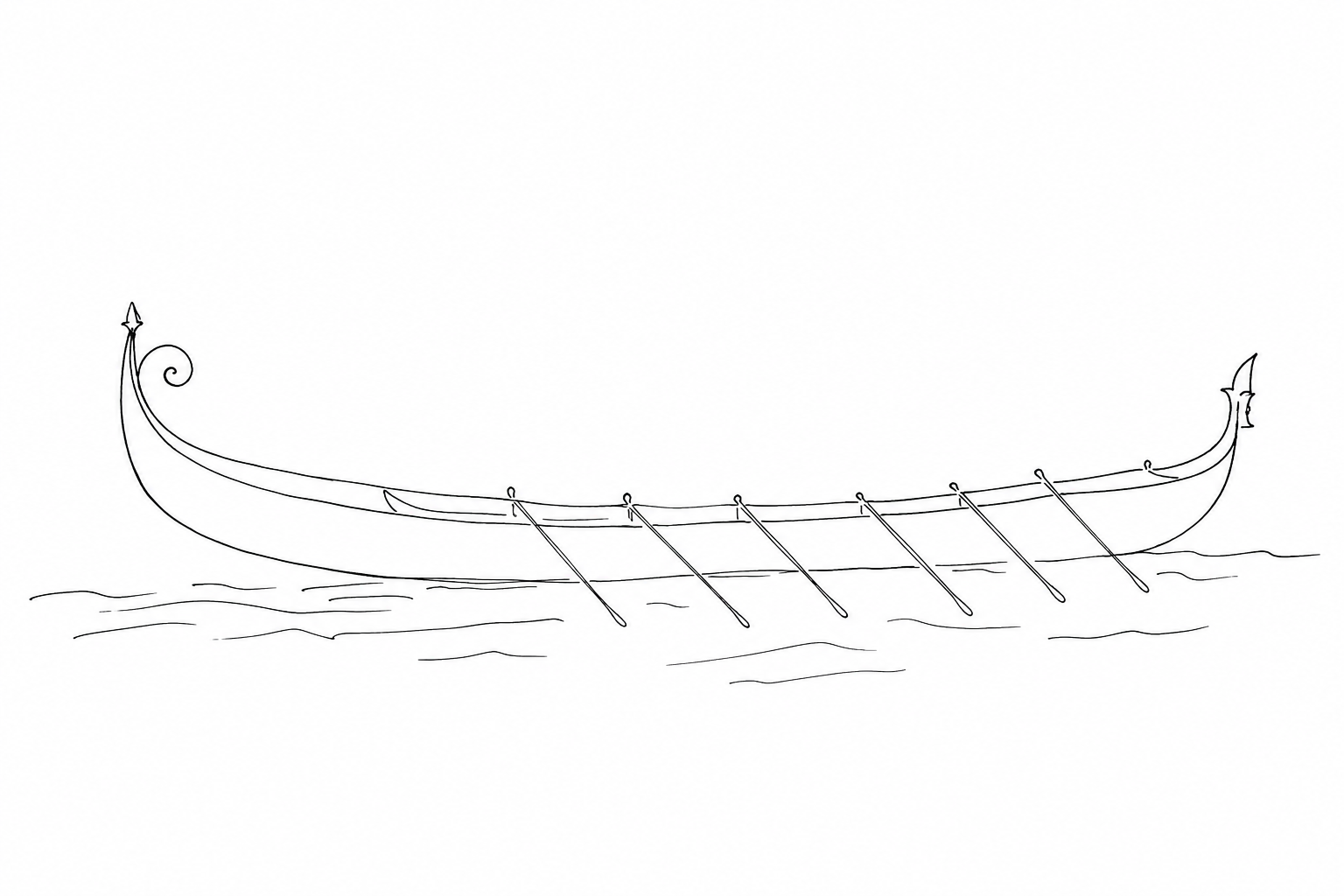
Its shape responded to practical needs: a bottom suited to shallow waters, a capacious hull, good stability and the possibility of moving by oar even in narrow canals or shallow water. It was used to transport goods, vegetables, fish, tools and small loads among salt marshes, gardens, markets and city landing places.
In the racing version, the caorlina retains the robust profile of the transport boat, but becomes a competitive vessel: it is handled by several rowers, often with six oars, using the Venetian rowing technique, standing and facing forward. It is precisely this passage from daily work to racing that makes it a concrete symbol of lagoon culture.
In its original use, the caorlina had to move where a boat with a deep keel would have had problems: narrow canals, mudflats, salt marshes and shallow waters. For this reason its hull has a flat or only slightly pronounced bottom, shallow draft and capacious sides, so as to carry loads without sinking too much. It was a boat suited to vegetables, fish, materials and small goods, intended for routes between islands, shores and Venetian markets.
The raised bow and stern helped cut through the calm lagoon water and protect the cargo from splashes. The width ensured stability when loading or unloading from a low bank, while the elongated line allowed good performance under oars. Pure speed was not needed: what was needed was control, balance and maneuverability.
These very qualities explain the transition to regattas. In Venetian rowing, with rowers standing, the caorlina responds well to shifts in weight and requires precise coordination. The working boat thus becomes an ideal vessel for showing strength, technique and knowledge of the canals.
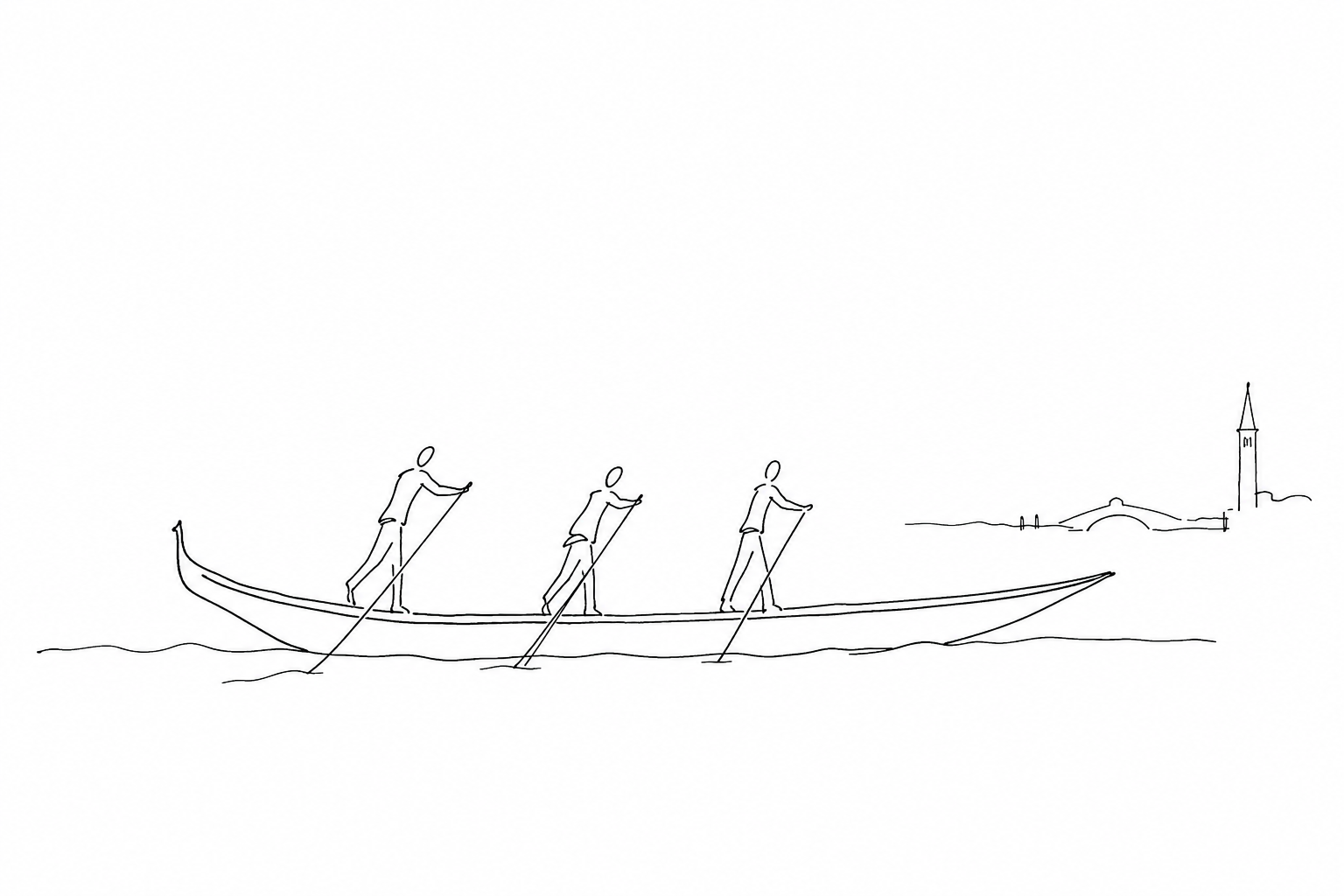
From loads to races: the symbolic transition
The passage from daily transport to competition did not erase the practical memory of the hull: it made it visible. When it enters the context of historic regattas, the caorlina no longer carries vegetables, fish, timber or materials destined for the lagoon markets; instead it carries an idea of craft, that is, the ability to handle a heavy, wide and stable vessel with precise gestures.
In the Historic Regatta of Venice, where the commemorative procession and the races cross the Grand Canal, this type of boat takes on a recognizable role even for those watching from the shore. The racing versions are painted in bright colors, often associated with crews of six rowers, and transform a form born for toil into a public sign of skill. Speed does not depend only on strength: the shared rhythm, the simultaneous entry of the oars, and the course chosen in relation to currents and bends matter.
Thus the ancient cargo vessel changes function without losing its identity. From a useful tool in the minor canals it becomes a ceremonial and sporting protagonist, capable of telling the story of the lagoon through movement.
Seeing it today in historic regattas
Observed in person, the caorlina is read above all through proportions and rhythm. The hull appears wide, stable, with bow and stern high enough to face choppy water without losing the low line typical of lagoon vessels. In six-oar trials it does not spring forward like a gondolino: it gains speed progressively, thanks to coordinated, powerful, almost choral rowing.
To interpret it along the Grand Canal or in the basin, it is worth looking at three details: the standing position of the rowers, which pushes the stroke beyond the side; the trim, which must remain horizontal even under effort; the turns around the poles, where weight and length reveal its transport origin. The bright colors of the crews help follow it among the other ceremonial boats, but the clearest sign remains the movement: less elegant in a drawing-room sense, more solid, lagoon-like, born to carry loads and now transformed into a test of collective technique.
Today the caorlina appears in historic regattas with an almost scenic presence, but it preserves the concrete imprint of its origin. Behind the colors of the boats and the strength of the rowers remains the memory of a boat born to transport, connect, work. Watching it on the water allows one to grasp a less obvious aspect of the Venetian tradition: not only ceremony, but continuity between craft, form and lagoon landscape. It is precisely this passage, from load to race, that still makes it so significant.
Related Posts
The mascareta: small, agile and Venetian, long before the regatta photos
History and use of the mascareta, a light boat created for rii, canals and the lagoon.Regata Storica: how to watch it while understanding boats, colors and hierarchies on the water
A guide to reading the Regata Storica: procession, boats, colors, flags and racing logic on the Grand Canal.
How a gondola is made: ferro, asymmetry and details that are not decoration
Bow ferro, hull asymmetry, forcola and finishes: the gondola read as a precise machine, not as Venetian ornament.Questions Answered
What is the caorlina originally used for?
It was a working boat for transporting goods in shallow lagoon waters.How does the caorlina function in historic regattas?
It becomes a racing vessel handled by multiple rowers using Venetian rowing technique.What design features make the caorlina suitable for the lagoon?
Features like a flat bottom, shallow draft, and wide hull ensure stability and maneuverability.What symbolic meaning does the caorlina hold in Venetian culture?
It symbolizes continuity between practical craft and ceremonial sport in the lagoon.
Keep reading Venice from the boats
Want to understand Venice through boatyards, oars and vessels rather than only from the waterfront?
 Regata Storica: how to watch it while understanding boats, colors and hierarchies on the waterA guide to reading the Regata Storica: procession, boats, colors, flags and racing logic on the Grand Canal.
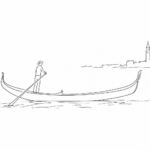 The mascareta: small, agile and Venetian, long before the regatta photosHistory and use of the mascareta, a light boat created for rii, canals and the lagoon.
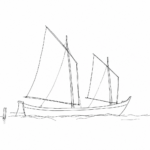 The bragozzo: sail, fishing and the Adriatic in the colorful boat of lagoon traditionHistory, forms and colors of the bragozzo, a fishing boat linked to Chioggia, the lagoon and the Adriatic.
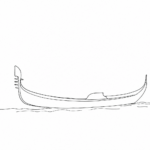 The Ships Pavilion: seeing Venice from the side of boats, not postcardsA route through the Ships Pavilion, among the Arsenale, historic boats and Venice seen from the water.