
The Imperial Rooms of the Museo Correr tell of a Venice often left on the margins of the imagination: not only a maritime republic, but also a city transformed by occupations, provisional courts and new ideas of representation. Overlooking Piazza San Marco, these rooms show how the political and urban heart of the city was rewritten between the Napoleonic era and Austrian rule, through architecture, furnishings, ceremonies and the daily life of the palace. By visiting them, San Marco ceases to be merely a monumental backdrop and becomes a place in which to read the continuities, ruptures and adaptations of Venetian history.
Why these rooms change the story of San Marco
Entering the Imperial Rooms of the Correr means shifting one’s gaze to a less celebrated Venice: not only the capital of the Serenissima, but a city also governed, furnished and represented by foreign powers. After the fall of the Republic in 1797, San Marco became the symbolic center of new authorities: first the Napoleonic orbit, then the Habsburg one.
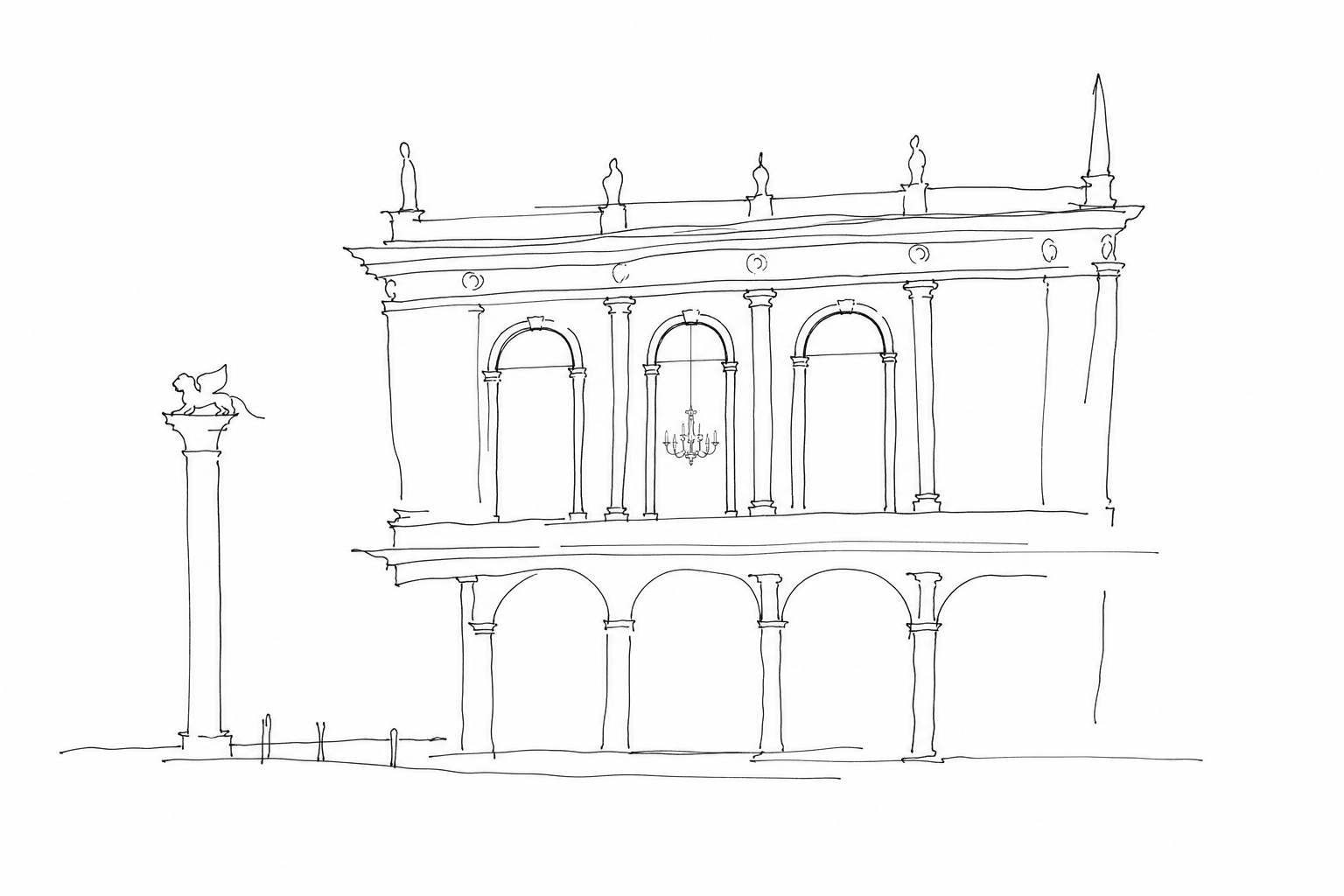
The rooms belonged to the complex of the Royal Palace, created between the Procuratie Nuove and the spaces overlooking the square. Here the republican monumentality was reinterpreted according to the language of the court: antechambers, halls, tapestries, stuccoes and furnishings do not tell of doges and magistracies, but of sovereigns, ceremony and diplomatic representation.
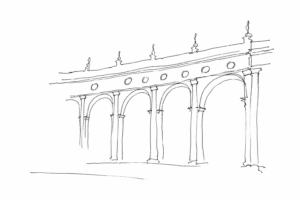
This transition is decisive for understanding San Marco in the nineteenth century. The square was not only Venetian memory: it became an imperial stage, a place where Napoleon and then the Habsburgs attempted to transform the city’s ancient political heart into a residence and showcase of their rule.
French Venice: the Napoleonic Wing and the new palace
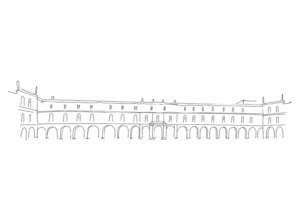
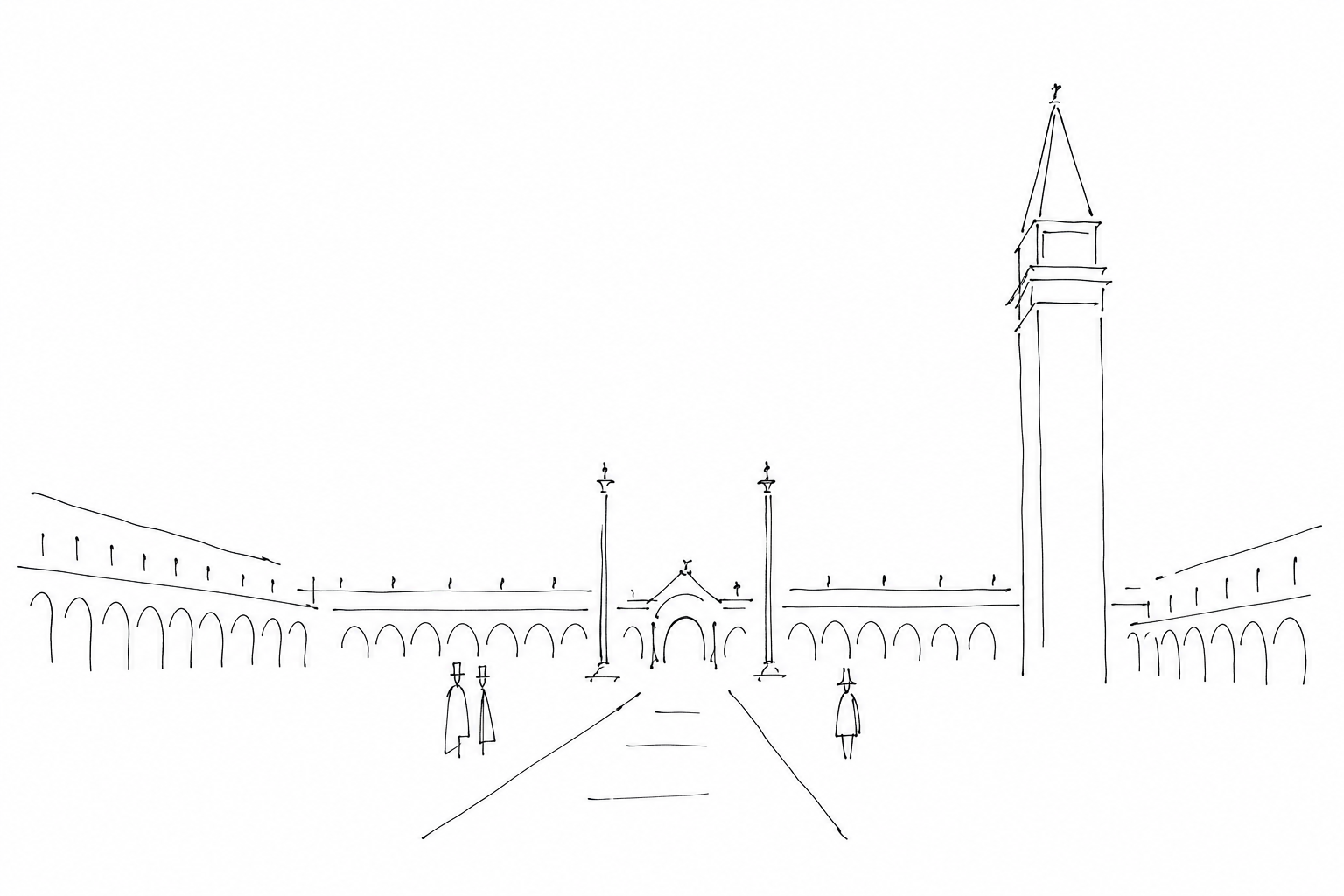
The most evident sign of French Venice at the Correr is the Napoleonic Wing, the building that closes Piazza San Marco opposite the basilica. To build it, the church of San Geminiano was demolished, an ancient building renovated in the sixteenth century by Jacopo Sansovino: a radical choice, because it transformed the western edge of the square into a representative façade for the new power.
The project, begun in the Napoleonic era and later completed under the Habsburgs, was intended to serve the royal palace, connected to the Procuratie Vecchie and Nuove. It was not only a residence: it was a ceremonial machine. The monumental staircase, the sequences of official rooms, the neoclassical decorations and the use of marble, stuccoes and antique-style motifs built a language different from that of the Republic.
Here Venice was reinterpreted according to French imperial taste: order, symmetry, monumentality. Piazza San Marco, once the theater of ducal sovereignty, thus also became the backdrop of a modern court, designed to welcome sovereigns, officials and rituals of government.
With the Congress of Vienna in 1815, the former Kingdom of Italy passed to the Habsburgs and the royal palace overlooking the city’s monumental heart changed its political function without losing its ceremonial character. The spaces now known as Imperial were adapted to an itinerant court: not a stable daily residence, but an apparatus ready to welcome the emperor, the viceroys of Lombardy-Venetia, dignitaries, audiences and receptions.
The transformation did not completely erase the previous imprint: the neoclassical discipline remained legible in the proportions, the decorated ceilings and the orderly sequence of the rooms. The Habsburgs, however, added a more dynastic tone, made up of coats of arms, ceremonial furnishings, precious tapestries, mirrors and routes designed to grade access to the sovereign. Every passage, from the antechamber to the more private spaces, communicated rank and control.
These interiors help to read a phase of lagoon history that is often less recounted: the one in which the Austrian government tried to insert itself into the local symbolic fabric, using a building already charged with power. The stays of Franz Joseph and Elisabeth of Bavaria, the famous Sisi, also contributed to fixing the imperial face of the Correr in the imagination.
How to read the imperial spaces during a visit to the Museo Correr
To orient yourself along the route, it is best to observe the spaces as a layered document, not as a simple decorative sequence. The first level is political: eagles, crowns, dynastic initials and allegories are not neutral ornaments, but signs of sovereignty left by different governments in the same palace.
The second level is functional. A room intended for audience or representation uses perspective axes, mirrors, chandeliers and furnishings to create distance; a more private space reduces the scale and favors fabrics, boiserie, fireplaces and domestic details. Reading these differences helps to understand how power entered the daily life of the court.
The third level is stylistic: neoclassical lines, Empire taste, nineteenth-century interventions and Habsburg adaptations coexist without completely erasing one another. During the visit it is useful to compare ceilings, floors and walls before individual objects: they often tell the story of the transformation from Napoleonic residence to Austrian ceremonial seat better. For updated itineraries, access and conditions, it is prudent to check the museum’s official information.
The Imperial Rooms deserve a slow look because they help to understand a less predictable Venice: a city that, after the fall of the Republic, continued to be a symbolic center, but within different political balances. The Napoleonic Wing, the court spaces and the ceremonial rooms are not simply elegant interiors; they are material traces of a complex transition, in which taste, power and the use of urban space intertwine. Including them in a visit to the Correr means stepping outside the more usual reading of Piazza San Marco and observing how Venice absorbed, reworked and preserved its French and Austrian seasons as well.
Related Posts
Museo Correr: why starting here helps you understand San Marco before the basilica
To read San Marco more calmly, the Museo Correr offers the civic, political and urban key to the square before the basilica.The Procuratie up close: how St. Mark’s Square became a perfect urban machine
The Procuratie read up close: architecture, power, porticoes and the urban rhythm of St. Mark’s Square.
Ca’ Pesaro: why modern art in Venice lives in a palace on the Grand Canal
Why Venice’s Gallery of Modern Art is in a Baroque palace on the Grand Canal: the history, architecture, collections and urban meaning of Ca’ Pesaro.Questions Answered
How did Venice’s political role change after 1797?
San Marco became a center for French then Austrian imperial authority.What was the significance of the Napoleonic Wing?
It established a French imperial presence via new architecture and ceremonial spaces.How did the Habsburgs use the Royal Palace?
They adapted it for an itinerant court and dynastic representation.What should visitors look for in the Imperial Rooms?
Political symbols, room functions, and stylistic layers reveal historic transformations.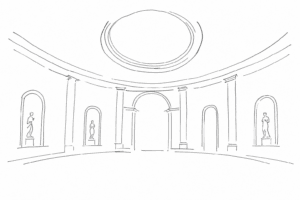
Keep exploring the Venice of St Mark’s
Which spaces help you read the square as a system of symbols, institutions and images?
 Museo Correr: why starting here helps you understand San Marco before the basilicaTo read San Marco more calmly, the Museo Correr offers the civic, political and urban key to the square before the basilica.
 Sansovino’s Loggetta: the small precious building at the foot of the CampanileHistory, architecture and sculptures of Sansovino’s Loggetta, at the foot of St. Mark’s Campanile.
 The Tetrarchs of San Marco: four embraced figures and the missing fragment in IstanbulHistory, interpretation and location of the Tetrarchs of San Marco, a porphyry group linked to Constantinople and to a fragment preserved in...
 The Clock Tower: Moors, gears and Venetian time above St. Mark’s SquareHistory and interpretation of St. Mark’s Clock Tower: Moors, dial, automata and Venetian public time.