
On Venetian facades, among worn bricks, Gothic arches and plaster that has survived centuries of humidity, small discs carved in stone sometimes appear: these are the patere. At first glance they seem like decorative details, almost marginal; in reality they tell of the movement of goods, artistic tastes, Byzantine memories and Venetian ways of reusing precious fragments. Looking at them means slowing down, observing the walls as surfaces inhabited by history and recognizing, in just a few centimeters of relief, animals, interlaces and symbols that have crossed the Mediterranean.
What Venetian patere are
Venetian patere are small circular reliefs, almost always in Greek marble or Istrian stone, set into the facades of houses, palaces and courtyards. The name recalls the Roman patera, a low, round ritual dish: in Venice, however, it refers above all to carved discs of Byzantine taste, often datable between the 11th and 13th centuries, reused as decorative elements.
They can be recognized by their compact format and by their relief subjects: facing lions, eagles, griffins, peacocks, vegetal interlaces, symbolic scenes of struggle between animals. They are not simple “ornaments”: they tell of the city’s connection with Constantinople, the Eastern Mediterranean and the trade in marbles and precious artifacts.
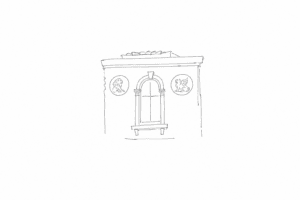
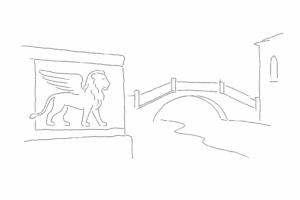
Almost no one notices them because they are above doors, windows, sottoportico arches or on upper floors, mixed into the texture of the bricks. Unlike the great monuments, they require a slow gaze: they are tiny details, but very widespread, transforming many Venetian facades into small atlases of Byzantine stone.
Byzantine origins and Venetian use
The patere arrived in Venice within a long relationship with the Byzantine East: trade, merchant colonies, shipyards, diplomacy and, later, spoils and reuses linked to the crusades. Between the 11th and 13th centuries the city looked to Constantinople, the Aegean and the Adriatic coast as a repertoire of marbles, ornamental motifs and prestigious languages.
Many reliefs derive from architectural or liturgical furnishings: plutei, screens, frames, elements of presbyterial enclosures. Once detached from their original context, they were set into Venetian facades as authoritative fragments. Their value depended not only on the quality of the work, but also on the perceived provenance: an Eastern stone communicated wealth, distant contacts and imperial memory.
Byzantine taste emerges in the symmetrical motifs: facing animals, griffins, peacocks, eagles, lions, vegetal interlaces, crosses and trees of life. Inserted into Venetian brickwork, these discs create a clear contrast between domestic surface and solemn image. They do not merely decorate; they transform the house into a small declaration of belonging to the Eastern Mediterranean.
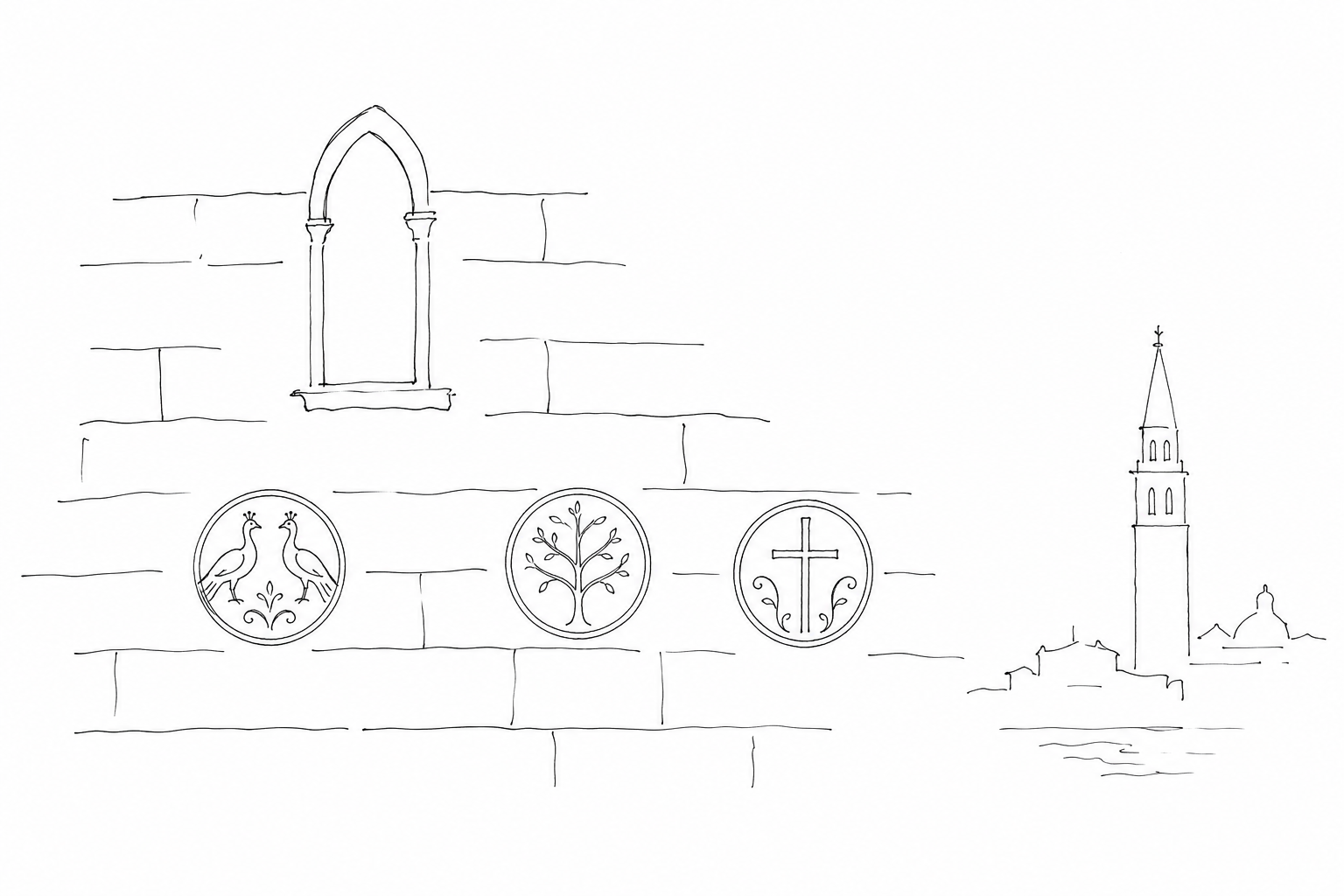
Animals, interlaces and symbols to read
The most recognizable repertoire of these roundels in marble or Istrian stone revolves around facing creatures: lions, griffins, peacocks, eagles, dragons. Often two animals are placed on either side of a tree, a vase or a central knot, according to a pattern dear to Byzantine and Sasanian art. Symmetry is not only ornamental taste: it suggests order, guardianship, protective strength.
The lion evokes power and vigilance; the griffin, a hybrid animal with a lion’s body and an eagle’s head, unites earth and sky; the peacock refers to life that is renewed, because in late antique imagination its flesh was considered incorruptible. Snakes and dragons, when they appear fighting or intertwined, evoke the control of chaos.
Alongside the animal figures appear shoots, rosettes, knotted circles, crosses and ribbon motifs. Read up close, the reliefs reveal different chisels: some deep and graphic cuts, others softer, worn by salt and time. This very variety helps distinguish them from simple reused ornaments.
Where to look without turning them into a list
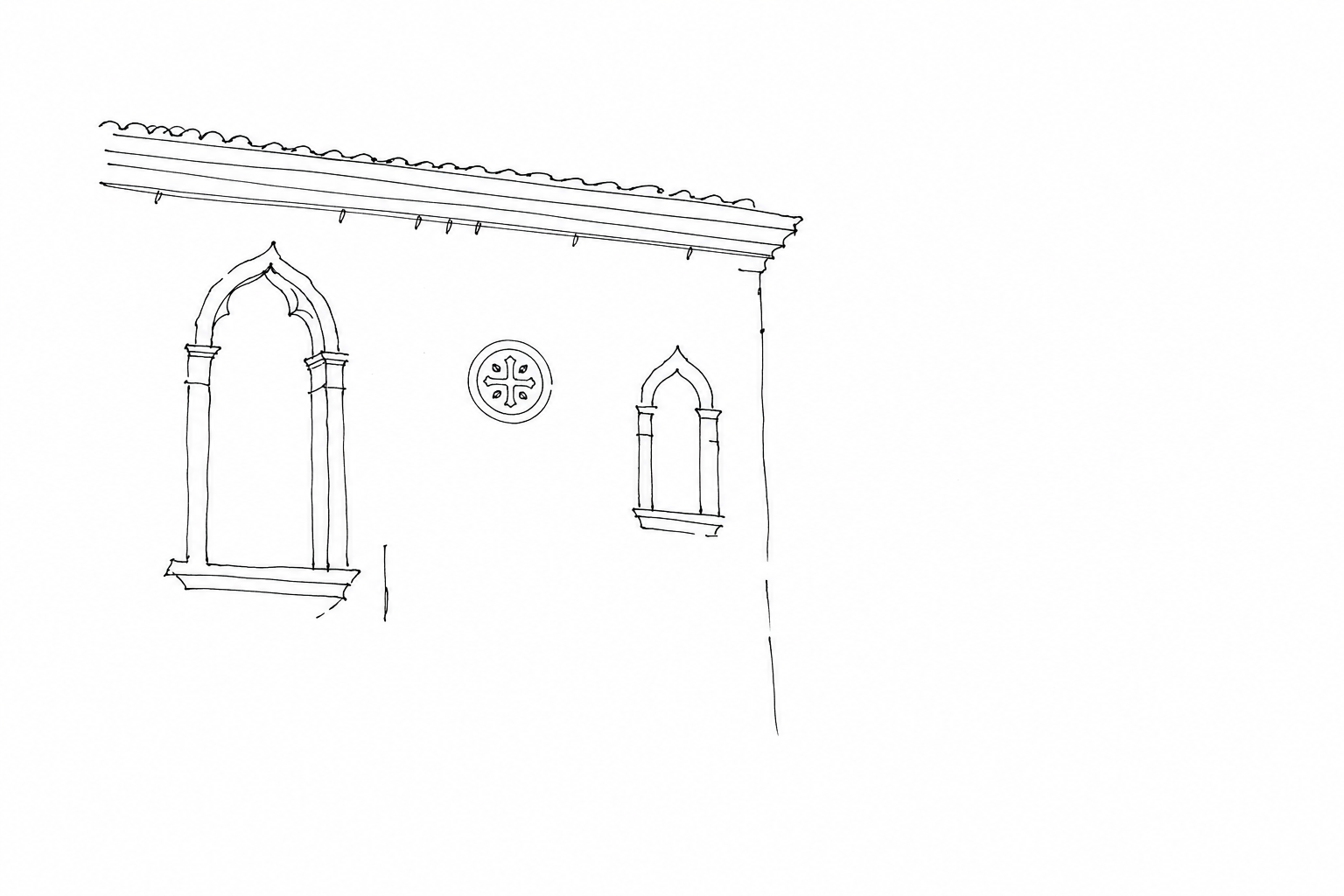
The best way to notice them is not to follow a map, but to change the height of your gaze. Look for them between the first floor and the lintel, at the sides of portals, above Gothic windows, beside later coats of arms or inserted off-axis in a brick wall. This imperfect position often reveals the reuse: the disc was not made for that spot, it arrived there later, perhaps during a medieval or Renaissance renovation.
- Shape: round or almost round, with an incised frame, braided border, beading or a worn smooth band.
- Material: light marble or Istrian stone, often brighter than the surrounding brickwork.
- Location: passage points, entrances, corners and minor courtyards; not only famous palaces, but merchant houses and secondary walls.
- Decisive clue: the patina. An ancient relief rarely appears perfectly centered, intact and “decorative” in the modern sense.
In the sestieri of Castello, Cannaregio, San Polo and Dorsoduro it is best to proceed slowly: small squares, sottoporteghi and side canals often reveal the most surprising details.
Venetian patere do not require a rigid itinerary, but a more patient gaze. They appear where the city already seems familiar: above a door, beside a window, on a side wall that one passes without stopping. Looking for them does not mean turning Venice into a catalogue of details, but learning to read its facades as open archives, made of moved stones, inherited images and everyday signs. It is a discreet form of attention: small, precise, capable of changing the way one walks.
Related Posts
Venetian paterae: animals, symbols and Byzantine stones walled into façades
Guide to Venetian paterae: origin, forms, animals, symbols and ways to read them on façades among calli, campi and rii.Hidden St. Mark’s lions: where to look for Venice’s symbol away from the flags
A guide to the less obvious St. Mark's lions: reliefs, coats of arms, stones and façades to observe among calli, campi and the lagoon.
Votive shrines in the calli: everyday religiosity hidden on the corners of Venice
Guide to the votive shrines in the calli of Venice: origin, forms, places and urban reading.Questions Answered
What are Venetian patere?
Small circular stone reliefs with Byzantine artistic motifs reused in Venetian facades.Where do Venetian patere come from?
They originate from Byzantine East, coming through trade, diplomacy, and reuse following crusades.What symbols are commonly found on patere and what do they mean?
Facing animals like lions, griffins, and peacocks symbolize power, guardianship, and renewal.How can I spot patere on Venetian buildings?
Look above doors or windows, often slightly off-center, with different stone and worn appearance.
Another way to observe Venice
Which small elements change the way you read calli, façades and bridges?
 Calle Varisco: seeking one of Venice’s narrowest calli without turning it into a trophyA brief guide to Calle Varisco: where to look for it, why it matters and how to pass through it with restraint,...
 Barbacani: the wooden brackets that tell of houses wider than the calliAn urban detail of Venice: the barbacani, supports that explain space, rules and life in the calli.
 Venetian sottoporteghi: small urban tunnels where the city suddenly changes rhythmGuide to Venetian sottoporteghi: covered passages between calli, campi and rii, urban thresholds where light, sound and pace suddenly change.
 Campiello, corte, ramo: a small sentimental guide to the words of the Venetian mapA short guide to reading Venice through the words of its nizioleti: campielli, corti, rami, calli, fondamenta and rii.