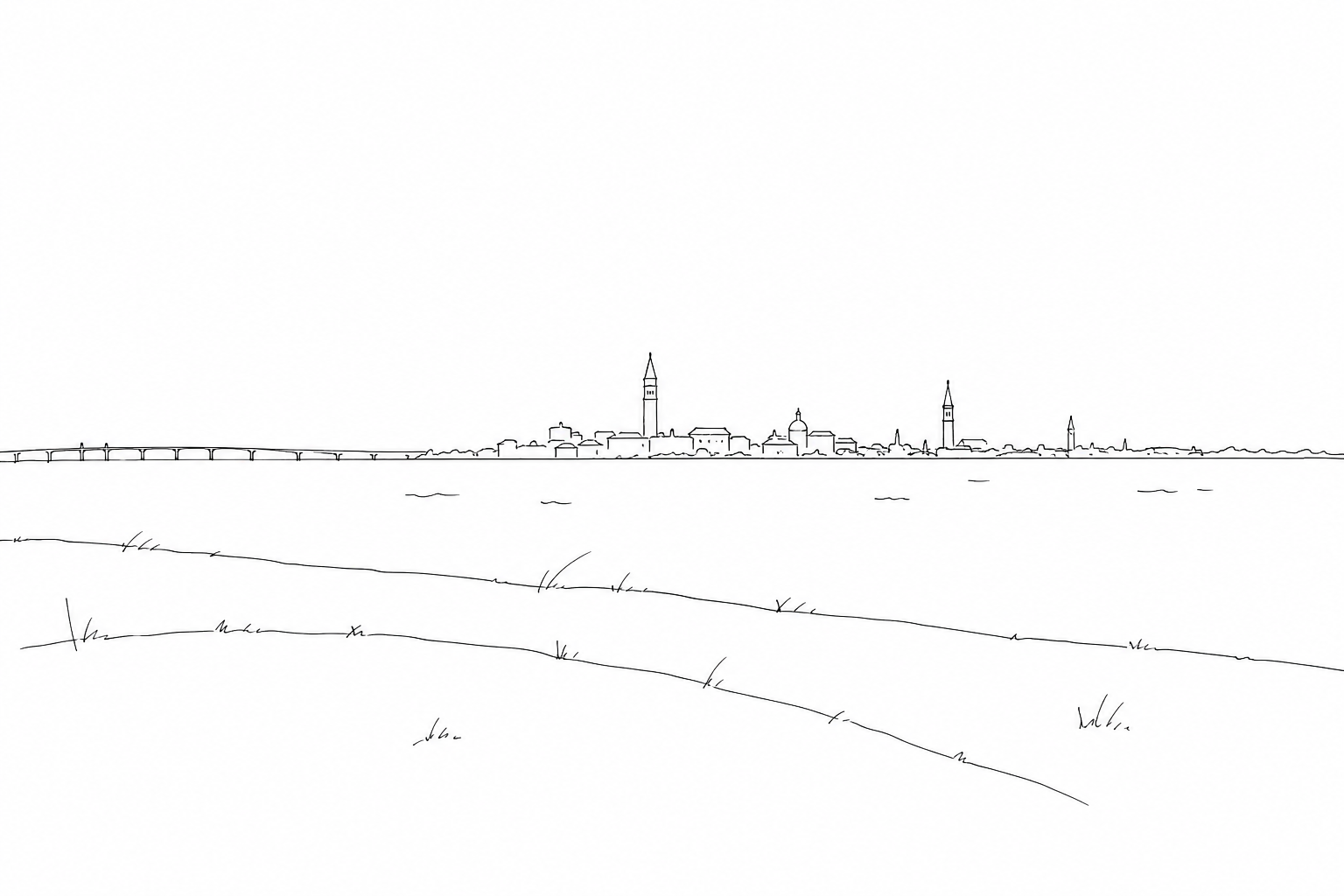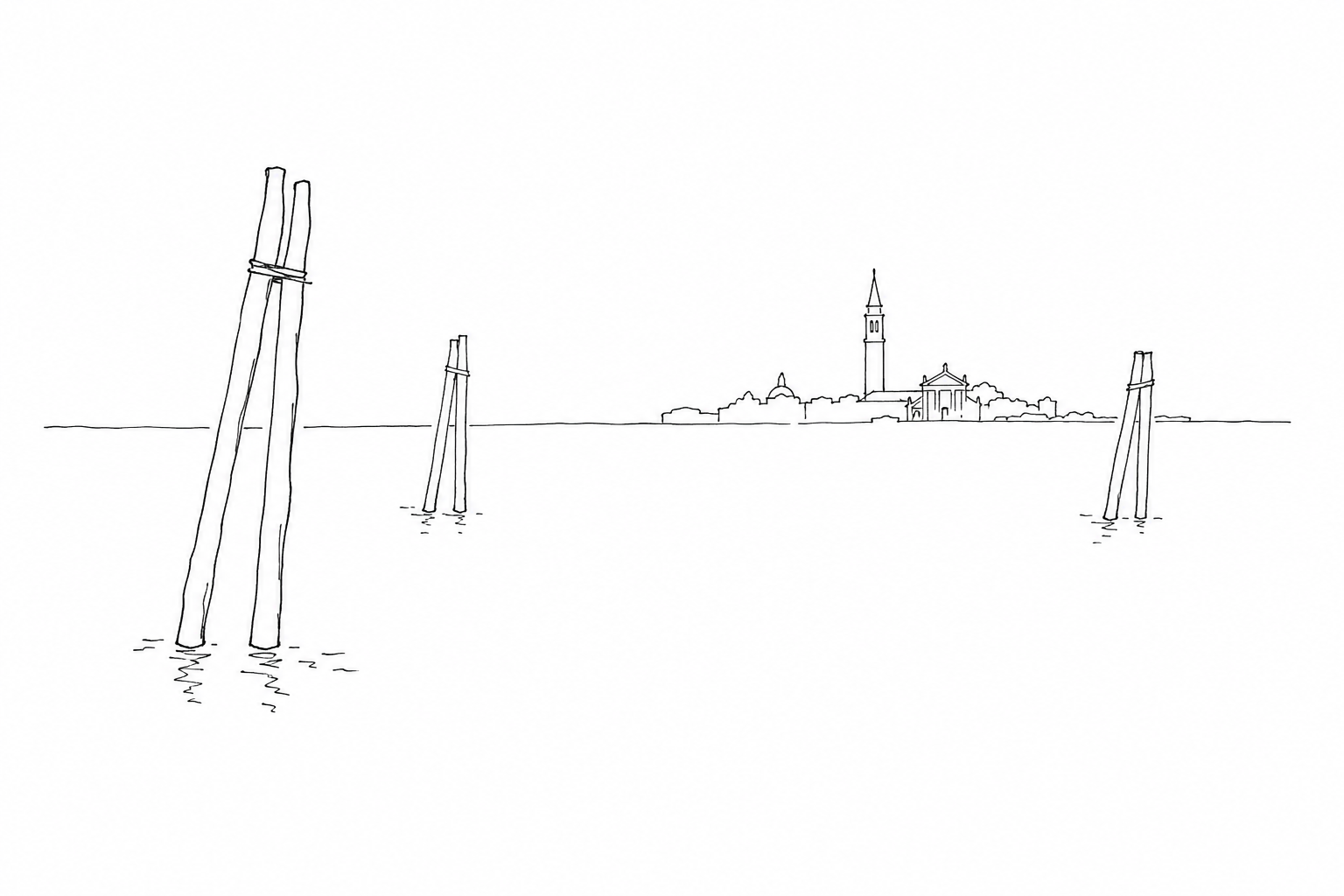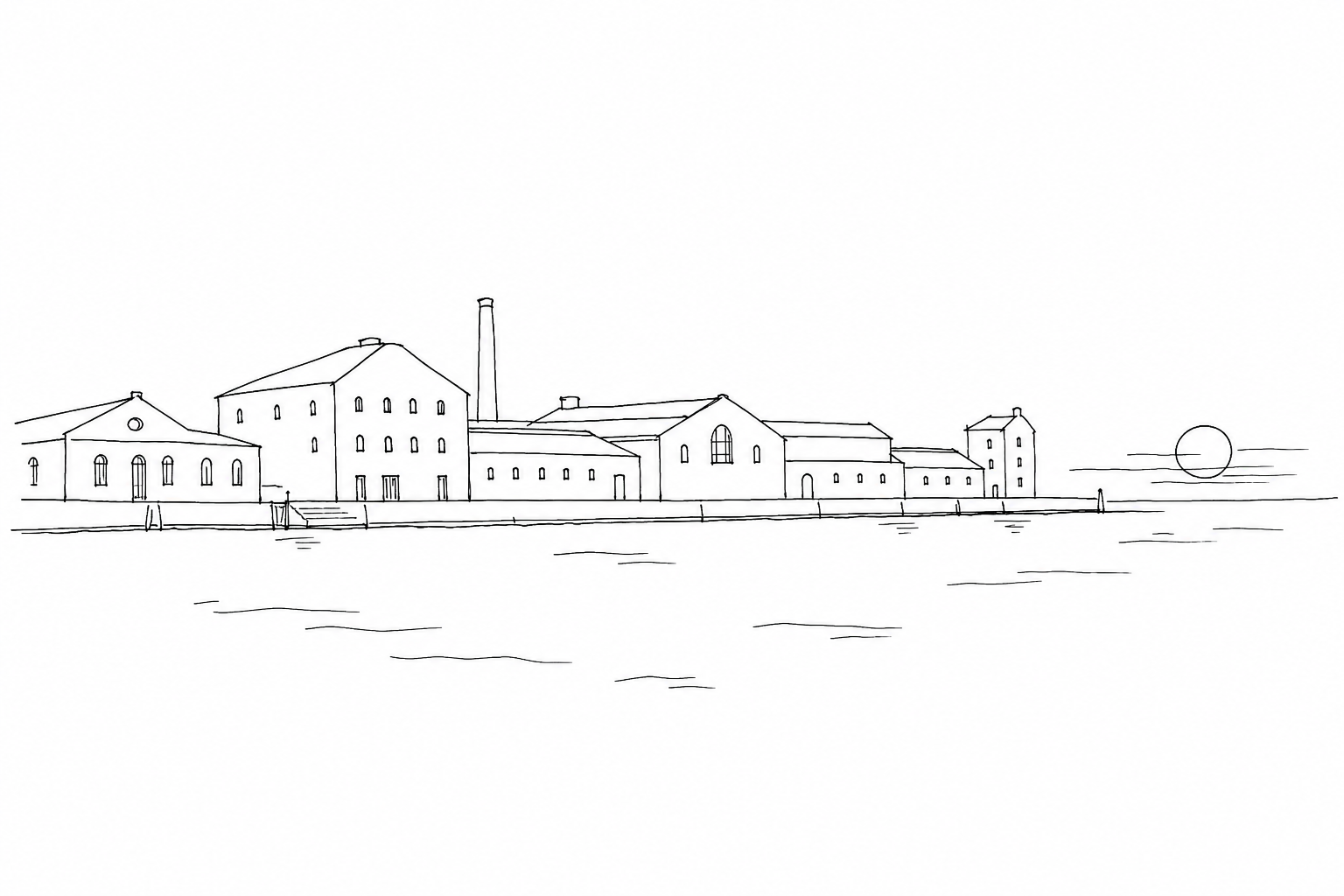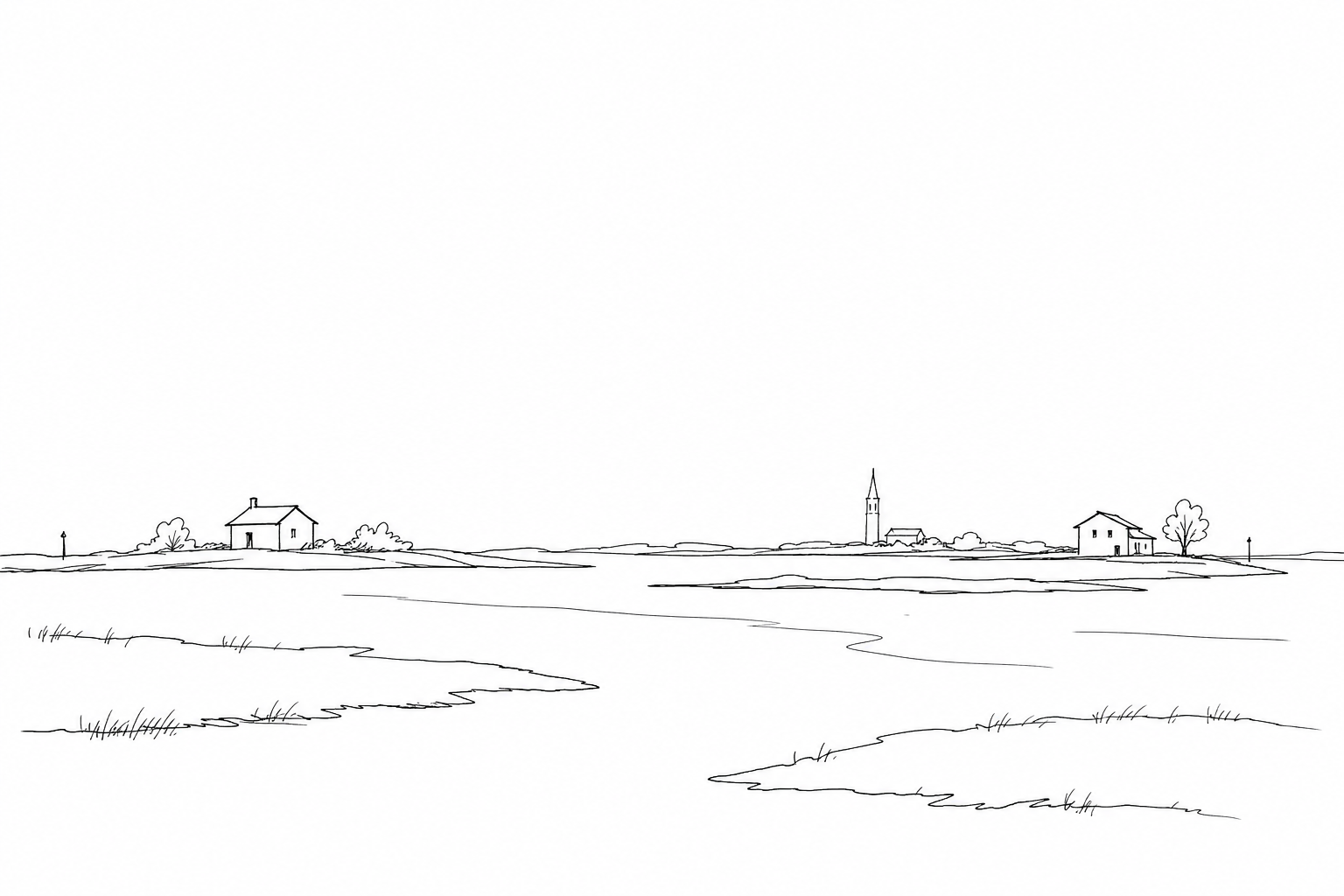
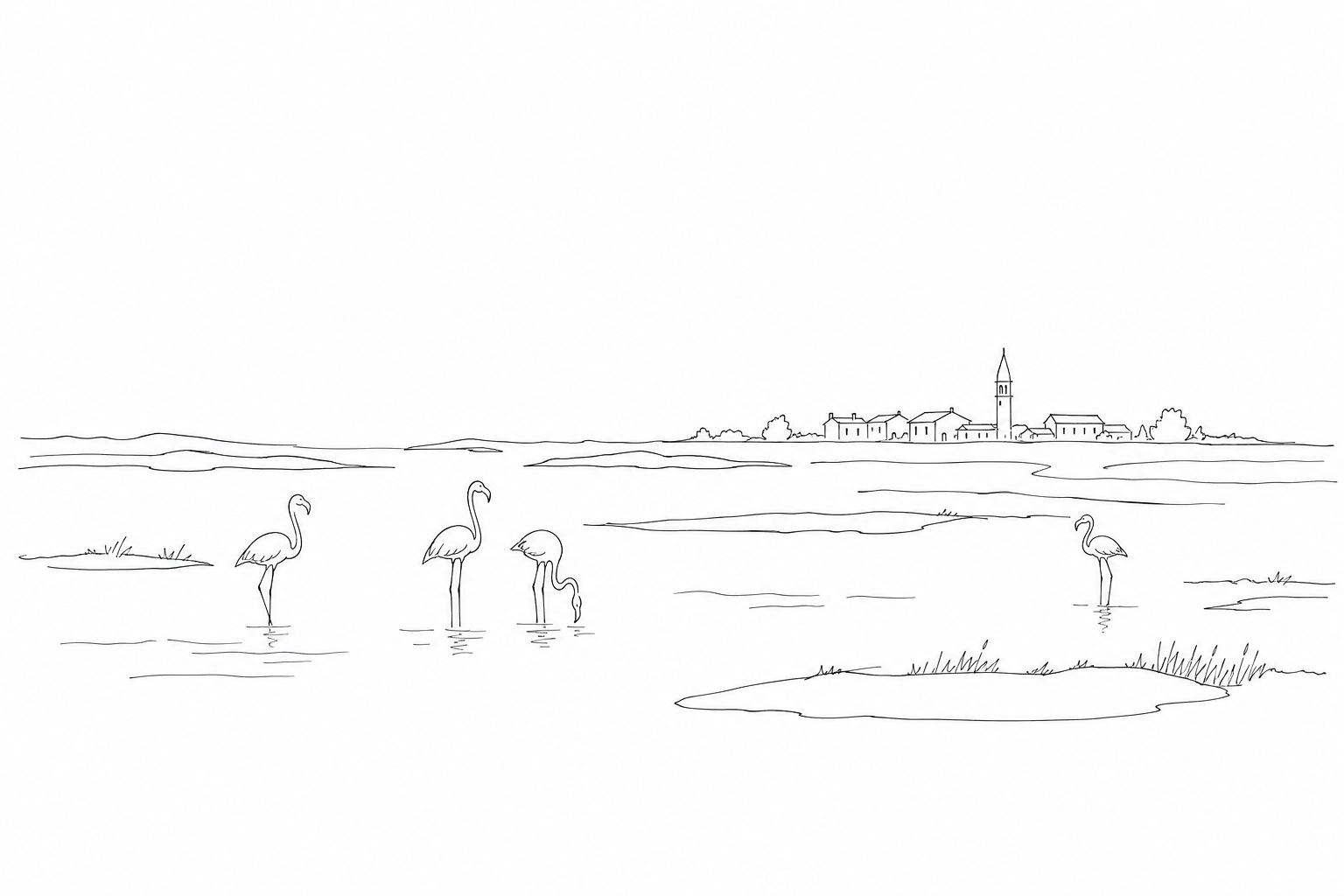
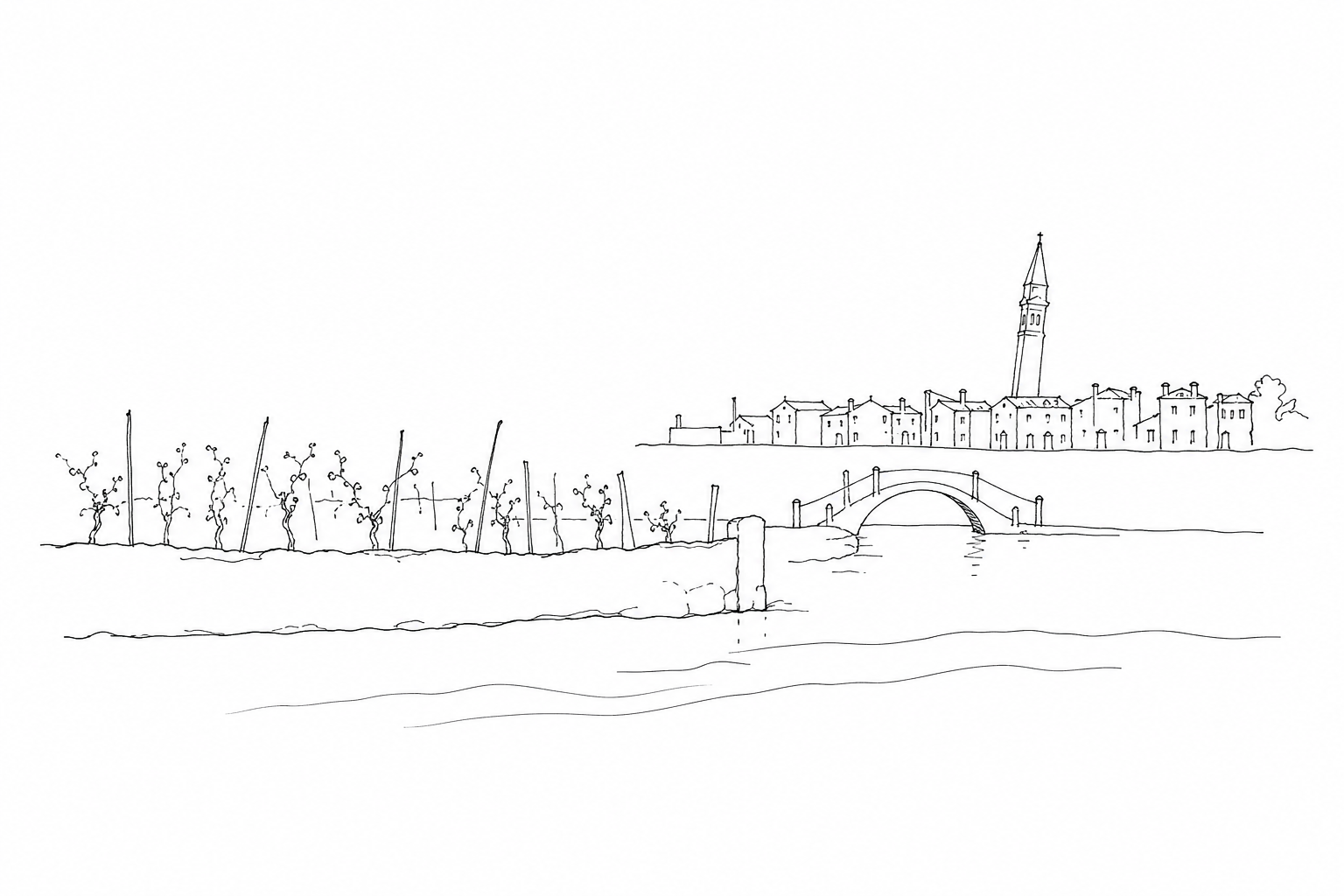
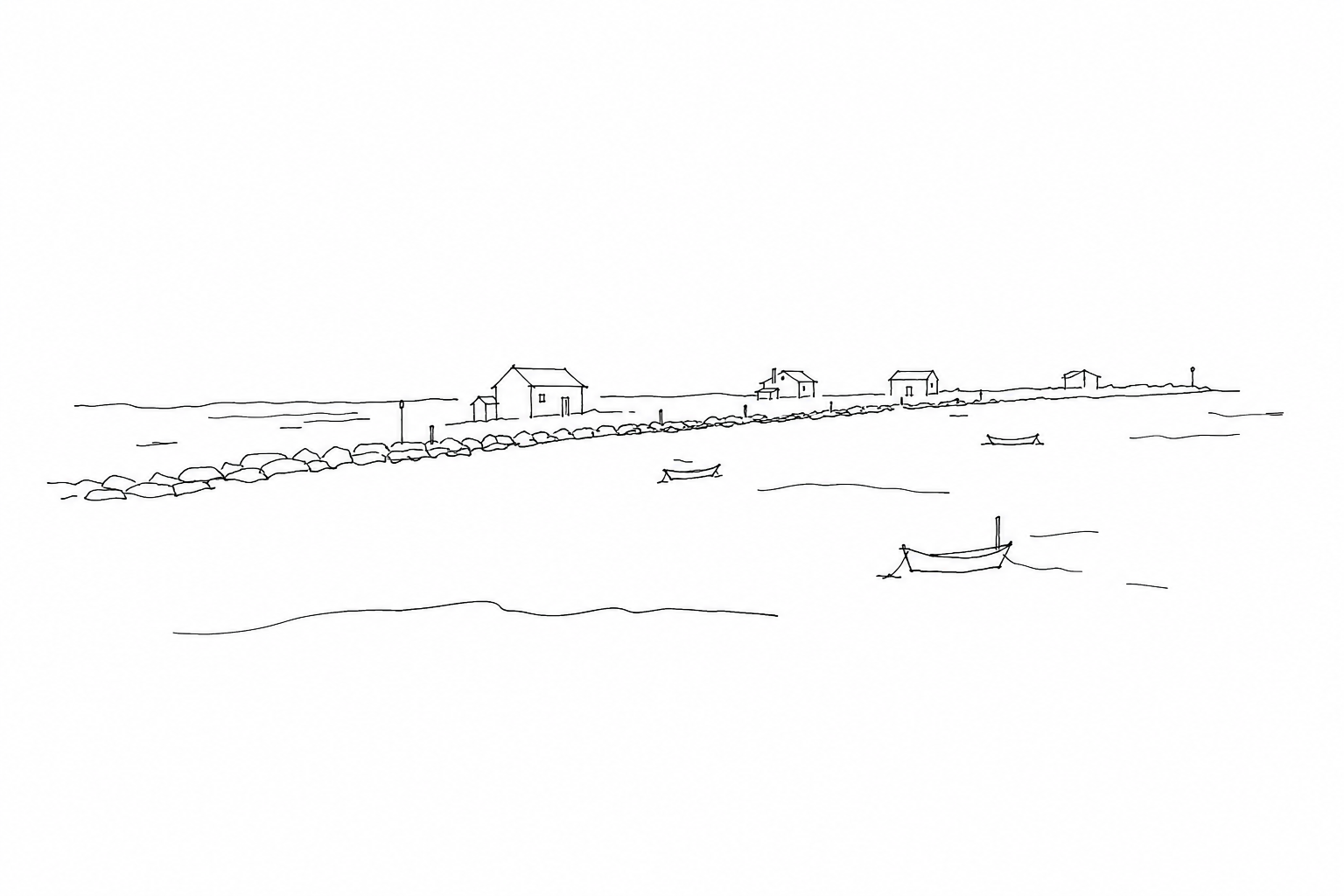

Pellestrina is a thin strip between the Adriatic and the lagoon, where Venice seems to lose its monumentality and become line, wind, stone, water. Walking it means following an inhabited edge: on one side the Murazzi, built to hold back the force of the sea; on the other low houses, boats, nets, minimal landing places and an everyday life still tied to fishing. It is not an island to cross in a hurry, but a place to read step by step, observing how defence, work and landscape have shaped the form of the villages and the rhythm of the shore.
Where Pellestrina is and why walk it
Pellestrina is a thin inhabited strip of the southern lagoon of Venice, stretched between the Lido to the north and Chioggia to the south. On one side it faces the Adriatic, on the other the quieter water of the lagoon: this double exposure is the key to understanding it on foot, without crossing it in a hurry.
The island is long and narrow, with a landscape that changes in just a few steps: low, colourful houses overlooking the lagoon shore, tiny calli, fishing boats, vegetable gardens sheltered from the wind and, on the sea side, the severe presence of the Murazzi. These great works in Istrian stone were built by the Republic of Venice to defend the lagoon from storm surges, transforming the Adriatic edge into an essential architectural line.
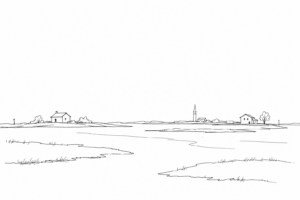
Walking on Pellestrina means reading a fragile balance: the work of the fishermen, protection from the waters, the small inhabited nuclei and the open horizon. It is not a monumental island in the classical sense; its value lies in the continuity between inhabiting, defending oneself from the sea and living the lagoon.
The Murazzi: a stone defence against the sea
On the Adriatic side of Pellestrina the walk meets the Murazzi, the great barrier in Istrian stone commissioned by the Republic of Venice to protect the fragile coastline from storm surges. Their construction, begun in the eighteenth century and linked to the studies of the engineer Bernardino Zendrini, replaced weaker defences in wood and earth, often insufficient against erosion.
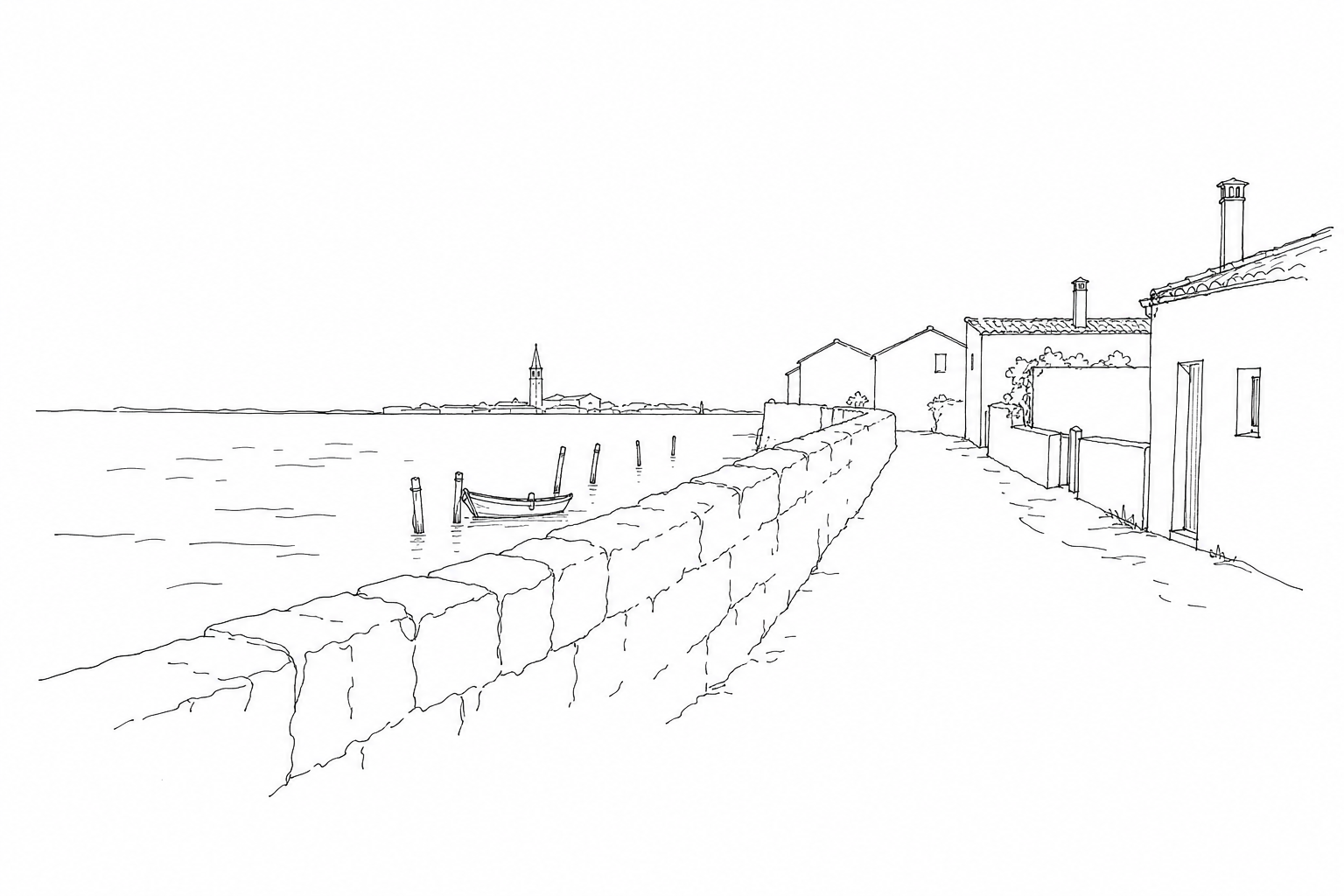
The presence of the Murazzi is not only technical: it changes the way the island is perceived. Walking beside the masonry, the sea remains close but partially held back, like a force to be controlled more than contemplated. Blocks, ramps, raised sections and surfaces worn by salt air tell of long maintenance, made of repairs and adaptations.
On Pellestrina this defensive work dialogues with the low fishermen’s houses on the inhabited side. On one side there is compact stone against the Adriatic; on the other, narrow streets, courtyards and landing places facing the internal waters. The Murazzi thus explain an essential part of the landscape: living here has always meant inhabiting a threshold, protecting it day after day.
Low houses, nets and fishing life on the inner shore
On the side facing the quiet waters, the landscape changes scale: no longer the monumental work of defence, but a minute sequence of one- or two-storey dwellings, coloured façades, entrances almost on the street and small courtyards where work leaves concrete traces.
Here the urban reading passes through details: coiled ropes, buoys, crates, racks, nets laid out to dry, working boats moored in front of the houses. The shore functions as an intermediate space, both domestic threshold and productive place: a tool is repaired, the catch is loaded, people talk while observing the canal.
The low houses also tell of a way of living measured by the wind, salt air and high water: simple volumes, contained openings, colours useful for distinguishing the façades along a continuous front. Behind the doors there is not only the picturesque, but a community tied to fishing trades, boat maintenance and small daily services.
Walking here means slowing down: every landing place, every side calle and every courtyard explains how much the island is built on the practical, not decorative, relationship with the water.
How to plan the walk without rushing
To read Pellestrina without reducing it to a line to be covered, it is best to alternate the two fronts: first the inner shore, with landing places, boats and courtyards; then the Murazzi side, where the walk becomes more exposed and silent. The best rhythm is not that of the total distance, but that of the small inhabited nuclei: San Pietro in Volta, Portosecco and the southernmost village mark natural pauses.
- Use the transverse calli: they are short passages that help change perspective without losing your bearings.
- Observe the wind: bora and scirocco modify sounds, smells and the perception of space; choosing the more sheltered side makes the walk more readable.
- Look at the bell towers and landing places: they function as vertical and practical reference points in an almost horizontal landscape.
- Make frequent stops: details such as house numbers, nets laid out and thresholds tell more than a continuous march.
In this way the route remains slow, concrete, close to the island.
A walk on Pellestrina works when one accepts its slow measure: few elements, but very precise ones. The Murazzi tell of the long Venetian effort to govern the sea; the lagoon shore shows an essential way of living, made of low thresholds, moored boats and daily gestures. Between these two fronts, the island reveals a lateral Venice, less representative and more concrete. Taking time, stopping often and not looking for attractions at every step is the best way to understand this fragile landscape, built on the balance between protection, work and water.
Related Posts
Alberoni: dunes, oasis and the lagoon where the Lido stops being fashionable
An editorial guide to Alberoni, among protected dunes, pine forest, breakwater and the lagoon edge of the Lido.Treporti and the thin islands: understanding the lagoon by looking at the borderlands
A slow journey through Treporti, salt marshes, fishing valleys and lagoon margins to read Venice from its thinnest border.
Le Zattere: the Venetian walk where the sun says more than the monuments
A slow guide to Le Zattere, the fondamenta in Dorsoduro where light, lagoon and everyday history matter more than the list of monuments.Questions Answered
Where is Pellestrina located and what makes its geography unique?
It is a narrow strip between the Adriatic and Venice's lagoon with distinct coastal exposures.What are the Murazzi and why were they built?
Stone barriers built in the 18th century to defend against the sea and erosion.How does the inner shore landscape differ from the Adriatic side?
It features low fishermen’s houses, colorful façades, and active fishing life.How should one plan a walk to best experience Pellestrina?
Alternate walking sides, use calli, observe natural elements, and stop frequently.
Explore the Venice beyond stone
Would you like to connect this stop with islands, boats and environments that tell the city’s other half?
 The bragozzo: sail, fishing and the Adriatic in the colorful boat of lagoon traditionHistory, forms and colors of the bragozzo, a fishing boat linked to Chioggia, the lagoon and the Adriatic.
 Briccole in the lagoon: the posts that guide boats and shape the Venetian landscapeWhat briccole are, how they guide boats and why they mark the landscape of the Venice lagoon.
 Barene and velme: the words of the lagoon that explain why Venice is not only stoneA lagoon vocabulary for reading Venice beyond calli and palaces: what barene and velme are, how they change with the tide and...
 San Servolo: the island of the asylum and the uncomfortable memory of psychiatric careHistory and visit to San Servolo, an island in the lagoon marked by the Venetian asylum and the Museum of the Asylum.