
In the Venetian lagoon, briccole seem like discreet, almost obvious presences: groups of posts emerging from the water, marking a canal, accompanying the passage of boats, motorboats and vaporetti. In reality, they are one of the most recognizable and functional elements of the lagoon landscape. They serve to guide navigation, but they also tell of the everyday relationship between Venice, the tides, wood and maintenance work. Observing them carefully means reading a concrete part of the city of water, made of simple, worn, indispensable signs.
What briccole are and what they are used for
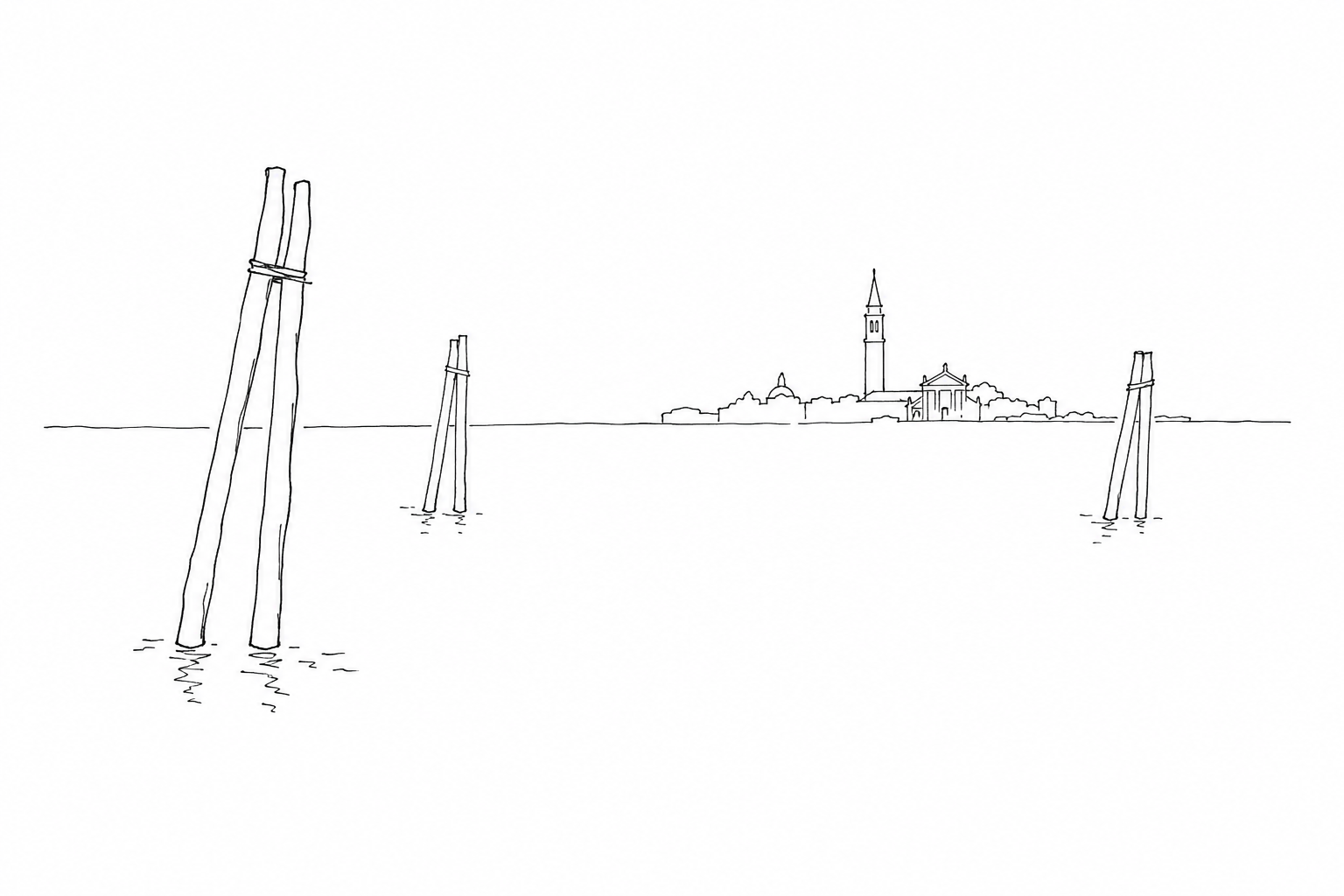
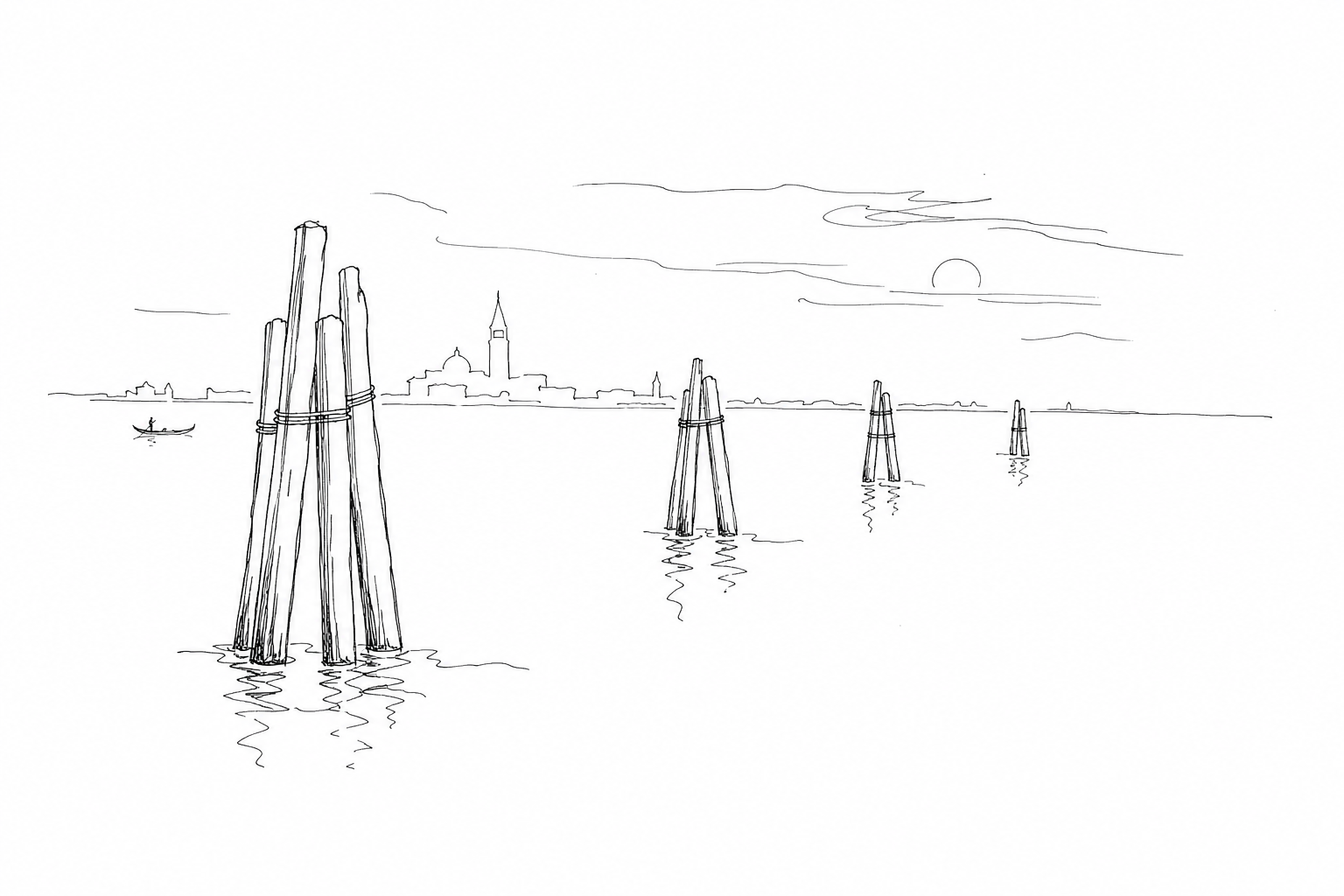
Briccole are groups of wooden posts driven into the bed of the Venetian lagoon, usually tied together in bundles of three or more elements. They emerge from the water as vertical signals and indicate to navigators where the navigable channel passes, that is, the part deep enough for boats, vaporetti, motorboats and working vessels.
Their function is first and foremost practical: in the lagoon the seabed changes rapidly, between shallows, salt marshes and tidal currents. Briccole help follow a safe route without leaving the track, avoiding shallow areas where the hull could run aground. In some cases they mark bends, forks or canal entrances; their arrangement in space is therefore a true grammar of navigation.
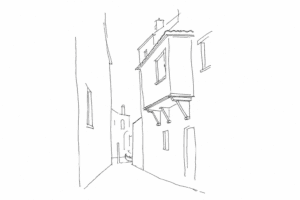
In addition to guiding those at the helm, these posts shape the landscape: dark lines on the water, worn by salt, algae and tides. For this reason they are both nautical infrastructure and a typically Venetian visual sign.
A wooden alphabet in the lagoon
Seen from afar, briccole function like punctuation marks on the water: they interrupt the low horizon, indicate a direction, warn where the seabed changes. In a lagoon made of canals invisible to those who do not know it, their alignment makes readable what remains submerged.
The Venetian landscape can also be understood by following these dark verticals. A close row suggests a navigable route; an isolated group can signal a passage, an edge, a point to recognize among salt marshes and expanses of water. Their height, the inclination produced by the currents, the bands left by the tides tell of the continuous relationship between wood, salt and movement.
For those looking from the shore, from a bridge or from a boat, briccole create depth: they measure distances better than a line drawn on a map. At sunset they become silhouettes, in the morning they cut through the fog, with high water they show only the essential part. Thus the lagoon does not appear empty, but written by a practical and visual alphabet.
Materials, wear and maintenance
A briccola does not remain identical over time: it is an artifact immersed in an aggressive environment. The trunks, traditionally of oak or other resistant woods, are driven into the lagoon bed and work under continuous stress. Salt, tidal variations, frost, sun, impacts from boats and wave motion open cracks, wear down the surface and weaken the part at the boundary between water and air.
The most characteristic damage comes from marine xylophagous organisms, such as shipworms, which dig internal tunnels while leaving an externally still recognizable shape. For this reason a post may seem solid and instead have a fragile, lightened and perforated structure.
Maintenance is not only aesthetic: it concerns the safety of navigation. When a signal leans, breaks, loses height or no longer guarantees a clear reading of the channel, it is removed and replaced with new elements driven into the sediment. The extracted pieces show dark grain, holes and abrasions: material traces of the lagoon, sometimes reused in furnishings and objects, where wear becomes visible memory.
How to recognize them during a slow walk
To read briccole from the edge of a fondamenta or from the deck of a vaporetto, it is best to slow down your gaze. The first clue is not the single post, but the sequence: closely spaced groups that draw an invisible line on the water and mark the edge of a navigable channel.
Observe the shape: often several trunks side by side, tightened by metal bands, emerge with similar heights. If they bear numbers, reflectors, small side signals or a light, they indicate a precise nautical function, not a simple mooring point. In curved stretches the distance between the groups may shorten; at intersections the eye finds more posts, almost punctuating a fork.
Another useful criterion is the relationship with traffic: boats leave them to the side, following the corridor of deep water. From the shore, however, they seem like landscape elements; up close they reveal a technical grammar, made of alignments, signs and depths. Thus the lagoon appears less flat: beneath the surface there is a map, and those posts make its essential phrases visible.
Recognizing briccole during a slow walk helps you look at Venice beyond its façades and monuments. They are nautical tools, but also visual traces that order the open space of the lagoon and show its fragility. Their marked wood, their inclinations, replacements and the colors of the water around them tell of a continuous balance between use, time and environment. The next time you cross a bridge, a fondamenta or a landing stage, it is worth stopping: often the Venetian landscape can be understood precisely from its quietest details.
Related Posts
Barene and velme: the words of the lagoon that explain why Venice is not only stone
A lagoon vocabulary for reading Venice beyond calli and palaces: what barene and velme are, how they change with the tide and why they matter.Barbacani: the wooden brackets that tell of houses wider than the calli
An urban detail of Venice: the barbacani, supports that explain space, rules and life in the calli.
Campiello, corte, ramo: a small sentimental guide to the words of the Venetian map
A short guide to reading Venice through the words of its nizioleti: campielli, corti, rami, calli, fondamenta and rii.Questions Answered
What are briccole and what is their primary purpose?
They are wooden posts marking navigable channels for safe boat passage.How do briccole influence the Venetian landscape?
They create visual markers that shape the water landscape and reflect local conditions.What materials are used for briccole and what challenges do they face?
Made of oak or resistant woods, they suffer wear from salt, organisms, and tides.How can one recognize briccole during a walk in Venice?
Look for groups of posts aligned along navigable waterways, often with signals or reflectors.
Explore the Venice beyond stone
Would you like to connect this stop with islands, boats and environments that tell the city’s other half?
 Barene and velme: the words of the lagoon that explain why Venice is not only stoneA lagoon vocabulary for reading Venice beyond calli and palaces: what barene and velme are, how they change with the tide and...
 Sant’Andrea and Sanmicheli’s fort: the military gate of the lagoon that controlled the seaHistory, architecture and interpretation of the fort of Sant’Andrea, a lagoon outpost designed by Michele Sanmicheli.
 San Lazzaro degli Armeni: a small island, a library and a piece of the East in the lagoonHistory, library, monastery and atmosphere of San Lazzaro degli Armeni, the Armenian island in the Venice lagoon.
 Sant’Erasmo: vegetable gardens, violet artichokes and the agricultural Venice few imagineA slow journey to Sant’Erasmo, the island of Venetian vegetable gardens, among violet artichokes, the northern lagoon and agricultural life.