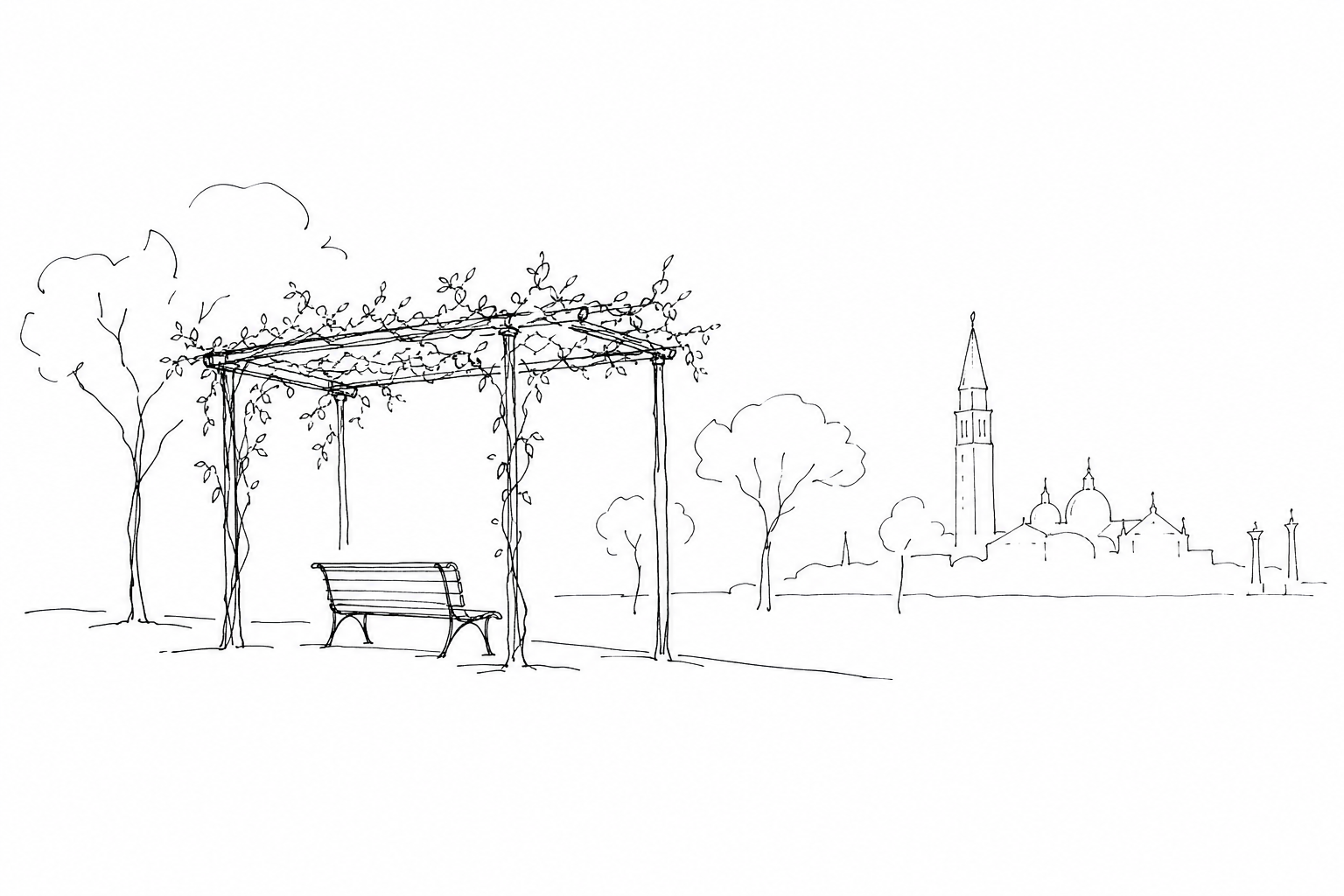

There are places in Venice that are better understood by subtraction. The Giardini Reali, behind the monumental area of San Marco, do not seek immediate astonishment: they offer shade, proportion, an orderly pause between water, stone and crowds. Many discover them only when the square becomes too full, but reducing them to a simple refuge would be too little. Their history passes through the Napoleonic era, royal use, long neglect and a recent restoration that has discreetly returned them to the city. They are small, central, almost hidden: precisely for this reason they help you read San Marco from a less obvious angle.
Why everyone looks for them when San Marco becomes heavy
The Giardini Reali become desirable precisely when Piazza San Marco stops being only a marvel and begins to be tiring: crowds, pale stone, glare, slow steps between the Basilica, the Campanile and the Doge’s Palace. They are just a few minutes from the monumental heart, but they function like a different threshold: not a large park, rather a green room wedged into the most observed point in Venice.
Their strength lies in the disproportion. After the scenic vastness of the square, this nineteenth-century garden, born in the orbit of the Royal Palace during the Napoleonic and then Austrian period, offers a measured pause: paths, flowerbeds, trees, seating, shade. It does not erase San Marco; it softens it. The noise remains close, but it does not dominate in the same way.
Many look for it late, when they have already looked at too much: mosaics, columns, marbles, queues, gondolas on the Basin. Here the experience changes register. You do not come to “do” Venice, but to better withstand Venice: drink in a little urban silence, get your bearings, catch your breath before returning toward the Riva degli Schiavoni or the Mercerie.
Where they are and what relationship they have with the square
The Giardini Reali are just a few steps from the south-western side of Piazza San Marco, but they do not impose themselves on the view: you have to leave the monumental axis, head toward the Basin and look for the green opening between the architecture and the water. This secluded position explains why many discover them late, almost out of necessity, after crossing the most crowded paving stones.
Their urban role is that of a hinge. On one side there is the official sequence of the square, with the Napoleonic Wing and the Museo Correr; on the other the waterfront, the public transport stops and the open perspective toward San Giorgio Maggiore. The garden stands in the middle: it is not a major panoramic destination, but a filter between representation and movement.
Created in the nineteenth century as an appurtenance of the Royal Palace, they preserve this nature of a “behind-the-scenes” space: close to power and the public stage, but separate enough to offer a real pause before re-entering the flow of San Marco.
From royal garden to restored public space
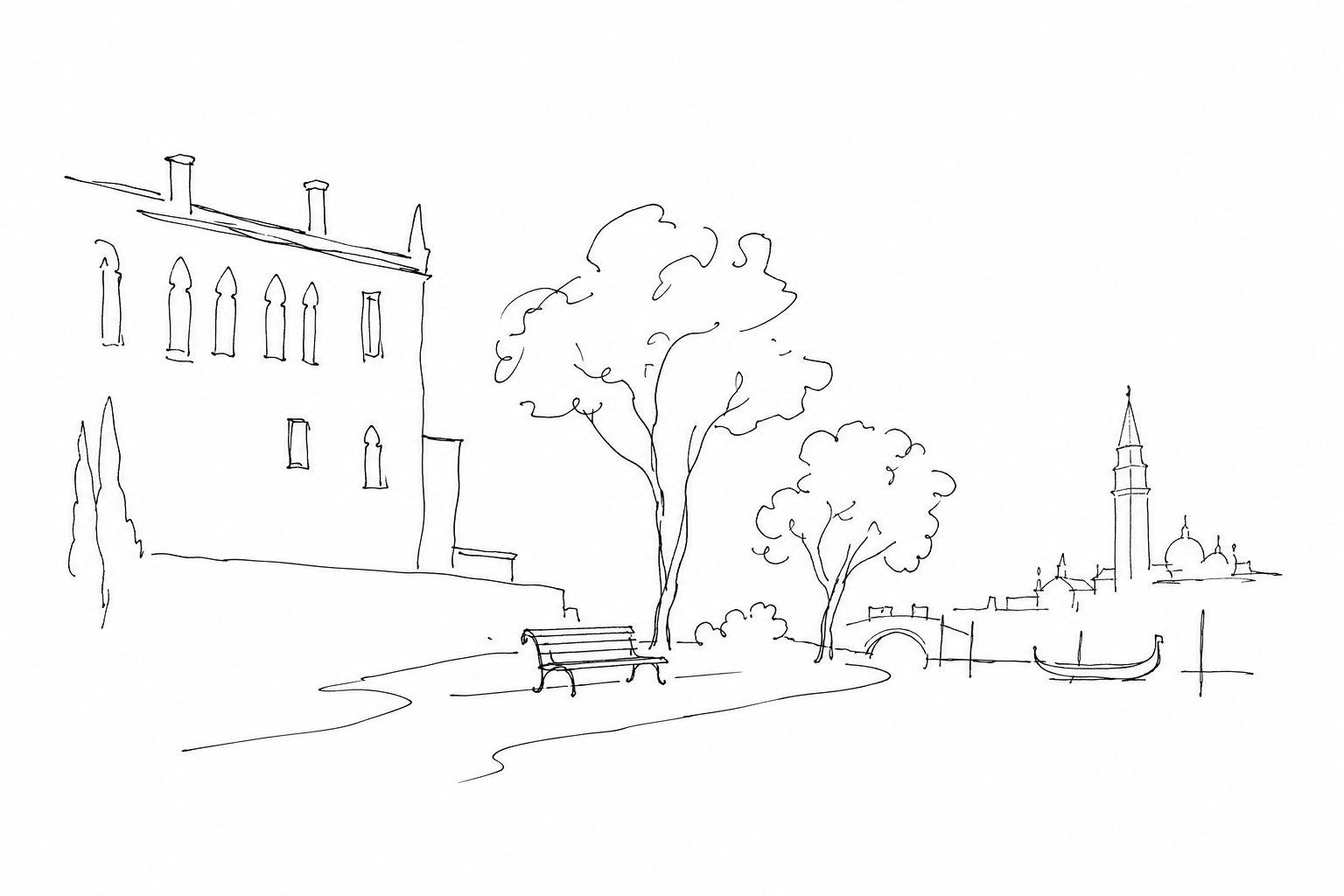
The calm of the Giardini Reali was not born as a service for tired travelers, but as part of a project of representation. At the beginning of the nineteenth century, with the transformation of the Procuratie Nuove into the Royal Palace desired in the Napoleonic era, this stretch facing the Basin was laid out as a court garden: a reserved green margin, connected to the official rooms and separated from the movement of the city.
Its position still explains the effect of surprise today. It is not a large park, nor a place designed to dominate the urban space: it was a discreet complement to power, made of paths, shade, gates, small service buildings and controlled views toward the water. After use by the different authorities that succeeded one another in the area, the garden progressively lost its function as a dynastic appurtenance and became a public space.
The contemporary restoration has restored legibility to this history: not only flowerbeds and seating, but also pergolas, greenhouses, pavilions and the relationship with the Palace. For this reason the stop here has a particular character: it seems casual, but it takes place within a precise fragment of the political and urban geography of San Marco.
How to use them well during a short stay
In an itinerary of a few hours, the Giardini Reali work best as a tactical pause rather than as a stop to photograph quickly. They are especially useful after a visit to the Basilica, the Doge’s Palace or the rooms of the Correr, because they allow you to leave the compact rhythm of the San Marco area without really moving away from the basin.
- Use them as a hinge between the Molo, the vaporetto stops and Calle Vallaresso: a few minutes seated can avoid a long detour toward less crowded areas.
- If you have light luggage or a map to reorganize, look for a side bench: the value of the place is the small visual suspension, not a prolonged stay.
- Enter with a simple purpose: drink water, choose the next visit, shelter from the sun or the wind. This way you do not use up energy in the maze near the Square.
However, it is worth considering them a regulated historic space, not an area that is always available: before counting on them for a necessary stop, check the updated access and opening conditions.
The Giardini Reali work best when they are not considered a stop to tick off, but an intelligent interval within a short itinerary. Entering them after the Basilica, before the vaporetto or between one visit and another allows you to recover rhythm and attention, without really leaving the historic heart of the city. Their strength lies in their closeness to everything and, at the same time, in a surprising mental distance from the pressure of San Marco. Those who cross them calmly find a fragment of Venice that is less spectacular but very concrete: an urban, restored, everyday garden, where even the stop becomes part of the journey.