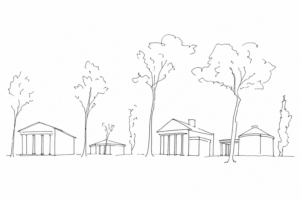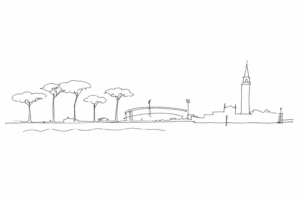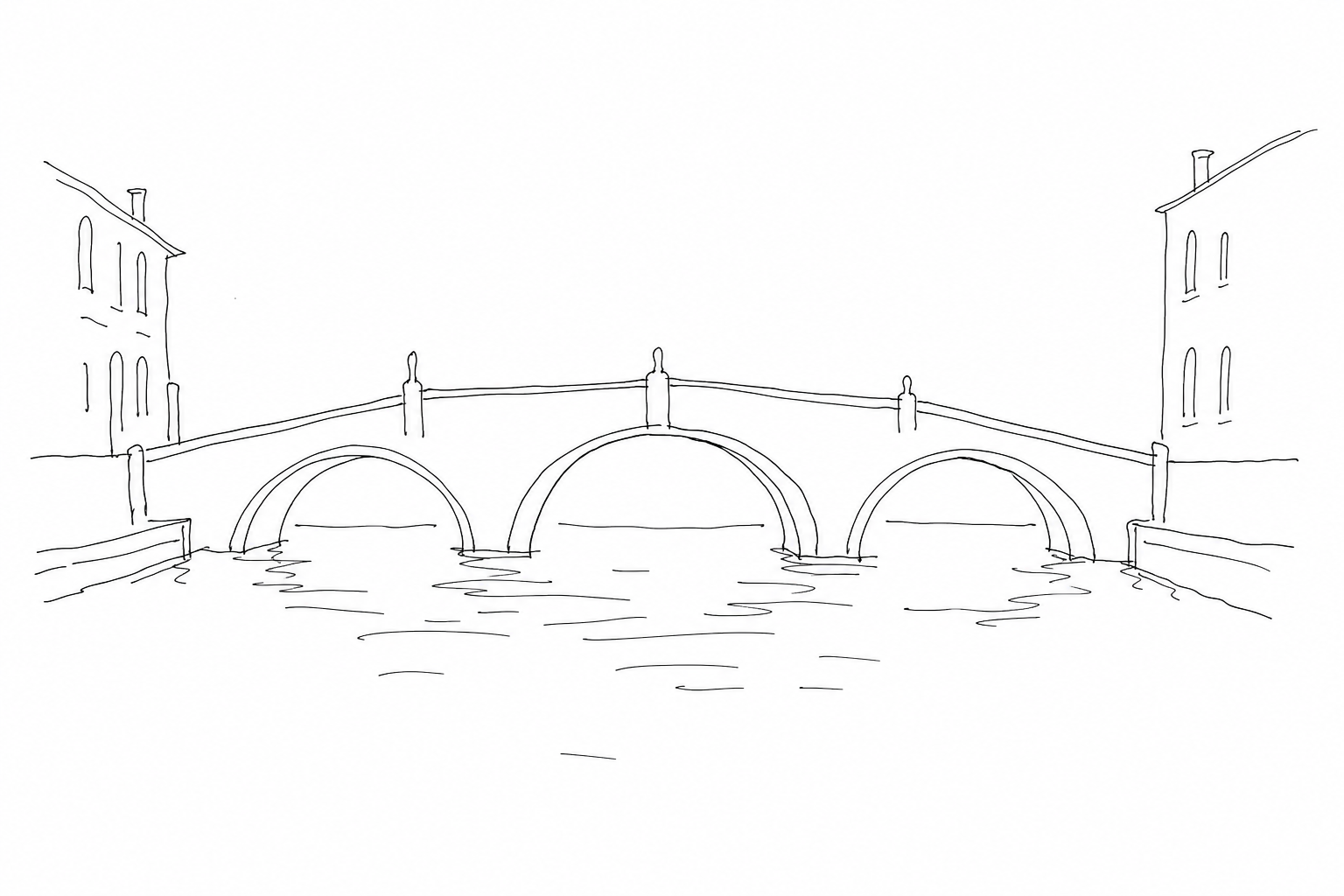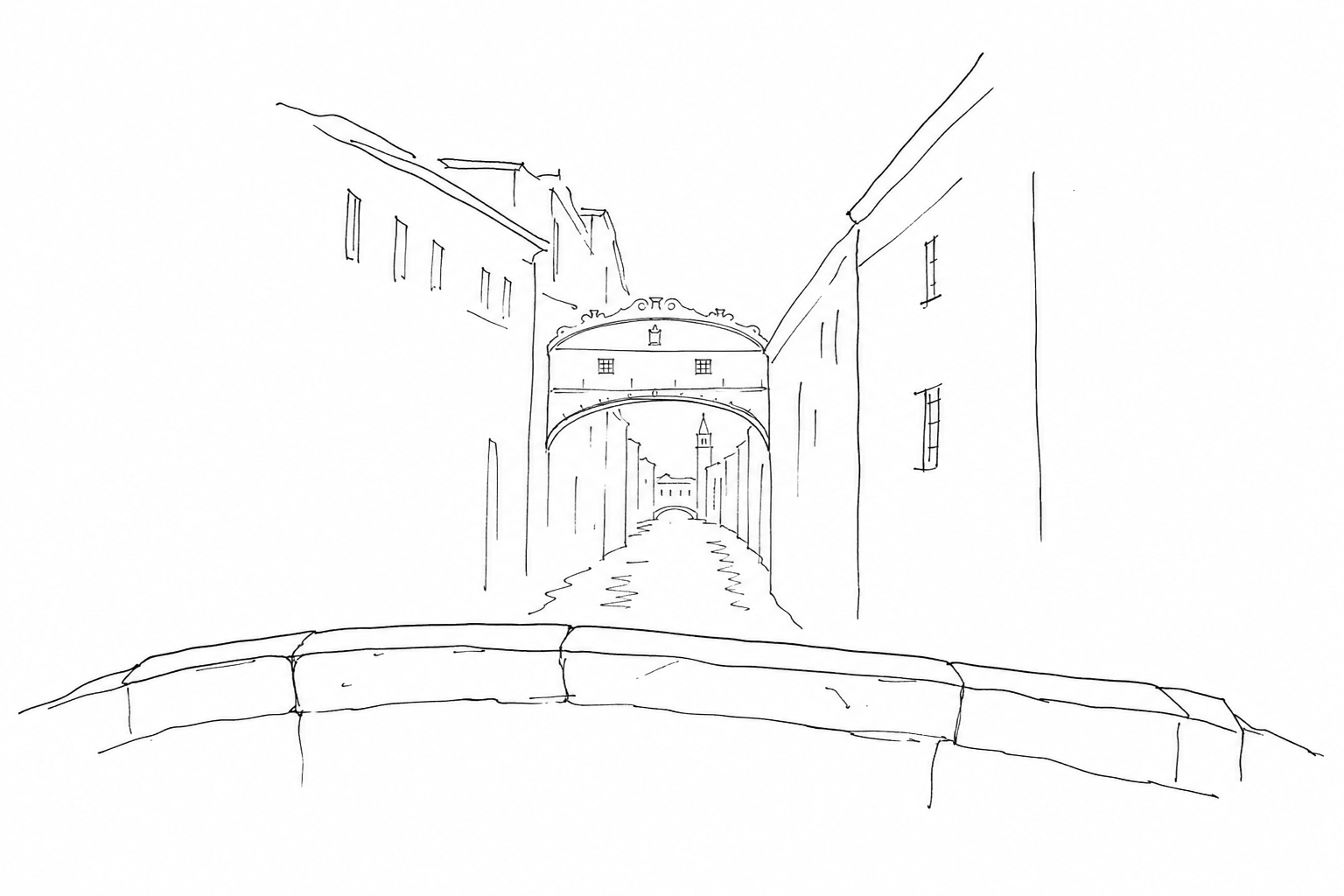
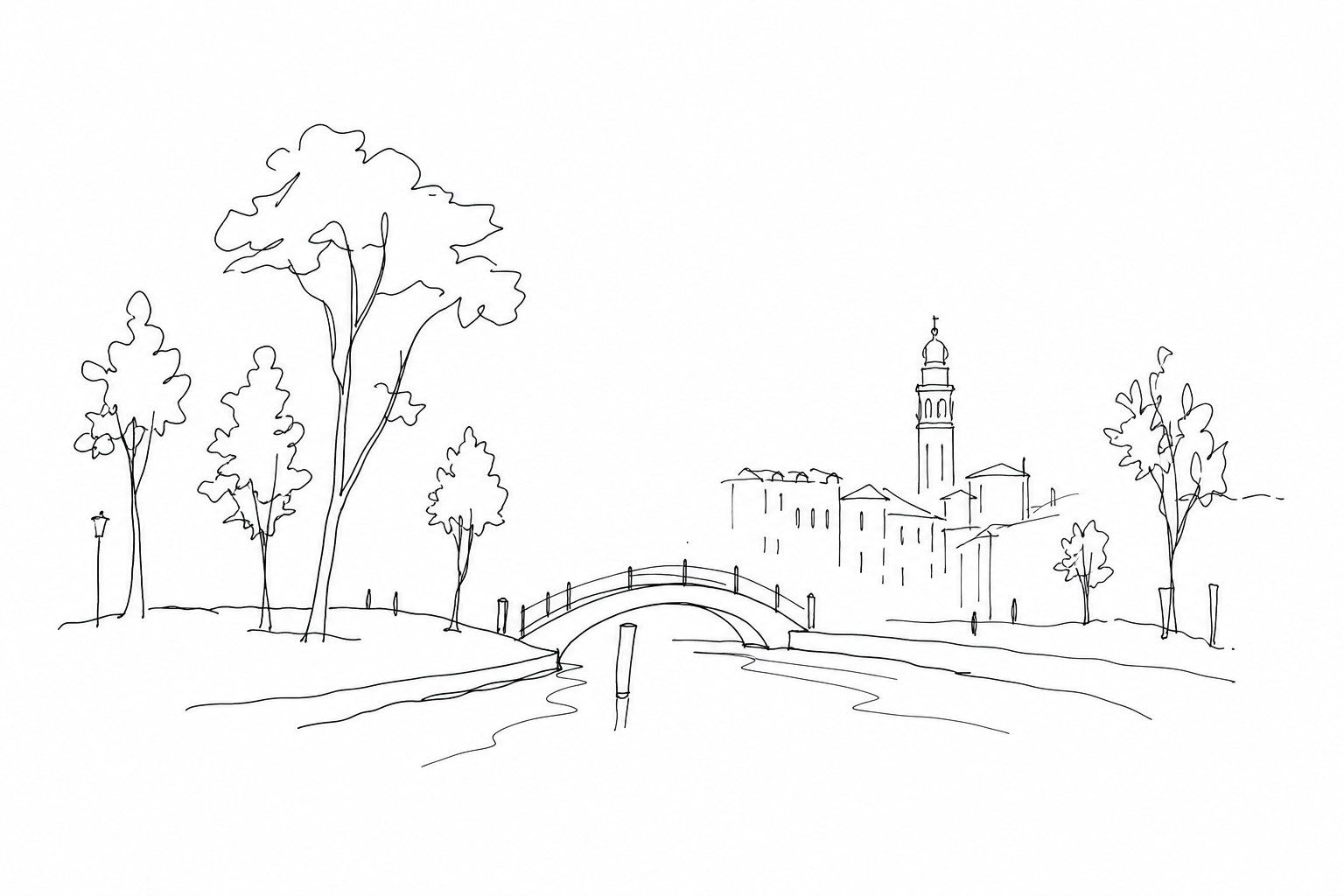

Giardini Papadopoli is one of the first places where Venice changes rhythm. A few steps from Piazzale Roma, amid buses, suitcases and bridges, this green space introduces the city without making a spectacle of it: it filters it. Born from an aristocratic history and later transformed into a public garden, it still preserves traces of a nineteenth-century idea of urban landscape, today compressed by the edges of modern road traffic. Observing it carefully means reading a threshold: not yet the Venice of the more internal campi and canals, no longer the mainland, but a passage made of trees, shade, paths and noises that slowly fade away.
A green threshold between arrival and the city of water
For those entering Venice from Piazzale Roma, the Giardini Papadopoli are often the first sign that the rhythm is changing. Behind remain buses, taxis, car parks and suitcases dragged over asphalt; ahead begins a city made of bridges, embankments, calli and slower passages. This small tree-lined space functions as a threshold: it is not yet the monumental Venice of San Marco, but it is no longer the mainland.
The garden occupies a delicate point in the sestiere of Santa Croce, near the Tolentini and the Rio Novo, where the modern arrival point meets a much older urban fabric. Its history reflects this border position: born in the nineteenth century as a garden linked to the Papadopoli family, it was later reduced in size by the twentieth-century transformations of the Piazzale Roma area.
Precisely for this reason, its shade, paths and pauses among the trees have a special value: they introduce Venice with a green breath, before the complete immersion in the city of water.
From the Papadopoli family to the public garden
The name of the Giardini Papadopoli preserves the memory of a family of Greek origin that entered the Venetian aristocracy in the nineteenth century, protagonist of a period in which palaces, collections and green spaces expressed social prestige and international taste. The area, however, has older roots: here stood the religious complex of Santa Croce, suppressed in the Napoleonic era and later demolished, leaving an urban void destined to change function.
In the nineteenth century that void was transformed into a garden according to a landscape sensitivity that was then highly appreciated: curved paths, tree plantings, controlled views and an idea of nature that was ordered but not rigid. Tradition attributes the project to Francesco Bagnara, set designer and teacher at the Academy, a figure suited to conceiving a space as a sequence of views and pauses.
The passage from a garden linked to an aristocratic residence to a space for public use changed its meaning. Today, near Piazzale Roma, it is not merely a green remnant: it is a legible trace of the nineteenth- and twentieth-century transformations of Venice’s western edge, where the modern entrance meets a history made of vanished convents, noble families and a redesigned urban landscape.
What to observe: trees, paths and urban edges
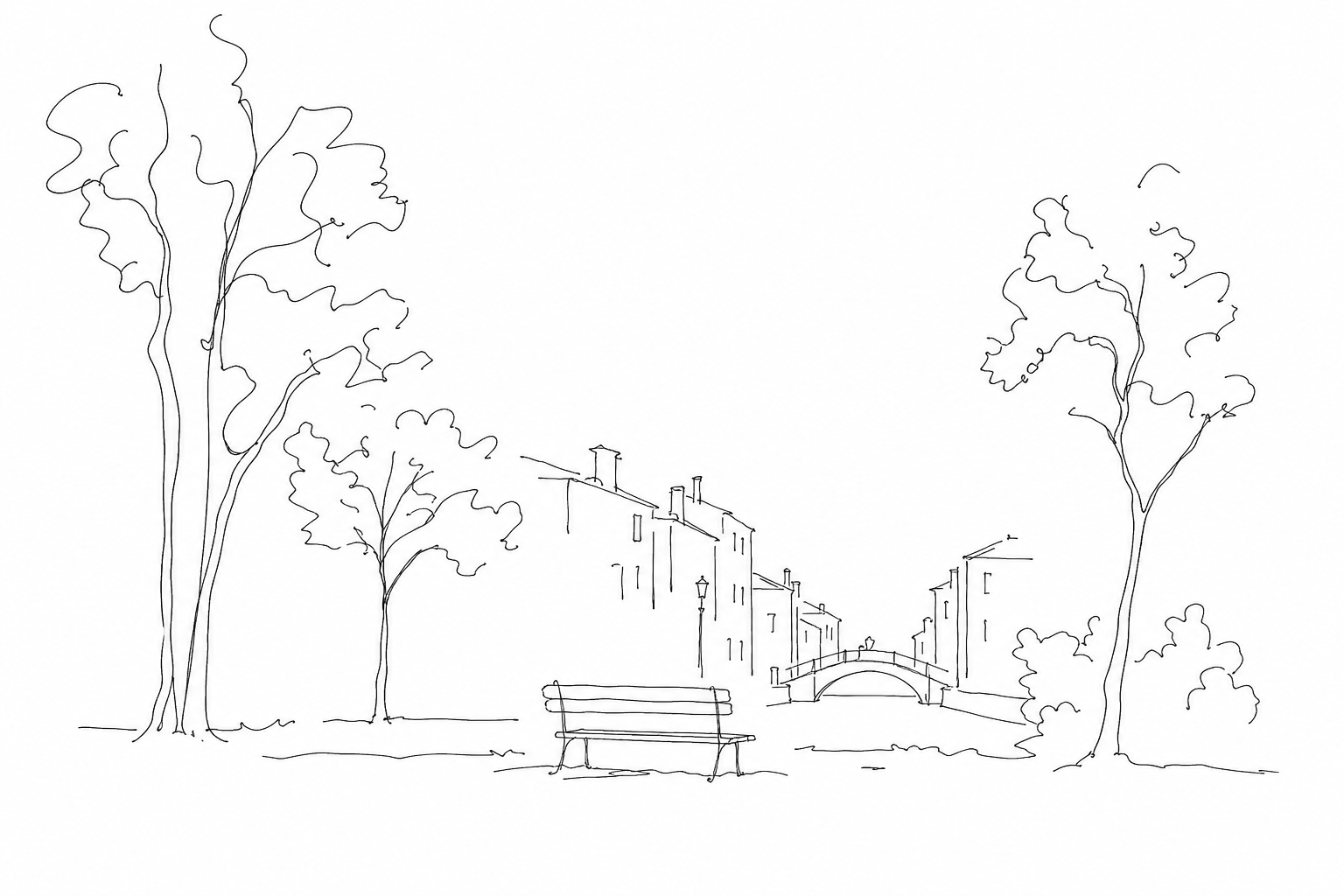
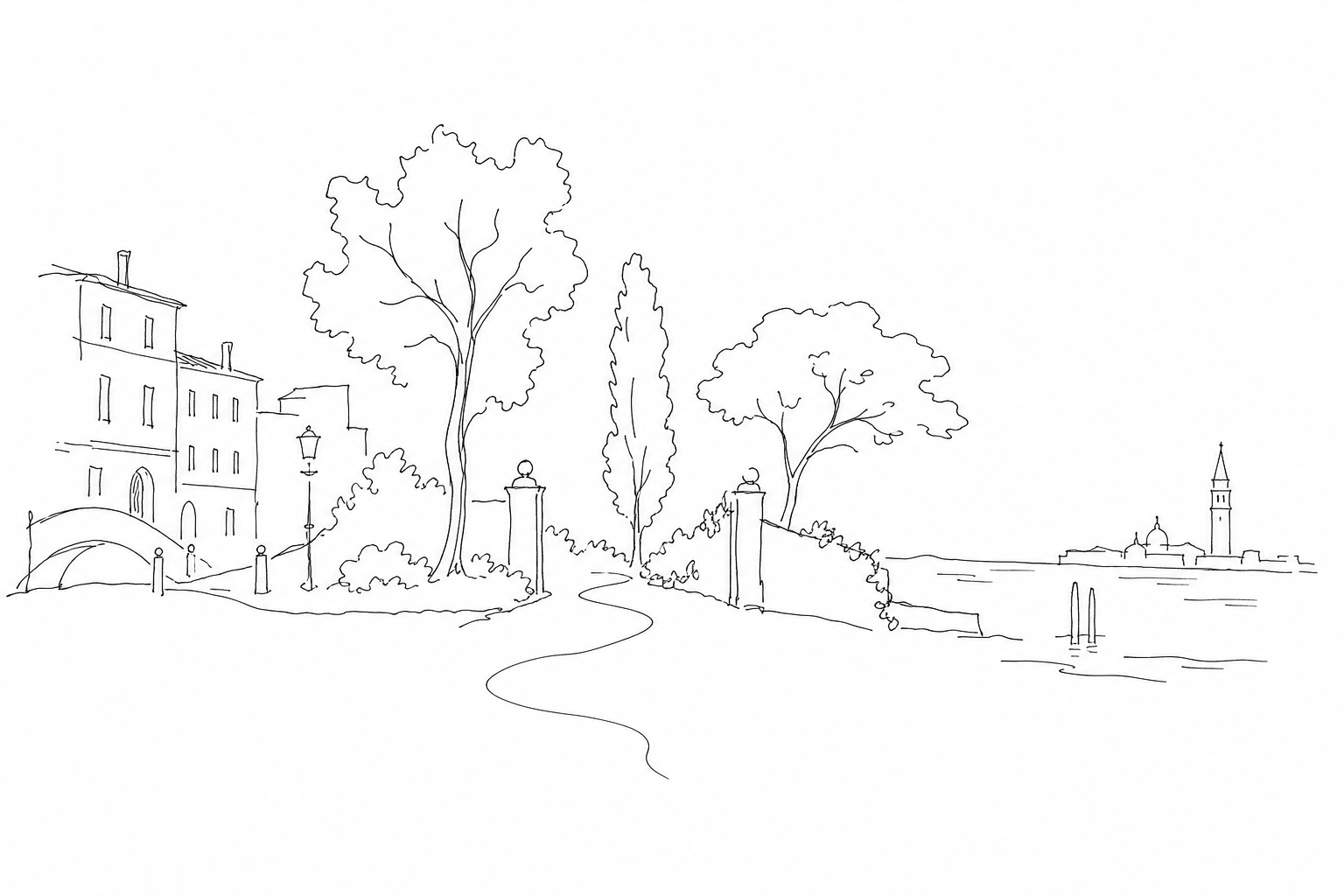
In the Giardini Papadopoli the gaze should be kept low and high at the same time: low on the routes, high on the crowns. The curved paths do not have the scenic movement of a large romantic park, but they function as small deviations from the more direct flow of those arriving from Piazzale Roma. Observing the turns, flowerbeds and benches helps to read this space as a pause compressed between water, bridges and traffic.
Among the most evident elements are the mature trees, with sturdy trunks and dense shade in the warm season. Plane trees and other broadleaved trees build a canopy that softens the passage from the automobile terminal to the Venetian pedestrian fabric. It is not just decoration: it is a climatic and visual threshold.
The edges matter too. On one side, the noise and presence of modern infrastructure can be perceived; on the other, canals, fondamenta and crossings re-emerge. Precisely this friction makes the place interesting: a compact area where the first contact with Venice is not monumental, but made of shade, curves and urban boundaries.
How to include them in a slow walk
The Giardini Papadopoli work well as a threshold, not as a simple shortcut. Arriving from Piazzale Roma, it is worth slowing down before choosing the direction: toward the Tolentini, toward Santa Croce, or over the bridge in the direction of the station. This small space helps change rhythm after buses, taxis and road traffic.
- Enter without cutting straight through: following at least one internal curve allows you to perceive the difference between the roadside edge and the shaded area.
- Use it as an orientation pause: before delving into calli and campielli, here you can observe how the urban fabric begins to narrow.
- Look at the edges: gates, fondamenta, canals and building fronts show how compressed this place is between modern infrastructure and historic fabric.
- Set off again slowly: the exit toward the Tolentini introduces a more intimate sequence, with passages suited to an unhurried visit.
For variable practical details, such as any access restrictions, it is always advisable to check updated information before the walk.
Including the Giardini Papadopoli in a slow walk allows you to begin Venice with a less hurried gaze. They are not a monumental destination, but a sensitive point of orientation: they tell of urban transformations, daily habits and the not always evident relationship between greenery and the city of water. Crossing them before continuing toward Santa Croce, the Frari or San Polo helps you better perceive distances, changes of light and the pattern of the routes. In this small entrance garden, Venice already shows one of its most interesting qualities: knowing how to hide complexity even in places of passage.