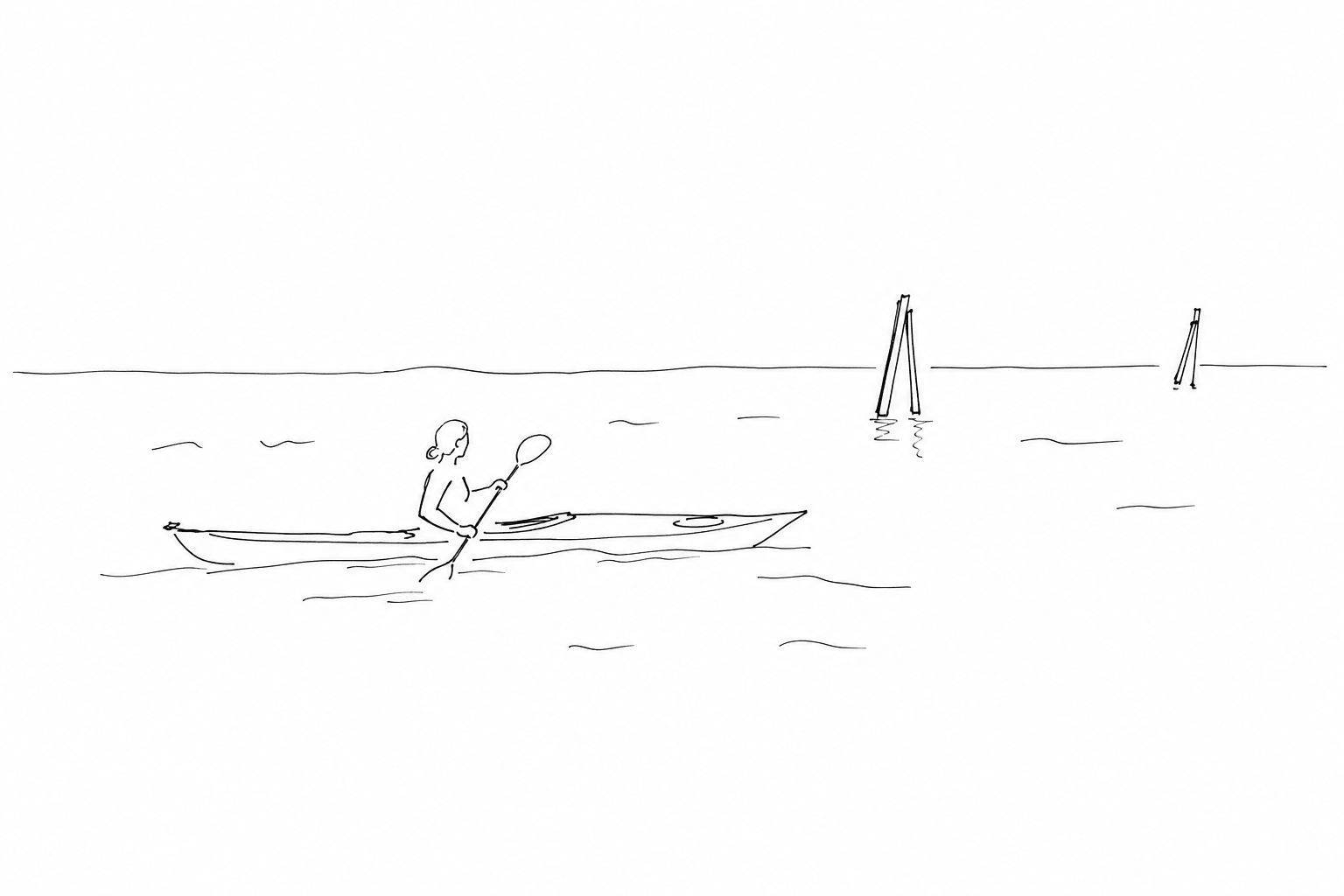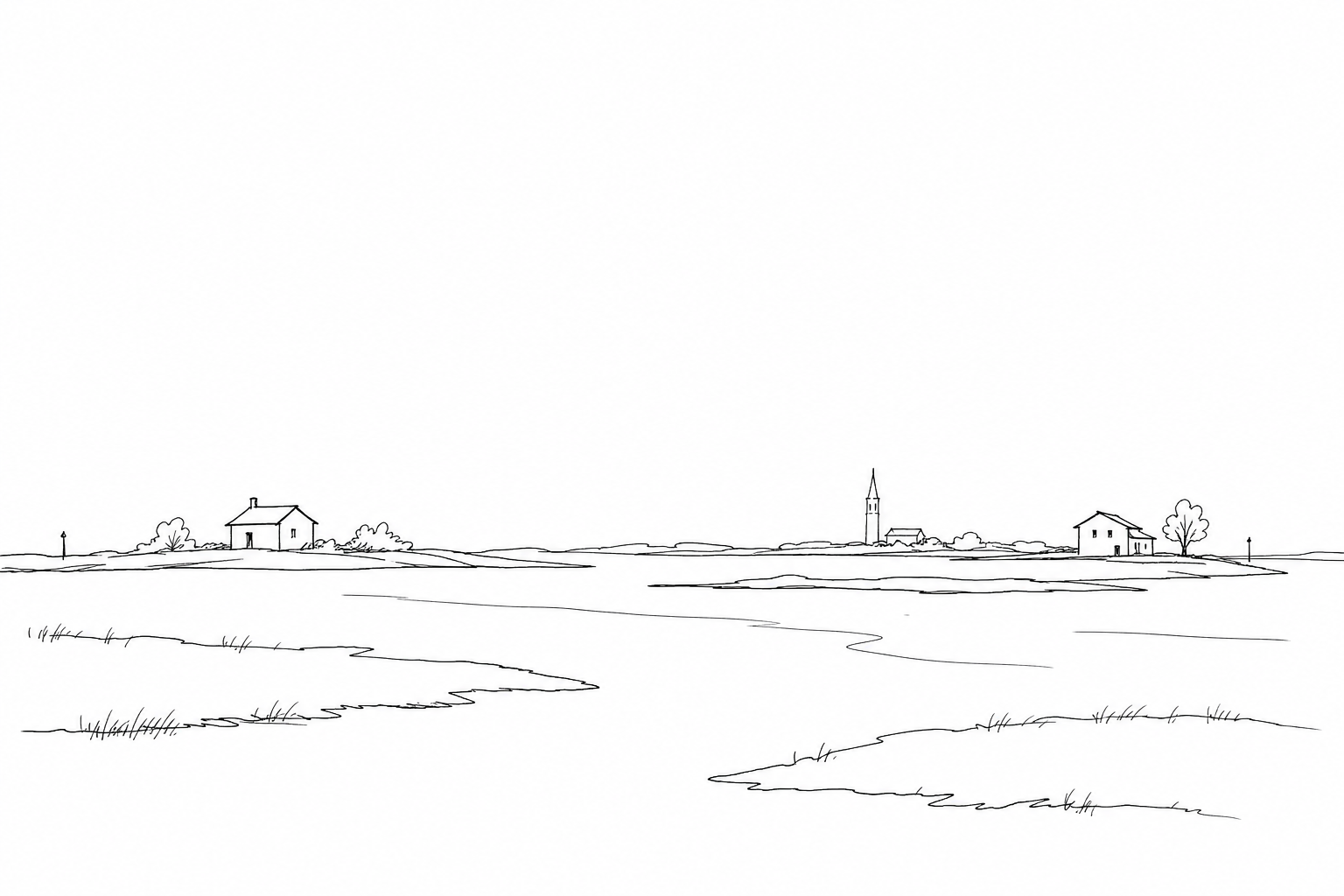
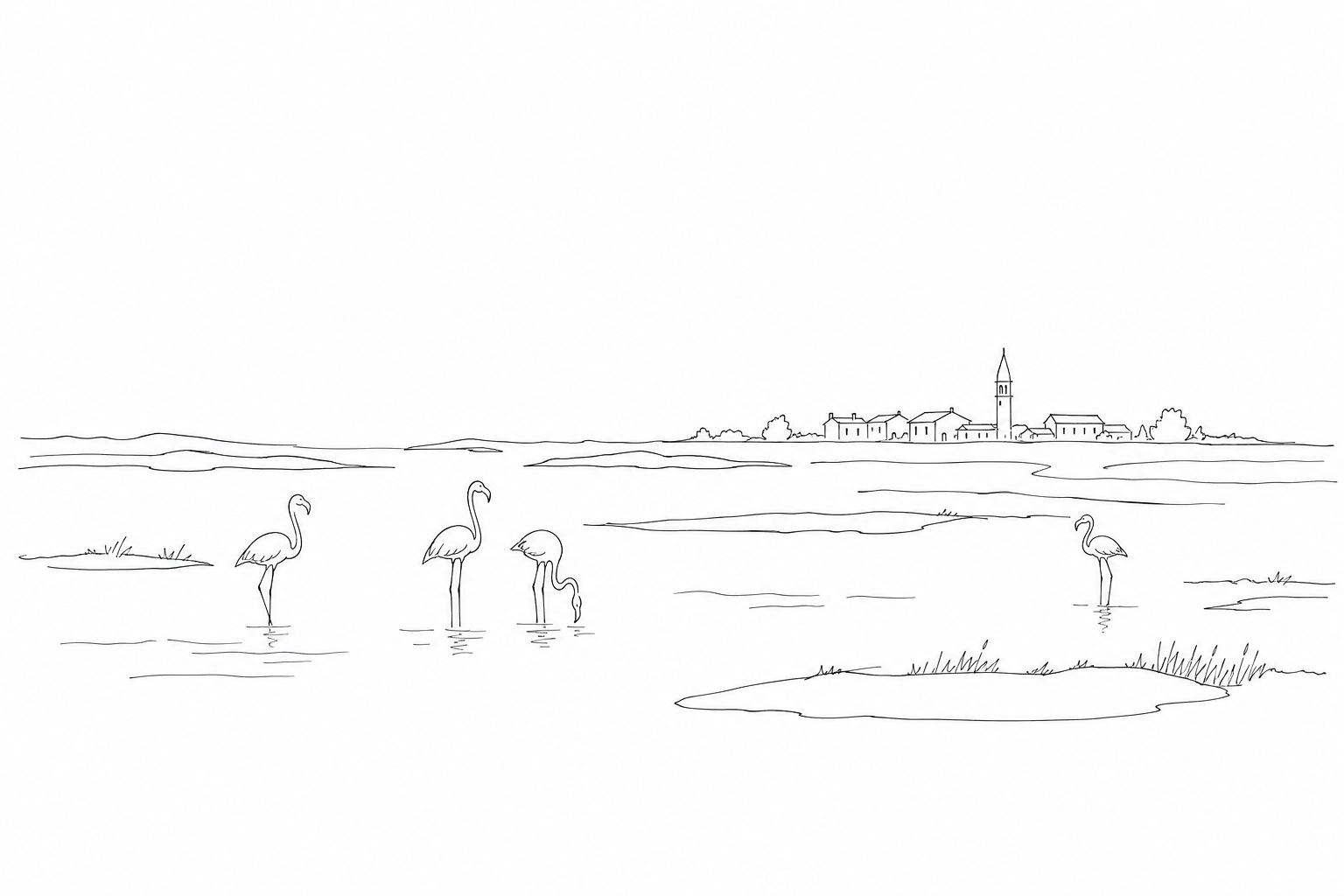
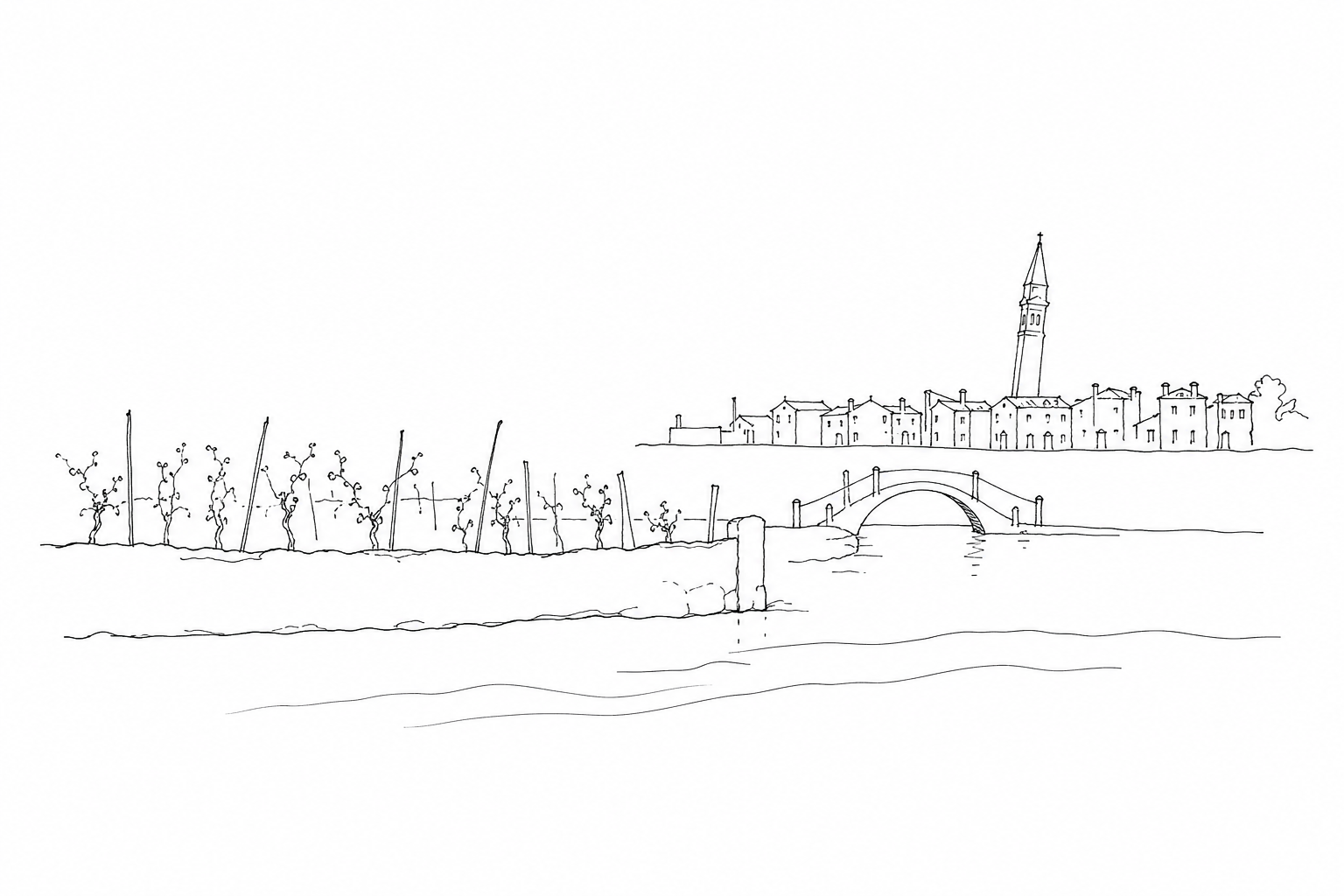

Murano is known throughout the world for glass, but reducing it to its furnaces means losing an essential part of its identity. The island also lives in the lagoon margins, in the silent fondamenta, in the short bridges, in the low houses and in the daily rhythms that endure alongside the best-known workshops. Looking at it beyond its artisanal image makes it possible to read its urban history better: a compact archipelago, productive and domestic at the same time, where the light changes continuously and every shore tells of a different relationship with Venice and with the lagoon.
Murano is not only furnaces
To understand Murano, one must step away, at least for a moment, from the incandescent image of the furnaces and look at the island as a small inhabited archipelago. Its main parts are separated by canals and joined by low bridges, with fondamenta that function together as street, view onto the water and place of daily passage. Here glass remains a strong presence, but it does not exhaust the landscape.
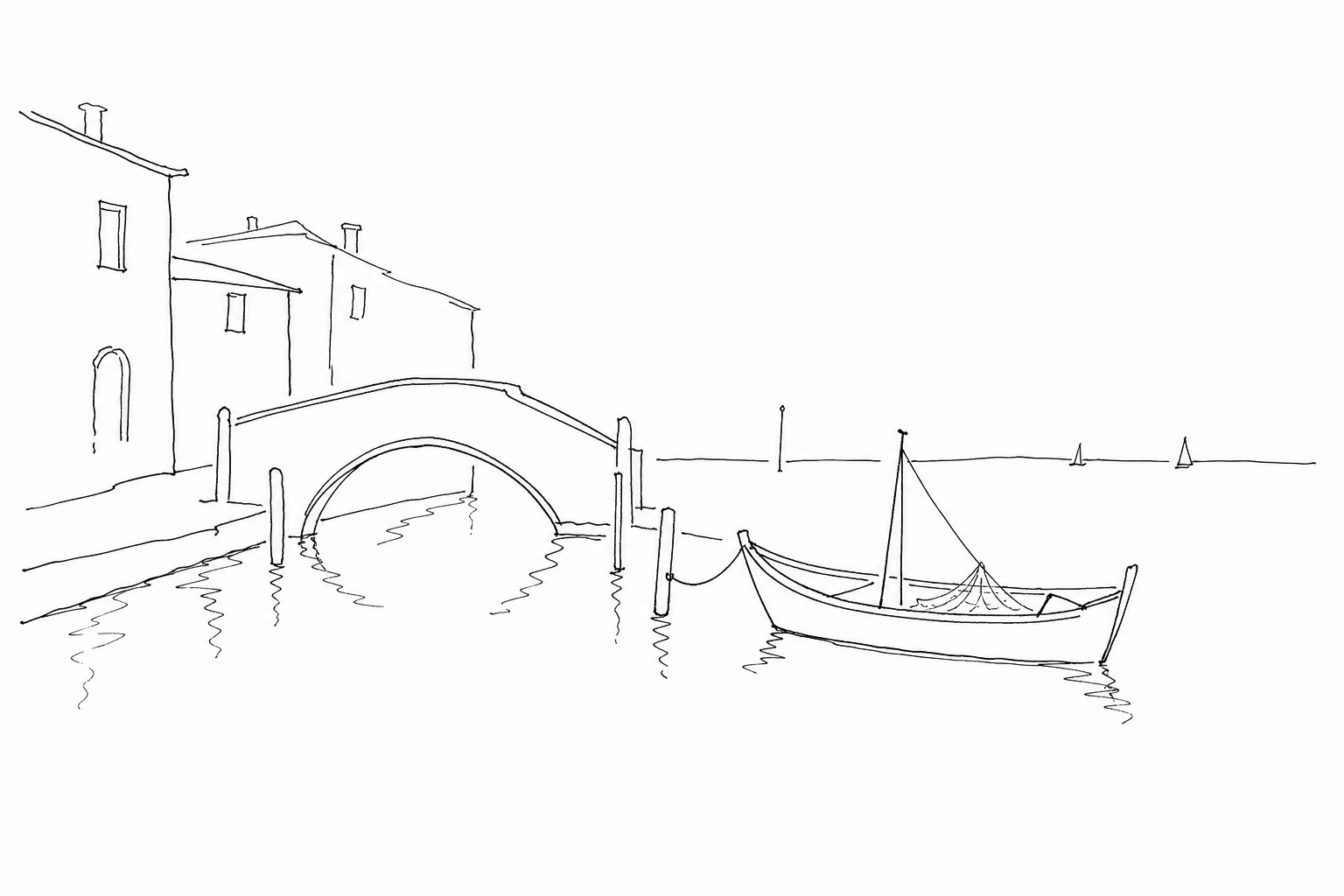
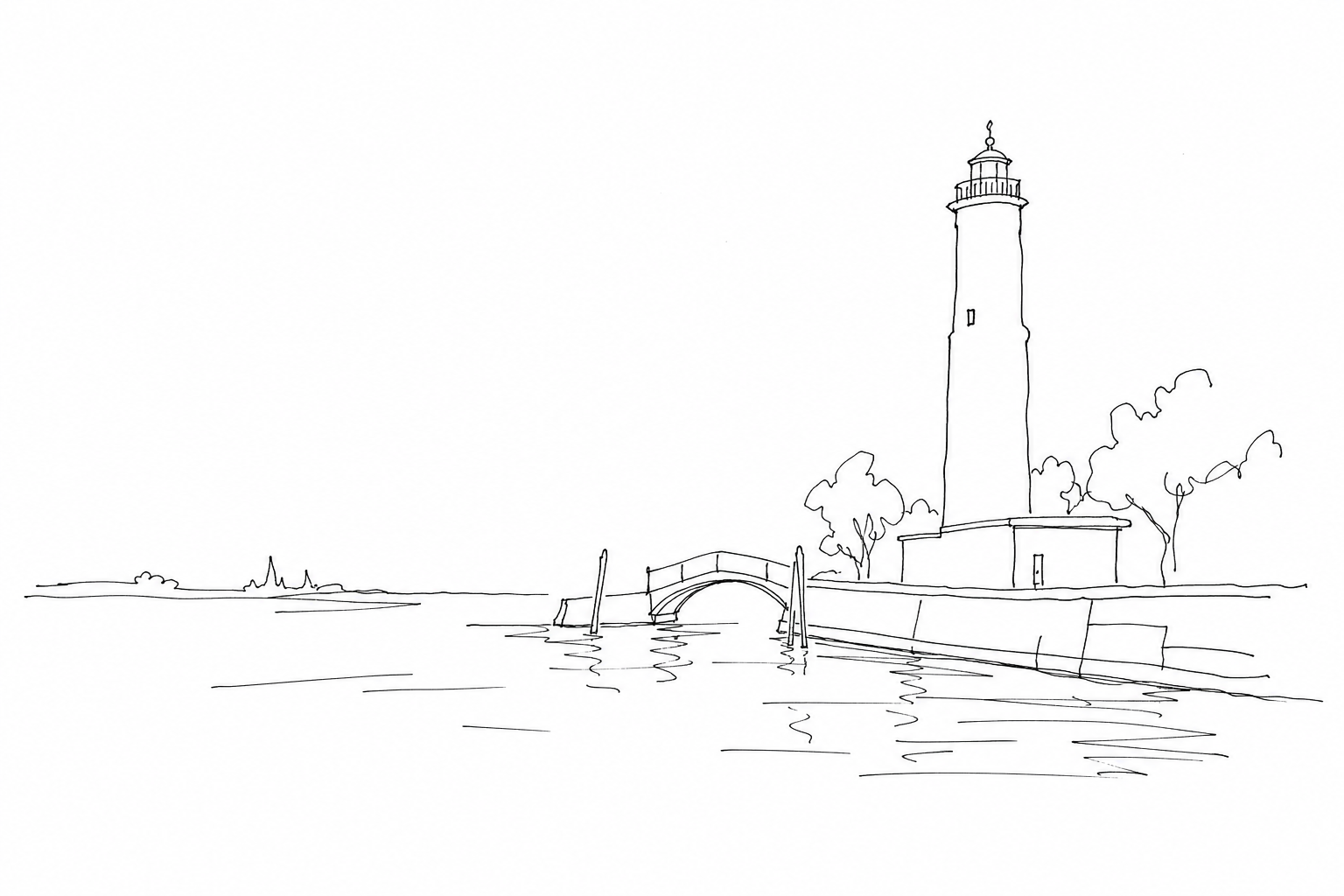
The outline of the lighthouse, at the eastern end, recalls that Murano is also a point of orientation in the lagoon: a threshold between Venetian water traffic and the more open spaces toward the north. The shores, on the other hand, tell of a more domestic scale: moored boats, entrances to houses and workshops, short calli that lead to silent campi.
This reading changes the rhythm of the visit. It is not only a matter of looking for a glassmaking demonstration, but of observing how production, residence, churches, warehouses and landing places coexist in the same urban fabric, forming the real life of the island.
The lighthouse: edge, orientation, lagoon
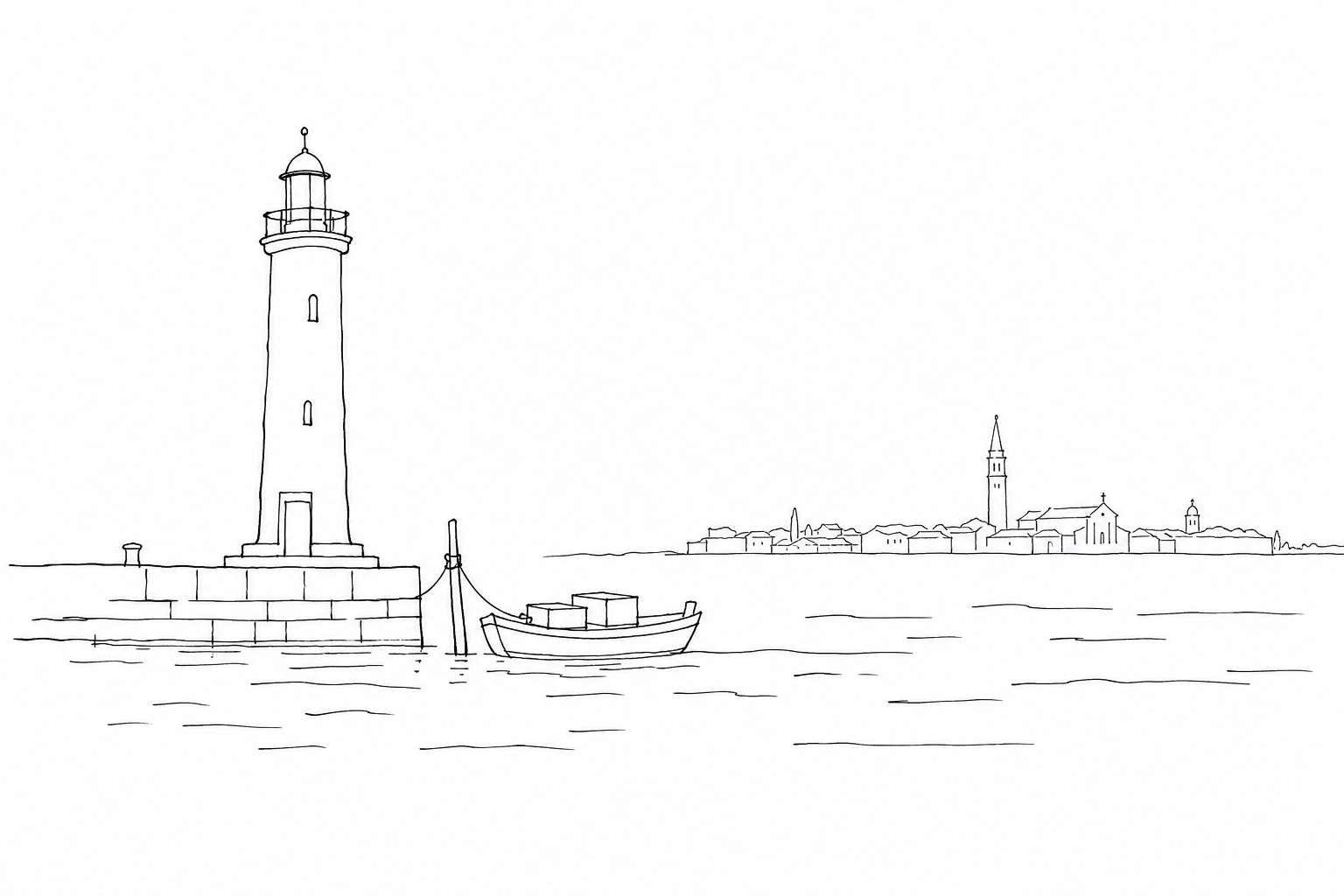
At the eastern end of the island, the lighthouse is not a simple functional object: it is the point where Murano stops appearing as a sequence of internal calli and canals and returns to declaring its lagoon nature. Its cylindrical silhouette, pale and vertical, can be read from afar as an entrance signal, but also as a limit: beyond it, the water opens toward the navigable canals and toward the routes that connect Venice, the smaller islands and the mainland.
The current twentieth-century structure replaced previous signaling systems and preserves a particular landscape force precisely because it dialogues with low elements: shores, bricole, warehouses, landing places, industrial profiles. Looking at it from the fondamenta means understanding how much orientation, here, is not only a question of maps: it is made of light, fog, short distances and sudden visual openings.
In the story of the glass island, the lighthouse therefore introduces another scale: that of navigators, transport, goods and the lagoon as a space of daily work.
Fondamenta, bridges and slow pauses
To read Murano beyond the furnaces, it is worth slowing down along the fondamenta: they are not simple pavements on the water, but thresholds between home, workshop, landing place and warehouse. Here one understands how daily life has always dialogued with the canals: the boats dock near the entrances, the façades show low portals, mooring rings, steps worn by the tide.
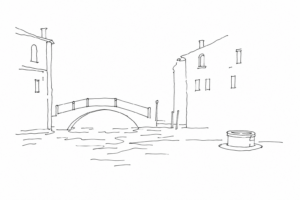
An attentive itinerary can alternate broad shores and narrower passages. Along the Murano Grand Canal the view opens onto palaces, bridges and campielli; entering the side calli, instead, the sound changes and courtyards, wells, laundry hung out to dry, small votive shrines become more evident. The bridges do not only serve to cross: they oblige one to raise one’s gaze, to compare two shores, to notice the rhythm of the landing places.
The best pauses are often the non-monumental ones: a corner with a wellhead, a secondary fondamenta, a shore looking toward the northern lagoon. In these points the island reveals its inhabited part, made of short routes, continuous maintenance and practical relationships with the water.
The real life of the glass island
Outside the exhibition halls, the local rhythm can be recognized in small gestures: boats pulling alongside to deliver goods, carts pushed over the bridges, residents crossing the campi without stopping in front of the shop windows. Artistic production remains important, but it coexists with schools, daily shopping, offices, internal courtyards and houses overlooking the canals.
To understand this side, it is worth walking during the hours of passage, when the island is not yet entirely occupied by visits. The shores are also used for work: avoiding stopping in the middle of the bridges, not sitting on the steps of the landing places, leaving space for those transporting packages or tools are simple but decisive attentions. The side calli, often silent, are not stage sets: they lead to private entrances, small vegetable gardens, warehouses and workshops that are still active.
A respectful reading alternates brief pauses and slow detours: observing the names of the shores, distinguishing service canals from the more photographed ones, looking at how ordinary life uses the water. For variable details on connections and access, it is always better to check the updated information before the visit.
Visiting Murano beyond the furnaces means allowing oneself a slower and less predictable time. The lighthouse, the fondamenta, the pauses along the water and the island’s ordinary gestures show a place still inhabited, not only exposed to the gaze of those passing through. Glass remains a fundamental key, but not the only one: alongside the memory of fire there are minute architectures, lagoon perspectives, quiet calli and a daily life that helps one understand Murano with greater precision. It is in this balance that the island becomes truly interesting.