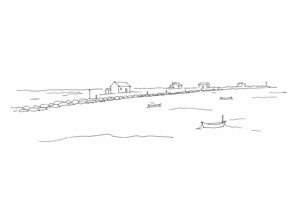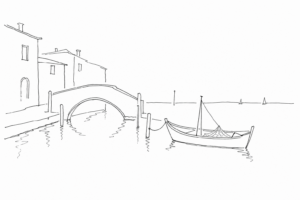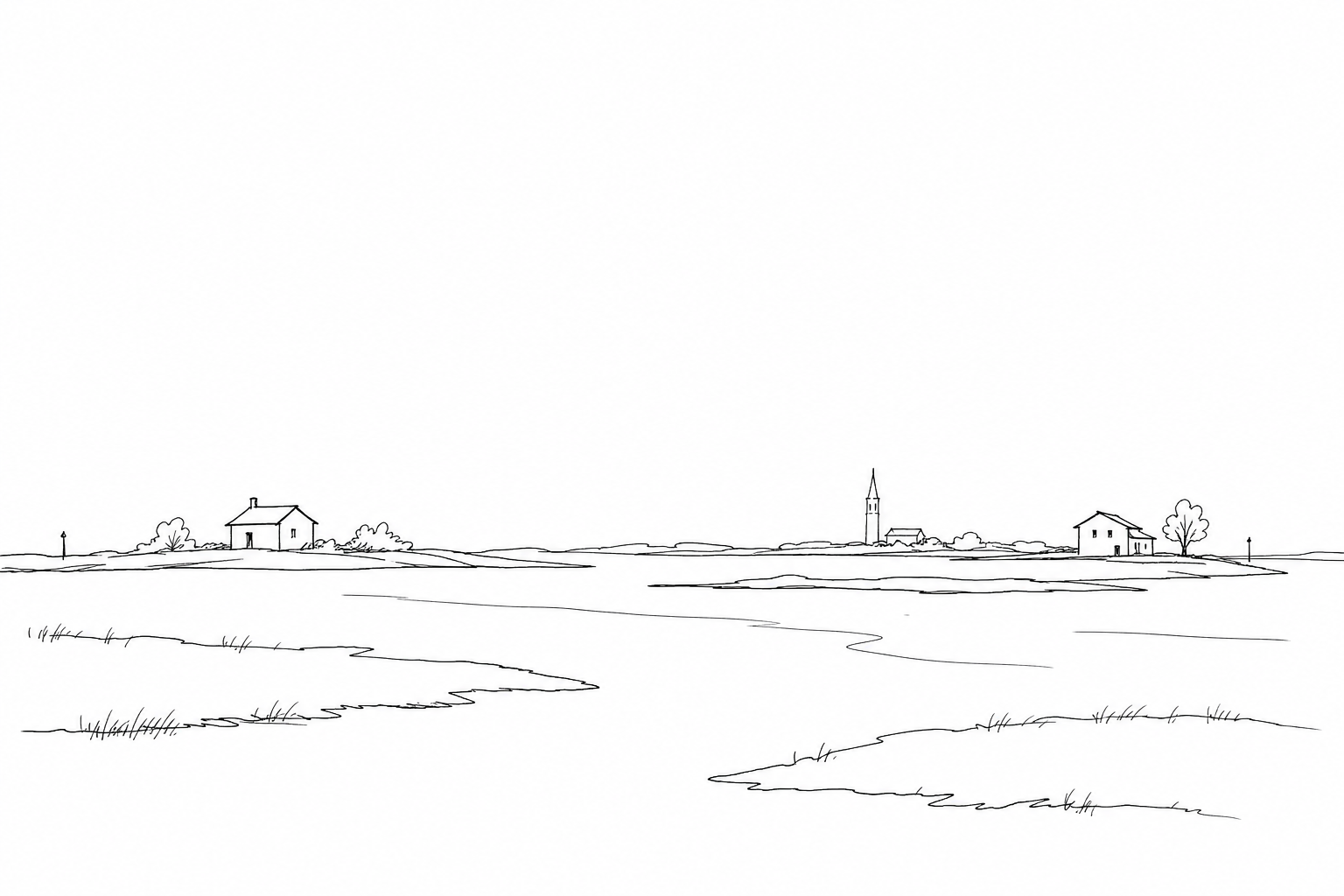
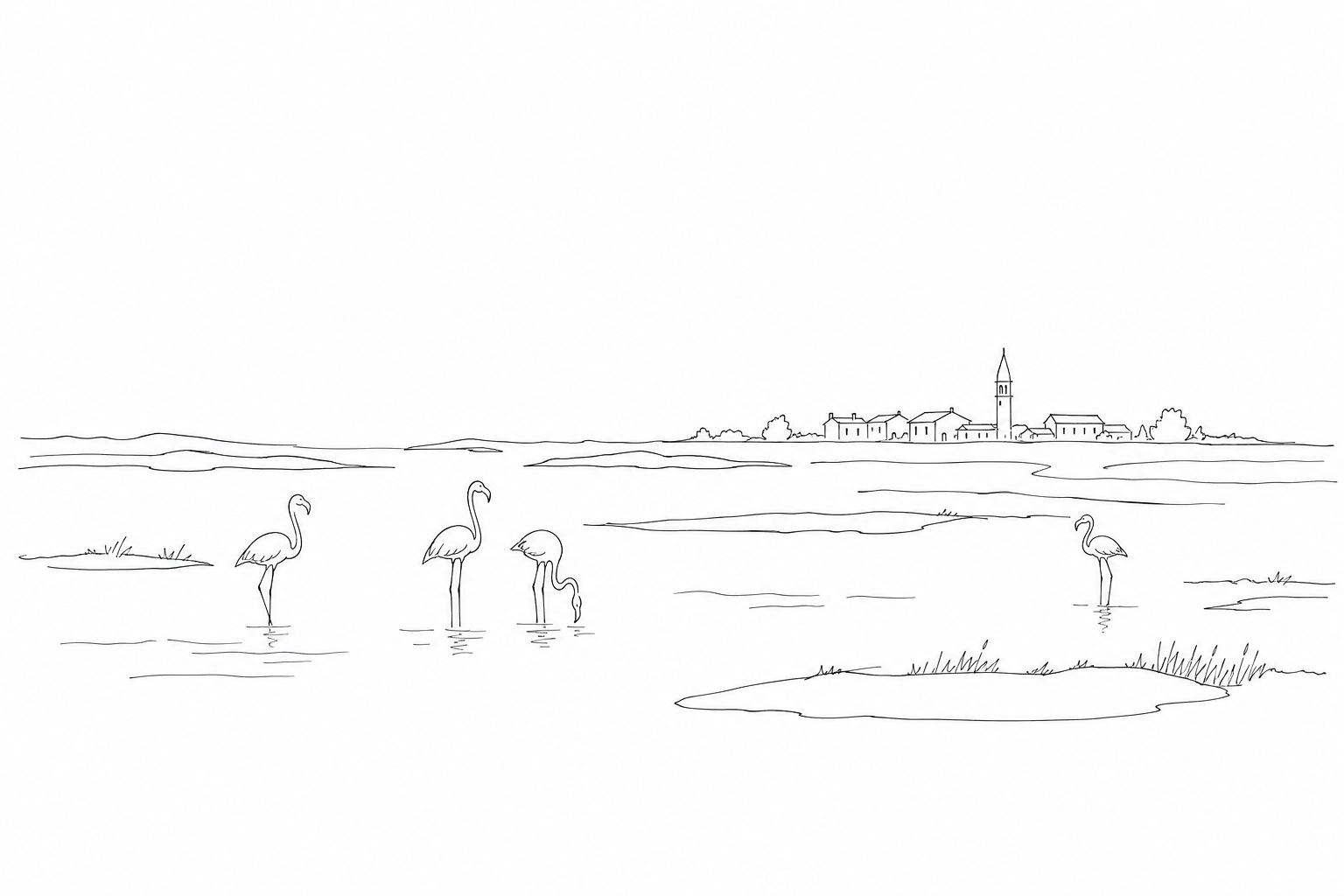
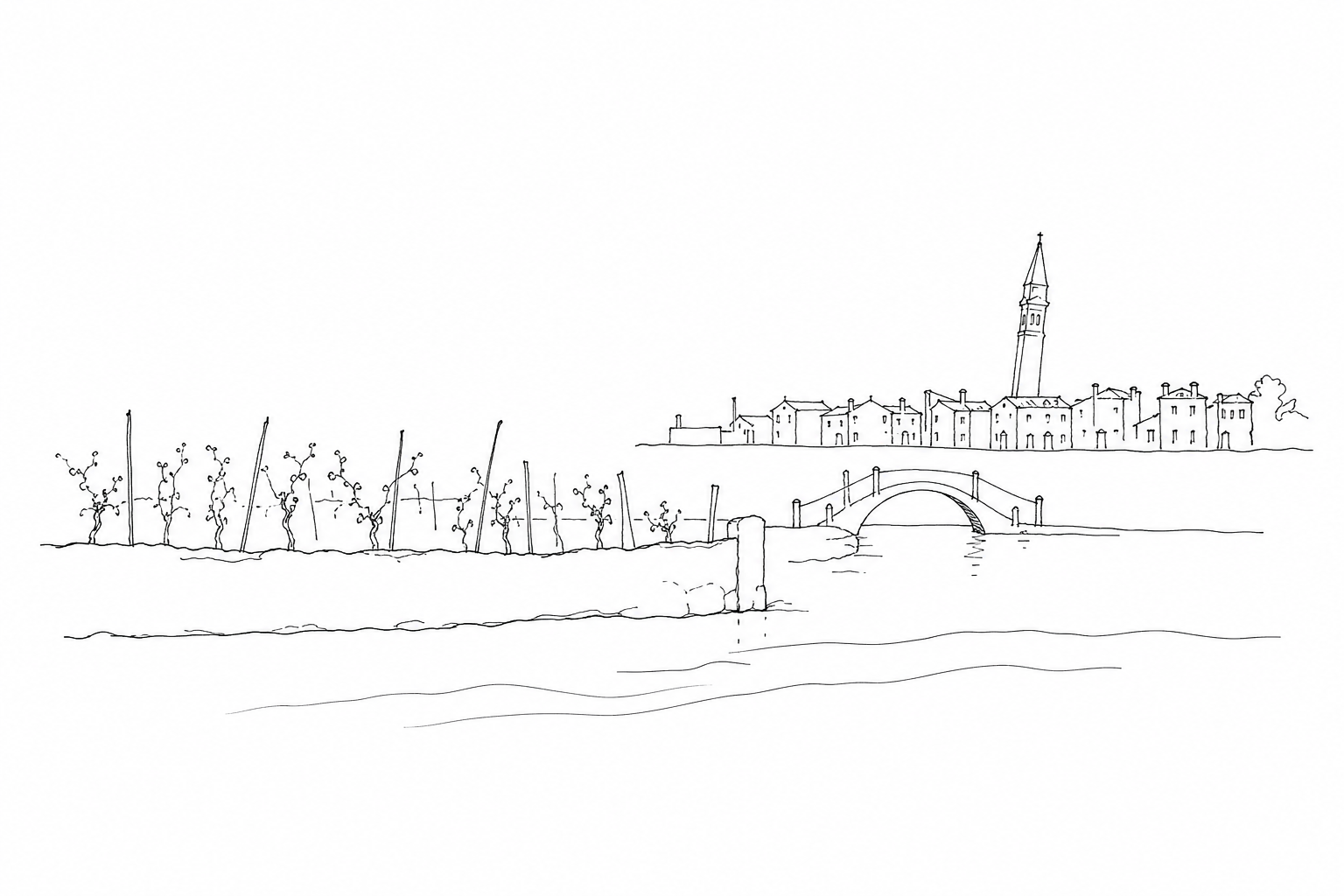
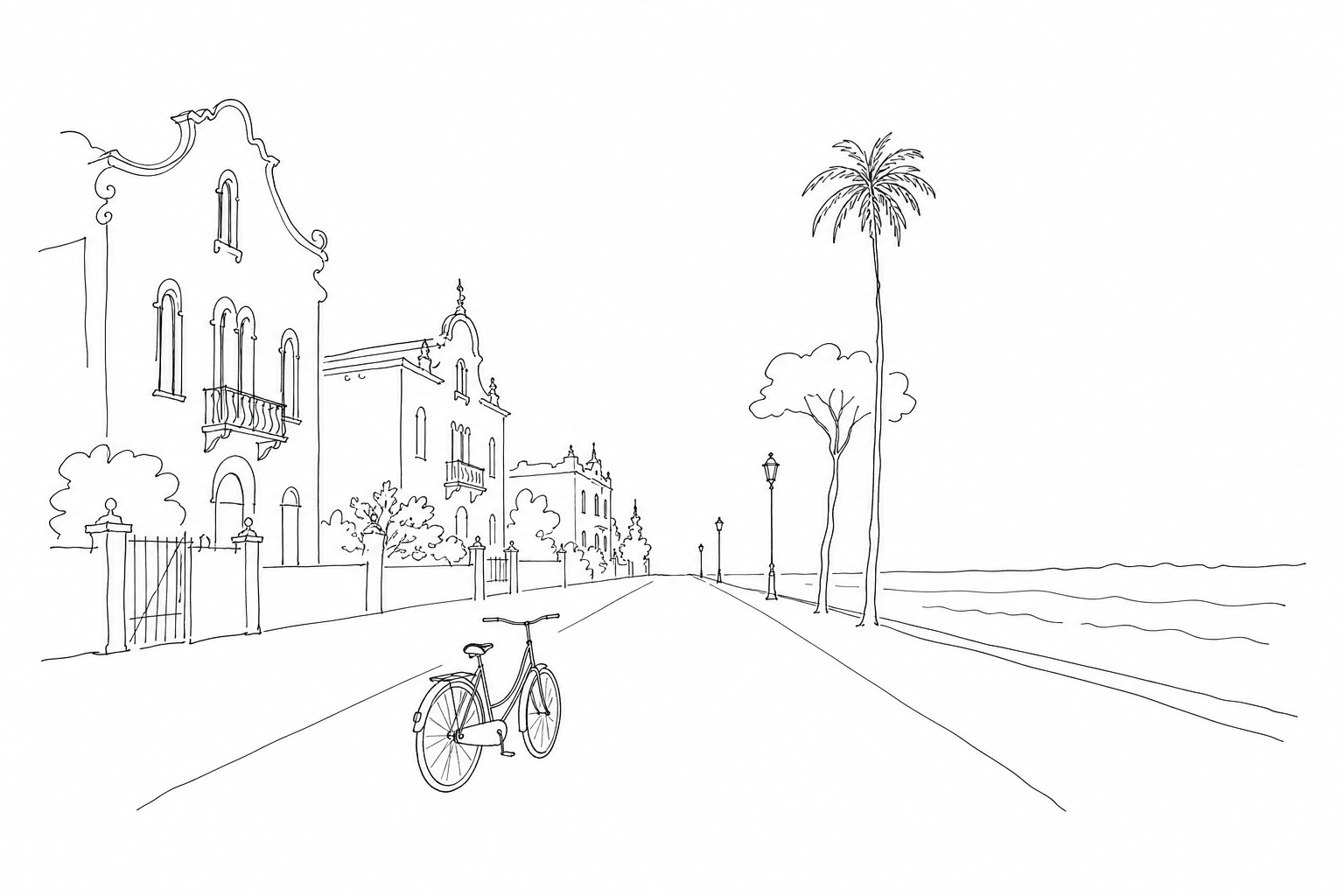

The Lido is a different Venice: long, flat, crossed by regular axes and by sudden openings toward the lagoon or the Adriatic. By bicycle this geography becomes legible: the Gran Viale, the Liberty-style villas, the beach establishments, the enclosed gardens and the quieter stretches toward San Nicolò or the Alberoni make up a linear urban story, almost unexpected for those arriving from the labyrinth of the historic center. Pedaling here does not only mean moving around easily, but observing how the island has built its own identity as a threshold over time: between city and sea, holidaymaking and everyday life, aristocratic memory and ordinary life.
Why the Lido reads well by bicycle
The Lido is better understood by pedaling because its geography is almost a straight sentence: a thin barrier island stretched between the lagoon and the Adriatic, with few detours and many changes of scene. Arriving at Santa Maria Elisabetta, the axis of the Gran Viale leads naturally from the landing stage toward the sea, like a threshold between the Venice of water and the seaside Venice.
The bicycle makes it possible to follow this rhythm without breaking it. Toward San Nicolò, monastic and military memory emerges; along the seafront, one recognizes the season of hotels, beach establishments and cinematic high society; farther south, toward Malamocco and the Alberoni, the island slows down and leaves room for low houses, vegetable gardens, pinewoods and lagoon edges.
Between one stretch and another appear Liberty-style villas, gates, bow windows, majolica and gardens: details that on foot would be scattered and by car too quick. By bicycle they become a continuous reading, at the right speed.
From the vaporetto to the sea: the Gran Viale as backbone
The simplest orientation point is the Santa Maria Elisabetta landing stage, where the vaporetti arrive from the historic city. From here the Lido immediately offers its logic: the Gran Viale Santa Maria Elisabetta cuts across the island from west to east and leads, almost without uncertainty, from the lagoon to the beach.
By bicycle it is the stretch to use as the main axis. On one side remains the inner water, with the perception of Venice behind you; on the other, the Adriatic draws closer, announced by beach establishments, pines, hotels and the more open light of the waterfront. The distance is short, but meaningful: in a few minutes you cross the passage between two very different Venetian landscapes.
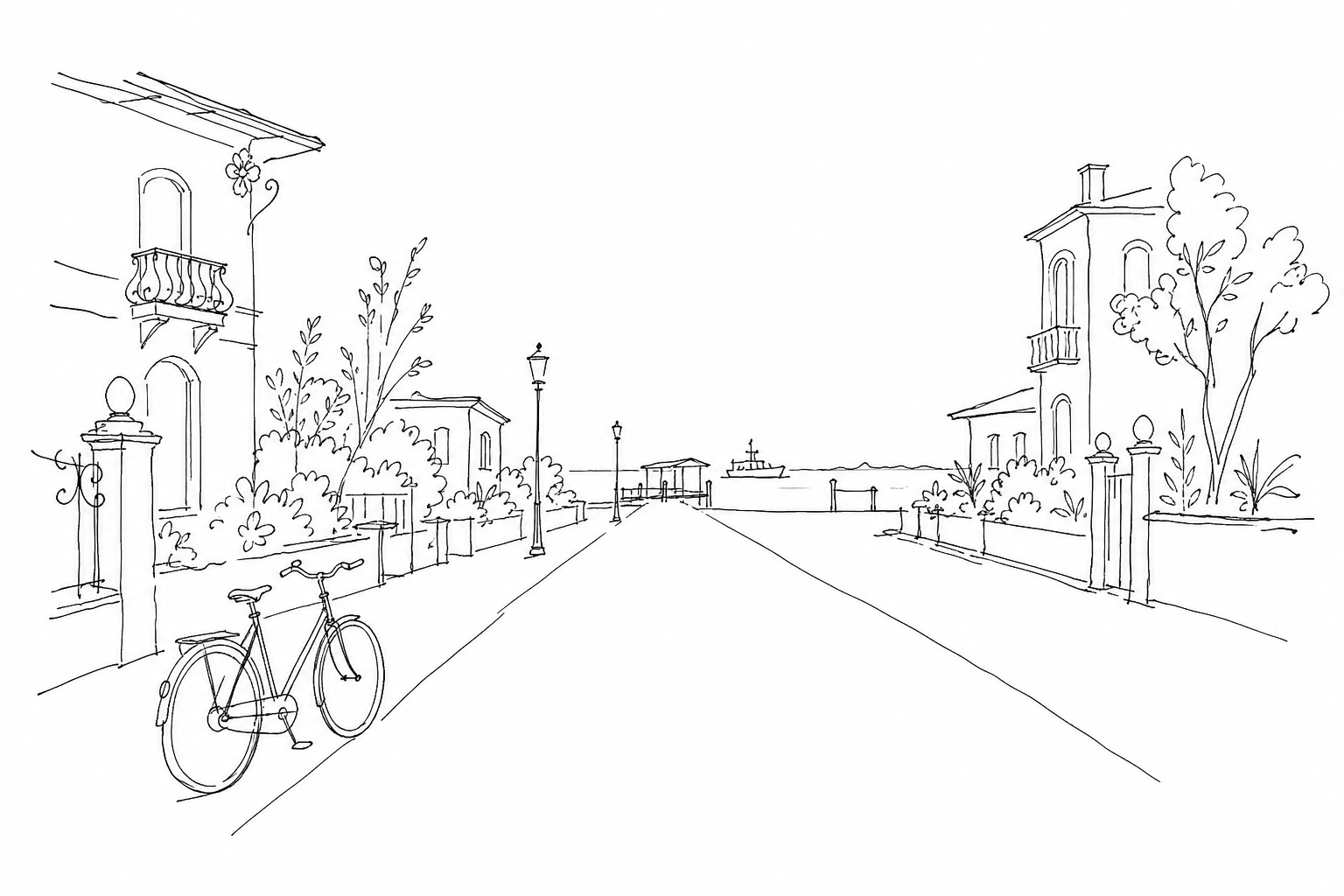
Along and around the Gran Viale it is worth slowing down. The side streets show the residential Lido of the first decades of the twentieth century: small villas with floral decorations, terraces, wrought iron, light-colored plaster and small gardens. Returning to the main axis, instead, you find again the practical function of the road: connecting the landing stage, services, hotels and access points to the sea, making the island legible even to those traveling through it for the first time.
Liberty-style villas, Grand Hotels and the beach season
Pedaling toward the beach establishments, the architecture tells of the moment when the island became an international society salon. Between the late nineteenth century and the first decades of the twentieth century, small villas arose with wrought iron, bow windows, majolica, floral decorations and small gardens: Liberty-style details designed for elegant holidaymaking, more private than the grand hotels.
The change in scale arrives with the Hotel des Bains, inaugurated in 1900, and with the Excelsior, opened in 1908 to a design by Giovanni Sardi. Their façades, between eclectic taste and Orientalizing suggestions, were not simple scenic backdrops: they organized a new social life made of terraces, ballrooms, sunbathing, sea cures and illustrious arrivals.
The beach season thus transformed the sandy strip into a line of representation. Thomas Mann set here the suspended atmosphere of Death in Venice, while the Palazzo del Cinema, inaugurated in 1937, consolidated the link between beach, hotels and celebrities. In the saddle, these buildings are read in succession: not isolated monuments, but stages of a society that sought modernity, leisure and prestige in front of the Adriatic.
Extending the ride: San Nicolò, Murazzi, Alberoni
Those who want to continue beyond the hotel promenade can transform the route into a reading of the island from north to south. At San Nicolò the landscape changes tone: here the harbor mouth recalls the military and ceremonial role of the lagoon access, with the church and convent area also linked to the tradition of the Sensa, when ducal power went out toward the Adriatic.
Toward the center-south, a detour along the Murazzi introduces another chapter: not holidaymaking, but engineering by the Serenissima. The great defenses in Istrian stone were designed to contain the force of storm surges and protect the lagoon, making visible the physical boundary between salt water and city.
At the southern end, Alberoni offers a slower variation, among dunes, pinewood and the Malamocco harbor mouth. It is the part where it is advisable to pedal with caution: some stretches may be exposed to wind, sand or local traffic. Before setting off, always check route conditions and updated rules for any connections with public transport.
A ride on the Lido leaves the impression of a less scenic but more spacious Venice, where history is read in the details: a Liberty-style façade behind a hedge, the shadow of the grand hotels, the straight line of the Gran Viale, the stone of the Murazzi against the sea. It is a simple itinerary, but not superficial: it makes it possible to understand how the island interpreted Venetian modernity, transforming beach, architecture and mobility into a recognizable landscape. Those who have time can extend as far as the Alberoni; those who have little will already find in the central stretch a different way of looking at Venice, with the regular rhythm of the wheels.