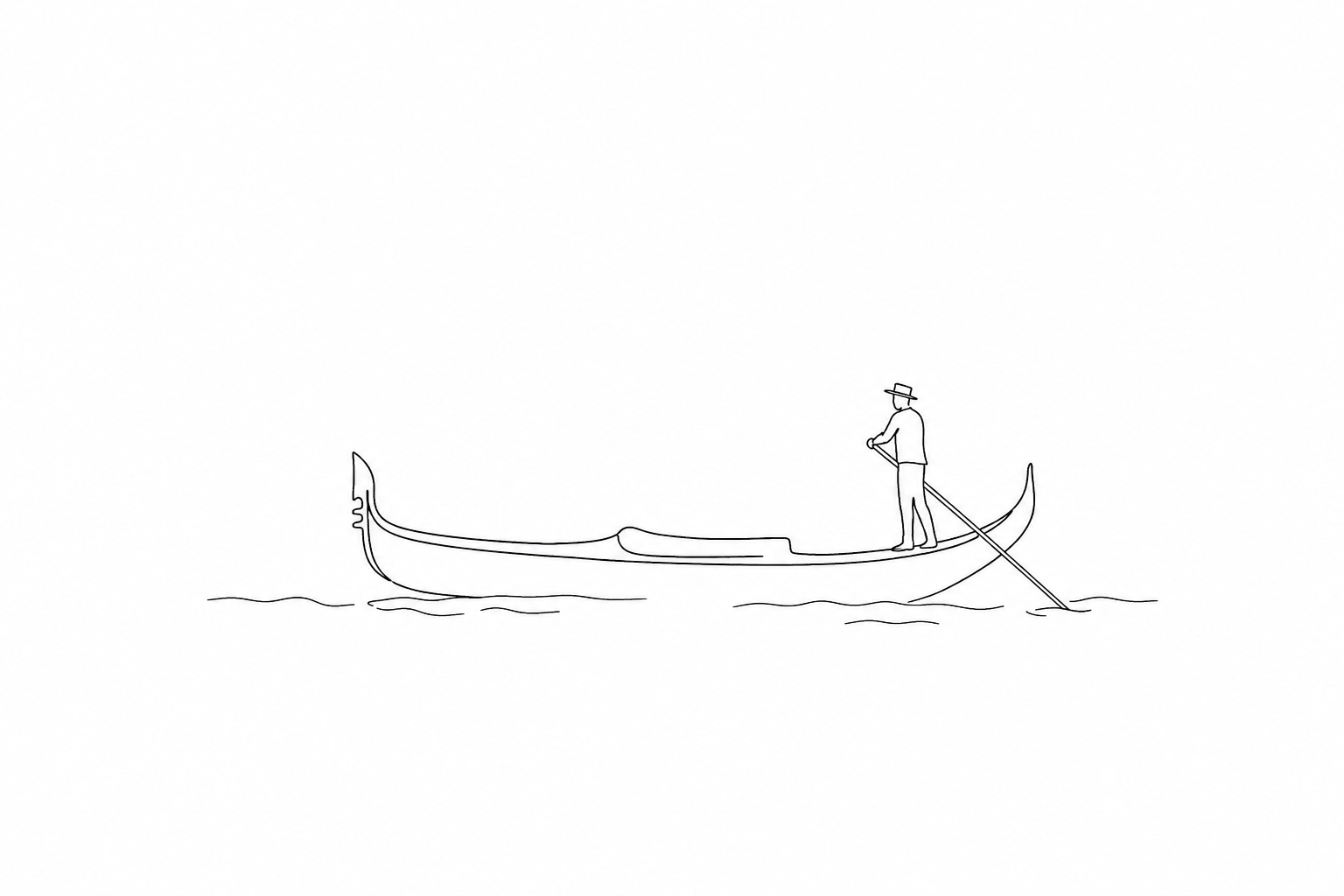

Voga alla veneta is not just a different way of rowing: it is a technique born from shallow water, narrow canals, salt marshes and the need to see in front of you. For those trying it for the first time, getting into a boat means observing Venice from a more concrete point of view, close to the daily work of boatmen, to the shape of the boats and to the continuous dialogue between gesture, balance and space. Understanding how people really row in the lagoon also helps you read the city better.
What voga alla veneta is
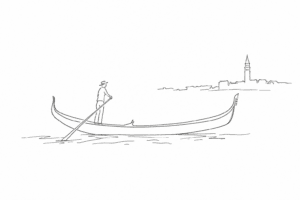
Voga alla veneta is the traditional way of steering a boat in the lagoon while standing, facing the bow, that is, looking in the direction of travel. It is a fundamental difference compared with better-known rowing, where people often row seated and with their backs to the route. Here the rower sees water, bricole, currents, other boats and can immediately correct the course.
The gesture comes from a precise environment: shallow canals, variable seabeds, narrow spaces, water traffic. The oar does not work in a closed rowlock, but rests on the forcola, the characteristic shaped wooden support that allows different points of contact. With a single blade it is possible to move forward, slow down, turn and keep the boat in balance.
For a beginner, the surprise is that it is not only about “pushing” the water. Feet, torso, arms and gaze need to be coordinated. The boat responds to small movements: a stroke that is too rigid unbalances it, one that is too short leaves it without direction. Trying voga therefore means learning a practical language born from the lagoon itself.
Boats, oar and forcola: what to observe before getting aboard
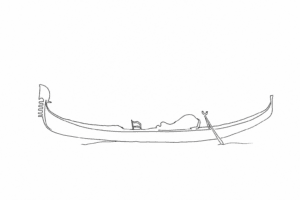
Before setting foot on board, it is worth looking at three elements: the hull, the oar and the forcola. In traditional lagoon boats the hull is often long, narrow and almost flat-bottomed, designed for shallow waters, canals and changes in current. Not all boats are the same: a sandolo is simpler and more manageable, while a gondola is asymmetrical and requires finer control.
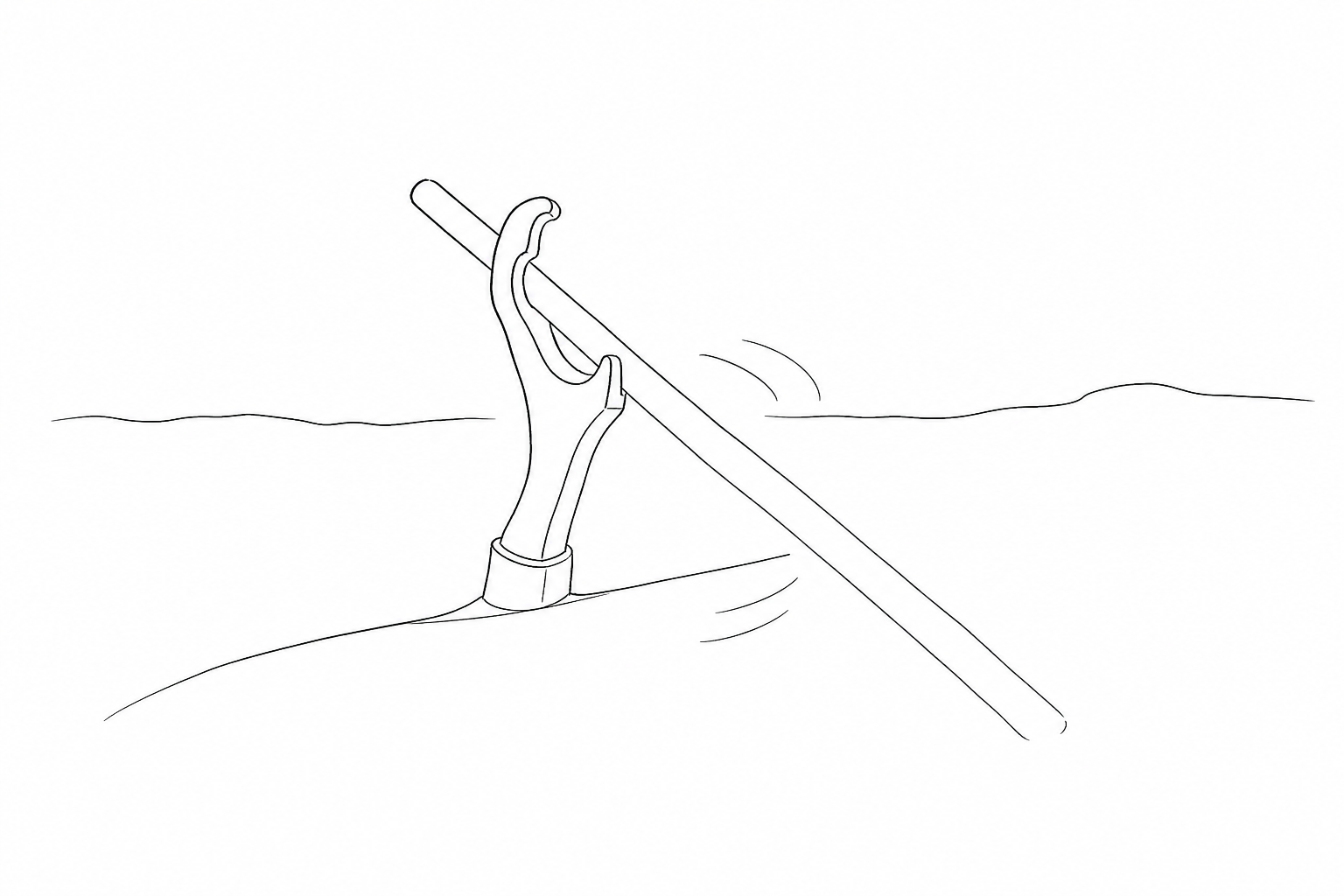
The oar does not work inside a closed rowlock as in many rowing boats. It is free, resting on the forcola, the carved piece of wood fixed to the edge. Its shape is not decorative: the different curves and notches make it possible to push, brake, correct the course and maneuver in narrow spaces.
- Observe the position of the feet: stability and body weight matter as much as the arms.
- Look at the angle of the oar: it changes between push, recovery and correction.
- Notice the forcola: it is the point where the technique becomes control of the boat.
The first trial in the lagoon: rhythm, balance, space
In an initial lesson in Venetian rowing, you do not start from strength, but from timing. The instructor has you get on calmly, sets your feet in a staggered position and asks you to keep your knees soft: the body must accompany the water, not stiffen against it. The first minutes are often used to feel how the boat responds to small shifts of weight.
The gesture is broken down: placing the blade, long push, light recovery, new entry. Those trying it for the first time tend to look at their hands; in reality the gaze must remain ahead, toward the open space, the bricole, the slow traffic or a possible crossing. The lagoon immediately teaches that there is no abstract trajectory: wind, current and passing waves modify every movement.
- Rhythm: counting the gestures helps you not to speed up.
- Balance: the pelvis guides more than the arms.
- Space: you learn to predict where the bow will be, not only where it is now.
Where to get information and how to choose without improvising
To try Venetian rowing, it is best to start with recognizable organizations: rowing clubs, amateur sports associations, historic clubs and schools that work steadily in the rii or in the inner stretches of water. In Venice many groups preserve knowledge handed down in regattas and daily activities: asking who teaches, on what type of hull you go out and in which area helps you understand whether the experience is suitable for a beginner.
- Check the teaching approach: a good lesson explains boarding, posture, use of the oar, respect for the forcola and right of way on the water before setting off.
- Ask about the ratio between instructor and students: when starting out it is important to be followed closely, without crowding the boat.
- Beware of improvisation: wind, tide, wave motion and canal traffic quickly change the conditions.
- Check up-to-date information: availability, duration, costs, meeting place and requirements may vary; they should be confirmed directly with the organizers.
The right choice is not the most scenic one, but the one that teaches you to move prudently in the real context of the lagoon.
Approaching voga alla veneta requires curiosity, listening and a little patience: it is not an experience to be consumed in a hurry, but an encounter with an ancient skill that is still alive. Choosing prepared instructors, suitable contexts and realistic timing allows you to try it without improvising, respecting the lagoon and those who use it every day. Even a short first outing can leave you with a more attentive eye for oars, forcole, shores and watery silences.