


Before becoming necklaces, embroidery, glass flowers or small ornaments exported far away, Venetian beads often passed through women’s hands. The impiraresse strung conterie and tiny beads in the calli, in homes, on doorsteps, transforming repetitive work into a discreet but essential presence in the urban economy. Telling their story means looking at Venice up close: not only the furnaces of Murano and international trade, but also domestic time, daily gestures, and the networks of women who kept an almost invisible trade alive.
Who the Venetian impiraresse were
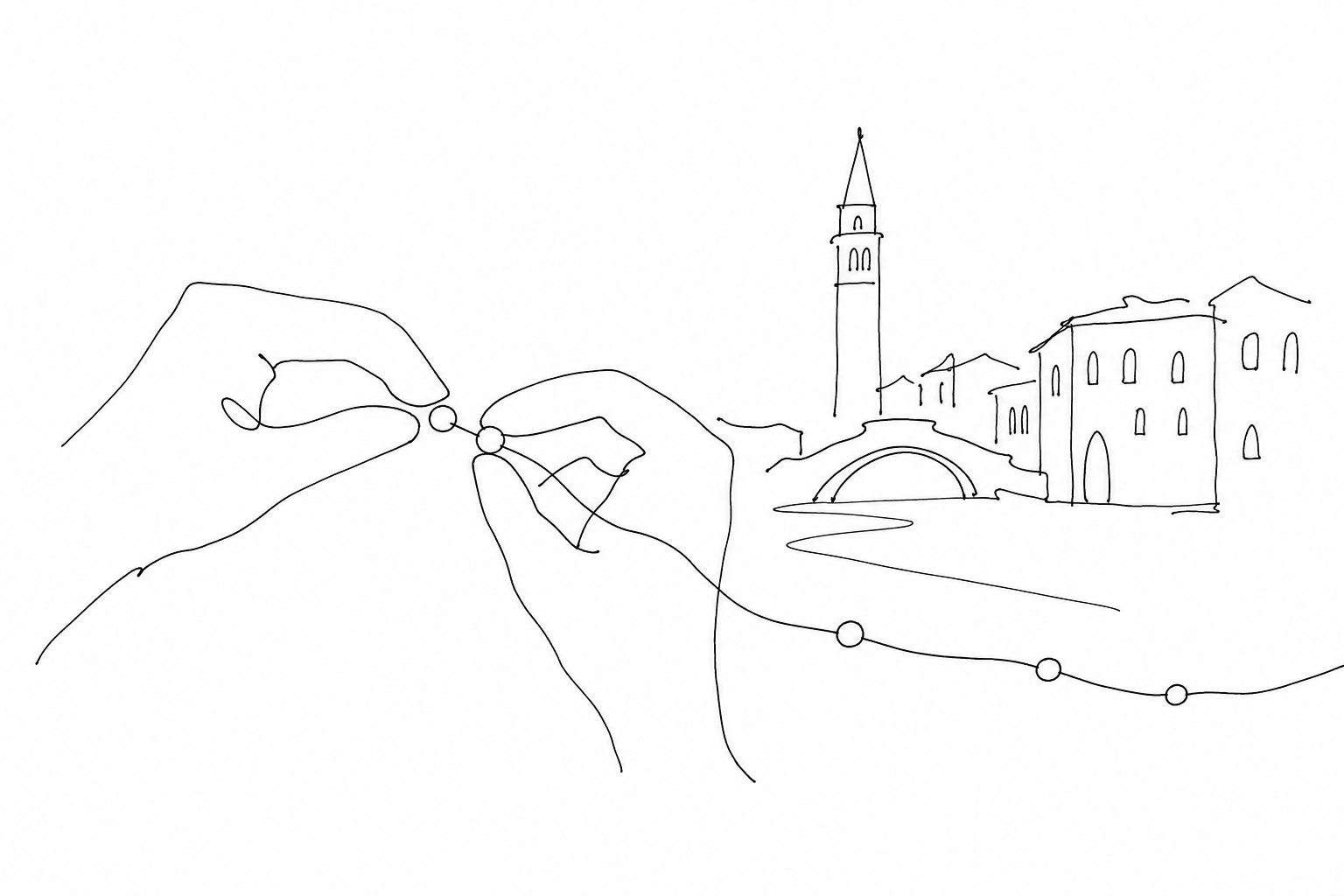
The Venetian impiraresse were the women who strung glass beads, one after another, transforming the small conterie produced in Venice and Murano into strands ready for trade. Their name comes from the Venetian verb impirar, meaning “to string”: a gesture simple only in appearance, repeated for hours with needle, thread, containers of tiny beads and great manual skill.
They were not marginal figures in the history of the Venetian bead: they were an essential part of it. While furnaces, glass masters and merchants left more visible traces in archives and in the city’s imagination, the impiraresse often worked at home, in courtyards, on thresholds, in small squares, balancing piecework wages, family care and neighborhood life.
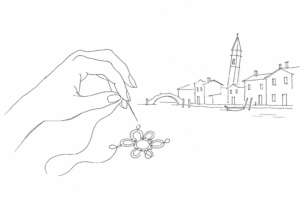
Their trade connected workshops, warehouses and trade routes. Without those hands, the beads remained loose material; thanks to them they became necklaces, fringes, ornaments and exportable goods. For this reason, telling their story means looking at Venice from the perspective of everyday female labor, minute and indispensable.
From the furnaces of Murano to women’s hands
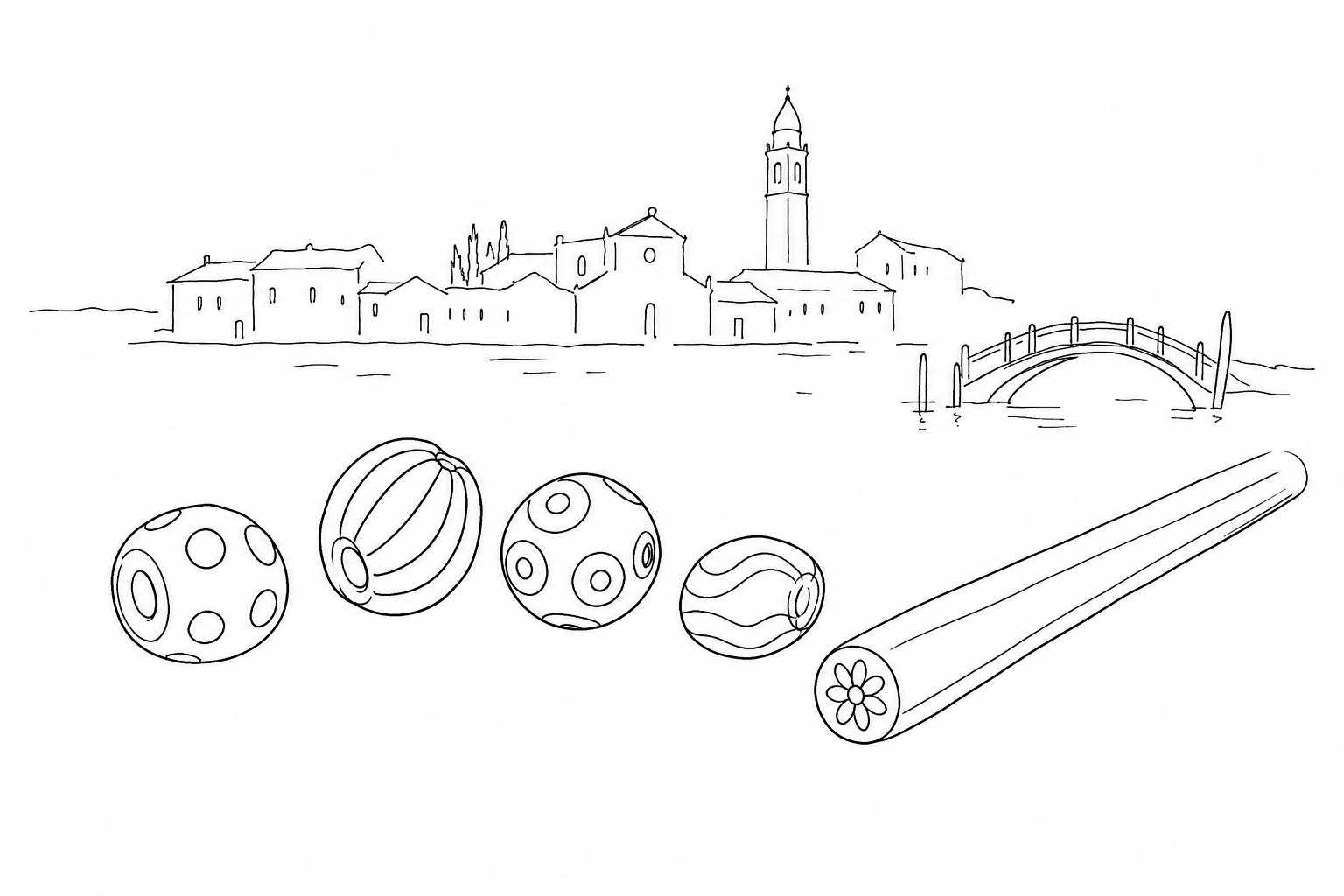
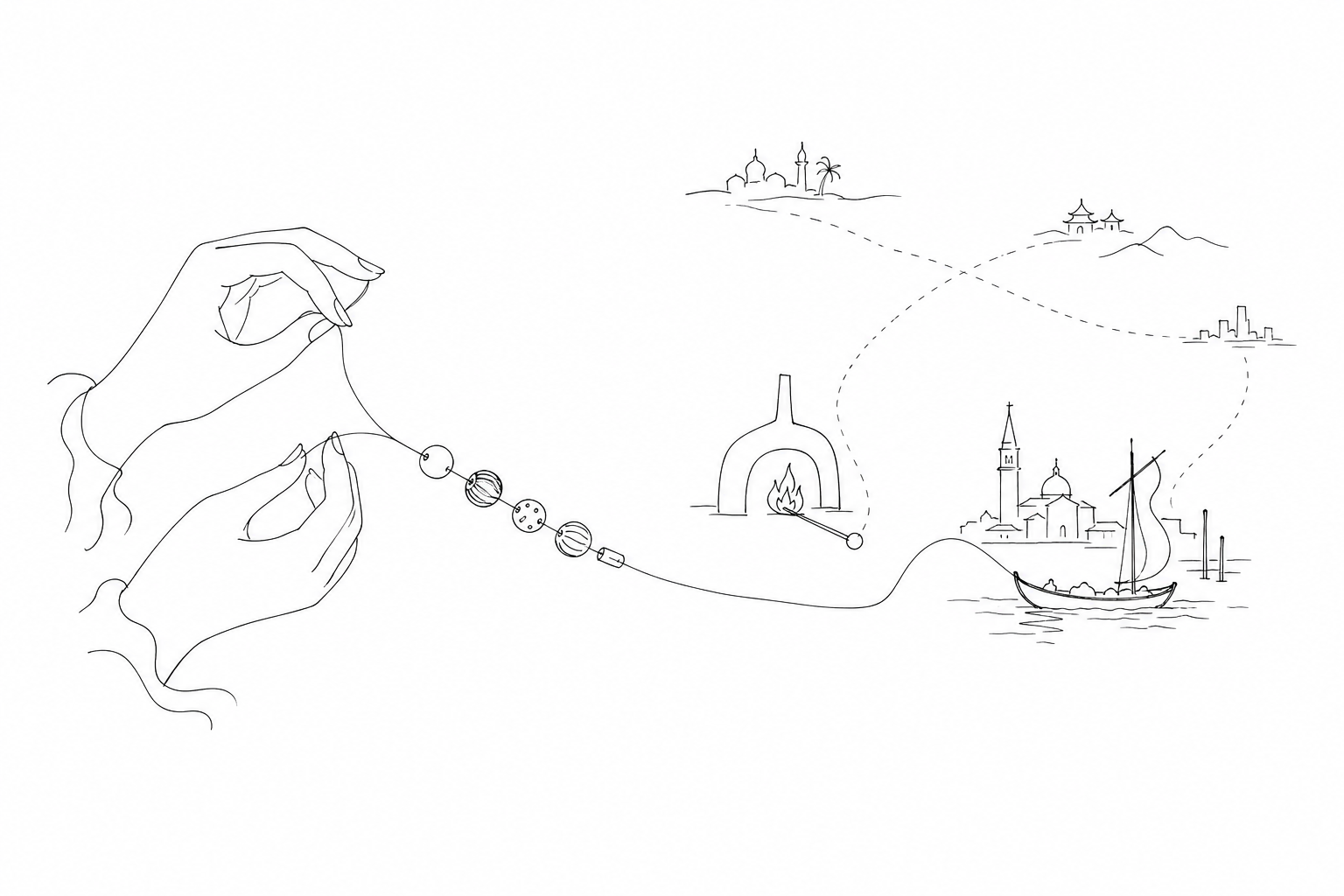
Before reaching needles and threads, conterie were born within a complex Venetian glass supply chain. In the furnaces of Murano, the glass paste was colored, drawn into thin canes and then cut into tiny segments; heat rounded the edges, transforming those fragments into regular, light beads, suitable for sale in large quantities.
However, the work did not end at the mouth of the furnace. The beads had to be separated by size and color, gathered, counted, strung. This is where the domestic and neighborhood work of Venetian women came into play, often carried out in the calli, on thresholds or in courtyards, where the light helped distinguish shades and sizes.
The conterie then traveled as global goods: toward the Levant, Africa, the Americas, used in commercial exchange and in fashion. Between Murano and the port, between fire artisans and patient hands, a minute yet international economy was thus built, made visible precisely by the repeated gesture of stringing.
An invisible but central trade
Stringing seemed like a minor gesture, almost domestic, but it held together a decisive part of the Venetian supply chain. After the production and selection of the small glass elements, someone was needed to order them, count them, pass them onto the thread and transform them into strands ready for merchants, embroiderers, shops and shipments.
The toil often remained outside official records. Women worked by the piece, paid by quantity, with long hours and modest earnings. The bent posture, strained eyesight and continuous repetition wore down the body, while the skill was taken for granted because it was performed at home, on thresholds, in courtyards or along the calli.
Precisely that collective dimension also made the trade a social space. Sitting in groups, the stringers exchanged news, taught the younger women, checked quality and built networks of mutual aid. The economic value of Venetian beads therefore also passed through a little-celebrated female skill: without that final patient ordering, the goods would not have had a commercial form.
Where to read this story in Venice today
To rediscover this story, it is worth starting from the places of the supply chain. In Murano, the area of the former Conterie and the calli near the Rio dei Vetrai preserve the memory of the serial production of the tiny glass grains: not always through explanatory plaques, but in the place names, in the repurposed industrial volumes and in the relationship with the water used to transport goods and materials.
A second point of interpretation is the Glass Museum, where sample collections, cut canes, tiny murrine and documents on manufacturing help explain what then arrived in homes and courtyards for stringing. Before visiting, it is advisable to check updated information on rooms, services and access procedures.
In the historic center, on the other hand, the trace is more discreet: small squares in Cannaregio, Castello and Santa Croce recall the everyday context in which the stringers sat outdoors, exchanged news, watched over children and transformed bags of loose glass pieces into ordered strands, ready for trade.
Today the memory of the impiraresse surfaces in museums, archives, oral testimonies and in certain details that remain linked to the life of the sestieri. Following their traces helps read Venice beyond the decorative surface of beads: behind their lightness there were skill, toil, family economy and knowledge transmitted through observation. It is a minute story only in appearance, because it gives voice back to female labor that contributed, in silence, to the material and symbolic fame of Venetian glass.
Related Posts
Glass beads in Venice: a small global object born between Murano and city workshops
History, places and meanings of Venetian glass beads, between Murano furnaces, urban work and global routes.The Burano Lace Museum: the slow art that photographs of the colorful houses do not tell
An outline on the Burano Lace Museum, among history, gestures, rooms and mindful visiting.
The Arsenale ropewalks: where the ropes that held Venetian naval power together were born
History, function, and interpretation of the Arsenale ropewalks, the long space where Venice produced the ropes for its fleet.Questions Answered
Who were the Venetian impiraresse?
Women who strung glass beads transforming them for trade.How did the impiraresse contribute to the Venetian bead trade?
They turned loose beads into ordered strands for merchants and exports.What was the supply chain process for Venetian conterie beads?
From Murano furnaces, coloring, cutting, to women stringing beads.Where is the story of the impiraresse visible in Venice today?
In Murano’s calli areas, the Glass Museum, and certain historic center squares.
Another piece of island Venice
Want to follow the journey through water, crafts and communities that shaped the lagoon islands?
 Glass beads in Venice: a small global object born between Murano and city workshopsHistory, places and meanings of Venetian glass beads, between Murano furnaces, urban work and global routes.
 The Murano Glass Museum: reading the island’s history beyond demonstrations for touristsAn editorial guide to the Murano Glass Museum: rooms, techniques, objects and context for understanding the island beyond demonstration furnaces.
 Venetian papier-mâché masks: what distinguishes a real workshop from an ordinary souvenirHow to recognize a Venetian papier-mâché mask made in a workshop: materials, gestures, finishes and signs to observe before buying.
 Murano, Burano or Torcello: Which Venice Island Should You Choose?At some point while planning a trip to Venice, the same question almost always appears: is it worth visiting the islands too?...