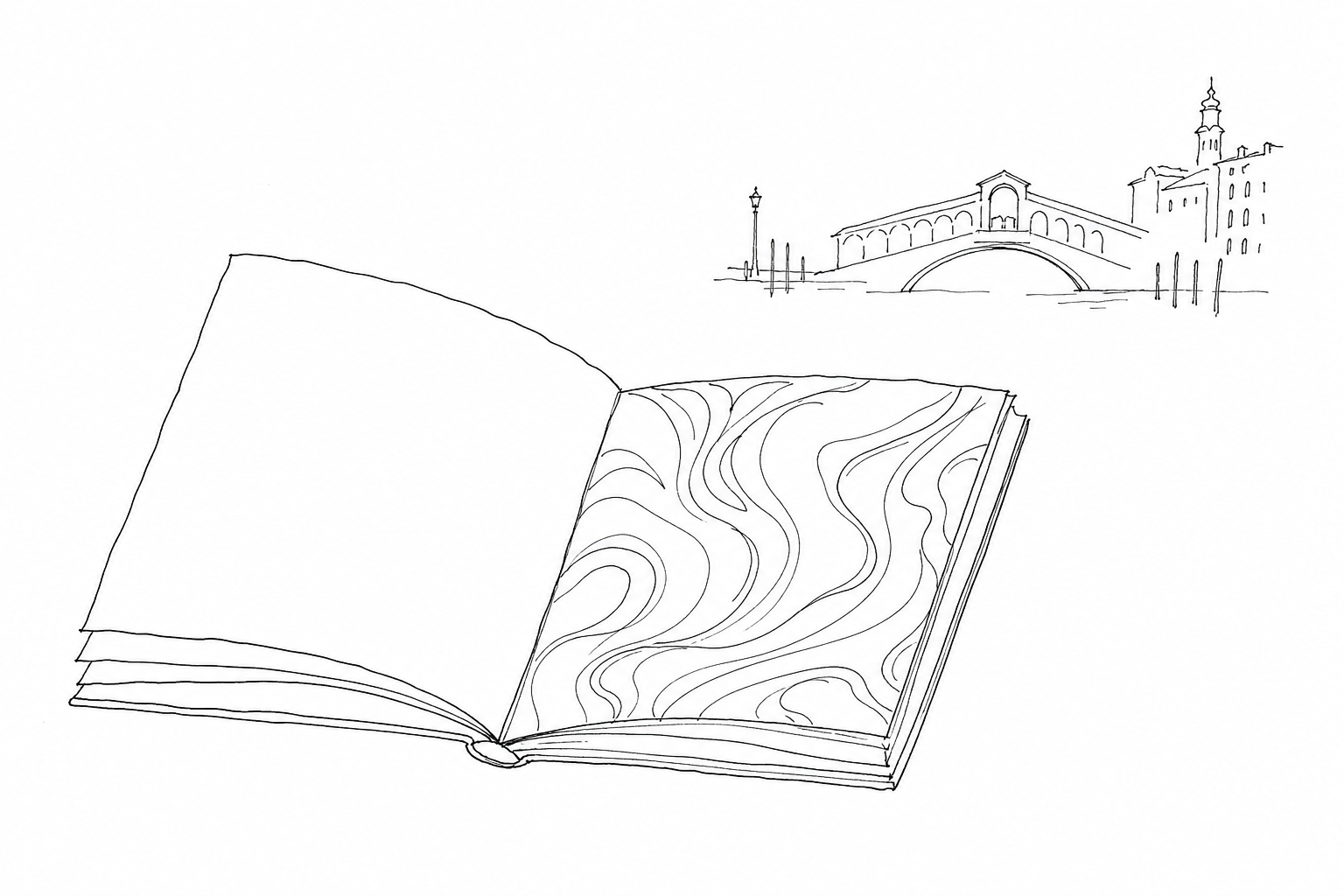

Even before being read, a Venetian book could be looked at, touched lightly, opened slowly. In the city of printing, decorated paper was not a simple ornament: it entered into the construction of the book object, in the endpapers, covers and bindings that protected and accompanied the text. Marbling, colored pastes, repeated or unpredictable motifs tell of technical knowledge made of water, pigments, glue, pressure and the hand. Observing them means shifting attention from content to matter, and understanding how Venice produced not only pages to read, but surfaces capable of holding light, use and memory.
Why decorated paper matters in the Venice of printing
In Venice between the fifteenth and seventeenth centuries, the European capital of the book, paper was not only a support for movable type and engravings: it was also a surface to touch, protect and recognize. Alongside the presses of Aldus Manutius, the Giunti or the Nicolini, there existed a material economy made up of reams, glues, boards, leathers and colored sheets intended for binding.
Decorated papers often entered books as flyleaves, pastedowns or light covers: parts less celebrated than the title page, but decisive in the everyday experience of the volume. A combed marbling, a woodblock-printed paper or a paste-paper motif could indicate taste, cost, provenance and use. In study books, mercantile registers and devotional booklets, the decoration made the object more resistant and more personal.
Venice, a city of trade and specialized workshops, encouraged this circulation of techniques and motifs. Decorated paper therefore tells the tactile side of Venetian printing: not only what the reader saw on the page, but what the hands encountered even before reading.
Marbling: water, color and designs that are never identical
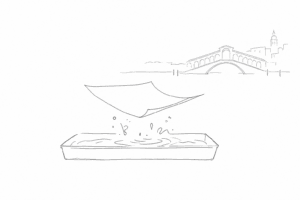
Marbling is based on a liquid surface transformed into a printing plane. In a shallow tray, water is prepared and made denser with plant mucilages; pigments are dropped onto this film and remain afloat, often aided by surfactants such as ox gall. With sticks, combs and metal points the color is drawn, broken up, curved: veins, feathers, waves and eyes are created.
The sheet is then laid with a single movement onto the colored surface. The pressure of the hand, the humidity, the density of the bath and the speed of the gesture modify the result. For this reason two examples are never truly identical: even when the motif is repeated, the design preserves small irregularities, like a material signature of the process.
In Venice the technique entered into dialogue with exchange routes toward the Ottoman Levant and with practices known in Persian and Turkish contexts, where decoration on floating sheets had long enjoyed success. In workshops connected with the book, these effects could cover endpapers, light covers and edges, evoking polychrome marbles, moving silks and hard stones familiar to the lagoon eye.
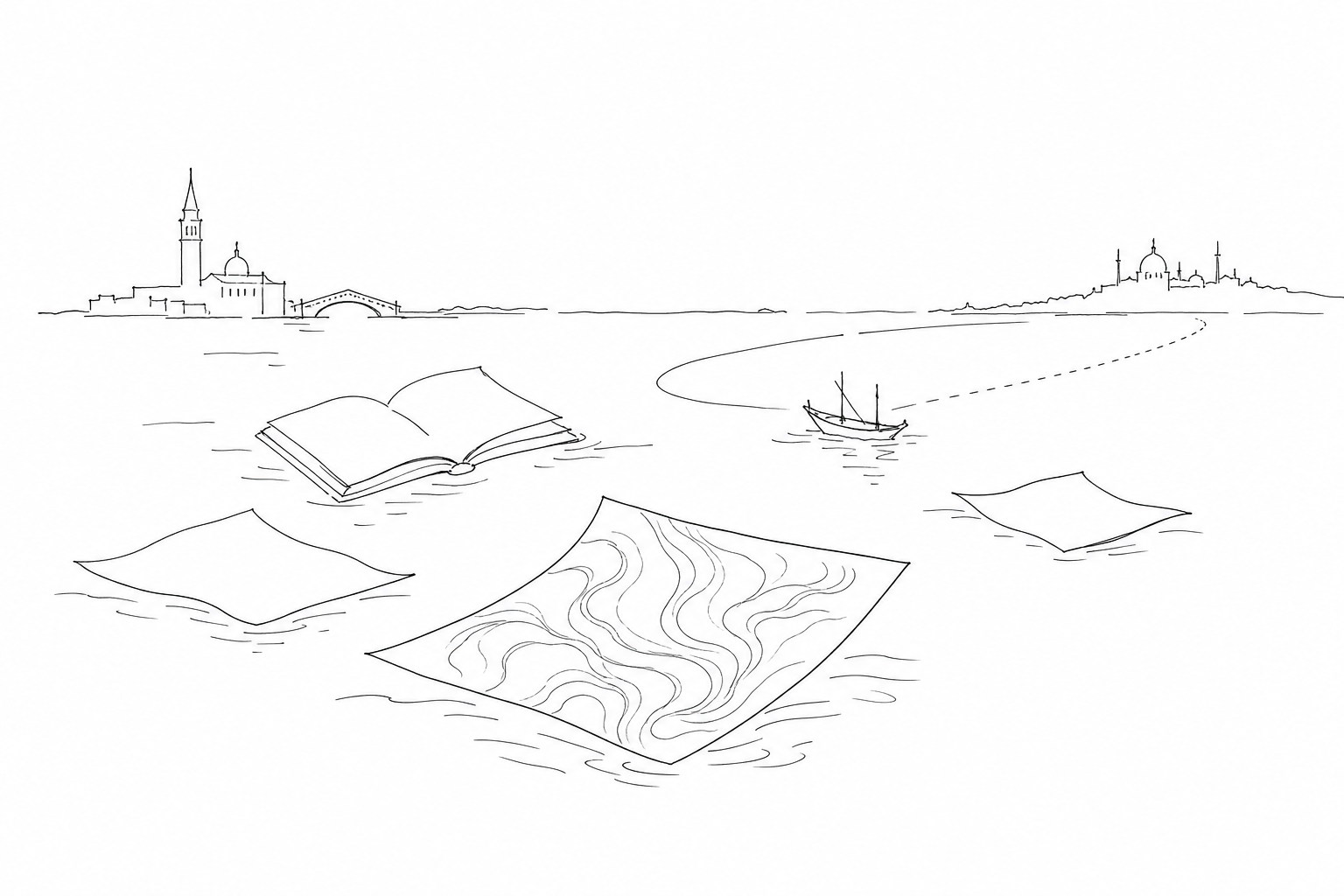
Bindings, endpapers and covers: the book as an object to touch
In an ancient volume, the decorated sheet is not only an image: it is a hinge, a protection, a surface of use. It is encountered in the endpapers, glued between cover and gatherings, where it masks the internal structure and accompanies the opening of the book; in the pastedowns, which immediately reveal taste and patronage; or on the outside, on boards and light bindings intended for reference texts, devotional booklets, theatrical collections and printed music.
Touch helps to read its function. A covered cover may show abrasions on the corners, folds on the spine, shinier areas where the hand has lingered. The endpapers, on the other hand, often preserve protected margins: there the colors remain closer to the binder’s original intent. In Venetian workshops, alongside stamped leathers and reused parchments, these supports offered a more economical but visually rich solution.
Observing a volume therefore means following the path of the body: grasping, opening, leafing through, closing. Marbling, colored woodblock prints, embossing and sprinkled papers live in those points of contact, where printing and binding become a material experience.
Where to observe these details without reducing them to decoration
To read these artifacts, one must change scale: not look only for the most conspicuous motif, but for the point where the worked sheet enters into the functioning of the volume. In a reading room, in a book exhibition or in a bookbinding workshop, it is worth observing three clues.
- The position: an external covering withstands friction and light; a pastedown protects the sewing; a sprinkled edge masks dust and wear.
- The technique: in marbling the colors float and deform; in woodblock-printed papers the design betrays the repetition of the block; in embossing, reading also passes through relief.
- The traces of use: folds, abrasions near the spine, glue stains and irregular cuts tell of repairs, reuse and circulation.
In Venice these details should be connected to the historical chain of printers, stationers, binders and Mediterranean trade: not isolated ornament, but material evidence of exchanges, hands and reading habits.
Looking at decorated paper in Venice requires a slower step: it is not enough to recognize an elegant motif; one must ask where it is located, what function it had, how it dialogues with the binding and with the traces left by those who handled the volume. In museums, historic libraries, archives and workshops that still work with attention to material, these details reveal a less obvious side of Venetian typographic culture. Printing, here, is not only text and impressed image: it is also weight, friction, fold, margin. A tactile experience that continues to make the book a living object.
Related Posts
Marbled paper in Venice: colors on water and workshops that seem like alchemy laboratories
A short journey through the history, technique and Venetian workshops of marbled paper, where pigments, water and slow gestures become objects of use and memory.Aldus Manutius in Venice: the printer who invented the paperback before cultural tourism
Aldus Manutius transformed Venice into a laboratory of the modern book: portable classics, italic type, learned publishing and a city of paper.
Italic type was also born here: Venice, publishing and typefaces that changed the way people read
How Venice, Aldus Manutius and Aldine typefaces changed books, reading and the printed page.Questions Answered
Why was decorated paper important in Venetian printing?
It protected and personalized books, reflecting trade and workshop traditions.How is marbling created and why is each design unique?
By dropping pigments on thickened water, creating patterns with tools.What roles do bindings and endpapers play in the book?
They serve as hinges and protection, showing use and patronage.How can one properly observe decorated paper details?
By analyzing position, technique, and signs of use.
Follow the Venice of printing
Want to continue through books, type and workshops that made the city a European publishing centre?
 Marbled paper in Venice: colors on water and workshops that seem like alchemy laboratoriesA short journey through the history, technique and Venetian workshops of marbled paper, where pigments, water and slow gestures become objects of...
 Aldus Manutius in Venice: the printer who invented the paperback before cultural tourismAldus Manutius transformed Venice into a laboratory of the modern book: portable classics, italic type, learned publishing and a city of paper.
 Italic type was also born here: Venice, publishing and typefaces that changed the way people readHow Venice, Aldus Manutius and Aldine typefaces changed books, reading and the printed page.
 The Marciana Library: books, painted ceilings and public knowledge next to San MarcoEditorial guide to the Marciana Library: history, rooms, books, paintings and public role in the heart of San Marco.