


Venetian glass beads seem like tiny objects, almost discreet, but they tell a broad story: technique, work, trade, fashion, cultural exchanges. Born between the furnaces of Murano and the city’s workshops, they crossed seas and markets, passing from the hands of master glassmakers to those of impiraresse, merchants and travelers. Looking at them up close means reading Venice not only as a place of beauty, but as a complex production system, capable of transforming sand, fire and manual skill into a good recognizable around the world.
A small object, a wide geography
Venetian glass beads matter because they contain, in just a few millimeters, a history of furnaces, specialized hands and trade routes. They arise from the encounter between Murano, where glass was melted and drawn into colored canes, and the city’s workshops, where that material could be cut, finished, strung and transformed into goods ready to travel.
They were not simple ornaments. The conterie, produced in large quantities, and the lampworked beads entered Mediterranean, African, Asian and American circuits as objects of exchange, signs of status, components of clothing, rosaries and necklaces. Venice managed to make them a recognizable specialty thanks to the variety of colors, the regularity of shapes and the ability to adapt motifs and sizes to distant markets.

Looking at a Venetian bead therefore means reading a compressed geography: the sand and fluxes of the furnace, the precise gesture of the artisan, the merchant’s counter, the port, the ship, and finally a body or a fabric on another continent.
Murano: furnaces, canes and lampworking
Murano’s role in the history of Venetian beads begins with the material: molten glass, colors obtained with metal oxides and a technical expertise preserved in the island’s furnaces. From the late Middle Ages, when glass production was concentrated in Murano also for reasons of safety and control, a know-how developed here that was capable of transforming an incandescent mass into minute, regular, exportable elements.
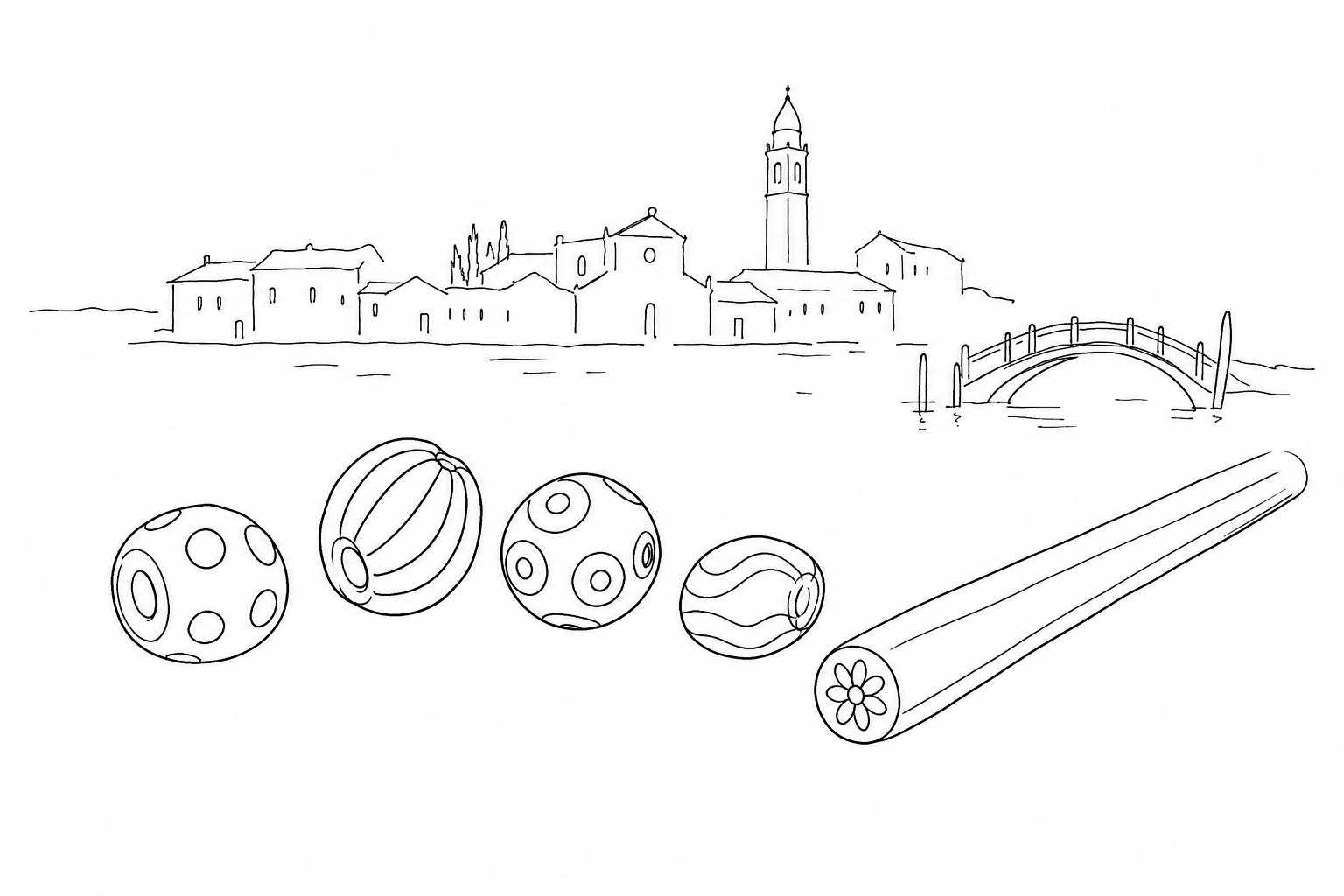
For many beads the starting point was the cane: a glass cylinder drawn hot until it became a long, thin tube. Once cooled, it was cut into small segments, then rounded and finished. From this process came, among others, the conterie, tiny beads for embroidery and trade, and rosetta or “chevron” beads, obtained by superimposing colored layers in a shaped cane.
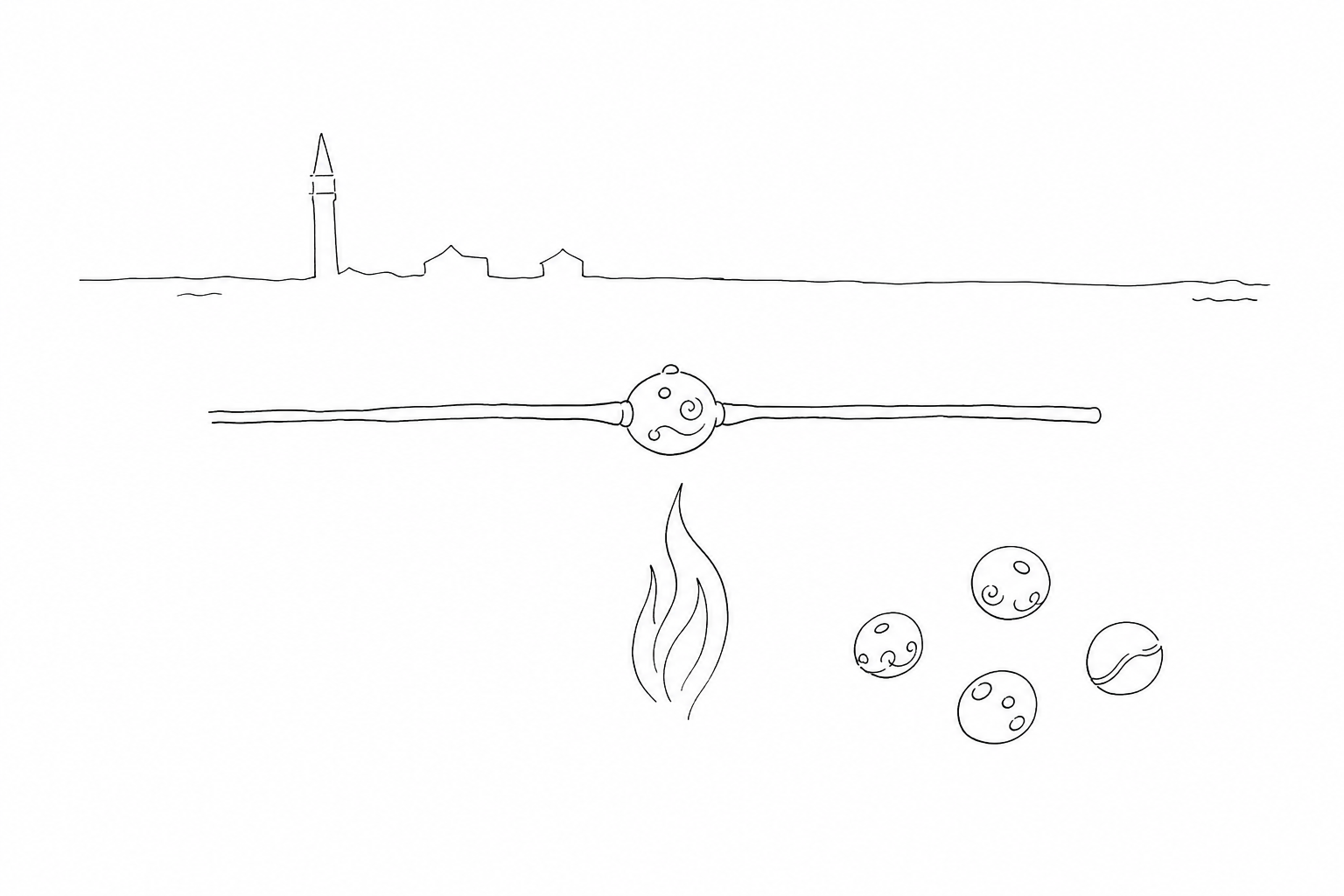
Alongside furnace work there was lampworking: the glass was softened in the flame and wound around a metal mandrel. This method allowed more individual shapes, applied decorations and chromatic variations that made each piece recognizable.
From the furnaces to the workshops: work in the city
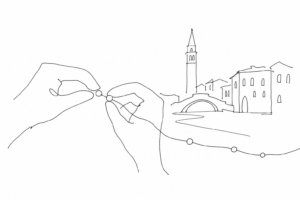
The story did not stop at the productive island. Once canes, rosettes or small elements to be finished had been obtained, the artifact entered an urban network made up of courtyards, warehouses and domestic tables. In Venice, the work often passed through female hands: the impiraresse, bead stringers who selected the pieces by size and color, composed regular bunches and prepared necklaces or sample cards intended for merchants.
This minute supply chain had its own vocabulary and geography. The conterie could be counted, washed, dried, divided into bags, sewn onto cards or gathered into long strands; in the city workshops they became legible goods, ready for Mediterranean, African, Asian and American trade. Rialto, the mercantile calli and the warehouses near the waterways transformed an artisan product into a unit of global exchange.
Looking at the workshops therefore also means seeing invisible work: sorting, stringing, packing, bargaining. Without this industrious city, the small object born from fire would not have reached so far.
A Venetian good on global routes
The small Venetian ornament was not only an accessory: it became a good legible in many commercial languages. The conterie, light and resistant, traveled in bunches, bags or sample cards toward the Levant, West Africa, the Americas and Asia, entering different exchanges: personal ornament, diplomatic gift, sign of rank, sometimes unit of barter.
To understand this path, those visiting Venice today can observe three clues. The first is repeatability: shapes and colors had to be recognizable even far from the lagoon. The second is the hole, often tiny but regular, designed for rapid stringing. The third is the decorative motif: rosettes, millefiori and monochrome beads tell of different publics, not a single fashion.
In museums, photographic archives or historical collections, it is worth reading labels and provenances carefully: a bead found elsewhere can speak of Venice as much as an object that remained in the city. For visits, displayed collections and updated services, it is always prudent to check official information before setting out.
Following the path of glass beads, from Murano to the Venetian workshops and then along global routes, makes it possible to grasp a concrete Venice: made of repeated gestures, craft specializations, commercial networks and daily life. In such a small object are concentrated technical skills, decorative taste and the capacity to relate to distant worlds. For those who visit the city attentively, the beads are not a simple souvenir, but a material trace of how Venice was able to unite art, urban work and international horizons.
Related Posts
Venetian impiraresse: the women who strung beads and kept an invisible trade alive
History and memory of the Venetian impiraresse, workers in the conterie trade who strung beads between home, calli and workshops.Murano beyond the furnaces: the lighthouse, the fondamenta and the real life of the glass island
A portrait of Murano beyond glass: lighthouse, fondamenta, canals and daily life on the island.
The Murano Glass Museum: reading the island’s history beyond demonstrations for tourists
An editorial guide to the Murano Glass Museum: rooms, techniques, objects and context for understanding the island beyond demonstration furnaces.Questions Answered
What is the significance of Venetian glass beads?
They represent a rich history of craft, trade, and cultural exchange.How were Venetian beads made in Murano?
By melting glass into canes and using furnace and lampworking techniques.What role did Venice’s city workshops play?
Transforming raw beads into finished goods for global markets.Why did Venetian beads become globally recognized?
Due to their repeatable shapes, colors, and adaptability to various markets.
Explore the lagoon beyond this island
Would you like to move from this story to another island with a very different character?
 The Murano Glass Museum: reading the island’s history beyond demonstrations for touristsAn editorial guide to the Murano Glass Museum: rooms, techniques, objects and context for understanding the island beyond demonstration furnaces.
 Venetian impiraresse: the women who strung beads and kept an invisible trade aliveHistory and memory of the Venetian impiraresse, workers in the conterie trade who strung beads between home, calli and workshops.
 Murano, Burano or Torcello: Which Venice Island Should You Choose?At some point while planning a trip to Venice, the same question almost always appears: is it worth visiting the islands too?...
 Venetian papier-mâché masks: what distinguishes a real workshop from an ordinary souvenirHow to recognize a Venetian papier-mâché mask made in a workshop: materials, gestures, finishes and signs to observe before buying.