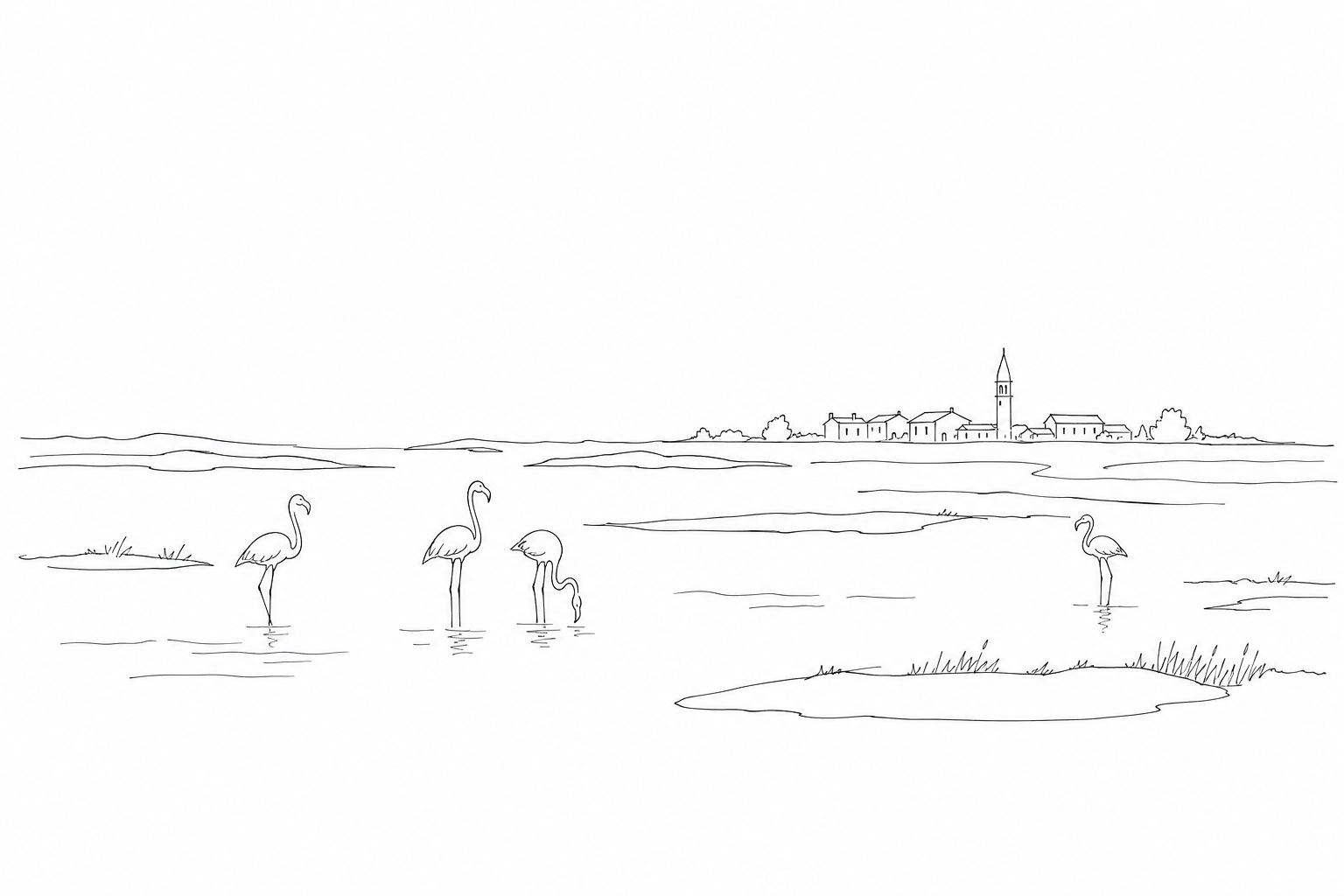
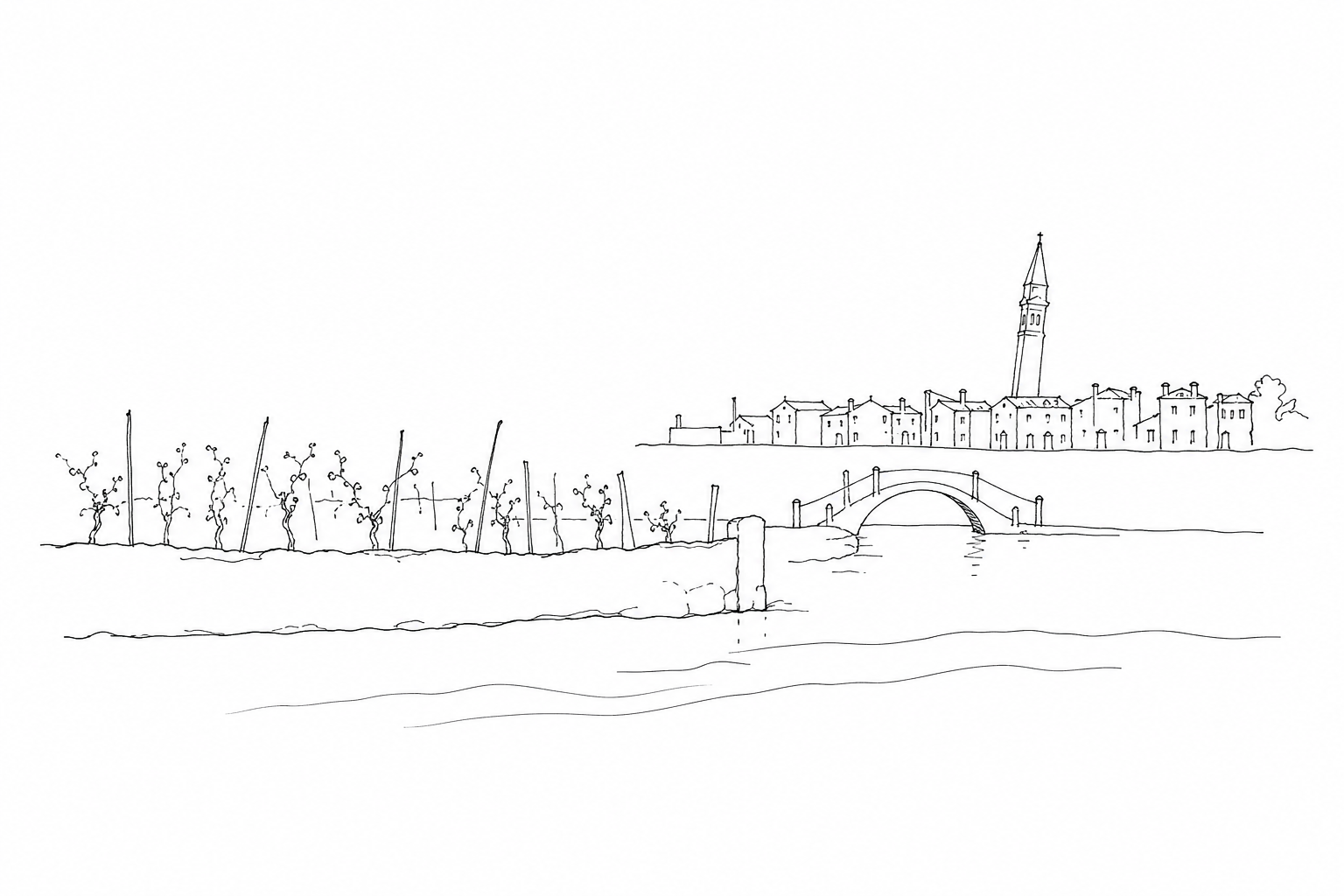

At some point while planning a trip to Venice, the same question almost always appears: is it worth visiting the islands too?
The simplest answer would be yes. Murano, Burano and Torcello are names that often appear in guidebooks, travel stories and colourful images of the lagoon. But the more useful answer is different: it depends on how you want to experience that day.
The islands are not all the same experience. Murano is not just “the glass island”, Burano is not only a row of colourful houses, and Torcello is not simply a quiet stop to add at the end. Each one has a different rhythm, a different landscape and a different way of telling the story of Venice and its lagoon.
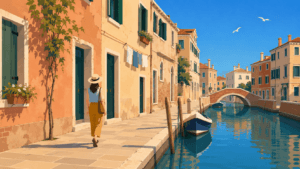
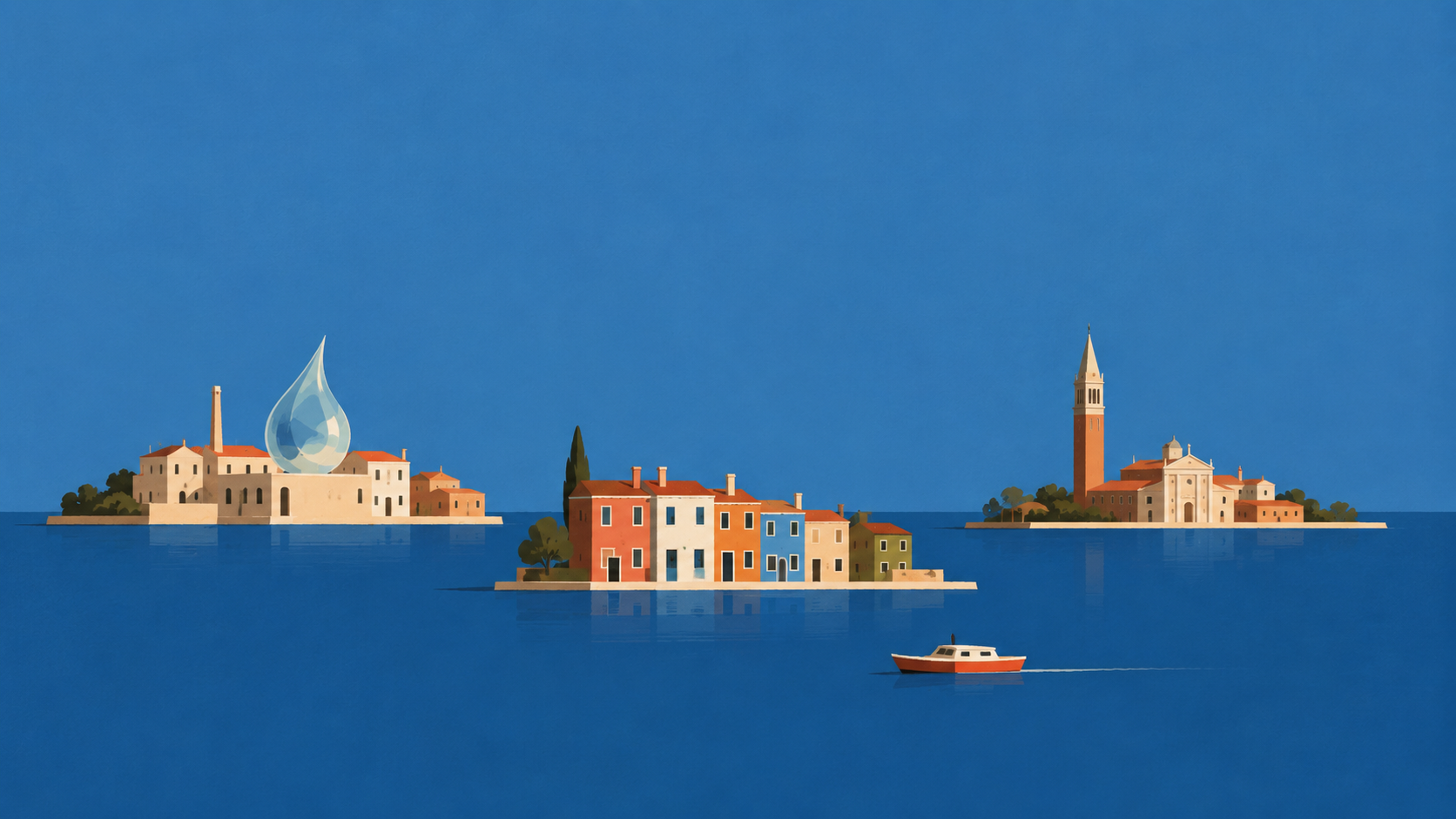
The risk, especially when time is limited, is turning Murano, Burano and Torcello into a race. You leave early, get off, take photos, get back on, try to see everything and end up remembering mostly the tiredness. The lagoon works better when you leave it a little space.
This guide is not meant to decide which island is “the best”. It is meant to help you choose the one that fits your trip.
First Question: How Much Time Do You Really Have?
Before choosing between Murano, Burano and Torcello, it is worth being honest about the time available.
If you only have two days in Venice and are visiting the city for the first time, spending many hours on the islands can be beautiful, but it is not always necessary. Venice itself requires time: St Mark’s, Rialto, Cannaregio, Dorsoduro, the Grand Canal, the side calli, a pause in a bacaro, a museum or a church visited calmly.
Adding the islands makes sense if you genuinely want to see the lagoon beyond the historic centre. It should not be an obligation added simply because “that is what people do”.
If you have half a day, it is better to choose one island. If you have a full day, you can think about two islands at a fairly relaxed pace, or three only if you accept a quicker visit. If you have already seen Venice before, then a full day between Murano, Burano and Torcello can become one of the most rewarding ways to change perspective.
The rule is simple: the more you want to listen to the place, the fewer stops you should include.
Murano: Glass, Craft and a More Industrious Venice
Murano is often the first island that comes to mind. It is close to Venice, easy to include in an itinerary and connected to a very strong tradition: glass.
The risk, however, is reducing it to a single word. Murano is not interesting only because “they make glass there”. It is interesting because it tells a story about Venice, craftsmanship, trade, fire, technique and representation. Murano glass is not merely a souvenir: it is a history of workshops, furnaces, skill, identity and mastery.
Walking through Murano, you encounter canals, bridges, fondamenta and spaces that recall Venice, but with a different density. The presence of furnaces, shops, windows and workshops gives the island a more industrious character. It is not a miniature Venice: it is a place that built its image around a luminous, fragile and extremely difficult material to control.
Anyone interested in the history of glass may consider visiting the Glass Museum, always checking updated opening times and access details before leaving. Those who prefer a freer visit can simply walk along the canals, look carefully at the shop windows and try to distinguish between objects designed for quick tourism and pieces that genuinely express a tradition.
Murano is the right island if you want to understand a productive and craft-based side of the lagoon.
When to Choose Murano
Murano is probably the most suitable choice if you have limited time but still want to leave Venice’s historic centre. It is closer than Burano and Torcello and allows for a relatively compact visit.
It is also a good choice if you are travelling with someone interested in craftsmanship, design, materials and objects. Glass can be read superficially, as pure decoration, but also in a richer way: technique, colour, transparency, risk, manual gesture and commercial memory.
Murano works well even on a day that is not too long. You arrive, walk along the canals, perhaps visit the museum or an accessible furnace, stop for a break and then return or continue towards another island.
It may disappoint those looking for absolute silence or a landscape radically different from Venice. Murano remains close, inhabited, crossed and visibly connected to an economy. Its charm lies precisely there: not in isolation, but in work.
Burano: Colour, Photography and the Rhythm of an Inhabited Island
Burano often reaches visitors before the visit itself. People know it through very recognisable images: colourful houses, reflections on the water, laundry hanging outside, boats and bright façades.
It is easy to understand why it is so loved. Burano has immediate visual power. Colour organises the space, creates backdrops and turns every canal into a potentially memorable image. But here too there is a risk: treating it like a photo set.
Burano was not created to be a backdrop. It is an inhabited island, with its own history, with lace-making as an important tradition and with a concrete relationship to fishing and lagoon life. The colourful houses are the most visible aspect, but they should not erase everything else.
The best way to visit Burano is to accept its popularity without being trapped by it. The most photographed areas can be crowded, especially at certain times of day. But by moving calmly, avoiding the use of doors and windows as if they were public scenery, and observing the relationship between colours, water and everyday life, the visit becomes much more interesting.
Burano is an island that asks for respect precisely because it seems so easy to photograph.
When to Choose Burano
Burano is the right choice if you are looking for a strong visual experience. If you enjoy photography, drawing, colours and urban compositions, the island offers a great deal.
It is also suitable for those who want to see a face of the lagoon that feels different from Venice’s historic centre. Burano has its own rhythm, a smaller scale and a more direct relationship between houses, canals and everyday spaces.
It can be a very pleasant destination for a slow day, especially if you do not reduce it to a few shots at the most famous points. The advice is to stay long enough to move beyond the first photographic impulse. After the first images, a more interesting visit begins: you notice doors, curtains, boats, small domestic details, less obvious colours and quieter calli.
Burano may be less suitable if you dislike heavily photographed places or if you are travelling during a particularly crowded period and are looking for silence. In that case, Torcello may be more consistent with your idea of the lagoon.
Torcello: Silence, History and the Lagoon Before the Crowds
Torcello is the island that changes the tone of the day the most.
After Murano and Burano, which are often more immediate and visual, Torcello seems to ask for a different pace. Here, the visit is less about the number of things to see and more about a sense of distance. You walk along a simple route, cross a more open landscape and perceive a less urban lagoon.
Torcello has enormous historical importance. It is one of the oldest places in the Venetian lagoon, and the Basilica of Santa Maria Assunta remains one of the most significant references for understanding the religious and artistic history of the area. But even without entering into detailed historical study, you can sense that time has a different texture here.
The island does not try to entertain you continuously. It does not offer the same density as Venice, the immediate colour of Burano or the productive appeal of Murano. It offers space, memory, silence and a kind of luminous melancholy.
That is exactly its value.
When to Choose Torcello
Torcello is the right choice if you are looking for a quieter and more historical lagoon. If you are interested in the oldest layers of the Venetian territory, if you want to step away from the logic of constant photography, or if you enjoy walking in a place where emptiness matters almost as much as what you visit.
It is especially suitable for those who have already seen Venice or for travellers who, during the trip, feel the need for a deeper pause. It is not the most scenic island in the immediate sense of the word. It is not the one that “performs” best in a quick visit. But it can become the most memorable for those looking for a less noisy experience.
Torcello works well together with Burano because the two islands are very different. Burano strikes through colour; Torcello subtracts, slows down and leaves space. Visiting them on the same day can be interesting precisely because of this contrast, provided you do not rush too much.
If you have very little time and want immediate visual impact, Torcello may not be the first choice. Not because it is worth less, but because it asks for a different kind of availability.
One Island Only: Which Should You Choose?
If you have time for only one island, the choice depends on the experience you are looking for.
Choose Murano if you are interested in glass, craftsmanship and a visit that is relatively easy to include in a Venetian day. It is the most natural choice for those who want to leave the historic centre without going too far.
Choose Burano if you want colour, photography, a very recognisable urban landscape and an island that changes the mood completely compared with Venice. It is the most immediate and visual.
Choose Torcello if you are looking for history, silence, space and a less decorative lagoon. It is the most contemplative choice, the one that asks for less haste and more listening.
There is no universal answer. There is your day: how much time you have, how much energy you want to spend on moving around, and what you truly want to observe.
Two Islands in the Same Day
With a fairly open day, two islands can be a good compromise.
The most classic combination is Murano and Burano: glass and colour, craftsmanship and photography, two experiences that are easy to understand and very different from each other. It is a good choice for those visiting the lagoon for the first time and wanting a rich but still manageable route.
Another possibility is Burano and Torcello. This combination is perhaps more poetic: first the inhabited colour of Burano, then the historical silence of Torcello. It works well if you do not want to fill the day with too many things and are willing to walk at a slower pace.
Murano and Torcello is a less obvious pairing, but it may appeal to those who want to avoid the most photographed island and build a day more connected to material, history and distance.
The important thing is not to treat the islands as identical stops. Every time you get off a vaporetto, the way of looking changes.
Three Islands in One Day: Yes or No?
Visiting Murano, Burano and Torcello in one day is possible, but it is not always the best choice.
If you have a full day, leave early, accept a lot of walking and do not expect in-depth visits in every place, it can be a satisfying itinerary. It allows you to see three different faces of the lagoon: glass, colour and historical silence.
But you need to be aware of the rhythm. Three islands mean more journeys, more waiting, more practical decisions. If each stop becomes an obligation to complete, the day risks becoming less enjoyable.
For a first visit to Venice lasting only two days, it is often better to choose one island or skip the islands altogether and give more time to the sestieri. For a longer stay, however, the three islands can become a well-shaped full-day excursion.
The point is not how many islands you have seen. The point is what has remained with you from the lagoon.
How to Organise the Day Without Turning It into a Race
To organise a good day among the islands, start from a few clear choices.
First: check the official transport timetables. Lines can vary, some services may have different frequencies depending on the season or time of day, and improvising completely can waste time.
Second: decide in advance which island is your priority. If Burano is the main reason for the trip, build the day around Burano. If glass interests you, give Murano more space. If you want Torcello, do not relegate it to a final stop made when you are already tired.
Third: leave some margin. The lagoon is not a metro system. Waiting, walking, queues, crowds and changing light are part of the experience. A programme that is too rigid risks spoiling exactly what makes the day beautiful.
Fourth: do not forget Venice on the way back. Returning from the islands towards the city can be one of the most beautiful moments, especially when the light changes and the profile of the lagoon gathers again before your eyes.
Visiting the Islands Respectfully
Murano, Burano and Torcello are not sets detached from real life. They are inhabited, worked, preserved and crossed every day by people who do not experience them as attractions.
In Burano, this means not using doors, windows and hanging laundry as objects available for any photograph. In Murano, it means not reducing glass to just any merchandise, but recognising the value of a complex craft tradition. In Torcello, it means respecting the silence and the historical dimension of the place.
Visiting the lagoon well requires a simple kind of attention: do not occupy spaces invasively, do not look only for the perfect photo, and do not treat every place as if it existed only to be consumed quickly.
Slowness here is not an affectation. It is a more correct way of being in these places.
Which Island to Choose Based on Your Trip
If it is your first time in Venice and you have limited time, choose Murano or Burano. Murano if you want a simpler visit connected to craftsmanship; Burano if you are looking for stronger visual impact.
If you have already seen Venice’s main places, consider Burano and Torcello together. The contrast between colour and silence can give the day a very beautiful shape.
If you are interested in the oldest history of the lagoon, Torcello deserves more attention than it often receives. Do not treat it as a marginal add-on.
If you are travelling with children or with people who tire easily, avoid adding too many stops. One island experienced well is better than three crossed with impatience.
If you love photography, Burano will probably be the most immediate choice. But try to photograph it respectfully: fewer invaded doorways, more distance, more details observed without forcing the scene.
If you want to understand an important part of Venetian productive identity, Murano remains a fundamental stop.
The Lagoon Is Not a List
Murano, Burano and Torcello are three different ways of leaving Venice without truly leaving its world.
Murano tells the story of material, fire, glass and the artisan gesture.
Burano tells the story of colour, island life and the relationship between houses, water and the eye.
Torcello tells the story of long time, history, silence and a lagoon less crowded with images.
Choosing does not mean losing something. It means giving the day a clearer shape. The lagoon does not ask to be completed like a list. It asks to be crossed with attention.
Sometimes one island is enough to understand that Venice does not end at the edge of the historic centre. It continues in the water, in the distances, in low profiles, in boats, in colours, in empty spaces.
And perhaps the best memory will not be saying “I saw them all”, but remembering the exact moment when one of those islands changed the rhythm of the trip.
Related Posts
Venice in Two Days, Without Rushing: An Itinerary for Your First Visit
Experience Venice beyond popular tourist spots by pacing your two-day visit around iconic landmarks and everyday neighborhoods, balancing must-see sights with leisurely strolls through the…What to See in Cannaregio: A Slow Walk Through Venice’s Most Everyday District
Cannaregio reveals Venice’s quieter, more lived-in side with its historic Ghetto, vibrant fondamenta, and relaxed campi where daily life and visitors coexist without the postcard…
Venice Beyond St Mark’s Square: 12 Details to Notice While Walking Slowly
Venice invites a different kind of exploration – one that uncovers its identity through painted street names, ancient wellheads, quiet bridges, and hidden courtyards, all…Questions Answered
How much time should I dedicate to visiting the islands?
Choose one island for half a day, two for a full day with a relaxed pace.What makes Murano special compared to the other islands?
Murano is renowned for its glassmaking tradition and industrious character.Why is Burano considered a strong visual experience?
Its colorful houses and vibrant atmosphere make it perfect for photography.Who should consider visiting Torcello?
Those seeking history, silence, space, and a slower lagoon experience.
Keep exploring the lagoon islands
Want to connect this stop with islands where landscape, craft and history change completely?
 The Murano Glass Museum: reading the island’s history beyond demonstrations for touristsAn editorial guide to the Murano Glass Museum: rooms, techniques, objects and context for understanding the island beyond demonstration furnaces.
 Bussolai and buranelli: the sweet side of Burano beyond the colorful housesHistory, shapes and flavors of Burano’s biscuits, among bakeries, the lagoon and slow pauses.
 Glass beads in Venice: a small global object born between Murano and city workshopsHistory, places and meanings of Venetian glass beads, between Murano furnaces, urban work and global routes.
 The Burano Lace Museum: the slow art that photographs of the colorful houses do not tellAn outline on the Burano Lace Museum, among history, gestures, rooms and mindful visiting.