
Getting off at Santa Lucia station means entering Venice without an antechamber: a few steps, the doors open and the city immediately appears as water, stone, vaporetti, facades, noises of suitcases. The first ten minutes are often crossed in a hurry, looking for a bridge, a vaporetto or an address. Yet right here, on the city’s railway threshold, important signs are concentrated: the relationship between Venice and modernity, the curve of the Grand Canal, the theatrical presence of San Simeon Piccolo, the daily crowd that mixes residents and travelers.
As soon as you get off: the station as Venice’s threshold
In the first ten minutes at Santa Lucia it is best not to rush immediately toward the vaporetto or the bridge: the station is already a key to interpreting the city. Coming out from the platforms, the most important passage is the one from the railway hall to the outside steps, where Venice appears without warning: the Grand Canal in front, the facades beyond the water, the movement of boats instead of road traffic.
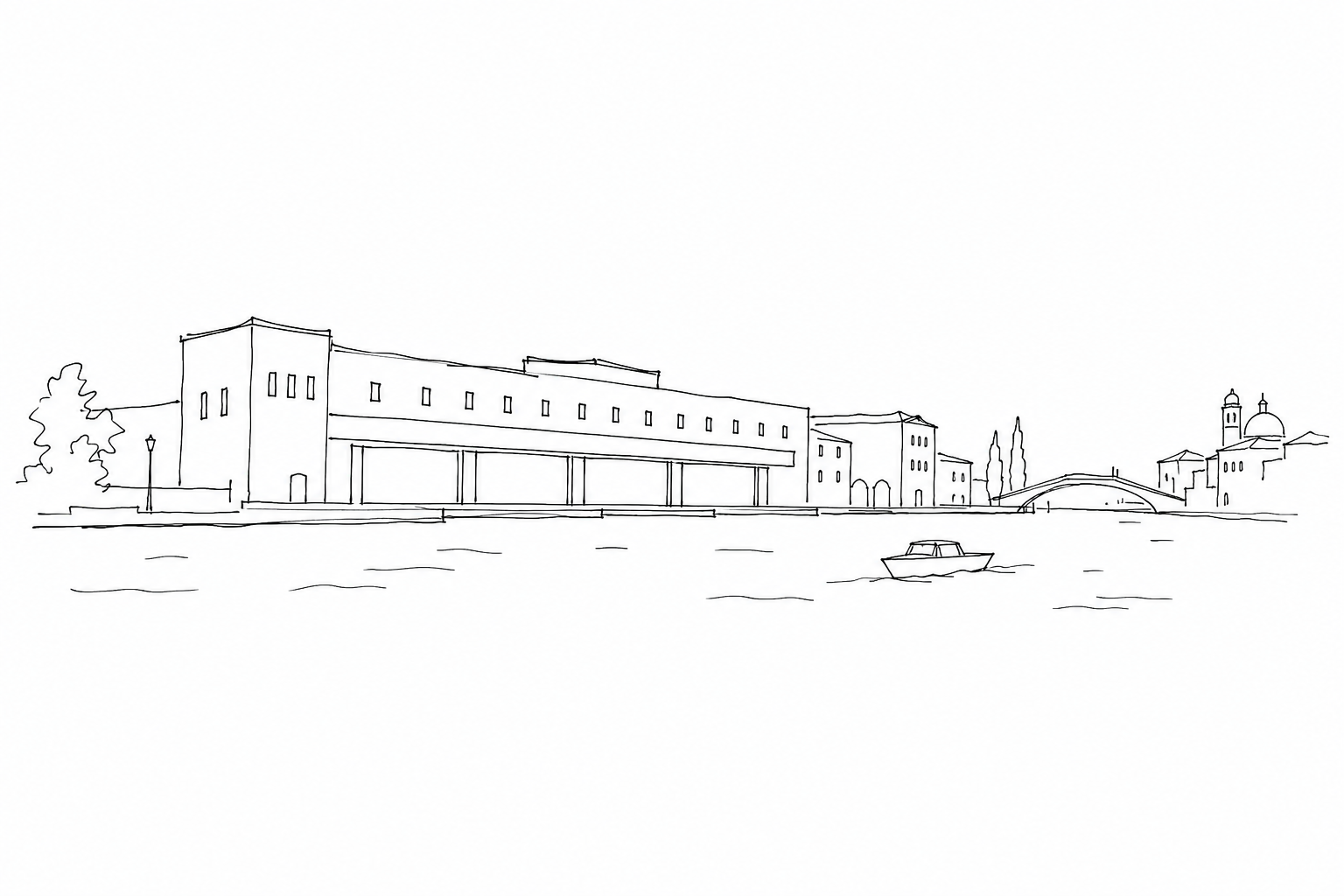
It is also worth stopping for a moment at the station building. The current front, completed in the twentieth century, has sober, horizontal lines: it does not imitate Venetian palaces, but works as a modern frame in front of a historic landscape. The name Santa Lucia instead recalls the church demolished in the nineteenth century to make way for the railway, when Venice was permanently connected to the mainland.
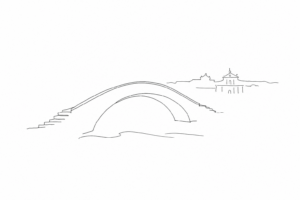
In a few minutes you can therefore read three layers: the railway arrival, the loss of a religious place and the scenic entrance onto the water. It is the first true Venetian orientation.
The first view: Grand Canal and San Simeon Piccolo
As soon as you are outside Santa Lucia, stop for a few moments before going down toward the water. The Grand Canal does not appear as a simple panorama: here it functions as a main street, with landing stages, service boats, water taxis and pedestrian passages concentrated in just a few meters. It is the right point to understand that in Venice traffic is read on the water before it is read in the calli.
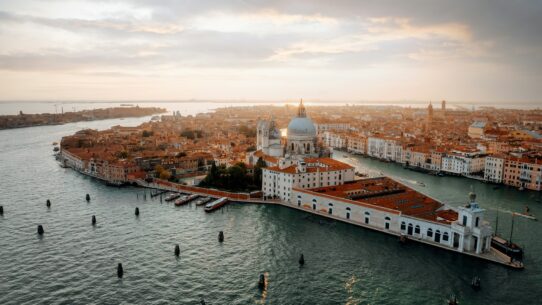
Opposite, on the other bank, San Simeon Piccolo dominates, recognizable by its large green dome and classicizing pronaos. The name can be misleading: the scenic effect is anything but small. The church, rebuilt in the eighteenth century to a design by Giovanni Antonio Scalfarotto, responds to the railway arrival with an almost theatrical facade, closer to the neoclassical language than to the Gothic image often associated with Venice.
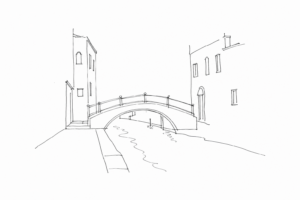
Also look to the left: the Ponte degli Scalzi frames the curve of the canal and introduces the flow of pedestrians toward Cannaregio and Santa Croce. In less than ten minutes you have before you three essential elements: water as an urban axis, architecture as a backdrop, continuous movement as the city’s first rhythm.
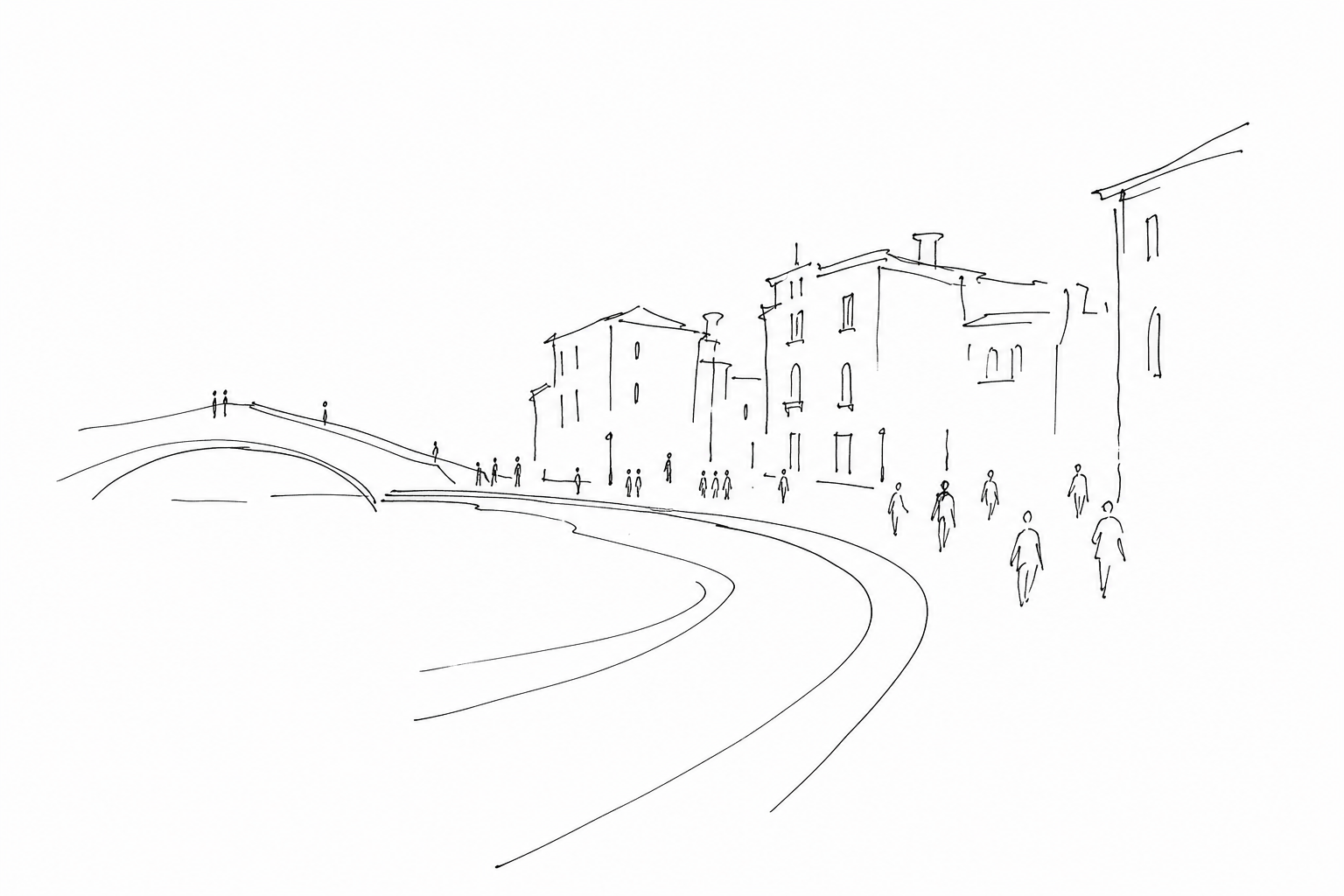
Coming out of the railway building and looking at the water, the simplest choice is to read the two sides immediately. To the left appears the Ponte degli Scalzi: it is not just a passage, but an urban signal. Its arch in Istrian stone connects the arrival bank with Santa Croce and introduces narrower calli, small campi and routes toward Piazzale Roma.
To the right, instead, the path remains on the bank for a few steps and then bends toward the Lista di Spagna, the natural entrance to Cannaregio. Here it is worth observing the unusual width of the street: it recalls its function as an access gate, with hotels, signs, newsstands and concentrated flows of travelers.
- If you want to cross immediately, head for the nearby bridge: from above you better understand curves, landing stages and facades.
- If you want to stay on the same bank, go right and note the passage from the open quay to the commercial street.
Before moving, also identify the landing stages: they help you understand the direction of the water and general orientation.
Before moving on: details to notice in ten minutes
Before choosing a bridge or a fondamenta, stay for a few moments at the water’s edge. Behind you is a twentieth-century building, low and horizontal: its sober facade works almost as a frame, because it does not compete with what opens in front. It is a modern entrance to an ancient city, and this contrast is read best by standing still.
- The steps: they mark the immediate passage from the mainland to the rhythm of navigation.
- Poles and bricole: they are not decoration, but work and orientation points for boats.
- The landing stages: observe directions and signs without relying on timetables or lines, which must always be checked on site.
- The light on the opposite facades: it immediately shows materials, worn plaster and different water levels.
A historical detail helps: the area takes its name from a church once nearby, demolished in the nineteenth century to make room for the railway. Knowing this makes the first glance less neutral: here the arrival by rail is also an urban transformation. After this slow reading, the direction chosen will already have meaning.
Before moving away from Santa Lucia it is worth truly stopping, even if only for a few minutes. Looking at the station behind you, the Grand Canal in front, the side bridges, the boats at work and the facades that already seem to tell of different eras helps you better understand the entrance into the city. Venice does not begin at San Marco or in the museums: it begins here, in a space that is practical and scenic at the same time, where the railway arrival meets a city built on water and immediately forces the gaze to change rhythm.