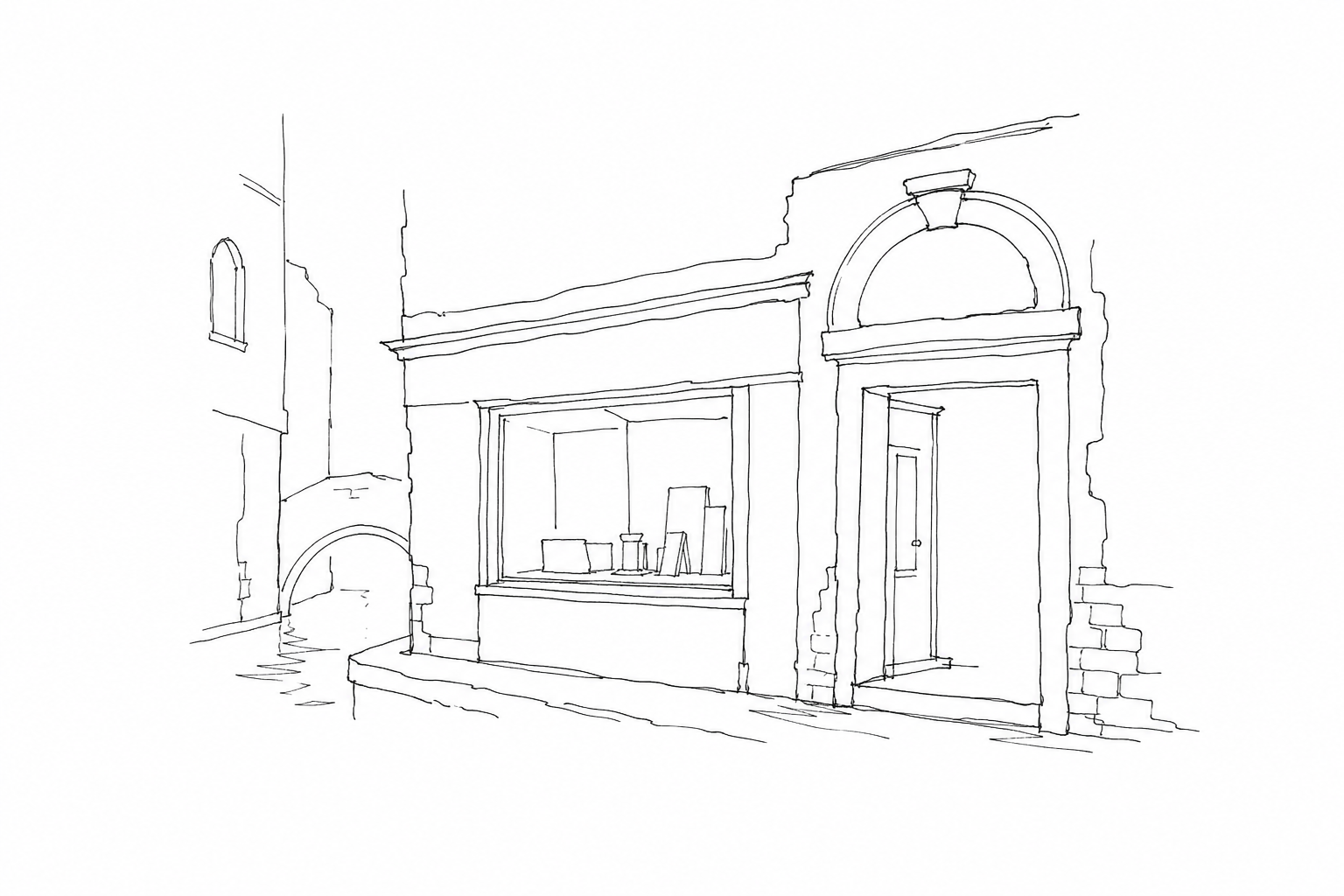

In the Venice Ghetto, the Banco Rosso occupies a minimal space: a shop window, a few furnishings, a sign that seems almost to hold back its voice. Yet a decisive part of the city’s economic history passes through here. Pawn loans, regulated by the Serenissima and entrusted to Jews within precise boundaries, tell of a practical, contradictory Venice, capable of transforming daily need into a financial system. Looking at the Banco Rosso means reading, behind a tiny façade, relations of power, religious constraints, trade, survival and urban life.
A small shop window, an enormous economic history
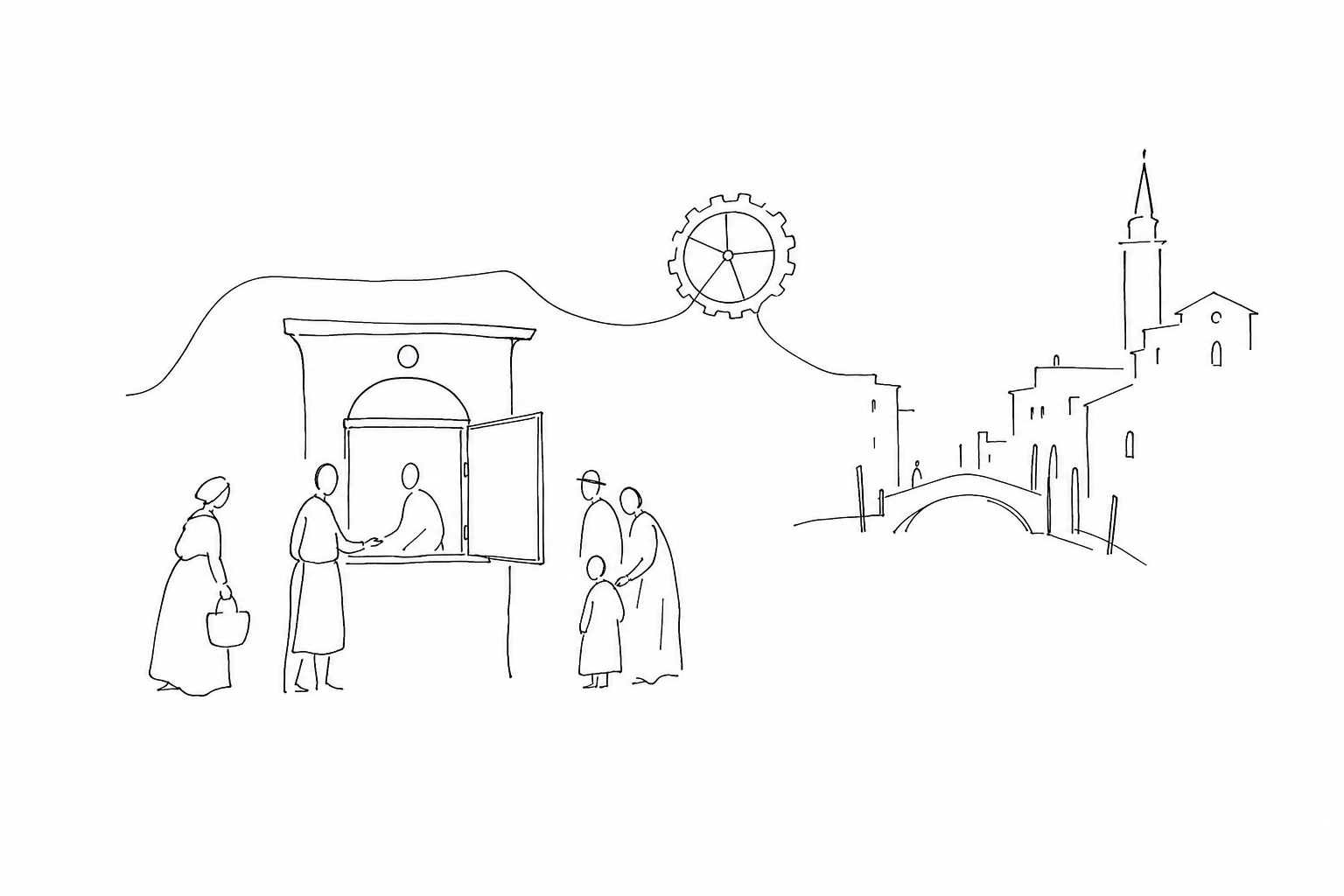
In the Campo del Ghetto Nuovo, the Banco Rosso is striking precisely because it does not resemble a triumphal monument: a tiny shop window, a wooden counter, a compact space. Yet through places like this passed an essential part of the Venetian economy between the sixteenth and seventeenth centuries. Here, pawn lending was not a marginal detail, but a regulated, controlled and necessary service in a city made up of uncertain wages, maritime trade, artisan workshops and families forced to turn household objects into liquidity.
The name recalls the color that distinguished one of the Jewish banks authorized by the Republic. In the Ghetto, established in 1516, lenders operated within precise limits set by the condotte, the contracts granted by the Venetian authorities. Behind that small threshold, obligation, tolerance and need met: Venice segregated the Jews, but it also depended on their credit function.
How loans worked in the Ghetto
The Banco Rosso was a pawn loan bank: it did not grant credit on abstract trust, but on an object physically handed over. Those who needed money brought an item that could be valued: a cloak, sheets, work tools, modest jewelry, household silver. The value of the object determined the sum advanced, always lower than the estimated value, because the pledge had to cover the risk of non-repayment.
Its operation was regulated by the condotte, that is, agreements granted and renewed by the Venetian authorities to families of Jewish lenders. These agreements established limits, obligations and interest rates, preventing the activity from being completely free. The lender kept the pledge; the debtor received money and, at the deadline, could redeem the object by repaying principal and interest. If they did not pay within the required terms, the item could be sold according to authorized procedures.
The bank, therefore, was not only a “Jewish” place: it was a cog in the Christian city. It served artisans, maids, small merchants, families in temporary difficulty. Precisely for this reason Venice maintained a practical contradiction: it confined Jews to the Ghetto and subjected them to restrictions, but entrusted them with a necessary economic function, controlled and frequented daily.
The Ghetto as a regulated space of the Serenissima
The Banco Rosso should be read within a precise geography: it was not an isolated service, but a counter located in a district that the Republic administered as an area both separate and indispensable. From 1516 Jews were concentrated in the Ghetto Novo, in Cannaregio, then the space extended to the Ghetto Vecchio and the Nuovissimo. The urban form still tells of that pressure: internal campi, controllable entrances, houses unusually tall for Venice, built upward because the available land remained limited.
The Serenissima regulated people, trades and movements. The gates were closed at night and surveillance made visible the boundary between the Christian city and the Jewish community; at the same time, during the day, that same boundary was crossed by Venetians seeking liquidity. The small red shop window therefore belonged to a broader urban machine: social separation on one side, economic usefulness on the other. In a few meters, public power transformed a financial necessity into a monitored space.
In front of the small shop window, the first thing to observe is the disproportion: a minimal frontage for a decisive function. Do not imagine just any shop, but a point of mediation between money, household objects and public control.
To read it on the spot, look for three clues. The first is the reduced scale: it communicates trust, but also surveillance, because every operation had to remain recognizable. The second is the position in the Campo del Ghetto Nuovo, close to the daily routes of the Jewish community. The third is the name: colors distinguished different lending institutions, such as Red, Green and Black, making the service identifiable even to those who did not read contracts or registers.
The key is not only “poverty,” but circulation. A ring, a fabric, a tool could become temporary credit. That tiny opening therefore tells of a city made of scarce liquidity, measured trust and very concrete rules.
In front of the Banco Rosso it is worth slowing down: it is not a conspicuous monument, but a detail that clarifies much about real Venice. In a few meters, the Republic’s rules, family economies, objects given in pledge, relationships between communities and institutions intersect. The Ghetto then appears not only as a place of memory, but as a regulated, inhabited and productive urban space. Reading this shop window carefully helps you see Venice beyond the scenery: a city also made of contracts, necessities, imposed limits and everyday ingenuity.
Related Posts
Palazzo dei Camerlenghi: money, public offices and economic power next to Rialto
History and interpretation of the Palazzo dei Camerlenghi, the financial seat of public Venice next to Rialto.Campo del Ghetto Nuovo: very tall houses, wells and memory in a strangely wide space
Editorial guide to Campo del Ghetto Nuovo: space, tall houses, wellheads and Jewish memory in Cannaregio.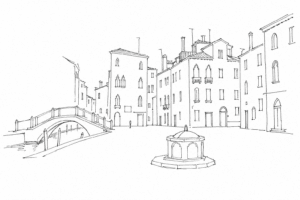
The Ghetto Nuovo of Cannaregio: why the world’s first ghetto is called “new”
Origin of the name Ghetto Nuovo: from the Venetian foundry to the Jewish enclosure of 1516.Questions Answered
What was the Banco Rosso and why was it important?
A pawn loan bank vital to Venice’s economy within the Jewish Ghetto.How did pawn loans operate in the Ghetto?
Loans were given against pledged objects with regulated terms.What role did Jewish lenders play in Venice?
They provided necessary credit while facing segregation.How was the Ghetto structured and controlled?
As a segregated yet indispensable urban space managed by the Republic.
From the Ghetto to its hidden stories
Want to move from façades and campi to the people and institutions that once filled them?
 Ghetto Vecchio and Ghetto Nuovissimo: three names for understanding Venice’s Jewish historyThe names Ghetto Nuovo, Vecchio and Nuovissimo explain space, power and memory in Jewish Venice in Cannaregio.
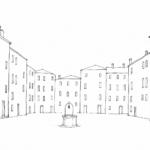 The Ghetto Novo: why the houses are so tall and what they tell us about Venetian Jewish historyIn Cannaregio’s Ghetto Novo, the height of the houses tells of imposed space, housing density and Jewish life in Venice.
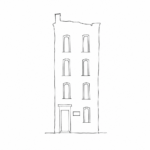 The hidden synagogues of the Ghetto: recognizing the “schools” by looking at almost normal façadesHow to read the façades of Venice’s Jewish Ghetto to sense the ancient “schools” behind almost ordinary buildings.
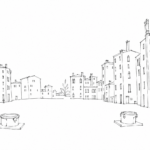 Campo del Ghetto Nuovo: very tall houses, wells and memory in a strangely wide spaceEditorial guide to Campo del Ghetto Nuovo: space, tall houses, wellheads and Jewish memory in Cannaregio.