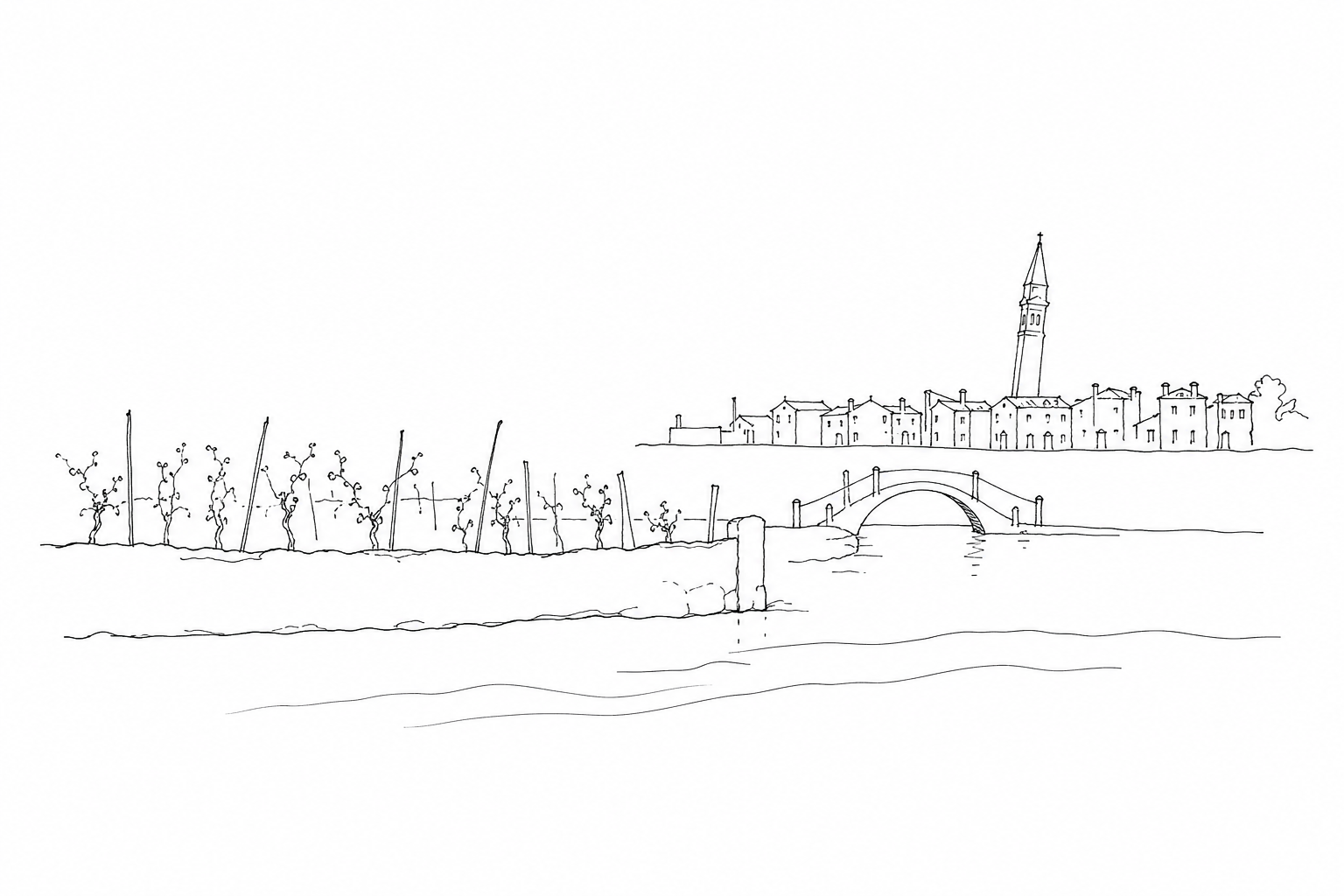
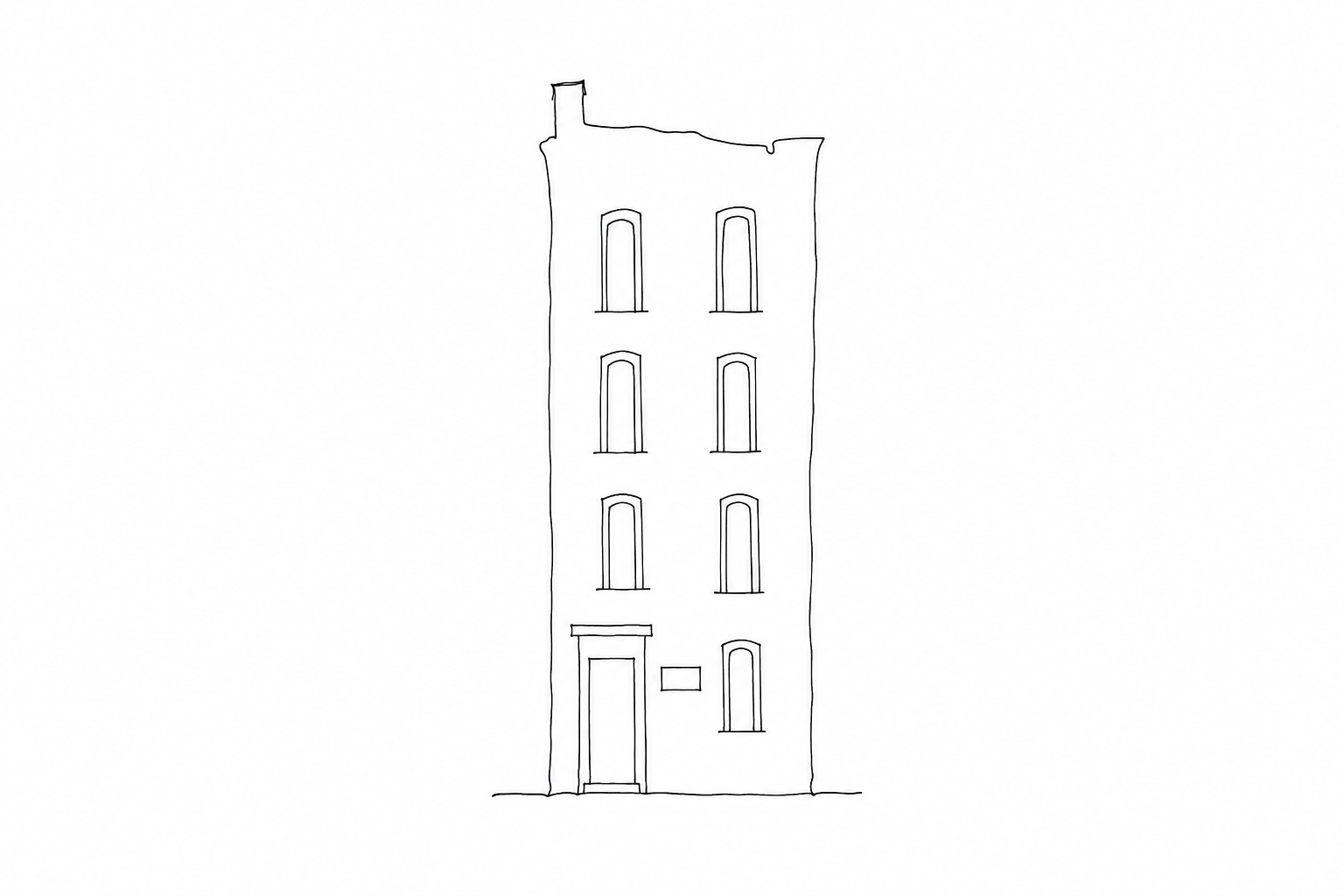

In the Venice Ghetto, synagogues do not announce themselves with domes or monumental façades. They often occupy upper floors, behind orderly windows, above doorways that could belong to any house. This discretion is not accidental: it tells of imposed constraints, urban density, architectural adaptations, and a community life capable of transforming limited spaces into places of study, prayer, and identity. Recognizing the ancient “schools” means learning to look better: reading proportions, openings, decorative traces, relationships between buildings and squares. It is a slower and more precise way to cross the Ghetto, where history does not always show itself, but remains imprinted on the façades.
Why the “schools” are hidden behind domestic façades
In the Venetian Ghetto, the historic synagogues did not originate as isolated, monumental buildings, but as spaces created inside already existing houses. The reason is both practical and political: after the establishment of the Ghetto in 1516, the Jewish presence was concentrated in a restricted, guarded, and densely inhabited space. Worship was necessary to community life, but its external visibility had to remain limited. For this reason the “schools,” that is, the places of prayer and study of the different communities, were inserted into the upper floors of buildings, without triumphal façades.
Discretion does not mean absence of architecture: it means compressed architecture. Behind almost domestic elevations there were ornate halls, women’s galleries, wooden furnishings, tevah and aron arranged according to the rite. Outside, instead, the signs are minimal: an unusual sequence of tall windows, closely spaced openings, sometimes inscriptions and proportions that only barely interrupt the rhythm of the dwellings. Recognizing the hidden synagogues of the Ghetto therefore means reading the façades as prudent surfaces, where apparent normality protected an intense religious life.
The word “school”: not a classroom, but a community
In the Venetian-Jewish lexicon, “school” does not primarily indicate a place of lessons. It is the Italian and Venetian form of “scola,” used for the synagogue and, more precisely, for the group that identified with it: a community of rite, origin, and internal administration. For this reason the historic names recount the plurality of the Jewish city: Scola Grande Tedesca, Scola Canton, Scola Italiana, Scola Levantina, Scola Spagnola.
Understanding the term also helps interpret the buildings. A “school” was not only a prayer hall: it included ritual furnishings, benches, a women’s gallery, tevah and aron, but also statutes, confraternities, relationships between families. Behind an ordinary elevation, therefore, a distinct collective identity was concealed. Recognizing it means listening to the names, the rites, and the Jewish “nations” that those upper floors preserved.
Clues to read on the almost normal elevations
In the Venetian Ghetto, the historic synagogues do not announce themselves with porticoes, domes, or pediments. The first rule of reading is to accept a constructed discretion: the place of prayer often occupies the upper floors of tall, compact houses, while at the level of the calle there remain doors, shops, stairs, and passages with a domestic appearance.
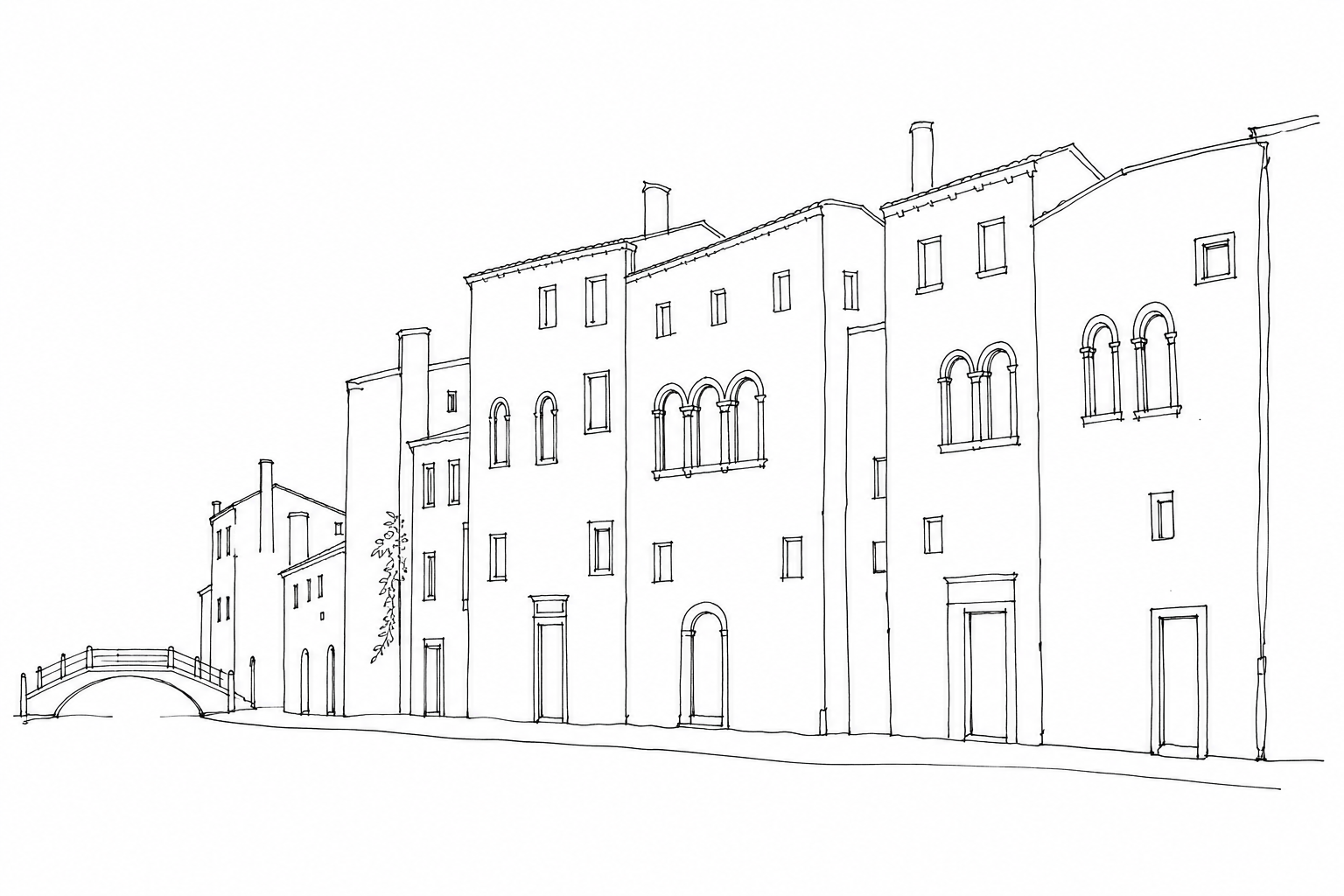
- Taller and more closely spaced windows: a liturgical hall requires light and volume. For this reason, on some elevations, a band of openings appears larger and more regular than the nearby residential windows.
- Number and rhythm of the openings: in the Venetian scole there sometimes recurs an ordered sequence of five windows, read by tradition in relation to the five books of the Torah. It is not proof on its own, but a strong clue if combined with the other signs.
- An anomalous piano nobile: the prayer hall may occupy an upper level, with a more generous ceiling than normal. From the outside this is perceived in an eaves line, in a cornice, or in a slightly out-of-scale proportion.
- Non-monumental entrance: the access may be lateral, narrow, inserted into a shared building. Solemnity, more than on the street, was concentrated in the interior space.
- Minute signs: Hebrew inscriptions, plaques, coats of arms, or tablets help, but they are not always original nor always visible.
The best criterion is therefore to combine upper position, rhythm of the windows, and relationship with the urban fabric. The hidden synagogues are recognized more by proportions and discreet anomalies than by declared ornaments.
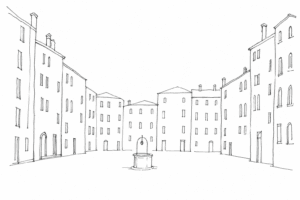
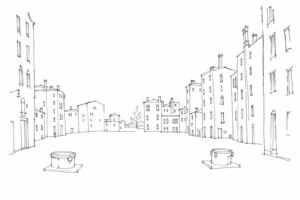
Orientation starts from the Campo del Ghetto Nuovo, a broad and apparently domestic space: here it is worth lifting your gaze toward the top floors of the tall houses, where the historic prayer halls were inserted into already inhabited volumes. Comparing one side of the square with the other helps to catch more regular windows, unusual heights, and less random wall portions.
Toward the Ghetto Vecchio, attention changes scale: narrower calli, passages, and small open spaces reduce the distance from the elevations. The Levantine and Spanish seats are read better by following the alignment of the openings and the relationship with small squares and side entrances, not by seeking an isolated monument.
The fondamenta also matter: the water, the bridges, and the access points recall that these buildings arose within a guarded urban enclosure, adapting solemn functions to a landscape of houses, warehouses, and everyday routes.
Observing the hidden synagogues of the Ghetto requires attention more than the search for a scenic effect. The Venetian “schools” speak through measured details: a series of wider windows, a raised floor, a portal, an unusual continuity in the façade. Understanding them helps to read the Ghetto not as a simple historic district, but as a space built by different communities, external obligations, and everyday solutions. Between Ghetto Nuovo, Ghetto Vecchio, and nearby calli, every building invites the gaze to slow down. Jewish Venice thus reveals itself through clues, not through evidence: precisely for this reason it leaves a deeper trace.
Related Posts
The Ghetto Novo: why the houses are so tall and what they tell us about Venetian Jewish history
In Cannaregio’s Ghetto Novo, the height of the houses tells of imposed space, housing density and Jewish life in Venice.Campo del Ghetto Nuovo: very tall houses, wells and memory in a strangely wide space
Editorial guide to Campo del Ghetto Nuovo: space, tall houses, wellheads and Jewish memory in Cannaregio.
Ghetto Vecchio and Ghetto Nuovissimo: three names for understanding Venice’s Jewish history
The names Ghetto Nuovo, Vecchio and Nuovissimo explain space, power and memory in Jewish Venice in Cannaregio.Questions Answered
Why are the synagogues hidden behind domestic façades?
Due to practical and political constraints limiting external visibility.What does the term 'school' mean in the Venetian-Jewish context?
It denotes a synagogue community, not just a classroom or prayer hall.How can hidden synagogues be recognized from the outside?
By observing taller windows, window rhythms, floor proportions, and subtle markings.What role does the urban environment play in the design of these synagogues?
The synagogues adapt to the guarded, dense urban fabric of the Ghetto.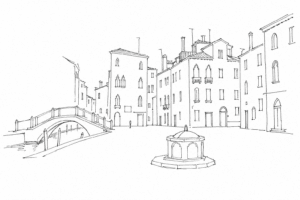
Stay a little longer in Venice’s Ghetto
Would you like to look behind the names, buildings and small details of Cannaregio?
 The Ghetto Nuovo of Cannaregio: why the world’s first ghetto is called “new”Origin of the name Ghetto Nuovo: from the Venetian foundry to the Jewish enclosure of 1516.
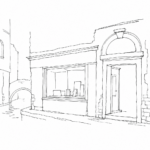 The Banco Rosso and Loans in the Ghetto: the Economic Venice Behind a Tiny Shop WindowA reading of the Banco Rosso in the Venice Ghetto: pawn loans, rules, urban space and economic memory.
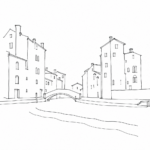 Ghetto Vecchio and Ghetto Nuovissimo: three names for understanding Venice’s Jewish historyThe names Ghetto Nuovo, Vecchio and Nuovissimo explain space, power and memory in Jewish Venice in Cannaregio.
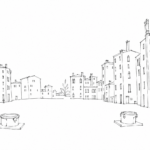 Campo del Ghetto Nuovo: very tall houses, wells and memory in a strangely wide spaceEditorial guide to Campo del Ghetto Nuovo: space, tall houses, wellheads and Jewish memory in Cannaregio.