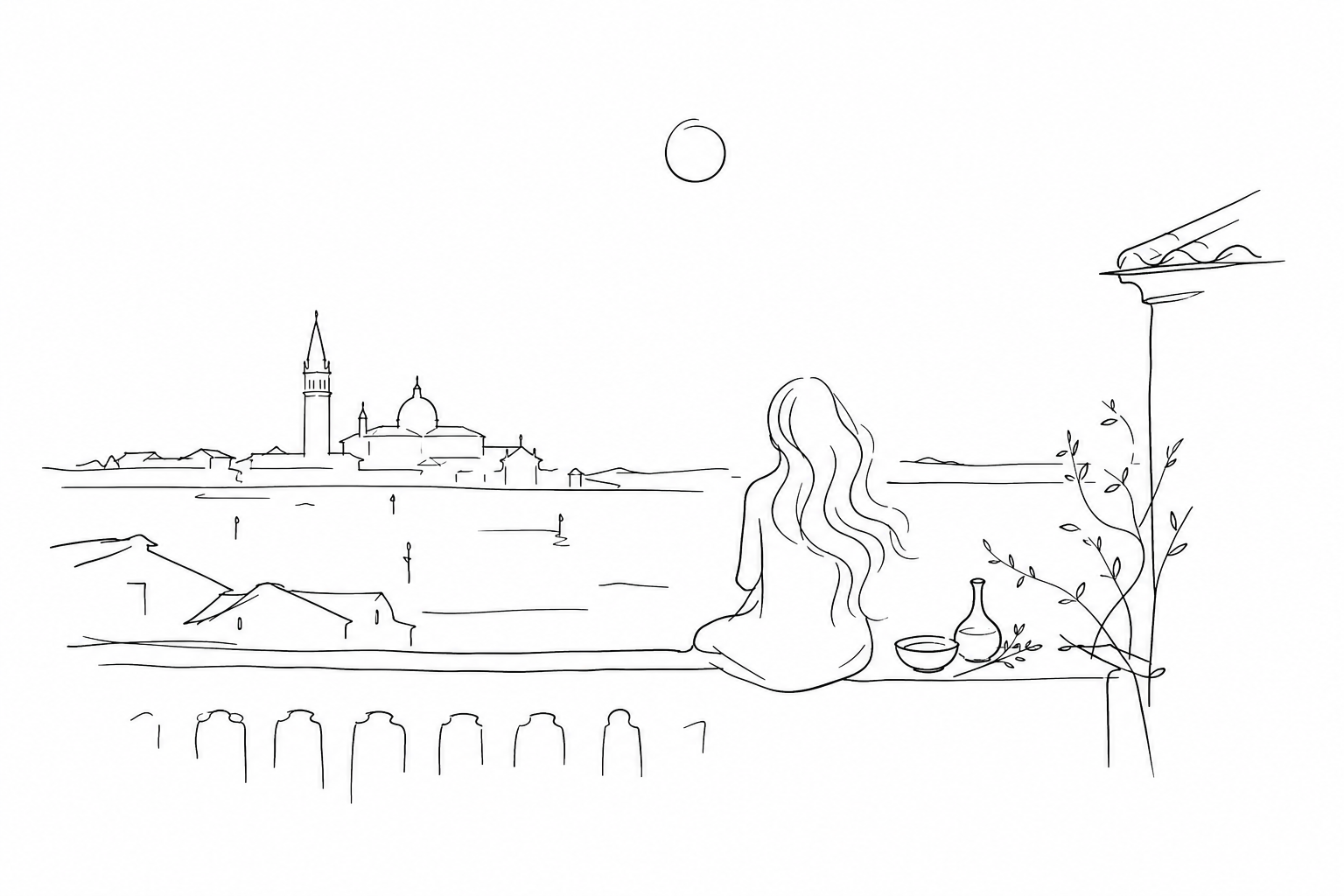

Venetian altane are a discreet but revealing presence: wooden terraces suspended on rooftops, born from practical needs and become part of the urban landscape. From up there people hung laundry, sought air, observed the city from a private height. But altane are also linked to a much-told image: Venetian women in the sun, busy lightening their hair with lotions and patience. Between daily use, fashion, painting and popular memory, these structures help us read Venice not only from the lower level of the campi and calli, but also from its higher and more hidden domestic life.
What Venetian altane are
The Venetian altana is a small wooden terrace, open and raised, built above the roof of houses. It should not be confused with a balcony: the altana does not protrude from the façade, but rests on the top of the building, often like a platform reached from inside through narrow stairs or dormer windows.
In a dense, humid city built on water, this space had a concrete function: it offered air, sun and a dry place to hang laundry, observe the neighborhood or carry out domestic activities away from the shady calli. Its light structure, made of beams and planks, made it possible to obtain light without radically transforming the house.
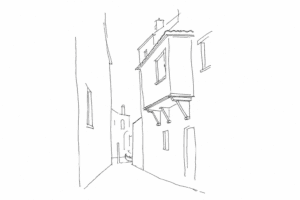
It was precisely this exposure to the sun that made the altana part of the story about the blond hair of Venetian women. According to tradition, women would sit here to lighten their hair, using preparations and long waits in direct light. Even before custom, therefore, the altana is an architectural element born from a typically Venetian urban necessity.
Sun, lotions and blond hair
The most curious link between altane and Venetian women’s life concerns hair lightening. In the city’s tall, dense houses, where the calli allowed little light to filter through, the roof became the ideal place to expose oneself to the sun. Women climbed up there in the brightest hours, often sitting for a long time, with their hair spread out and treated with preparations designed to accentuate light highlights.
Sources and tradition recall the use of lotions based on simple ingredients, such as plant infusions, scented water, ash or alkaline substances derived from lye, sometimes mixed with acidic elements. These were not risk-free gestures: the sun, combined with aggressive mixtures, could dry out the hair and irritate the skin. Precisely for this reason a characteristic accessory also appeared, the solana or exposure hat: a wide brim with a central opening, useful for protecting the face while allowing the locks to come out.
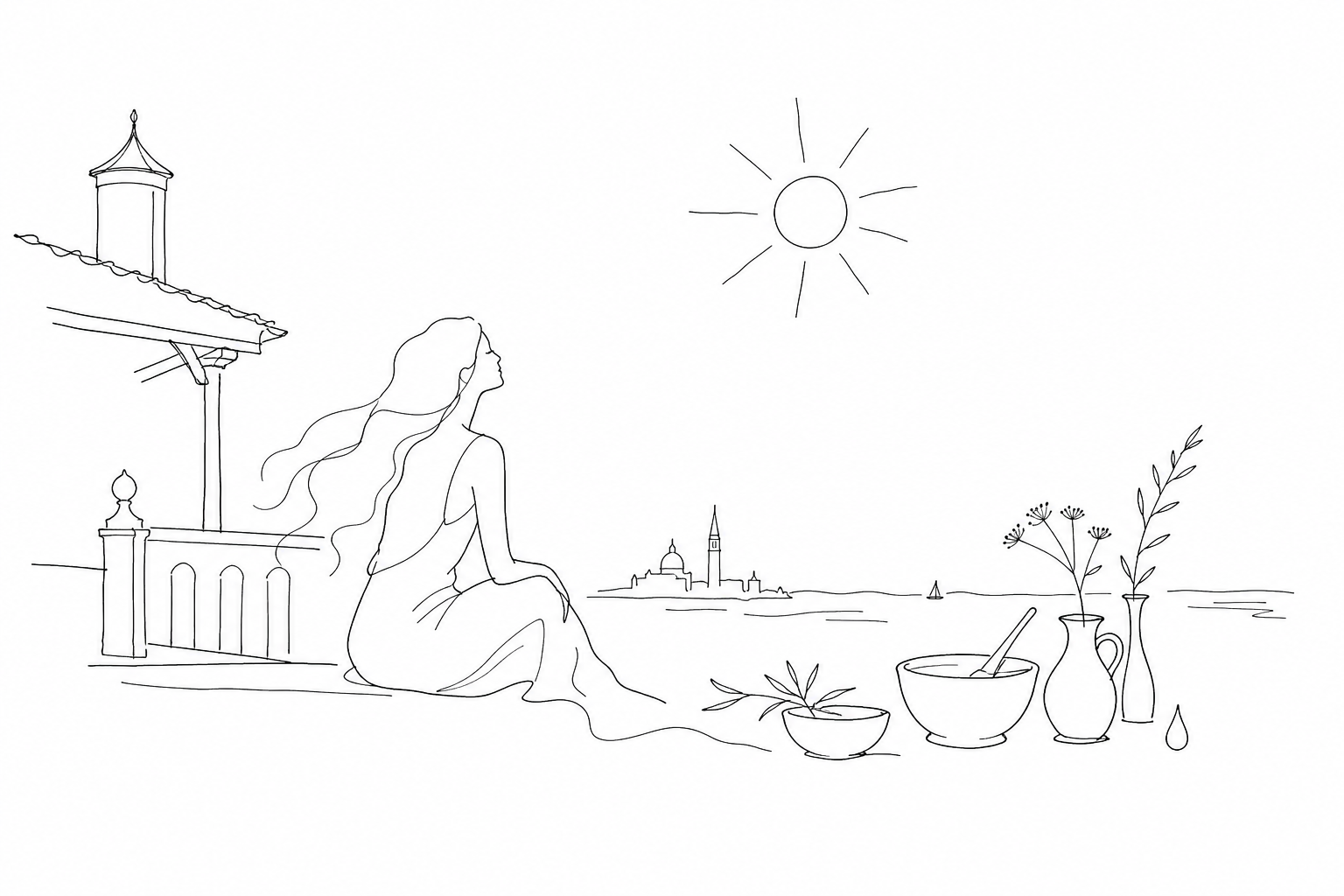
From this practice comes the image of the so-called Venetian blond, a warm, golden or coppery color, celebrated in painting between the fifteenth and sixteenth centuries. The altana, therefore, was not only a domestic space: it also became a small social scene, where body care, fashion and the desire for visibility met the sun of the lagoon.
Between custom, painting and popular storytelling
The practice of the altana soon entered the city’s imagination because it united daily gesture and representation. In costume repertories of the late sixteenth century, such as Cesare Vecellio’s Habiti antichi et moderni, Venetian women often appear recognizable by elaborate hairstyles, precious fabrics and a care for appearance that interacted with the international fame of the Serenissima. The so-called “Venetian blond,” warm and coppery, was not only an effect sought with lotions and sun: it also became a visual sign, associated with urban refinement.
Painting also helped to fix this memory. In the canvases of Titian, Veronese or Palma il Vecchio, the golden and luminous locks should not be read as simple domestic chronicle, but as an aesthetic code: beauty, status, controlled sensuality, a taste for color. Popular storytelling then transformed the altana into an almost theatrical scene: a figure looking out between sky and rooftops, with the straw solana and scented preparations, suspended between fashion, vanity and home life.
How to read them today while walking in Venice
To recognize an altana without falling into the postcard image, it is best to look upward with architectural attention. It is not a simple terrace: it usually appears as a wooden platform resting above the roof, often set back from the façade, with a light parapet and access from the attic. Its position tells of a dense city, where domestic space sought air, light and a view beyond the narrow calli.
In the more residential sestieri, from Dorsoduro to Cannaregio, the altana can be read well when it emerges among chimneys, roof tiles and dormer windows. The link with the lightening of hair should be interpreted in this way: not as an isolated curiosity, but as the private use of an exposed, reserved and at the same time visible place. Observing the orientation, height and relationship with windows and courtyards helps to understand why these very spaces became the setting for aesthetic practices, family memory and the Venetian imagination.
Looking at altane while walking in Venice means noticing a less immediate level of the city: that of the rooftops, domestic habits, gestures repeated over time. The story of blond hair, between historical reality and imagination, should not be taken as a simple picturesque curiosity, but as a clue to a society attentive to appearance, light and available spaces. Today many altane are restored, transformed, sometimes almost invisible among chimney pots and antennas. Recognizing them makes it possible to observe Venice with greater precision, grasping the continuous relationship between architecture, climate, custom and daily life.