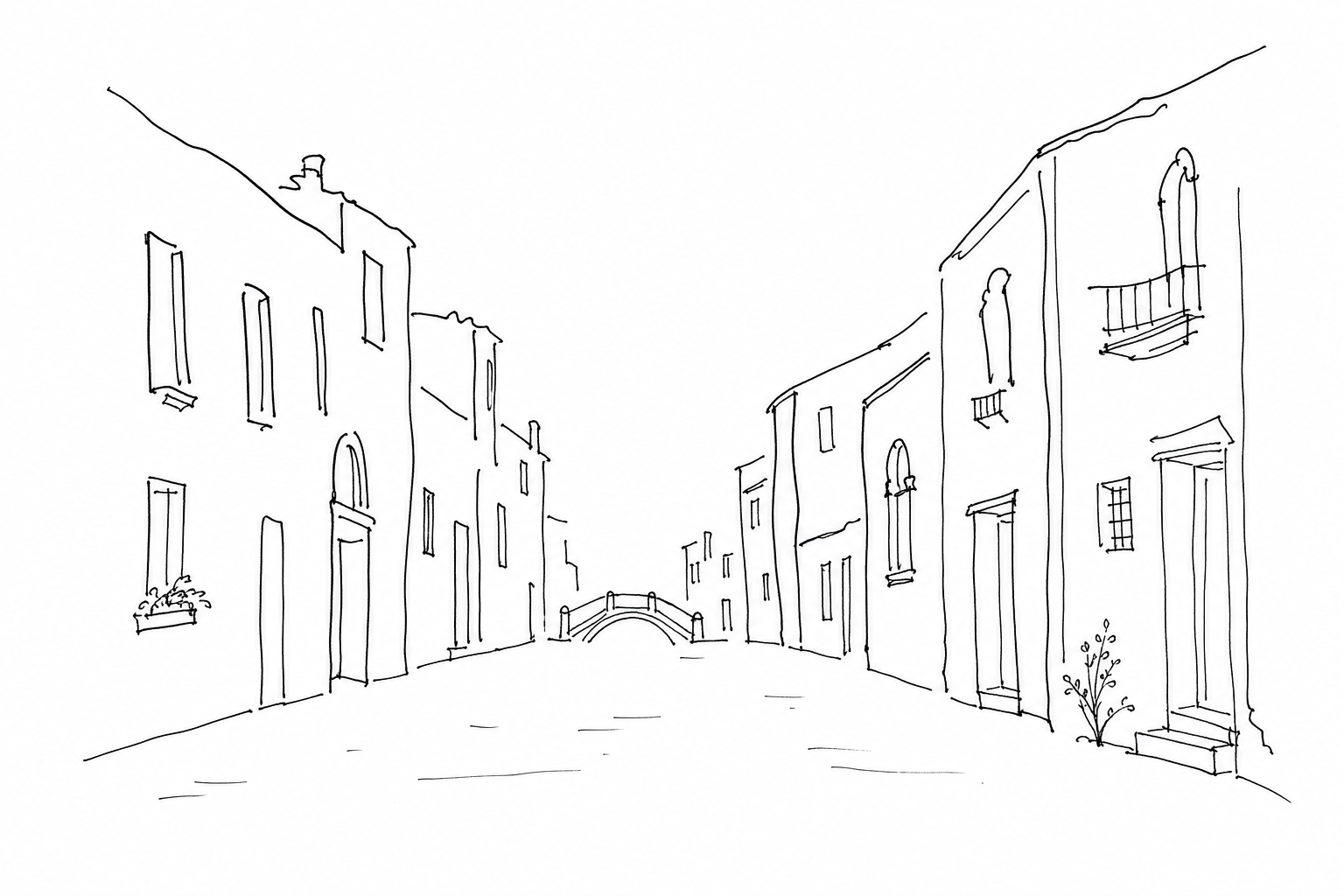
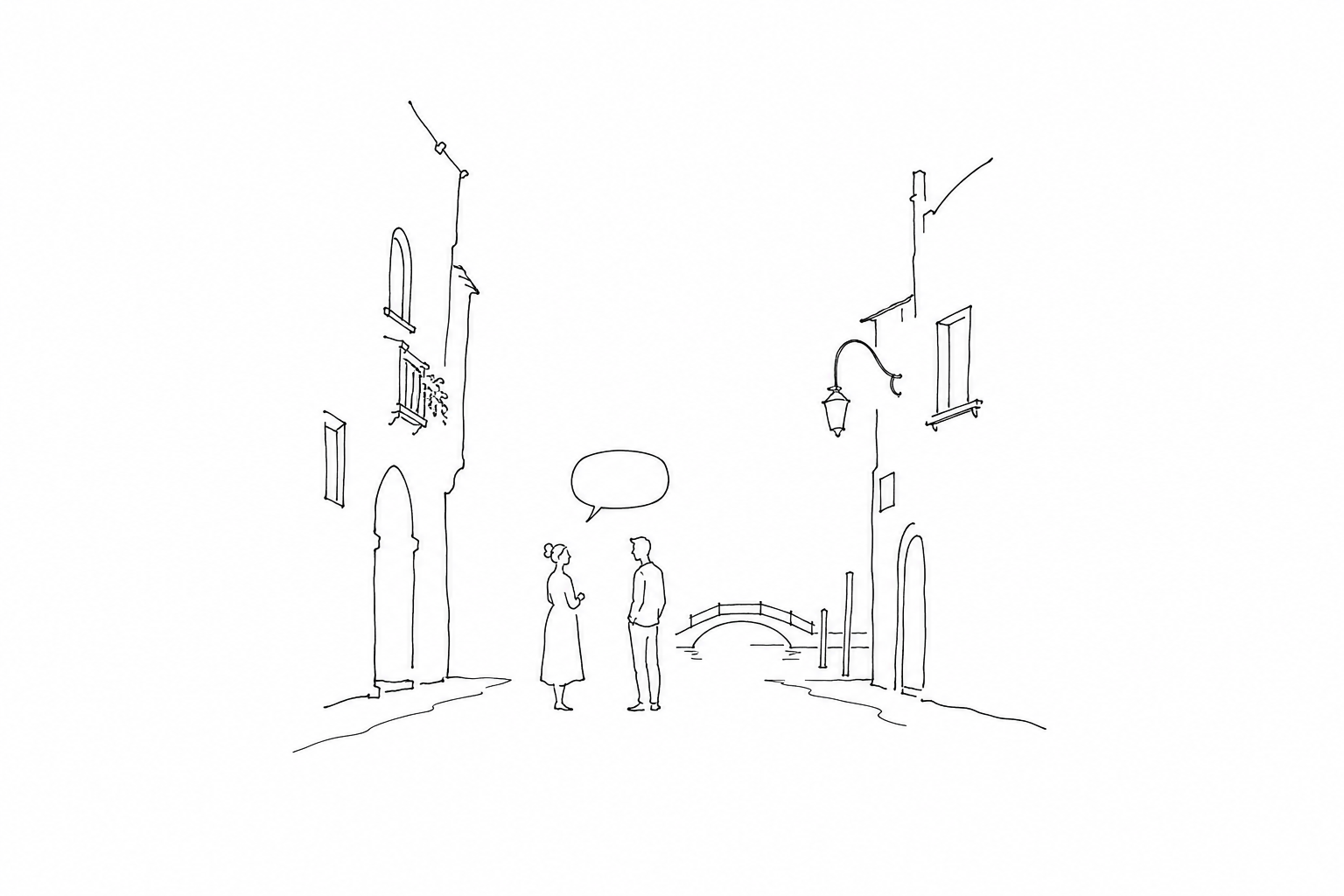

In Venice some words arrive before their meaning: they are heard at the market, on the vaporetto, between two elderly people in front of a water door, and they seem both familiar and indecipherable. “Xe” and “ghe sboro” are among these: not simple local colors to collect, but living traces of an urban, layered language, used naturally and in different registers. Understanding them, at least a little, helps you enter the city without reducing it to scenery: it means listening better to relationships, tones, distances, everyday ironies.
First thing: it is not mangled Italian
When a tourist hears “xe” or “ghe sboro”, the temptation is to translate on the fly as if they were Italian words pronounced badly. That is the first mistake. Venetian has its own grammar, its own urban and lagoon history, and for centuries it was a language of everyday use in a city that traded, administered and wrote a great deal.
“Xe” often corresponds to “is” or “are”: el xe qua means “he is here”, i xe rivai “they have arrived”. It is not a shortcut, but a normal form of local speech. “Ghe”, instead, can function as “there”, “to him”, “there is”, depending on the sentence: it must be understood in context, not in isolation.

With “ghe sboro” even more caution is needed: it is a vulgar, very marked exclamation, which can express surprise, annoyance or emphasis. Hearing it does not authorize you to repeat it: tone, familiarity and place matter a great deal.
“Xe”: the little word that supports many sentences
In Venetian “xe” corresponds, in most cases, to the Italian “è” or “sono”. It is a very short word, but it is heard continuously because it is used to build everyday sentences: “el xe qua” means “he is here”, “la xe bela” means “she is beautiful”, “i xe rivai” means “they have arrived”.
The pronunciation should not be read as a hard Italian “x”. It usually sounds closer to a soft “ze”, with an initial voiced s: something like “ze”, not “cs-e”. For a tourist, recognizing it helps a lot: it is often the pivot of the sentence, the thing that makes it possible to understand who or what “is” in a certain way or in a certain place.
Be careful, however, not to use it as folkloric decoration. Saying “xe” once may seem nice, repeating it without knowing the rest of the sentence can sound artificial. Better to listen to it in context: in a market, in a bar, on a vaporetto, it often indicates a quick, practical observation, said without emphasis.
“Ghe sboro”: why caution is needed
If “xe” is a useful and almost neutral word, “ghe sboro” belongs to a completely different register. It is a very colorful Venetian exclamation, with a vulgar basis: it should not be treated as a nice phrase to repeat in order to seem “local”.

The point is not only the literal meaning, openly obscene, but the tone. It can come out of someone’s mouth as a vent, surprise, irritation, emphasis or theatrical comment; often the intonation matters more than the word-for-word translation. In a conversation among friends it may be perceived as a rough joke; said by a stranger, in a shop, in front of elderly people or children, it can be out of place or offensive.
For a tourist the prudent rule is simple: understand it yes, use it no. If you hear it in a calle, at the counter of a bar or during a lively discussion, it is best to read it as a sign of familiarity, exasperation or local color, not as an invitation to imitate. Repeating it with an uncertain accent risks turning an already strong phrase into a caricature.
It is therefore better to recognize it for what it is: an expressive, popular voice, not suited to formal contexts and to be handled with great caution.
Where to listen without turning everything into folklore
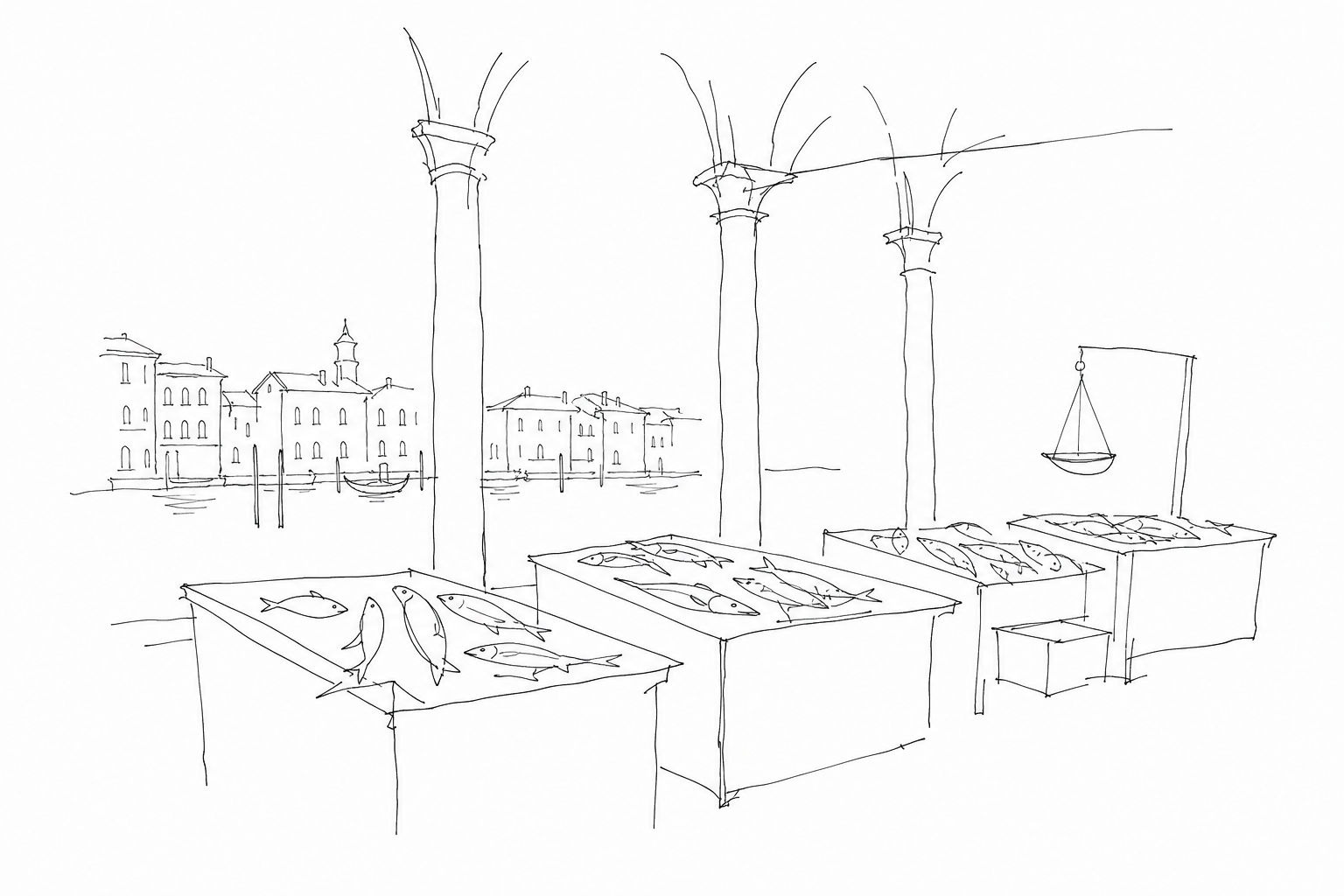
The best way to understand “xe” and certain rougher expressions is not to look for them as linguistic souvenirs, but to notice them in the places where Venetian still circulates naturally: among market stalls, in a conversation at the bar, on a crowded vaporetto, in the less theatrical calli, when someone comments on the weather, a delay, an annoyance.
Tone matters more than literal translation. “Xe” can pass almost unnoticed: it links sentences, states, explains. The stronger exclamation, instead, usually arrives as an outburst, a joke among acquaintances or an energetic reaction; outside that relationship it can sound intrusive, especially if imitated with a fake accent.
Listening carefully also means accepting that you should not use everything you understand. In Venice dialect is not scenery for visitors: it is a language of proximity, with registers, boundaries and intimacy. Recognizing them is already a form of respect.
Venetian words are not sound souvenirs: they have contexts, nuances, boundaries. “Xe” can open a simple everyday sentence; “ghe sboro” instead requires caution, because it carries with it intensity, local habit and possible misunderstandings. For those visiting Venice, the best approach is to listen before repeating, to distinguish curiosity from imitation, to accept that a city is also known through what is not grasped immediately. In that small distance between sound and meaning there is often the most authentic part of the encounter.
Related Posts
Barene and velme: the words of the lagoon that explain why Venice is not only stone
A lagoon vocabulary for reading Venice beyond calli and palaces: what barene and velme are, how they change with the tide and why they matter.Campiello, corte, ramo: a small sentimental guide to the words of the Venetian map
A short guide to reading Venice through the words of its nizioleti: campielli, corti, rami, calli, fondamenta and rii.
Venetian caìgo: when fog changes the way of seeing calli, canals and bell towers
A practical and cultural account of Venetian caìgo, the fog that changes distances, sounds and details among calli, canals and bell towers.
Keep reading Venice through its words
Want to move from expressions heard at the counter to the names and terms written into the city itself?
 Why in Venice They Say “ombra”: history and legend of the most Venetian glass of wineOrigin, legend and everyday use of the ombra, the glass of wine linked to Venetian bacari.
 Campiello, corte, ramo: a small sentimental guide to the words of the Venetian mapA short guide to reading Venice through the words of its nizioleti: campielli, corti, rami, calli, fondamenta and rii.
 Venetian nizioleti: reading the names of the calli like a map written on the wallsGuide to Venetian nizioleti: origin, form, recurring words and practical use for finding your way among calli, campi, rii and sestieri.
 Rio terà: why some streets in Venice were canalsWhat rio terà means, why some rii were filled in, and how to recognize them while walking among calli, campi, and sestieri.