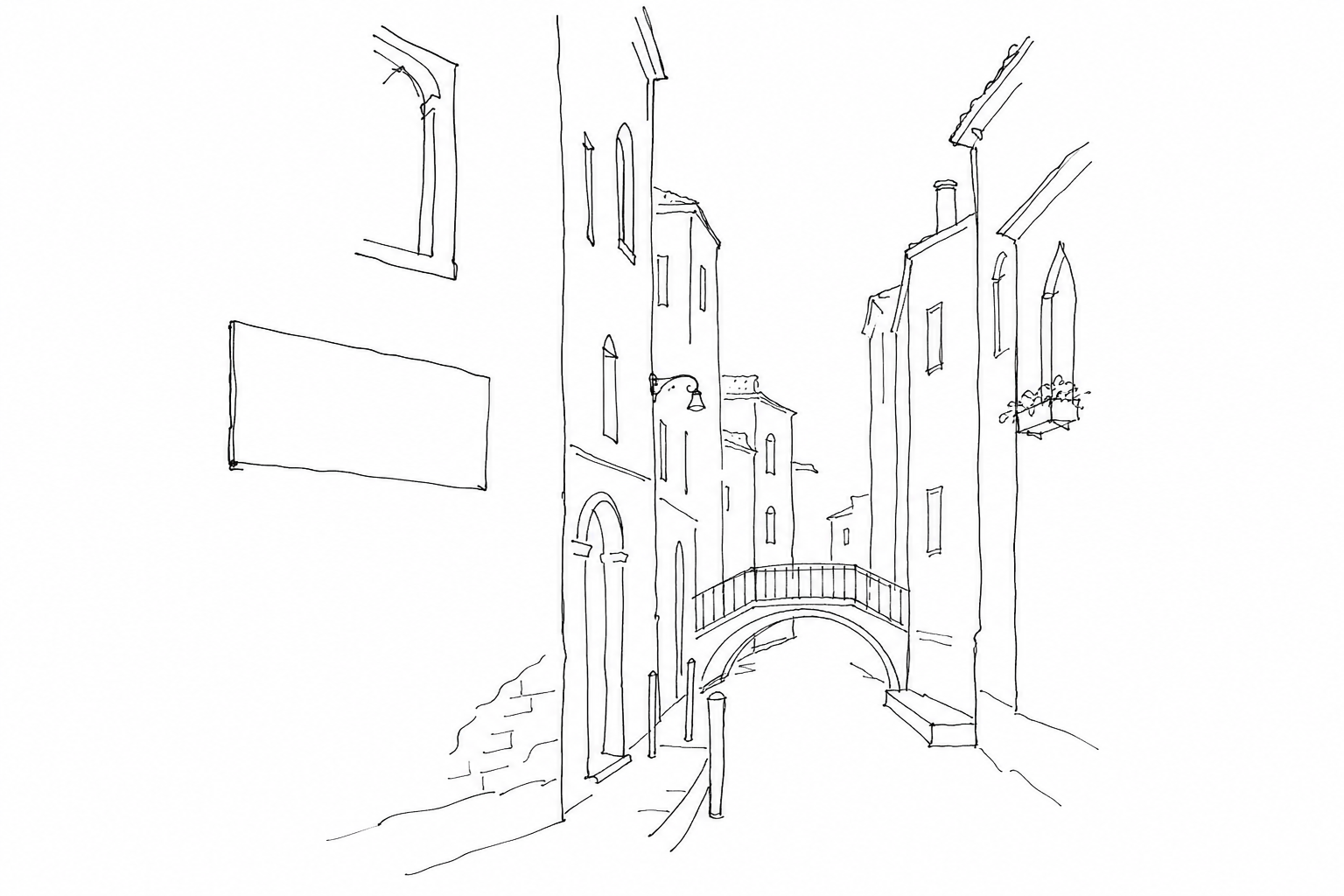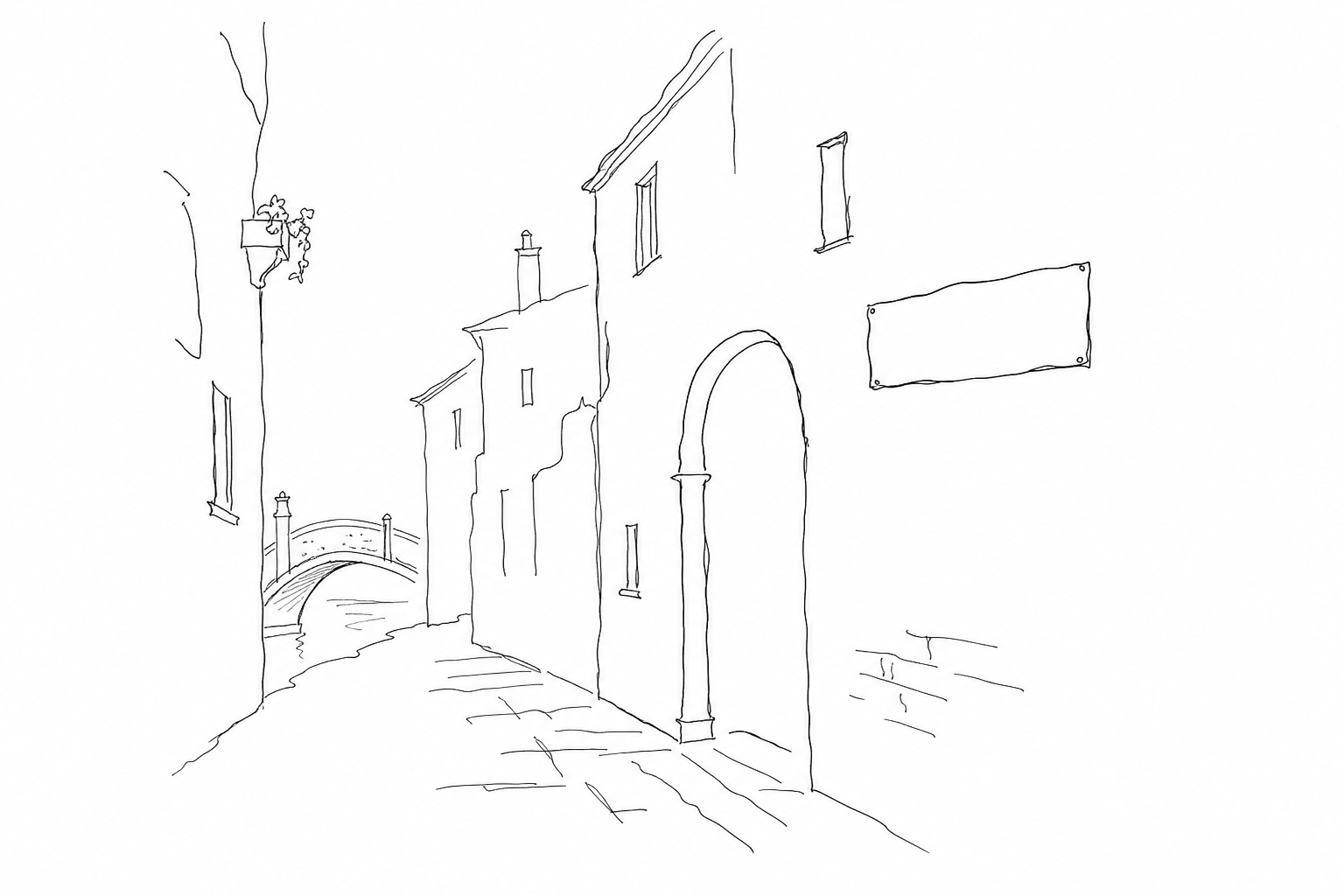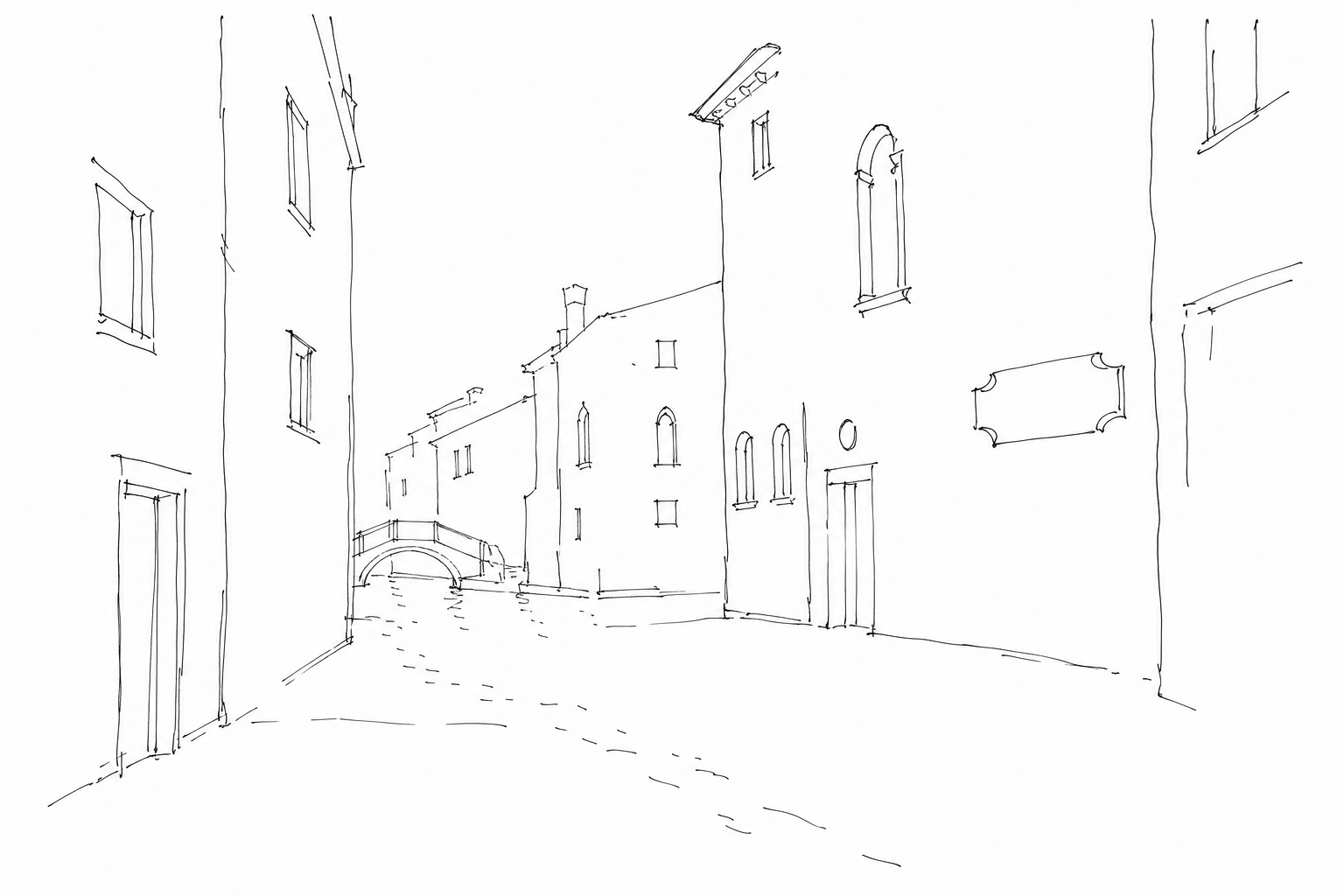

Among the names of Venetian calli, “salizada” is one of those that seem to go unnoticed and yet preserve a precise trace of the city. It indicates the streets that were paved before the others, when a large part of the routes was still in beaten earth or in less stable materials. Reading this word on a street sign means recognizing an ancient axis of passage, often linked to churches, markets, landing places, workplaces or important everyday connections. It is a tiny detail, but it helps to understand Venice not as scenery, but as an urban organism built out of necessity, hierarchies and real movements.
What “salizada” means in Venice
In Venice a salizada is a street that, originally, was “salizzata,” that is, made solid with stable paving. The term derives from Venetian usage linked to the pavement: it indicated those routes that, before others, were covered with stone or brick, distinguishing themselves from the more modest calli, often unpaved, muddy or covered with simple beaten surfaces.
The word therefore preserves a material trace of the medieval and modern city: it does not describe only a street, but signals an urban intervention considered important. A salizada was usually a busy connection, useful for reaching churches, markets, bridges, landing banks or places of public and commercial activity. The paving made passage easier, especially in a city exposed to humidity, rain and the constant movement of goods and people.
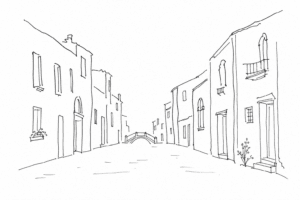
Reading a place name such as “Salizada” means recognizing a historical clue: that route was already relevant when the quality of the road surface was not uniform throughout Venice.
Why some streets were paved first
Priority did not depend on an aesthetic criterion, but on function. In a city built on islands, crossed by rii and campielli, making a street stable meant protecting a necessary connection: toward a parish church, a bridge, a loading bank, a market or an axis used every day by artisans, porters and residents.
Before paving became more uniform, many passages could be irregular, damp or subject to standing water. Paving a route meant reducing mud and wear, facilitating the transport of goods on shoulders or with small handcarts, and making movement safer during religious ceremonies, funerals, processions and public activities.
The value was also social: a well-maintained street indicated a place that was frequented, recognized and supported by collective interests. Where commerce, devotion and administration passed, the city invested first. For this reason the name salizada does not describe only a material, but signals an urban hierarchy already readable in ancient Venice.
Where to read the salizade in the sestieri
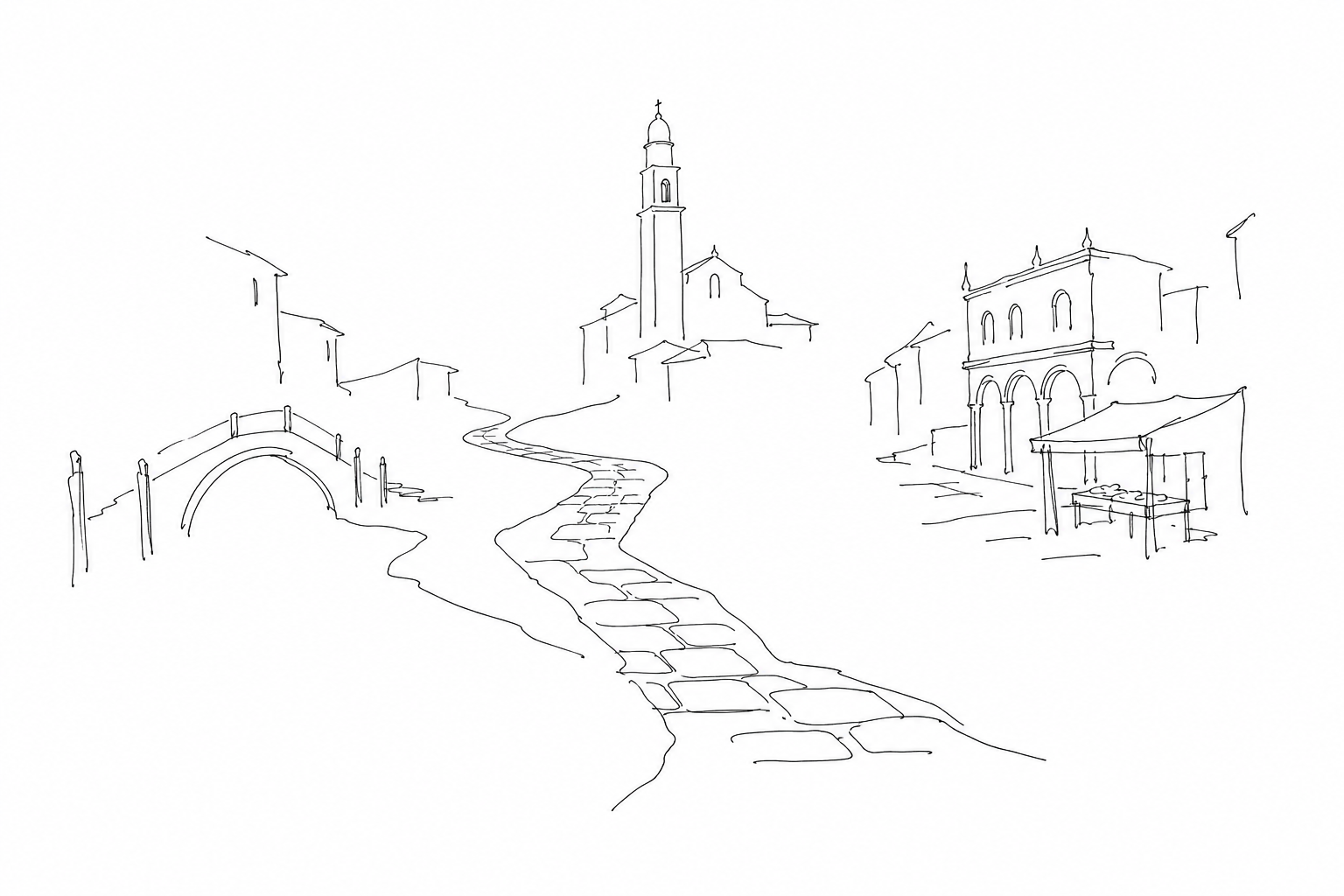
To recognize them, it is not enough to look for an ancient name: it is necessary to look at the relationship between the street and what it connects. In the central sestieri, the most eloquent cases are along the axes that linked landing places, bridges, parish churches and areas of exchange. Around Rialto, for example, the calli leading toward San Giovanni Grisostomo and San Lio clearly show this logic: narrow but continuous passages, designed for intense daily traffic.
In San Marco, the interpretation becomes even clearer in the routes near the Mercerie and San Moisè, where shops, residences and ceremonial routes overlapped. In Castello, near San Provolo or Santa Giustina, the term instead signals useful connections between religious places, banks and popular settlements.
The practical criterion is to observe three clues: the presence of the name on the nizioleti, the continuity of the route with respect to the bridges, and the proximity to collective functions. When a calle leads without unnecessary deviations toward a campo, a rio or a church, the place name often preserves the memory of a route already considered essential.
A small detail for understanding Venice
The term salizada does not indicate only a paved street: it suggests a hierarchy. It derives from the Venetian verb salizar, meaning to cover the ground with stone, and signals a costly intervention in an environment made of mud, acqua alta and narrow passages. Reading it on a street sign therefore means imagining a route made stable because it was truly needed: to reach a bridge, a market, a church, a seat of power or a landing place.
This detail also changes the view of materials. The trachyte masegni, associated today with the urban image, tell of a practical choice: to resist wear, salt and constant foot traffic. A salizada should be observed as a clue to an ancient priority, not as simple toponymic decoration. If a secondary calle widens, straightens or accompanies a natural flow between campo and fondamenta, the term preserves the memory of an itinerary recognized by Venetian daily life.
Observing the salizade is a simple and concrete way to change pace within Venice. Great monuments are not needed: it is enough to stop in front of a street sign, follow the course of the street, ask oneself why that particular stretch was made more solid before others. In those stones one can read ancient priorities, collective habits, routes of work and devotion, relationships between water and land. The word “salizada” thus becomes a small urban key: discreet, everyday, but capable of restoring depth to an itinerary and of bringing out the historic city beneath the present movement.
Related Posts
Venetian nizioleti: reading the names of the calli like a map written on the walls
Guide to Venetian nizioleti: origin, form, recurring words and practical use for finding your way among calli, campi, rii and sestieri.Rio terà: why some streets in Venice were canals
What rio terà means, why some rii were filled in, and how to recognize them while walking among calli, campi, and sestieri.
Campiello, corte, ramo: a small sentimental guide to the words of the Venetian map
A short guide to reading Venice through the words of its nizioleti: campielli, corti, rami, calli, fondamenta and rii.Questions Answered
What does 'salizada' mean in Venice?
It refers to streets originally paved and important for essential connections.Why were some streets paved before others?
Paving depended on their functional importance connecting key urban points.How can salizade be identified in Venice?
By their continuous routes linking churches, bridges, and markets.What social significance did a salizada have?
It indicated a recognized, frequented place with collective support.
The words hidden in Venice’s calli
Which details help explain why even addresses in Venice carry pieces of history?
 Rio terà: why some streets in Venice were canalsWhat rio terà means, why some rii were filled in, and how to recognize them while walking among calli, campi, and sestieri.
 Campiello, corte, ramo: a small sentimental guide to the words of the Venetian mapA short guide to reading Venice through the words of its nizioleti: campielli, corti, rami, calli, fondamenta and rii.
 Venetian nizioleti: reading the names of the calli like a map written on the wallsGuide to Venetian nizioleti: origin, form, recurring words and practical use for finding your way among calli, campi, rii and sestieri.
 Calle del Paradiso: a gentle name for looking at Venetian toponymy more carefullyA small Venetian name becomes a guide for reading nizioleti, calli and urban memory with greater precision.