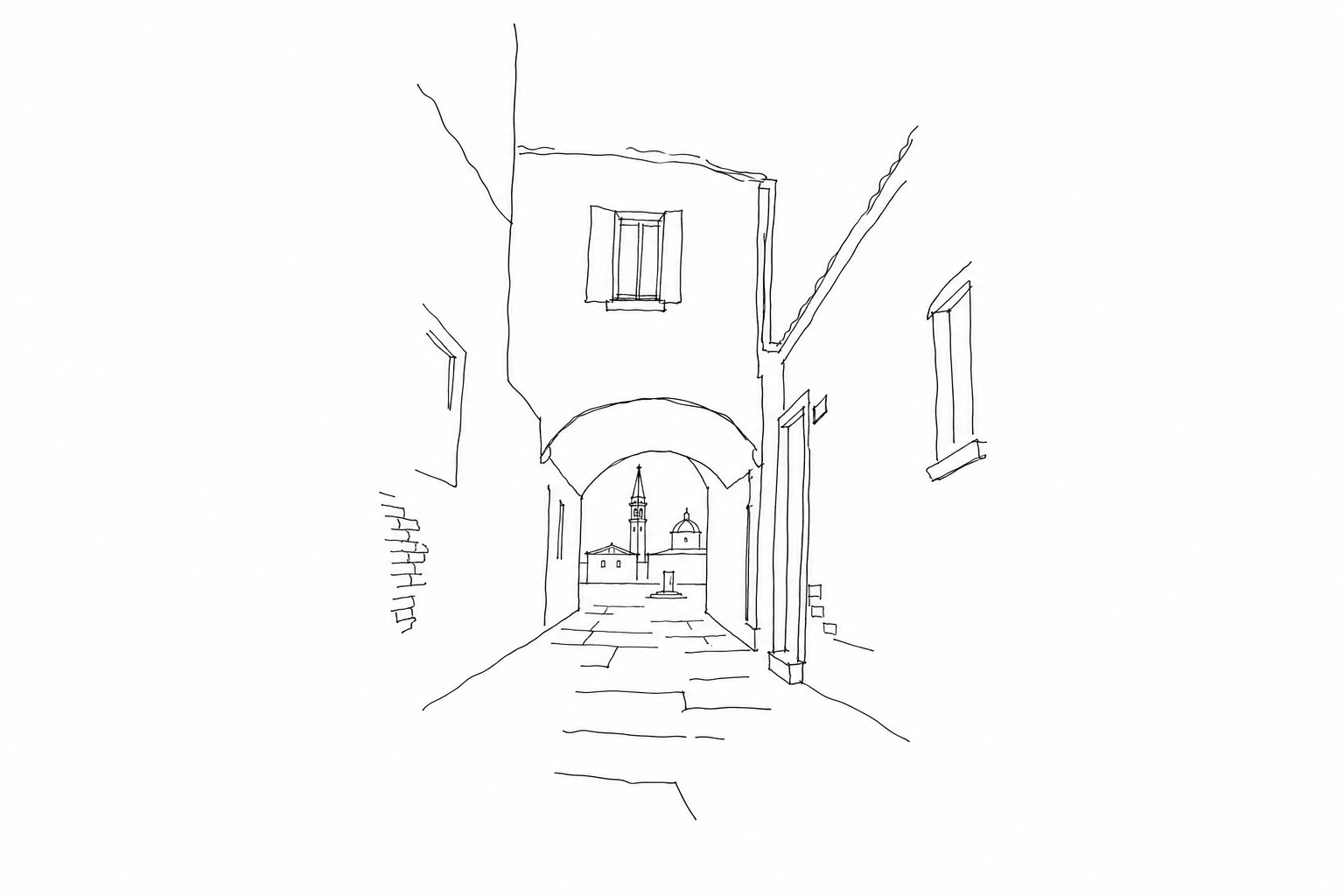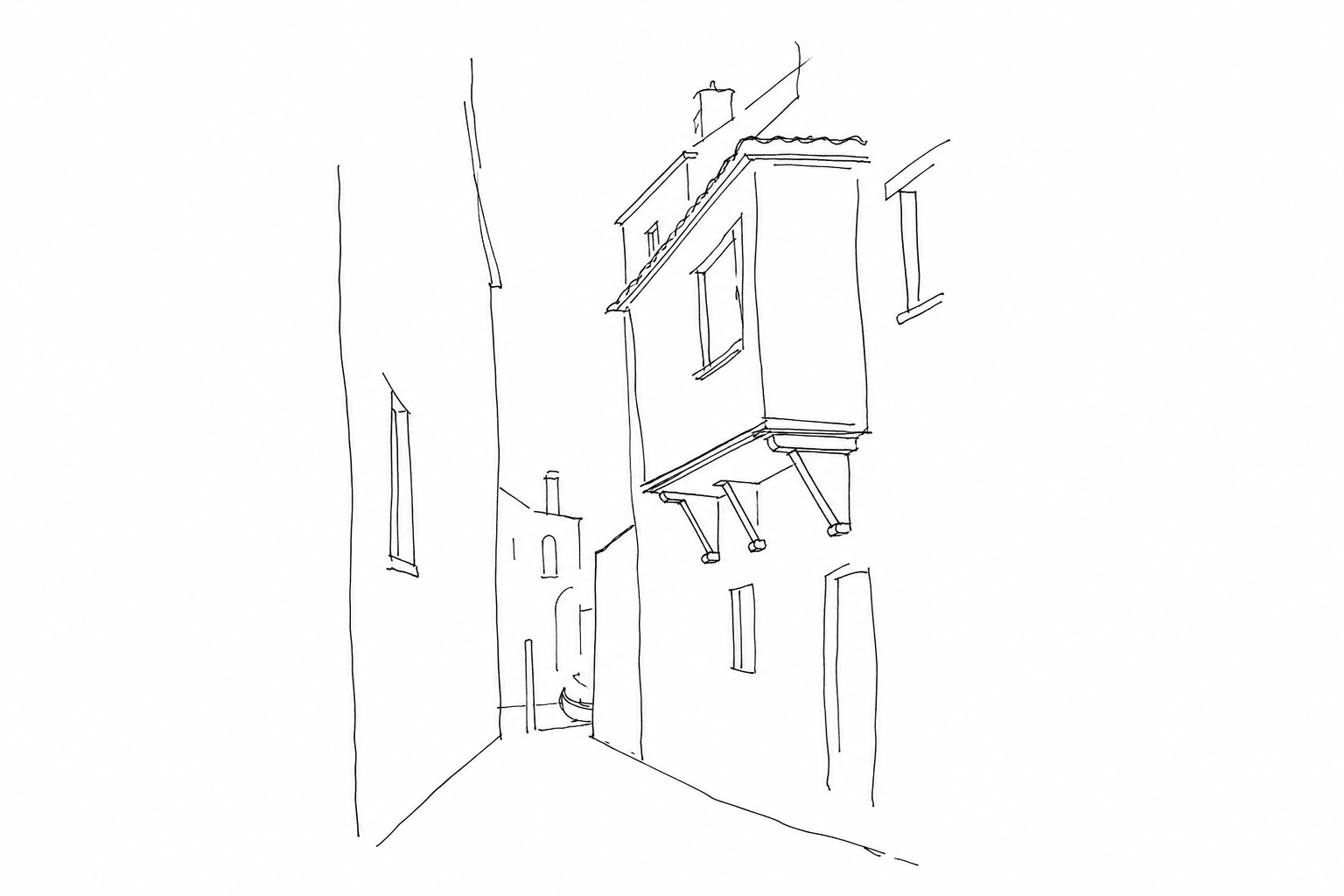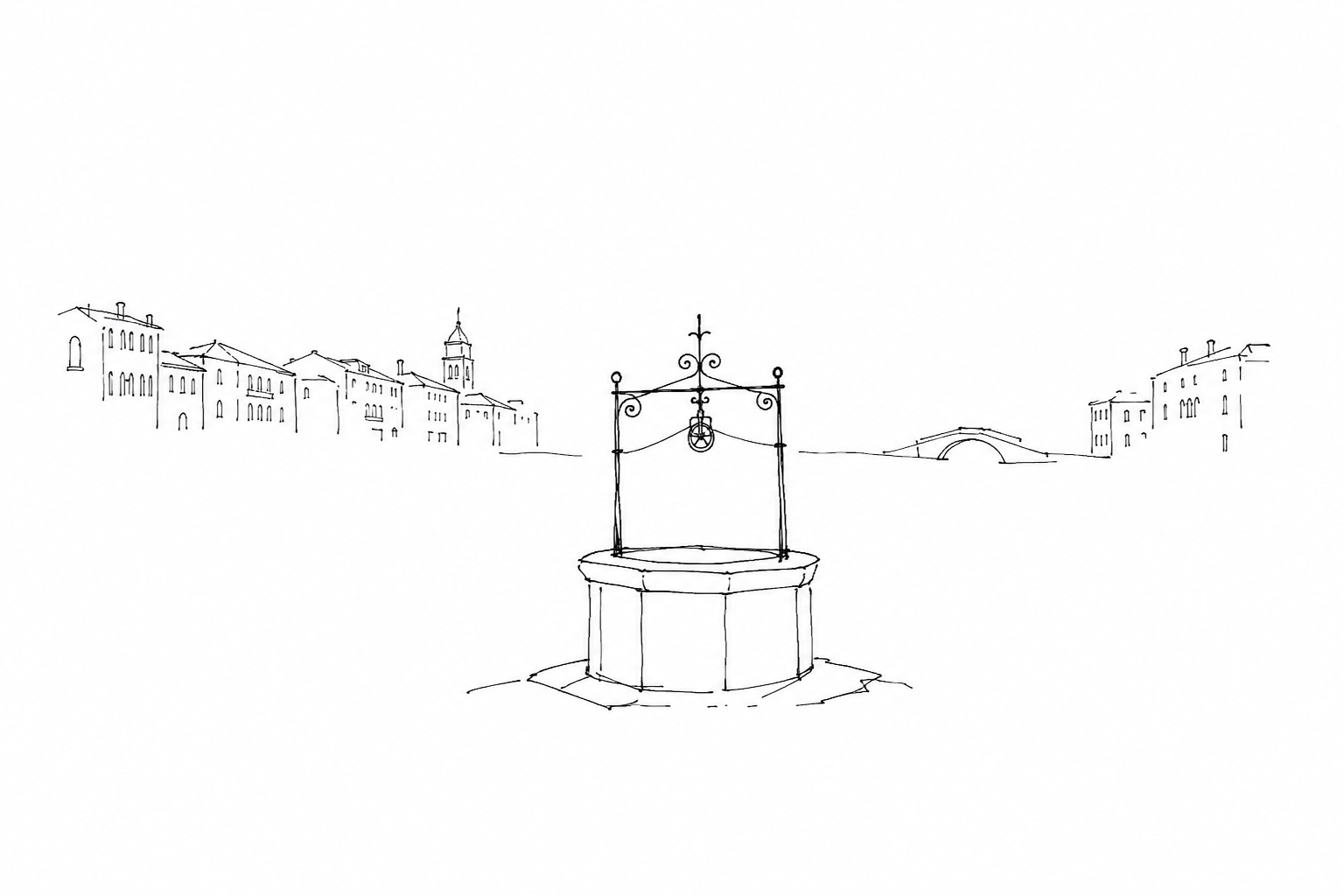

Venetian nizioleti are one of the most discreet and precise ways in which the city tells its own story. Painted on the walls, with a white background and black letters, they indicate calli, campi, rii and courtyards, but they are not simple street signs: they preserve trades, families, devotions, characteristics of the place and words from everyday Venetian. Reading them means following a map written on plaster, made of urban memory and practical orientation. During a slow walk, observing these names helps you understand how Venice was inhabited, named and recognized by those who lived there even before by those who visited it.
What nizioleti are
Venetian nizioleti are street signs painted directly on the walls, recognizable by their white background and black border. The name derives from nizioleto, meaning “small sheet”: a light rectangle spread out on the plaster, designed to make the text stand out even amid shadows, salt air and uneven surfaces.
In Venice they do not only indicate streets in the modern sense. They record a more minute geography: calli, campi, campielli, fondamente, salizzade, sotoporteghi, rii terà. Each word says something about the urban form: a fondamenta runs along the water, a sotoportego passes under a building, a rio terà recalls a filled-in canal.
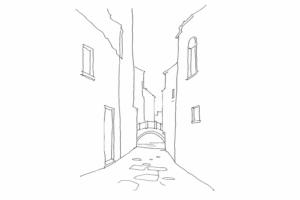
For this reason, nizioleti function as a wall map. They are not decoration, but an orientation system that can be read while walking. Many names preserve trades, families, churches, workshops or characteristics of the place: reading them means following the city through written traces, even before doing so on a map.
A system born from the inhabited city
Before becoming recognizable signage, nizioleti gathered a Venetian way of finding one’s bearings that was born in everyday life. In a city without large straight axes, where the route changes among calli, campi, rii and sottoporteghi, the name of the place had to speak to those walking: it indicated a trade, a community, a nearby church, an influential family, a workshop or a physical peculiarity.
Between the eighteenth and nineteenth centuries, with the increase in administrative needs and urban control, this oral memory was progressively fixed on the walls. The nizioleto transformed names already used by residents into a public, readable and repeatable reference. It did not erase Venice’s minute geography: it made it more stable.
For this reason, many inscriptions maintain dialect forms and concrete indications: Calle del Forno, Ramo dei Fuseri, Fondamenta dei Ormesini. Each name preserves a function or a local presence. Read in sequence, the nizioleti tell of a city built around neighborhoods, trades and landing places, rather than boulevards and monumental squares.
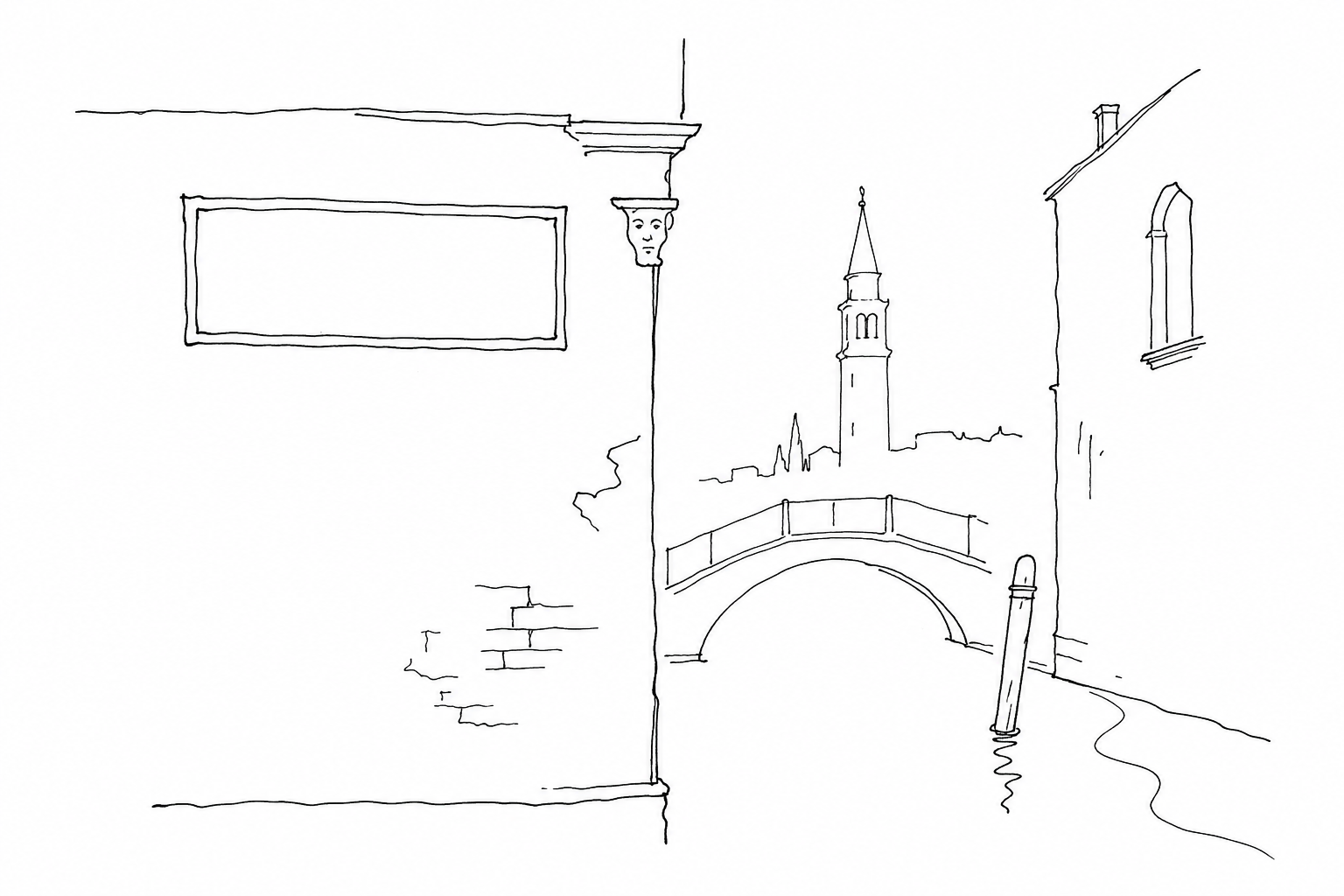
How to read names, words and abbreviations
To decipher a nizioleto, it is best to start from the first word: it almost always indicates the type of space. Calle indicates a narrow passage; fondamenta runs along a canal; rio terà recalls a filled-in watercourse; salizada alludes to a stretch that was paved earlier than other streets; corte and campiello refer to smaller spaces, often within the neighborhood.
The second part of the text should be read as a clue. A trade may appear in the plural: dei Fabbri, dei Saoneri, dei Botteri. A saint often appears abbreviated: S. stands for San or Santa, while forms such as Zan, Zulian, Zorzi preserve Venetian pronunciations of Giovanni, Giuliano, Giorgio. Families also leave traces: a surname after Ca’ indicates a house or palace linked to that lineage.
- Ramo: short deviation from a main calle.
- Sotoportego: covered passage under a building.
- Piscina: ancient water area or depression later transformed.
- Riva: edge accessible from the water, often useful for loading and disembarking.
The spellings should not be mentally “corrected”: apostrophes, truncations and dialect variants are part of the map. Reading a sequence of inscriptions thus makes it possible to follow trades, parishes, vanished canals and family memories without opening a map.
Where to notice them during a slow walk
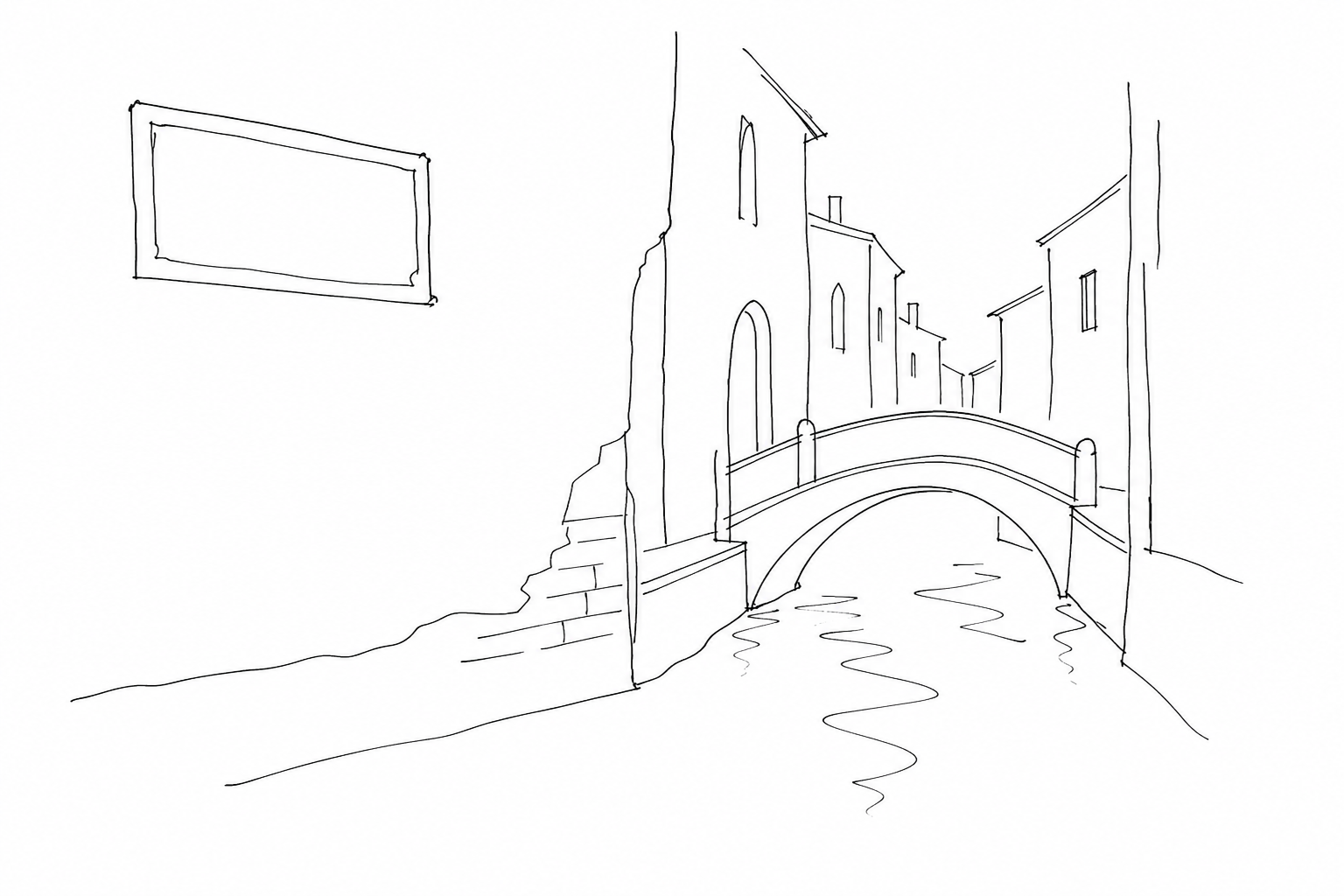
To observe the nizioleti without turning the walk into a fixed route, it is best to slow down at turning points: corners between two calli, entrances to sottoporteghi, exits onto campi, bridgeheads. Often the inscription is high up, above eye level, on a white rectangle painted on the plaster; in other cases it appears near a red house number or next to a more recent sign.
The fondamente help connect the name to the water’s edge: a riva dedicated to a trade, a family or a nearby church can explain what is seen around it. In smaller campi, instead, it is worth comparing the name with wells, portals, sacred shrines and façades: small clues confirm ancient neighborhood functions. Even a worn, retouched or slightly crooked spelling tells of maintenance, remaking and continuity of use.
Stopping in front of a nizioleto changes the way of crossing Venice. A calle is no longer just a passage, but a fragment of civic, craft or domestic history that remains visible on the wall. Among abbreviations, linguistic variants and apparently minor names, the city reveals a concrete toponymy, born from use and proximity. There is no need to look for monuments: it is enough to raise your eyes in the right places, in the busiest sestieri as in the quieter areas. The nizioleti invite a different attention, less rapid and more precise, where finding your way also becomes a way to read Venice.
Related Posts
Campiello, corte, ramo: a small sentimental guide to the words of the Venetian map
A short guide to reading Venice through the words of its nizioleti: campielli, corti, rami, calli, fondamenta and rii.Salizada: the oldest Venetian streets and the sign of routes that were already important
What a salizada indicates in Venice: origin of the name, paving, historic routes and urban interpretation among calli, campi and sestieri.
Calle del Paradiso: a gentle name for looking at Venetian toponymy more carefully
A small Venetian name becomes a guide for reading nizioleti, calli and urban memory with greater precision.Questions Answered
What are Venetian nizioleti and how do they function?
They are painted street signs acting as a wall map reflecting urban memory and orientation.What is the historical background of nizioleti?
They fixed oral place-naming traditions onto walls in the 18th and 19th centuries.How can one read and understand the names on nizioleti?
By recognizing space types and clue words referring to trades, families, or saints.Where are the best places to notice nizioleti during a walk?
At corners, sottoporteghi entrances, campi exits, and bridgeheads on white backgrounds.
Follow the names written on the walls
Want to move from this word to other clues showing how the city grew?
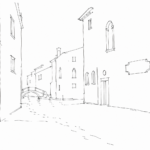 Piscina in Venice: when a name on the map recalls the water that can no longer be seenA name in the nizioleti tells of filled-in basins, toponyms and Venice’s urban memory.
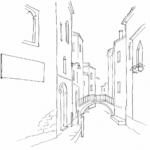 Calle dei Assassini: history, atmosphere and caution behind a striking nameA strong name, a calle in San Marco and what it really tells: toponym, urban context and interpretive caution.
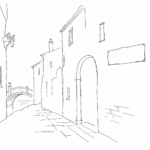 Calle del Paradiso: a gentle name for looking at Venetian toponymy more carefullyA small Venetian name becomes a guide for reading nizioleti, calli and urban memory with greater precision.
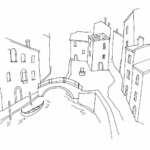 Campiello, corte, ramo: a small sentimental guide to the words of the Venetian mapA short guide to reading Venice through the words of its nizioleti: campielli, corti, rami, calli, fondamenta and rii.