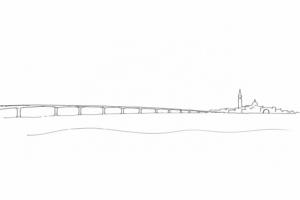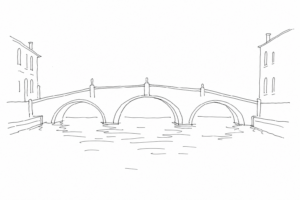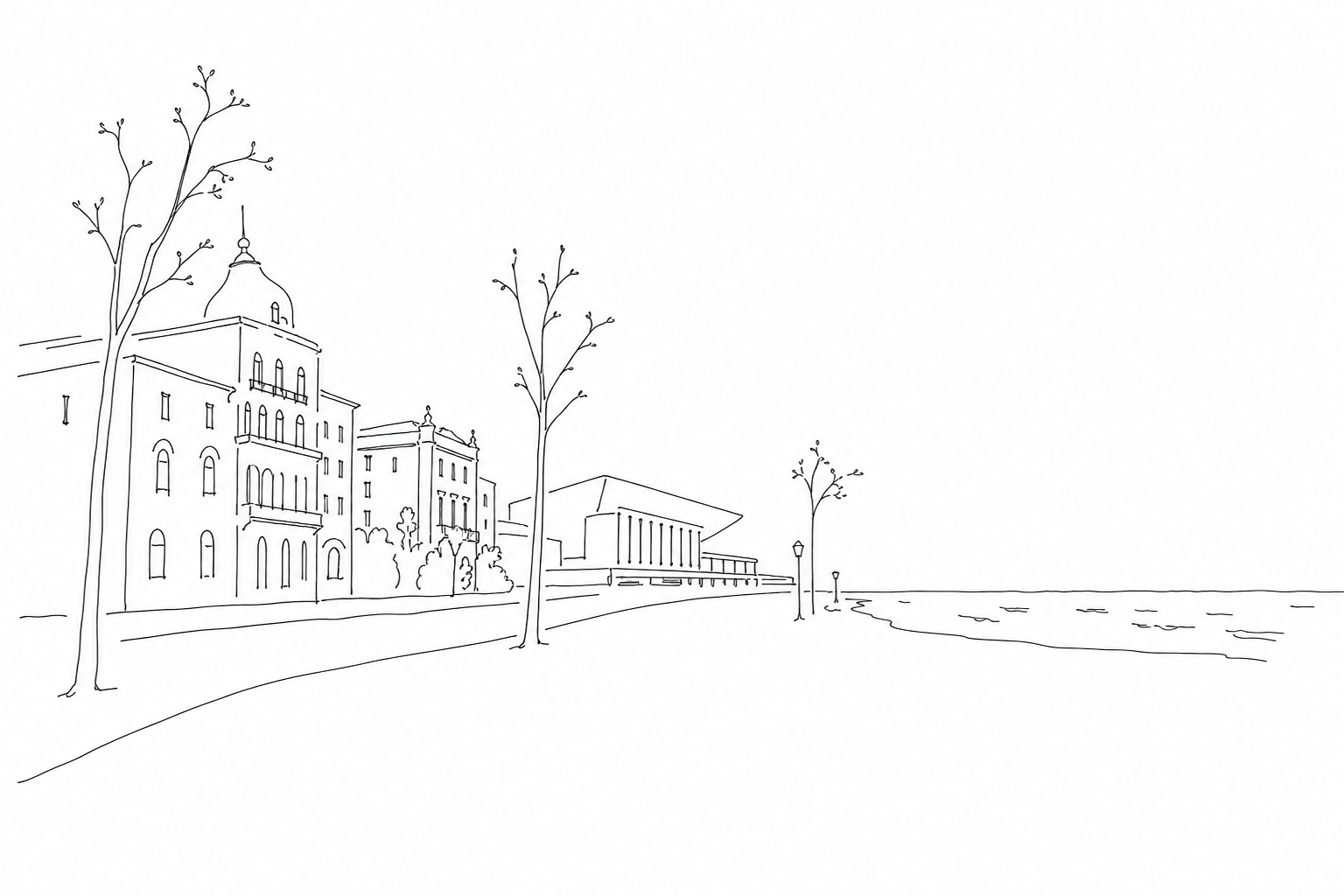

The Ponte della Costituzione is one of the few contemporary interventions capable of making a strong entry into Venice’s historic landscape. Designed by Santiago Calatrava and inaugurated in 2008, it connects Piazzale Roma to the Santa Lucia railway station, at one of the city’s most crossed points. Its arched form, glossy materials, and the criticism over accessibility and costs have made it much more than a simple passage over the Grand Canal. Looking at it carefully means reading a delicate urban node, where arrivals, departures, daily habits and architectural debate meet every day.
Where it is and why it matters
The Ponte della Costituzione is located at the point where Venice welcomes many of its most everyday and most photographed arrivals: between Piazzale Roma, the city’s automobile terminal, and the area of the Santa Lucia railway station, overlooking the Grand Canal. It is the fourth permanent bridge over the main canal, after Rialto, the Scalzi and the Accademia, and precisely this position makes it impossible to ignore.
Those who enter Venice by bus, car, tram or train encounter it as a contemporary threshold before going deeper among calli and fondamenta. It does not connect two marginal places: it relates mainland traffic to the pedestrian city, the flow of commuters to that of visitors, modern infrastructure to a rigidly recognizable historic landscape.
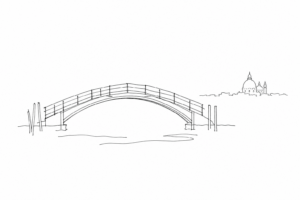
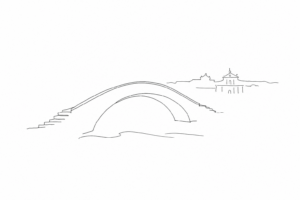
For this reason, the bridge designed by Santiago Calatrava is not just a crossing. It is an architectural gesture placed at the most sensitive point of arrival in Venice, where every choice of form, material and use immediately becomes public and discussed.
Calatrava’s project
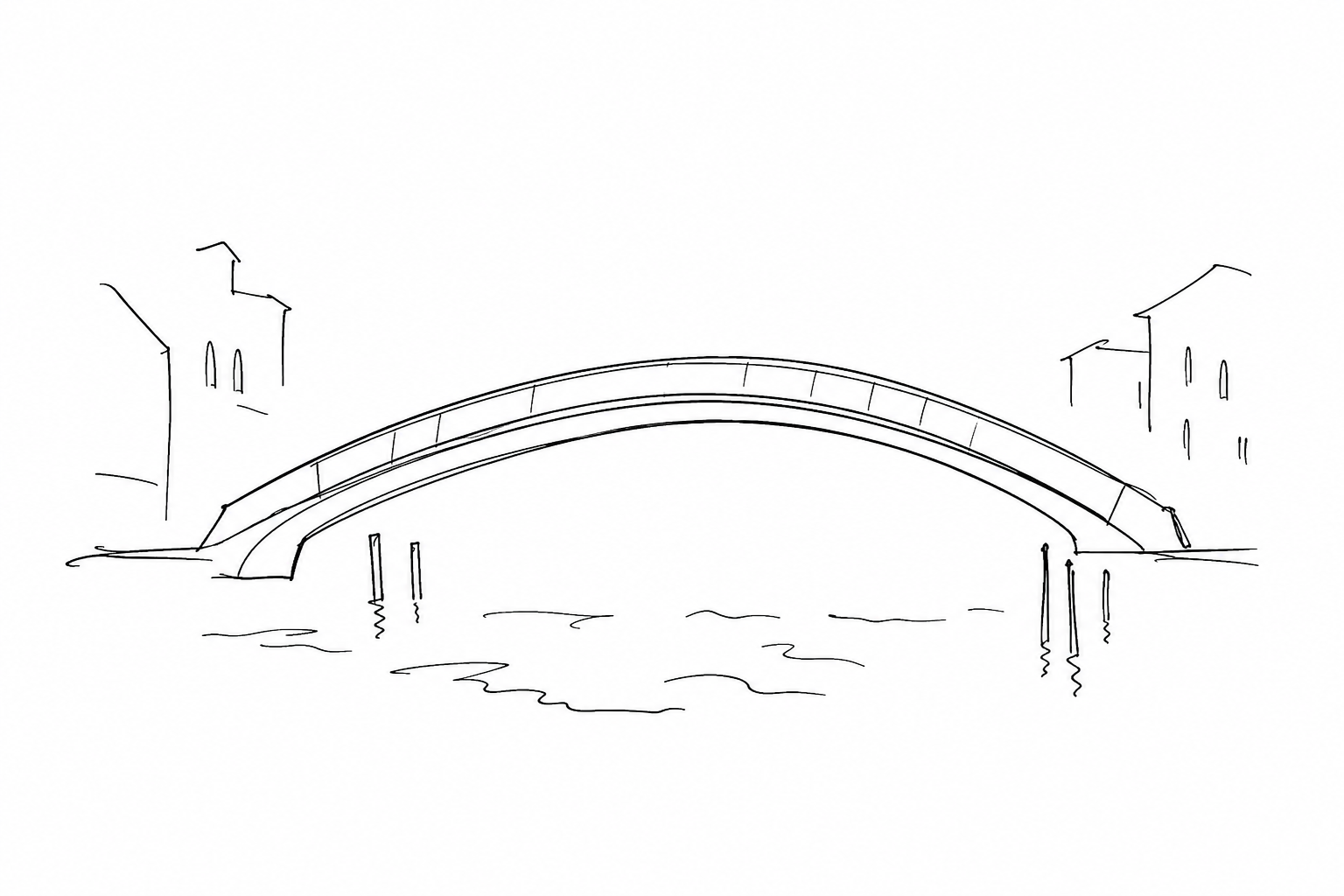
In the Ponte della Costituzione, signed by Santiago Calatrava, the intervention takes shape as a low arch: not a neutral line, but a structure that rises with a taut and light movement over the Grand Canal. The choice is recognizable in the Spanish architect’s typical language, made of metal ribs, dynamic symmetries and profiles that evoke movement more than a simple construction.
The materials played a decisive role in the debate. The steel frame supports steps in Istrian stone and slabs of tempered glass; the transparent parapets also seek to reduce the visual impact, allowing the water, banks and perspective toward the station to be read. The intention was to insert a contemporary sign without imitating Rialto, Accademia or Scalzi: an autonomous work, explicitly of its time.
It was precisely this choice that ignited the discussions. In Venice, where every modern addition dialogues with centuries of historic material, Calatrava’s footbridge does not blend in: it exposes technique, light and perceptual fragility, transforming an everyday crossing into a public judgment on contemporary architecture.
The reasons for the discussion
The controversy surrounding the Ponte della Costituzione does not arise only from personal taste. In just a few meters over the Grand Canal, the work has concentrated very concrete issues: relationship with the historic landscape, everyday use, maintenance and accessibility.
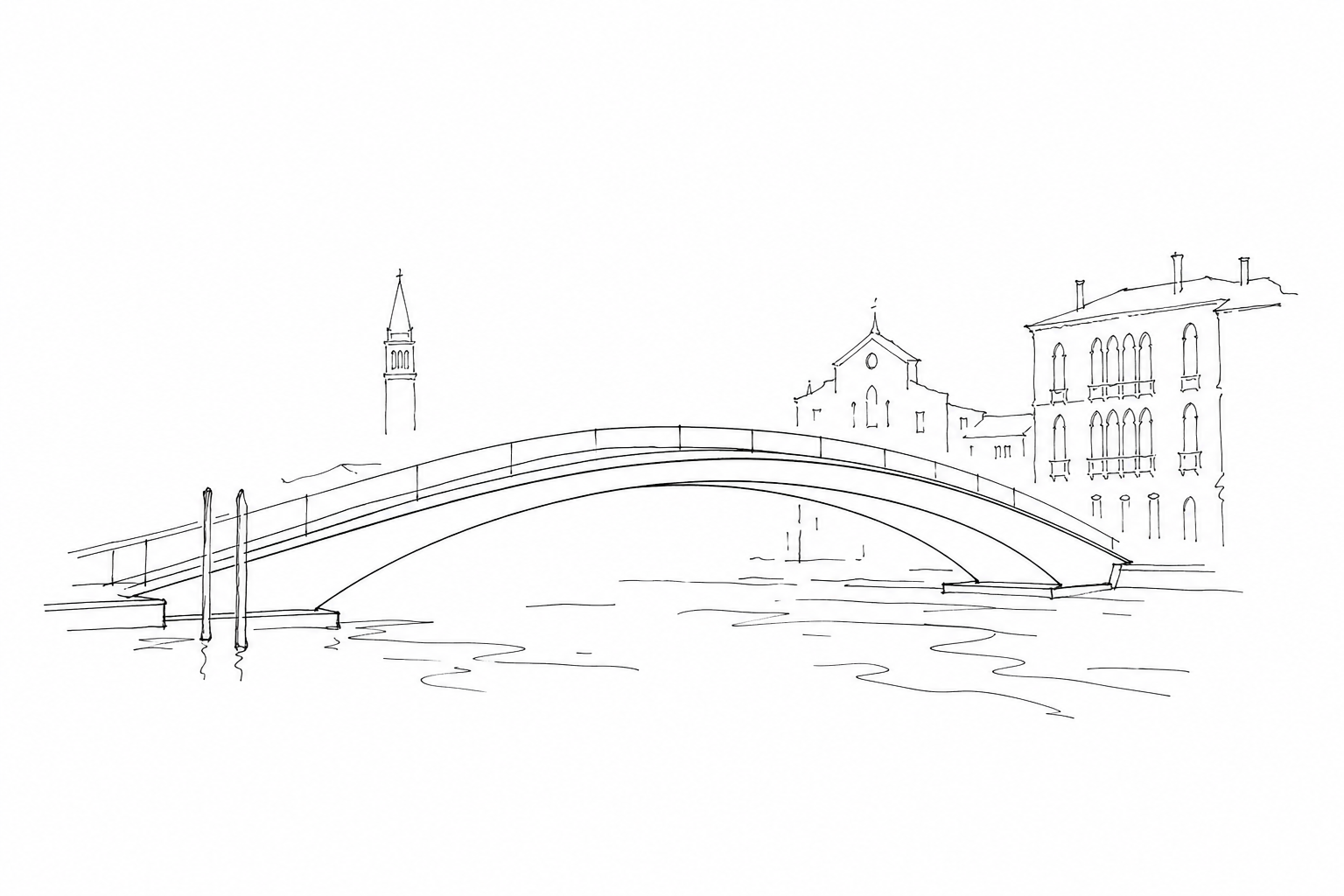
The first criticism concerns its visual presence. Steel, glass and Istrian stone build an explicitly contemporary image right at the arrival point of many visitors, between Piazzale Roma and Santa Lucia station. For some it is a necessary sign in the urban present; for others it interrupts the material and chromatic continuity of the older crossings.
The second issue is functional. Steps, transparent surfaces and an arched course have made the experience less simple for those moving with suitcases, strollers or mobility difficulties. For this reason too, the debate soon shifted from architectural language to the more practical question: should a public infrastructure first amaze or facilitate?
Finally, costs, timing and subsequent interventions weigh heavily, often cited as proof of a complex project to integrate into ordinary lagoon life. The discussion, therefore, remains specific: not “modern against ancient,” but ambitious form against small needs, repeated every day.
To observe it more carefully, it is best to arrive without hurry from Piazzale Roma and stop before going up. From here the most evident choice can be read: a thin, arched line that does not try to imitate the historic passages over the Grand Canal. The profile is almost a graphic sign, while the materials — steel, glass and stone — immediately declare its belonging to the present.
During the crossing, look at the rhythm of the steps and the transparent parapets: the experience is not only panoramic, but physical, made of slopes, glossy surfaces, reflections and changes in level. It is precisely here that one understands why the work has been discussed: the beauty of the design gesture is measured against everyday use, with suitcases, crowds, rain and maintenance.
Arriving toward Santa Lucia, turn back. The comparison with the church of the Scalzi, the crowded banks and water traffic shows the real node: a contemporary object inserted into a space already extremely dense with functions, memories and movements.
Read without haste, the Ponte della Costituzione tells of a Venice less immobile than is often imagined: capable of welcoming a contemporary sign, but also of discussing it with severity. Crossing it means observing a point of contact between everyday mobility, signature architecture and public space. It is not necessary to love it or reject it outright: it is enough to look at it in its context, among arrivals, departures, reflections on the Grand Canal and uncertain steps on the glass. It is precisely there, in its controversial presence, that the bridge becomes a useful key to understanding the city of today.