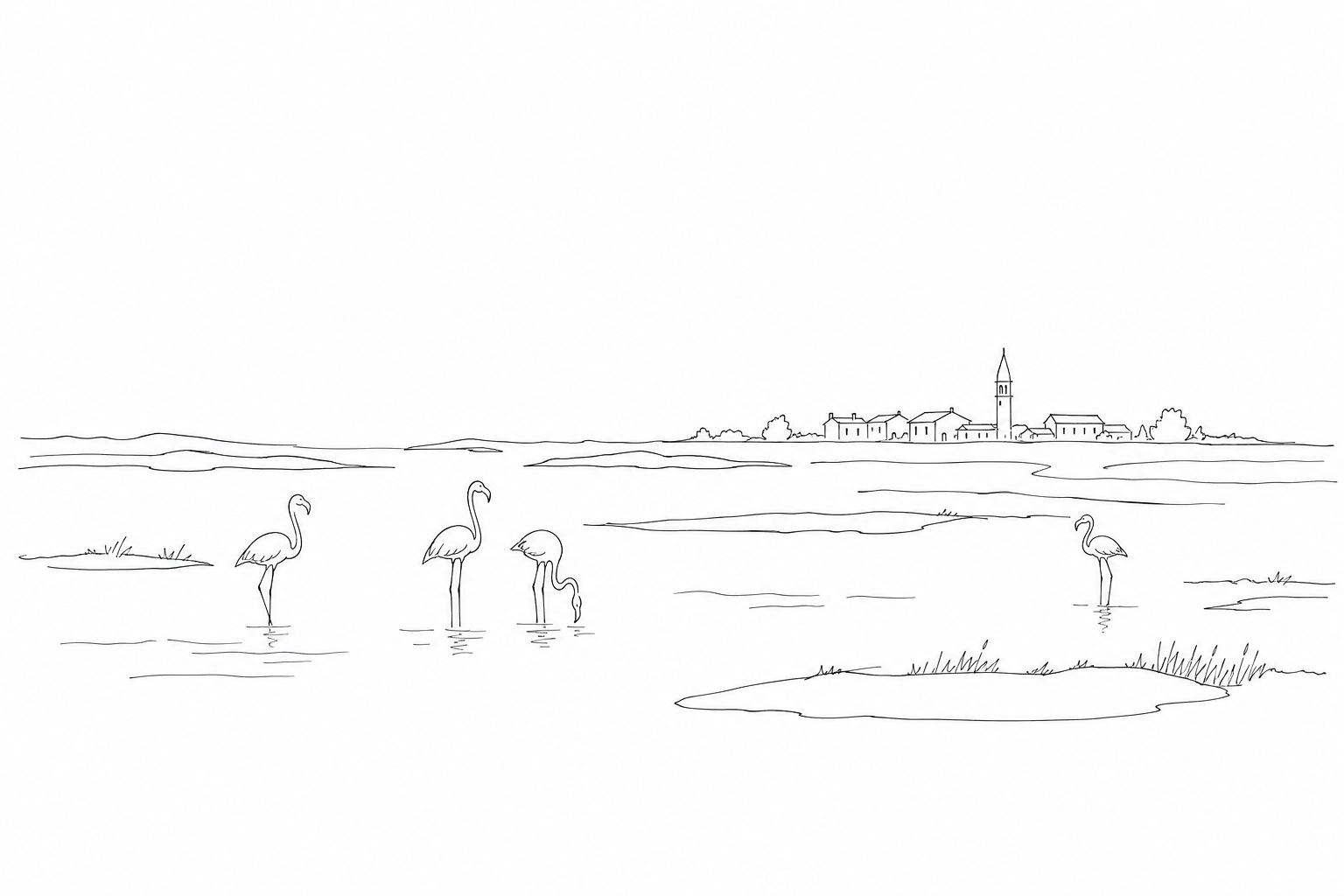
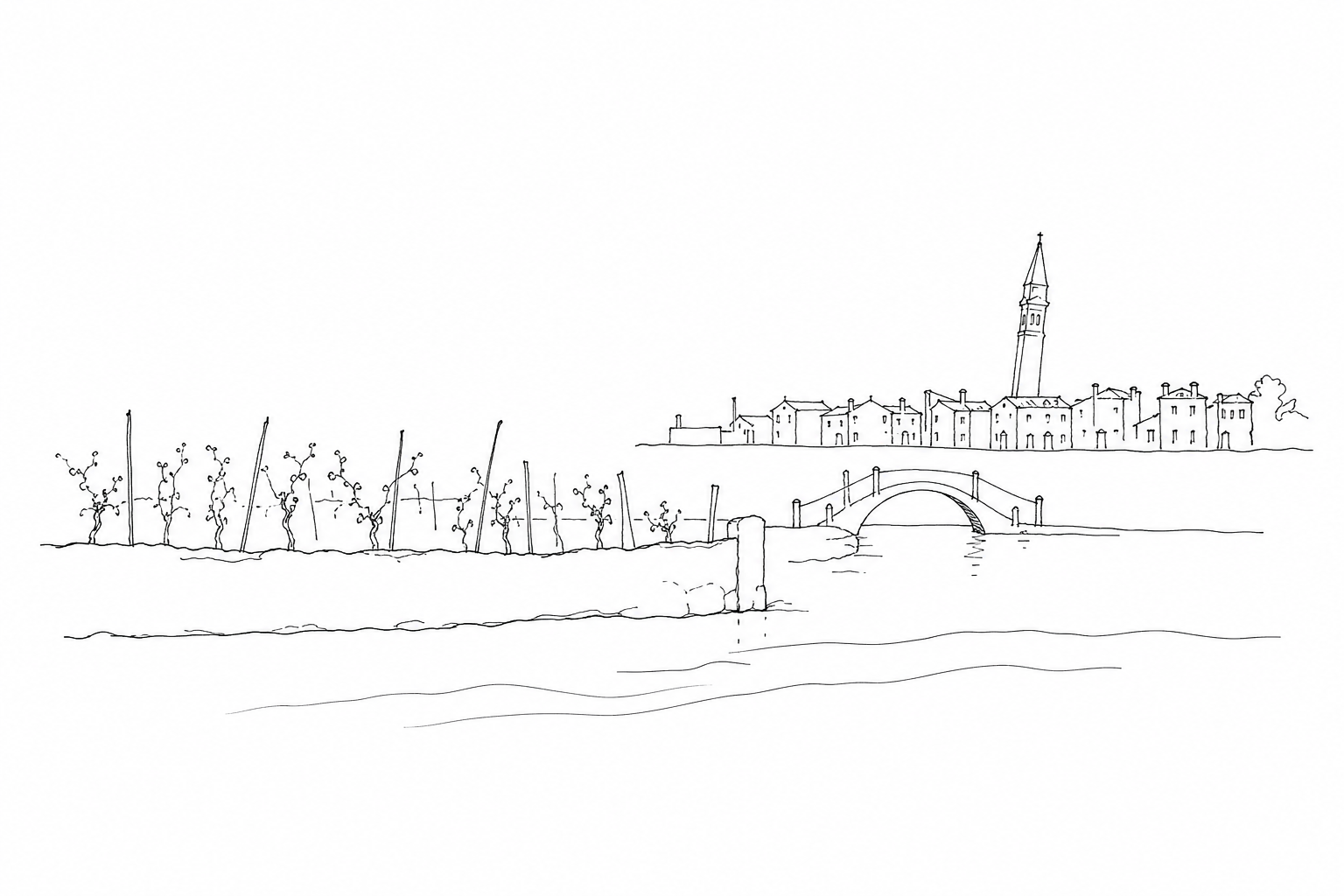
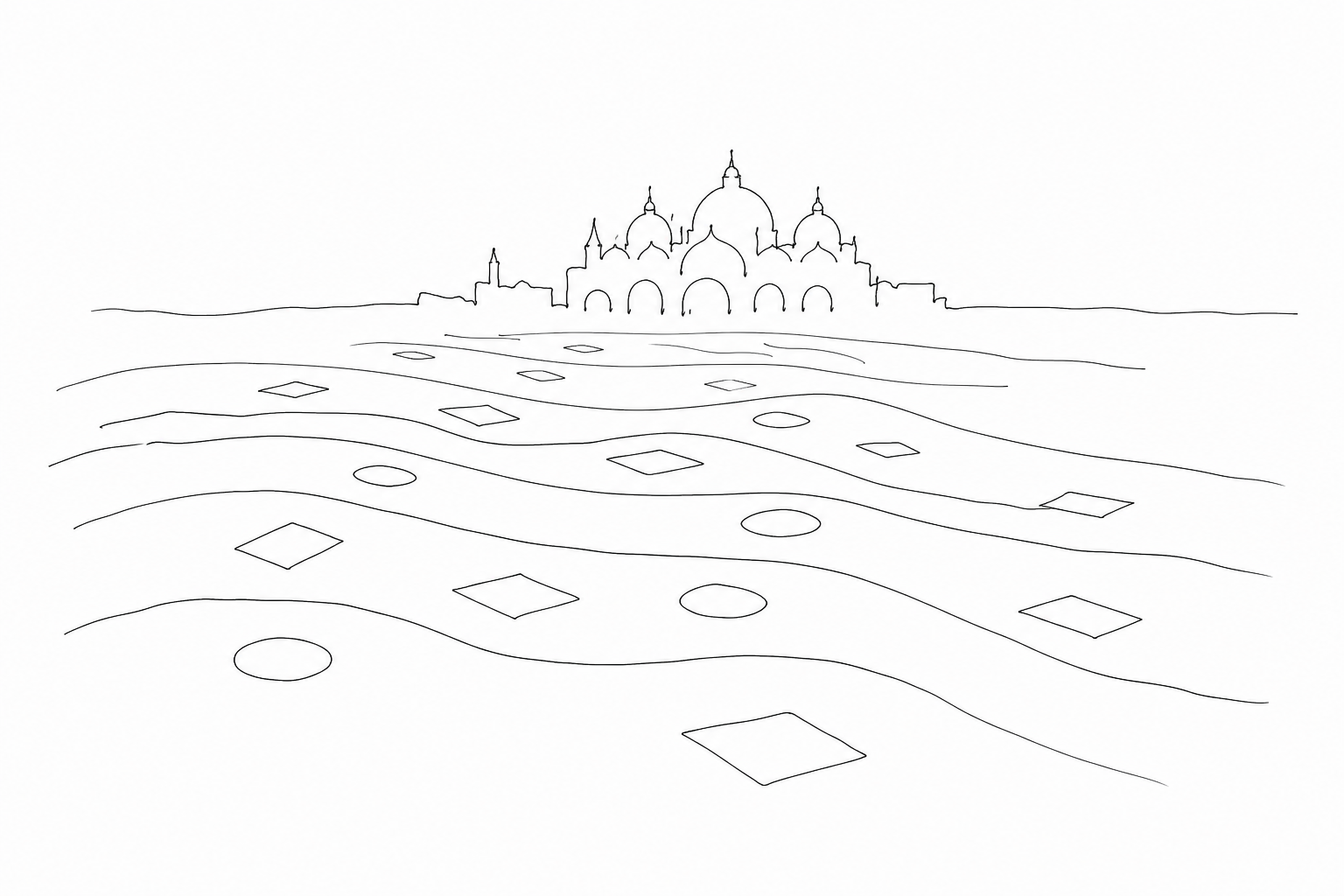

Entering St. Mark’s often means immediately lifting your gaze toward mosaics, domes and gold. But one of the basilica’s most surprising readings begins beneath your feet: the floor, with its marble slabs, tiny tesserae and those undulations that seem to move the surface like a petrified lagoon. It is not just a scenic effect. It is the result of centuries of history, settling, high water, restorations and decorative choices that intertwine Venice with the Byzantine East and with the city’s concrete life.
A floor that does not stay still
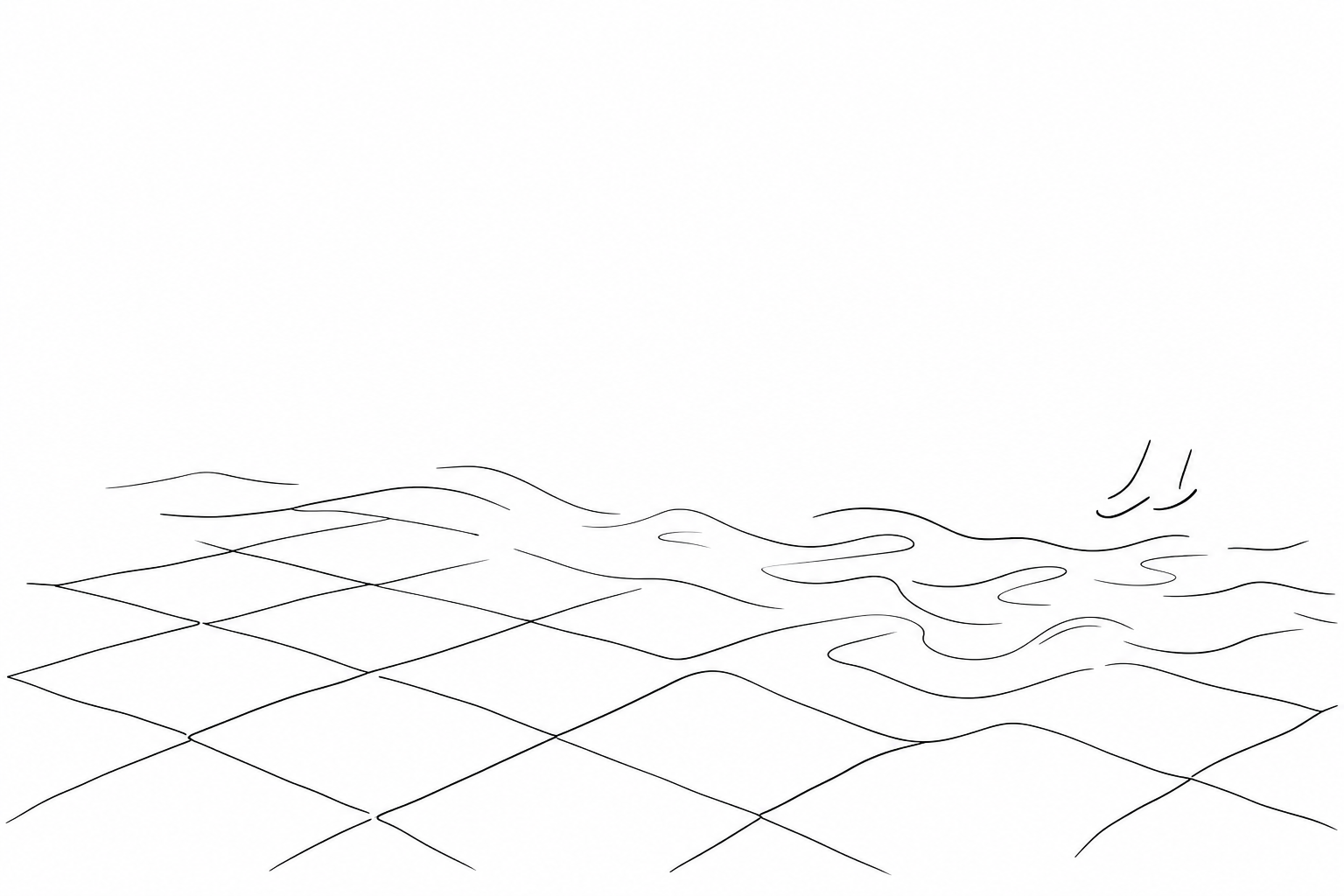
Entering St. Mark’s Basilica means noticing almost immediately that the ground does not behave as one would expect from a church floor. The slabs do not form a perfectly flat surface: they rise, fall, and curve into slight depressions. The impression is that of walking on solidified water, a sea of marble that preserves the movement of the lagoon.
This effect arises from the encounter between matter, time and place. The basilica rests on fragile Venetian ground, made of ancient foundations and damp soils; over the centuries, settling and deformation have transformed the mosaic covering into an undulating expanse. It is not a defect to be erased, but one of its most recognizable qualities.
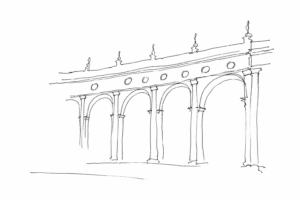
The geometries in polychrome stones amplify the sensation: circles, interlacings, squares and carpet-like motifs seem to move with the light. Even before looking up toward the golden mosaics, St. Mark’s forces you to look down.
Marbles, tesserae and designs: how to read the surface
The floor of St. Mark’s should not be read as a simple precious covering. It is a large figurative field built with different techniques: slabs cut and placed side by side according to opus sectile, small mosaic tesserae, inserts of porphyry, serpentine, light and dark marbles. The variety of materials produces a continuous vibration: the deep red, the dark green, the veined white and the warm yellow react differently to the light entering the basilica.
The geometric motifs help in understanding this surface. Circles inscribed in squares, rotae, interlacings, checkerboards and marble carpets are not merely ornaments: they order the space and guide the step. In a church linked to the Byzantine world and to Venetian trade, the floor gathers a Mediterranean language made of rare stones, reused fragments and reinterpreted Eastern models.
Observed up close, the design seems measured; when seen while walking, however, it becomes mobile. The regular geometries meet the real undulations of the ground and transform the marble into an almost liquid surface.
Why those waves tell the story of Venice
The undulations of the ground in St. Mark’s are not a defect to be erased with the gaze: they are a physical trace of the lagoon city. Venice is built on compressible soils, crossed by water and supported by wooden foundations driven into the sediments. Over time, weights, settling and humidity have also affected the large internal marble expanse, causing the slabs not to remain perfectly level.
For this reason, the effect of “walking on water” does not arise only from the geometric designs. It arises from the encounter between precious matter and Venetian instability: porphyries, serpentines and polychrome marbles compose ordered patterns, but the step perceives slight slopes, depressions, rises. The eye follows circles and interlacings; the body registers a ground that seems to move.
Those waves also tell of the relationship between splendor and fragility. The city’s most representative church does not separate itself from the lagoon: it incorporates it. The marble, instead of denying the water, preserves its memory in its own irregular form.
Looking at it carefully during the visit
To read the mosaic floor of St. Mark’s, it is not enough to lower your gaze: it is worth changing position. The undulating slabs make the design easier to perceive when observed obliquely, because raking light highlights depressions, joints and small differences in level.
- First look at the whole: seek out the large circles, the interlaced knots and the quincunx forms, with a central roundel surrounded by four elements.
- Move closer to the details: distinguish porphyry, serpentine, light and dark stones; they are not just colors, but materials chosen to create rhythm and depth.
- Compare the areas: near pillars, thresholds and passages, the design changes pace, revealing restorations, additions and later adaptations.
- Observe the path of others: the slow rising and falling of steps makes visible that sensation of motion that recalls the lagoon.
If available, it is useful to check before the visit for any updated information on the permitted route: even from a respectful distance, the geometries remain readable.
Observing the floor of St. Mark’s requires a slower step and a less distracted gaze. Its waves are not an imperfection to be corrected, but a visible trace of the relationship between architecture, water and time. Among geometric motifs, ancient marbles and inclined surfaces, the basilica also tells from below the unstable and refined nature of Venice. During the visit, stopping to read that ground means better understanding not only an artistic masterpiece, but also the city that made it possible.
Related Posts
The mosaics of San Marco: how to look at the gold without being dazzled only by its beauty
A brief guide to reading the mosaics of San Marco: gold, light, scenes, spaces and details to observe calmly.The Procuratie up close: how St. Mark’s Square became a perfect urban machine
The Procuratie read up close: architecture, power, porticoes and the urban rhythm of St. Mark’s Square.
The Pala d’Oro: Stones, Enamels and Byzantine Power Behind the Altar of St. Mark’s
History, materials and symbols of the Pala d’Oro, the great precious altar of St. Mark’s born between Venice and Byzantium.Questions Answered
Why does the floor of St. Mark’s Basilica undulate?
Due to settling and deformation on Venice's fragile, damp ground over centuries.What materials and designs make up the floor?
It includes porphyry, serpentine, marbles, and geometric motifs like circles and interlacings.How does the floor reflect Venice’s history?
Its irregular surface and materials embody the city’s lagoon environment and Byzantine links.How should visitors best observe the floor?
By changing position to see the undulations and materials under oblique light.
Keep exploring the Venice of St Mark’s
Which spaces help you read the square as a system of symbols, institutions and images?
 The Pala d’Oro: Stones, Enamels and Byzantine Power Behind the Altar of St. Mark’sHistory, materials and symbols of the Pala d’Oro, the great precious altar of St. Mark’s born between Venice and Byzantium.
 The Procuratie up close: how St. Mark’s Square became a perfect urban machineThe Procuratie read up close: architecture, power, porticoes and the urban rhythm of St. Mark’s Square.
 The Treasury of St. Mark’s: relics, spoils and precious objects that arrived from the EastOrigins, objects and meanings of the Treasury of St. Mark’s, among relics, Byzantine enamels and spoils that reached Venice from the East.
 The Clock Tower: Moors, gears and Venetian time above St. Mark’s SquareHistory and interpretation of St. Mark’s Clock Tower: Moors, dial, automata and Venetian public time.