
The Pala d’Oro is not only a precious object kept in St. Mark’s: it is a surface of power, faith and diplomacy, built over time between Venice and Byzantium. Behind the high altar, minute enamels, set stones and sacred figures tell a story less immediate than the basilica’s façade, but decisive for understanding the city’s role in the Mediterranean. Looking at it up close means reading a layered work, made of commissions, spoils, devotion and political prestige.
Behind the altar: what the Pala d’Oro is
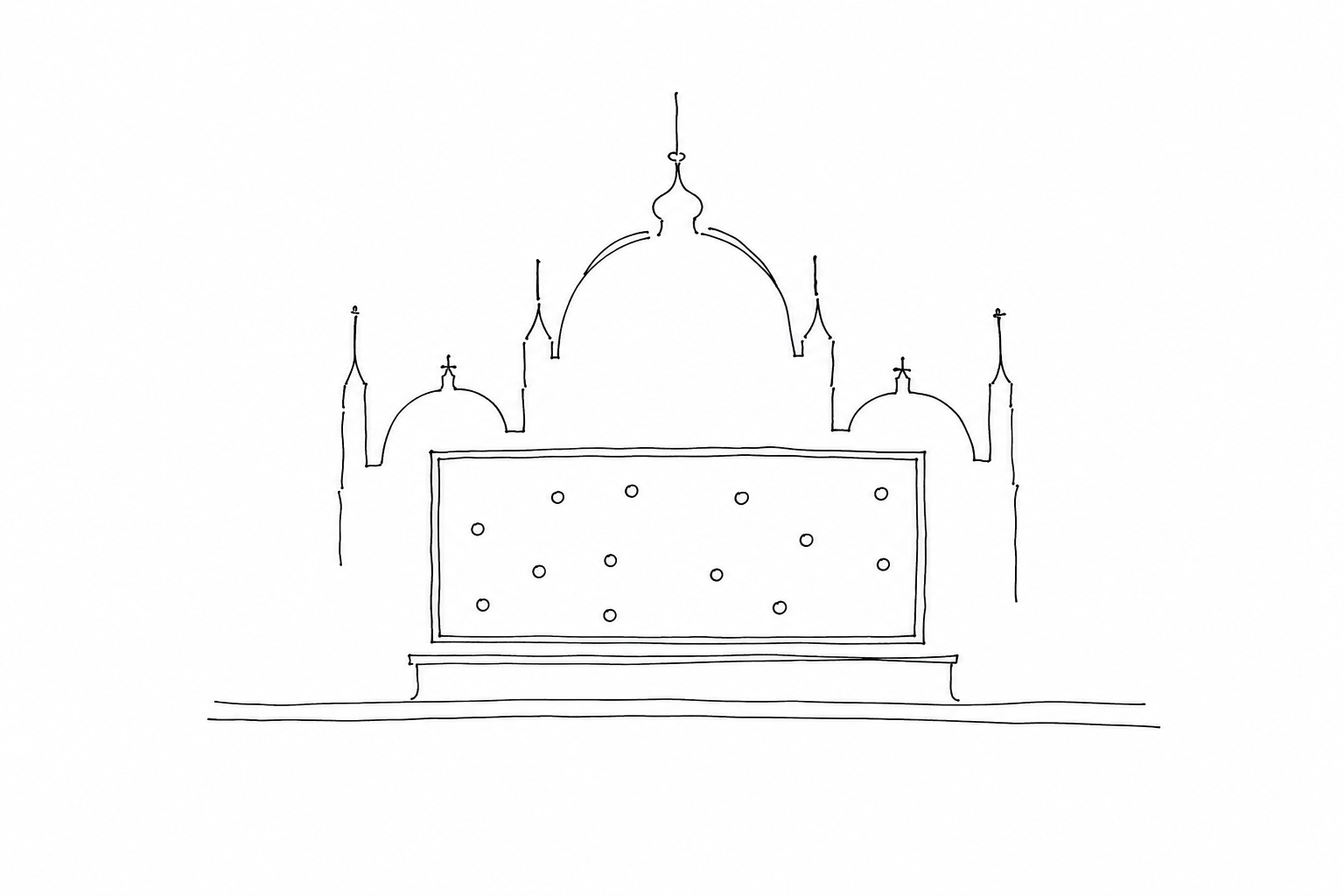
The Pala d’Oro is the great precious covering placed behind the high altar of St. Mark’s Basilica, in the point most charged with liturgical meaning: near the tomb of the evangelist and at the ceremonial heart of the ducal church. It is not a simple ornament, but a visual machine of faith and power, designed to transform the altar into a luminous threshold between Venice and Byzantium.
Made as a complex of gold sheets, gilded silver, enamels and stones, the altarpiece functions as a monumental retable: it accompanies the celebration, organizes the sacred images and makes visible the spiritual and political wealth of the basilica. Its enamel panels, many linked to the Byzantine tradition of cloisonné, depict Christ, the Virgin, the apostles, the archangels and scenes from the life of St. Mark.
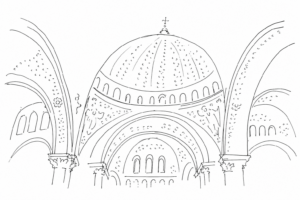
Its position “behind the altar” is therefore decisive: it does not hide, but reveals. It is the golden backdrop before which Venetian liturgy affirmed continuity with the Christian East and the prestige of the Serenissima.
From Byzantium to Venice: a history of additions
The story of the Pala d’Oro does not begin at a single moment: it is a layered construction, which grew together with Venetian power and its relations with Constantinople. A first precious nucleus is traditionally connected to Doge Pietro Orseolo I, in the 10th century, when Venice still looked to the Byzantine Empire as a political, religious and artistic model.
A decisive phase came under Doge Ordelafo Falier, at the beginning of the 12th century: cloisonné enamels of the highest quality arrived from Byzantium, with sacred figures, archangels, prophets and Christological scenes. They were not simple ornaments: that visual language spoke of the imperial court, Eastern liturgy and universal authority.
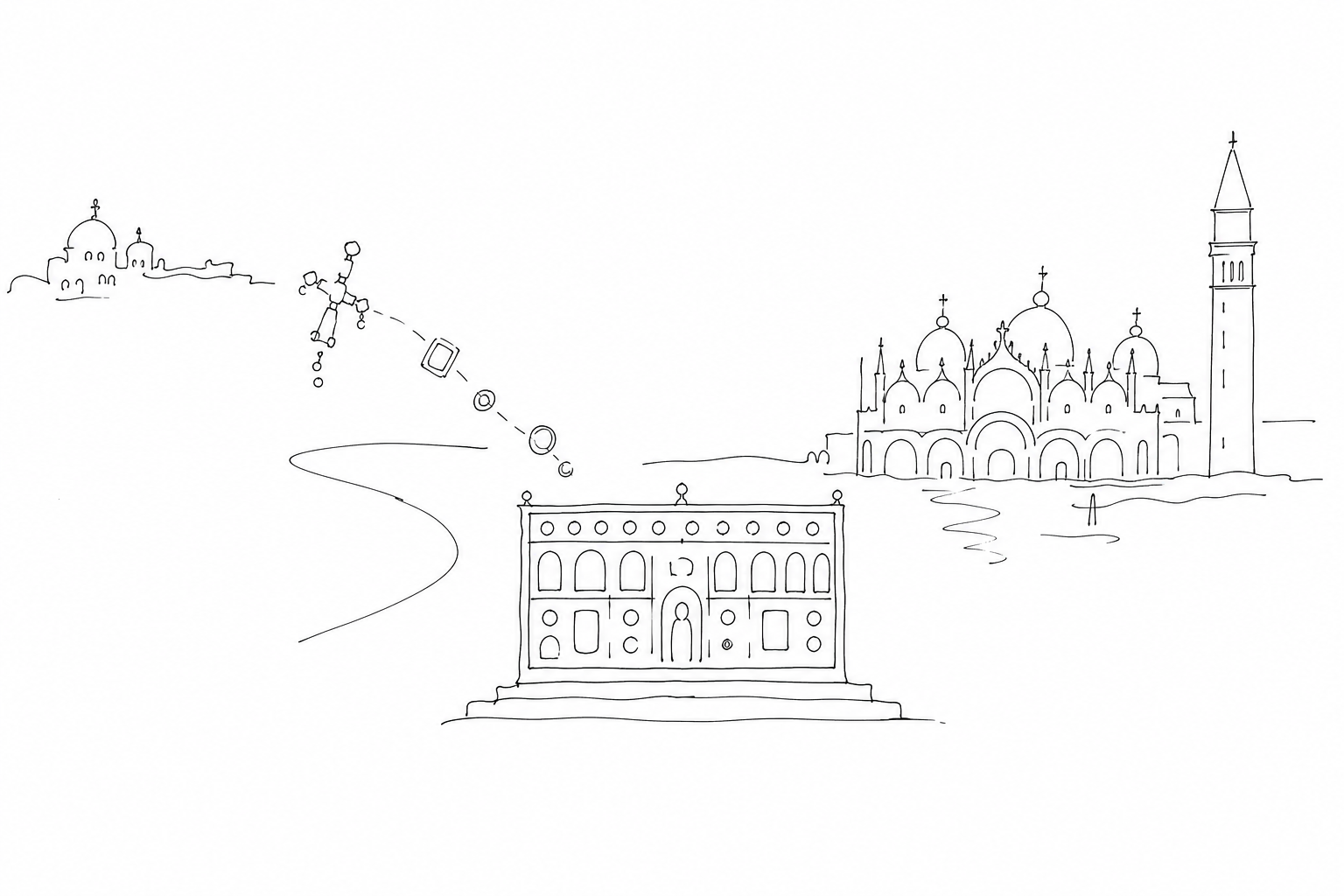
After 1204, with the Fourth Crusade and the sack of Constantinople, Venice further strengthened its material bond with the East. Some precious elements were reinterpreted in a Venetian key, transforming the artifact into a tangible memory both of devotion and of domination. In the fourteenth century, under Doge Andrea Dandolo, the work received a new Gothic arrangement: frames, settings and gems stitched different centuries together into a single manifesto of gold.
Enamels, stones and figures: reading it up close
A close reading begins with the technique. Many figured plaques are in cloisonné enamel: thin gold wires create small cells, then filled with colored glass pastes and fused. The result is not painting on metal, but light trapped in precious cells. Intense blues, greens, reds and whites do not serve only to decorate: they separate hierarchies, garments, skies, halos, making the sacred protagonists immediately recognizable.
At the center Christ in Majesty dominates, the theological and visual axis of the whole. Around him are arranged evangelists, apostles, prophets, angels and Christological scenes, organized according to a logic of the heavenly court. The golden surface transforms narration into presence: each figure seems to belong to a higher order, governed by symmetries and frontal gazes.
The set stones add a second language. Sapphires, garnets, amethysts, emeralds, pearls and rock crystals should not be read only for their material value. In the Middle Ages color had symbolic resonances: blue could evoke heaven, red sacrifice, green rebirth. The gems cut en cabochon, not faceted in the modern sense, reflect a soft, almost liquid light.
Observing it therefore means following three levels: the sacred narrative of the enamels, the political power of gold, and the symbolic grammar of the stones, fused into a single liturgical and dynastic object.
Why it matters: Byzantine power in the heart of St. Mark’s
The political value of the work comes from its place: St. Mark’s was not only a sanctuary, but the ducal chapel and the stage for the most solemn public rites. Placed at the liturgical focal point, the golden structure translated an idea of government into image: the doge prayed under signs coming from the Eastern empire, while the community saw reflected a legitimacy broader than simple local power.
Gold, gems and inscriptions were therefore not neutral luxury. They recalled the Constantinopolitan court, its ceremonies, its visual vocabulary of sovereignty. In the urban context, between basilica and Doge’s Palace, the object functioned as a hinge: the cult of St. Mark, the memory of spoils and gifts from the East, mercantile and diplomatic authority. This is why it still matters: it is not only a masterpiece of goldsmithing, but a material document of a power that presented itself as sacred, international and profoundly Marcian.
The Pala d’Oro concentrates in a few square meters what Venice knew how to transform into identity: precious matter, sacred images, Byzantine memory and urban ambition. It should not be observed only as a decorative masterpiece, but as a visual document of the city that built its rank also through objects coming from other worlds. Stopping before its enamels and stones helps us see St. Mark’s not as a simple monument, but as a place where art, liturgy and politics have been intertwined for centuries.
Related Posts
The Treasury of St. Mark’s: relics, spoils and precious objects that arrived from the East
Origins, objects and meanings of the Treasury of St. Mark’s, among relics, Byzantine enamels and spoils that reached Venice from the East.The mosaics of San Marco: how to look at the gold without being dazzled only by its beauty
A brief guide to reading the mosaics of San Marco: gold, light, scenes, spaces and details to observe calmly.
The Frari Triptych: how to look at Bellini without stopping only at the great basilica
A brief guide to reading Giovanni Bellini’s Frari Triptych, beyond the scale of the basilica.Questions Answered
What is the Pala d’Oro and its purpose?
A golden altarpiece symbolizing faith and Venice-Byzantium ties.How did the Pala d’Oro evolve historically?
It grew through additions linked to Venetian-Byzantine relations.What artistic techniques define its imagery?
It features cloisonné enamels and symbolic precious stones.Why is its location significant?
It emphasizes political and religious authority in Venice.
From the square to the rooms of power
Would you like to follow other places showing how Venice represented itself at the heart of St Mark’s?
 The Treasury of St. Mark’s: relics, spoils and precious objects that arrived from the EastOrigins, objects and meanings of the Treasury of St. Mark’s, among relics, Byzantine enamels and spoils that reached Venice from the East.
 The floor of St. Mark’s: marble waves, geometries and the feeling of walking on waterA journey across the floor of St. Mark’s Basilica: marbles, waves, geometric mosaics and a slow reading of a Venetian detail.
 St Mark’s Campanile: looking at Venice from above without forgetting that it is a reconstructionClimbing St Mark’s Campanile means reading Venice from above and remembering the collapse of 1902, the reconstruction and the urban meaning of...
 The Procuratie up close: how St. Mark’s Square became a perfect urban machineThe Procuratie read up close: architecture, power, porticoes and the urban rhythm of St. Mark’s Square.