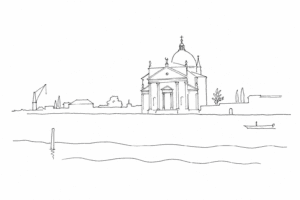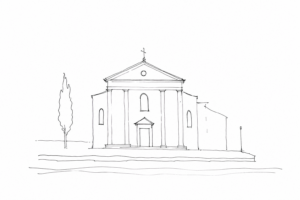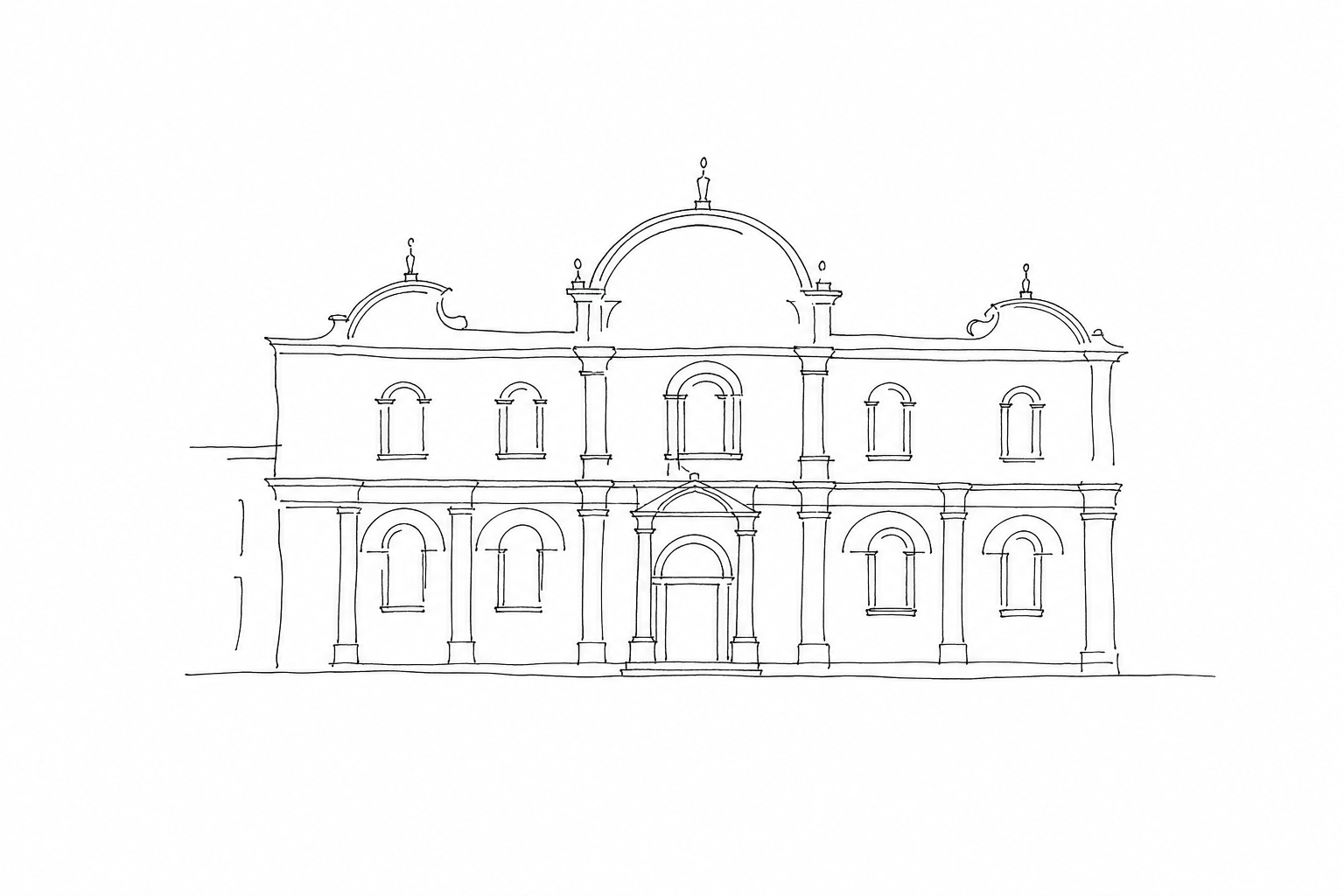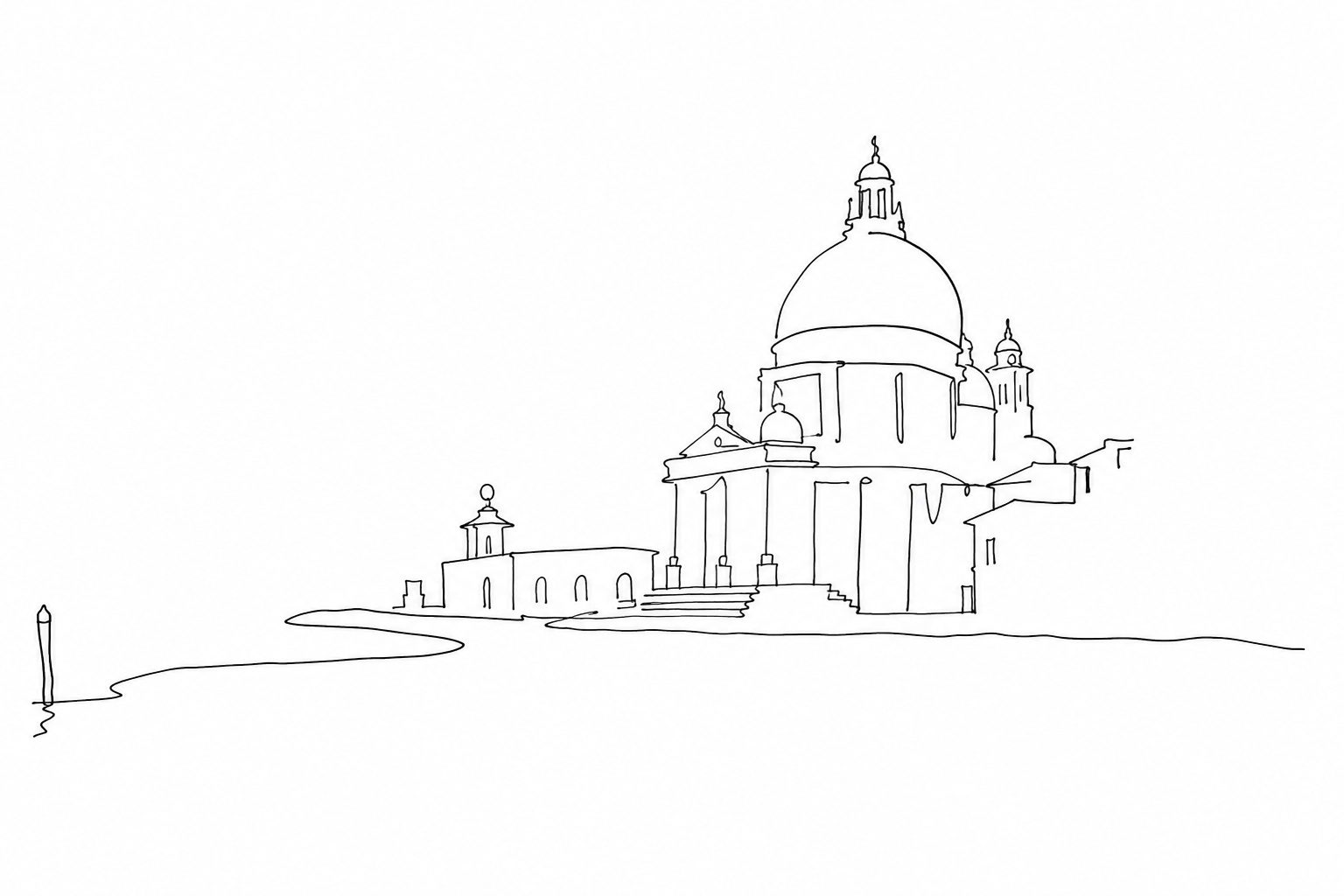

Santa Maria della Salute is not only one of the most recognizable images of Venice: it is a church born from a collective promise, when the city was seeking a response to the plague of 1630. Seen from the water, at the entrance to the Grand Canal, it almost seems to watch over the passage between the basin, the customs house, and Dorsoduro. But its strength also lies in the details: the central plan, the domes, the interior light, the works it preserves, and its continuous relationship with urban life. Entering it, or even just approaching it on foot, means reading an essential fragment of Venetian history.
A public promise after the plague
Santa Maria della Salute was born from a precise wound: the plague that struck Venice in 1630, one of the harshest crises in its modern history. The contagion arrived in a city still powerful but fragile, caught between trade, diplomacy, and urban density. Faced with the emergency, the Republic did not choose only health measures: it transformed fear into a public vow.
The Venetian Senate promised the Virgin a new church if the epidemic ceased. The dedication to the Madonna della Salute is therefore not an ornamental title, but the very memory of the request for salvation. In 1631 the young Baldassare Longhena was chosen, and he imagined a building capable of being seen from the water, at the entrance to the Grand Canal.
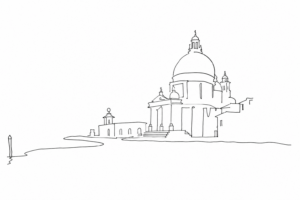
The basilica thus became a collective sign: not the private monument of a family, but the ex-voto of a city. Even today its position, between the Basin of San Marco and the Punta della Dogana, tells of that promise made in the face of death.
From the Grand Canal: a façade designed for the water
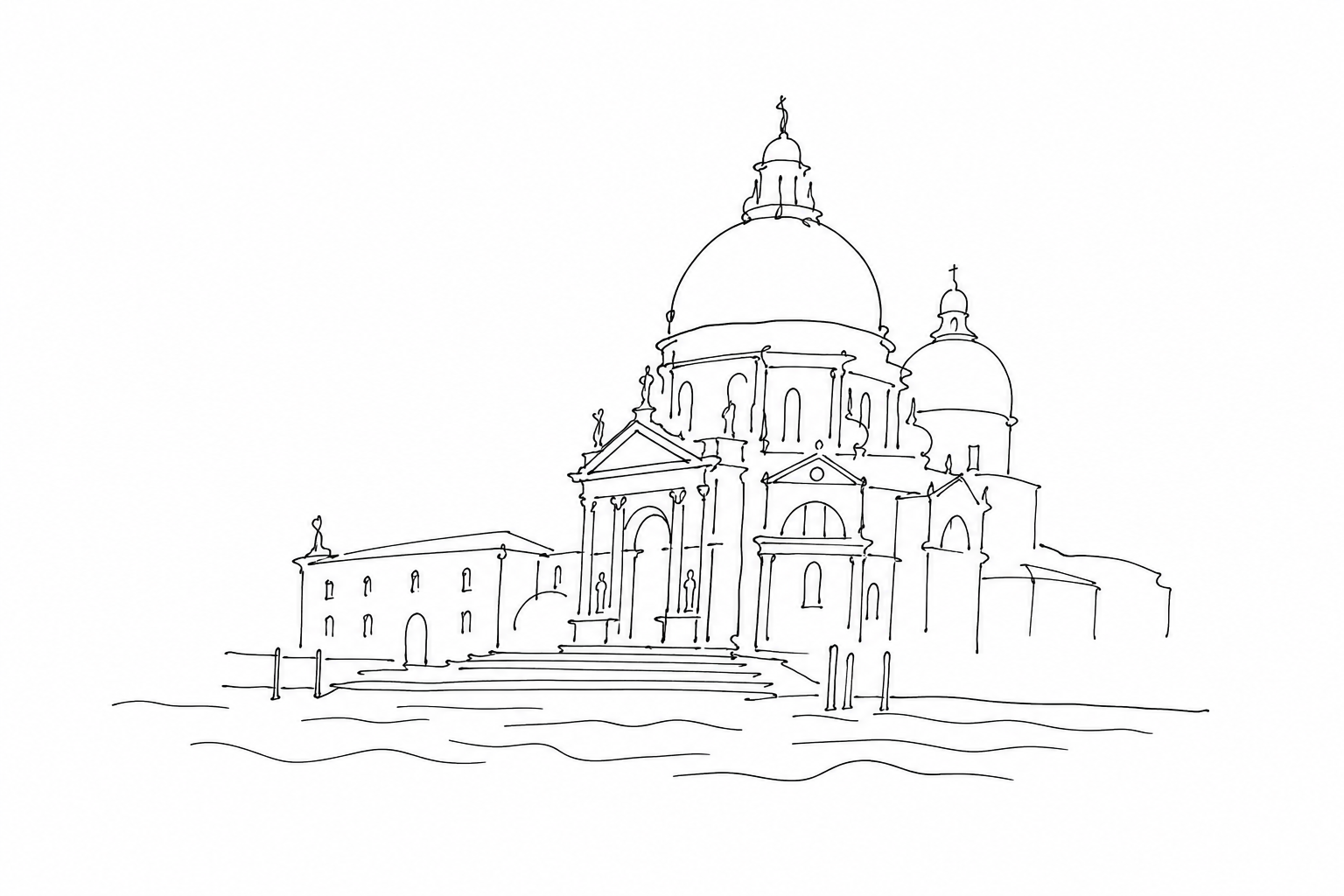
Arriving by boat, Santa Maria della Salute does not appear like a church set at the end of a calle, but as a frontal presence at the junction between the Grand Canal and the Basin of San Marco. The staircase descends toward the canal like a ceremonial landing place: it invites the gaze even before the steps, and transforms the water into a visual churchyard.
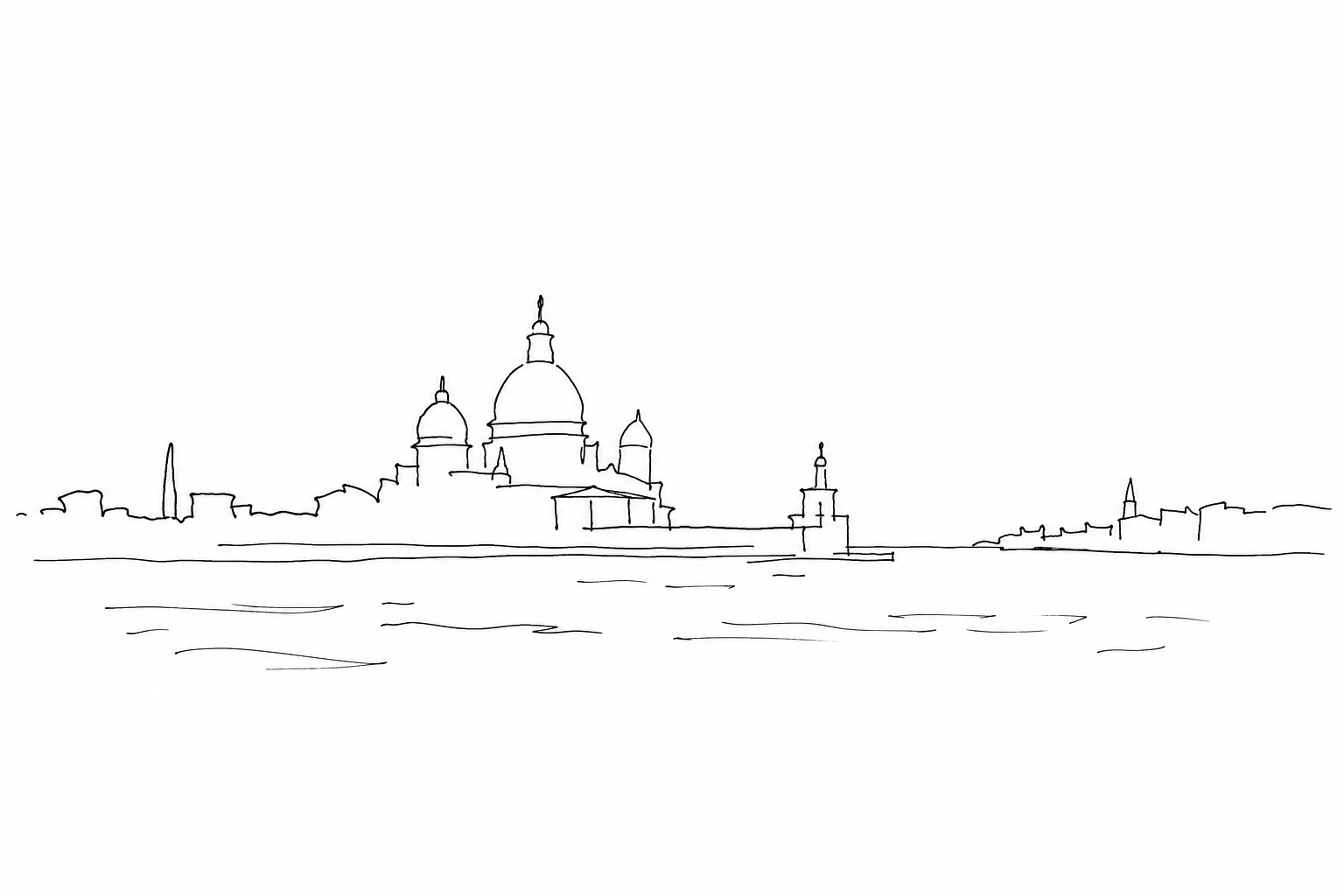
Baldassare Longhena used this position with a composition recognizable from afar. The great dome, flanked by the smaller one and by the set-back bell towers, creates a profile that responds to the low line of the fondamenta and to the movement of the boats. The external volutes, similar to scenic buttresses, guide the eye upward and make stable a building often observed from oblique perspectives.
For this reason, the Salute is one of the points where Venice is best read from the water: not only a sacred building, but an urban signal at the point between Dorsoduro, San Marco, and the Dogana.
Domes, central plan, and works to observe
Upon entering, the overall impression changes: the scenic exterior gives way to an intimate space, built on an octagonal plan. Baldassare Longhena chose a central form, suited to a votive sanctuary, where the gaze turns without getting lost in deep naves. The larger dome dominates the hall; the smaller one covers the presbytery, creating a sequence visible from afar but perceptible inside as a balance between height and contemplation.
The side chapels help one read the building calmly: they are not simple decorative pauses, but points of rest around the focal point. The high altar concentrates the historical meaning of the Venetian vow: the sculptural group by Giusto Le Court shows the Virgin with the Child, Venice kneeling, and the plague driven back, transforming the memory of the contagion into a sacred image.
The works preserved in the sacristy, linked to sixteenth-century Venetian painting, also deserve attention. Here one encounters canvases by Titian, including Old Testament subjects, and Tintoretto’s Wedding at Cana. Read together, architecture and works tell of a church born to give thanks, remember, and protect.
A slow walk in Dorsoduro
To include it in an itinerary, it is best to arrive without haste from the Accademia Bridge, letting the white mass appear at an angle between palaces, landings, and small calli. This approach helps one understand why Santa Maria della Salute was also conceived to be seen from afar: not only a sacred building, but an urban signal placed at the entrance to the Marcian basin.
After the interior visit, a good reading continues outside. From the churchyard one can observe the Dogana da Mar, San Giorgio Maggiore, and the line toward the Giudecca: three references that explain the strategic role of this point of Dorsoduro, suspended between devotion, maritime trade, and public representation.
- Stop first on the staircase, to grasp the relationship between the façade, statues, and open space.
- Look at the domes from several distances, not only frontally.
- Connect the place to the votive festival of November 21, a historical memory of the plague.
- Always check updated opening hours and access conditions before organizing the stop.
Including Santa Maria della Salute in a walk through Dorsoduro allows one to observe Venice at a different pace, less tied to the haste of obligatory routes. The church brings together public devotion, Baroque architecture, memory of the plague, and urban scenography, without losing its daily relationship with the water and with those who cross the point of the city. It is worth arriving there slowly, perhaps from the Accademia Bridge or along the Zattere, letting its presence change perspective with every step. It is one of those places where Venice does not merely show itself: it tells how it learned to survive.