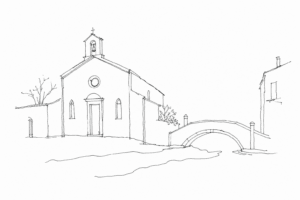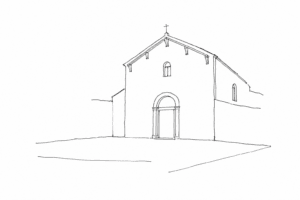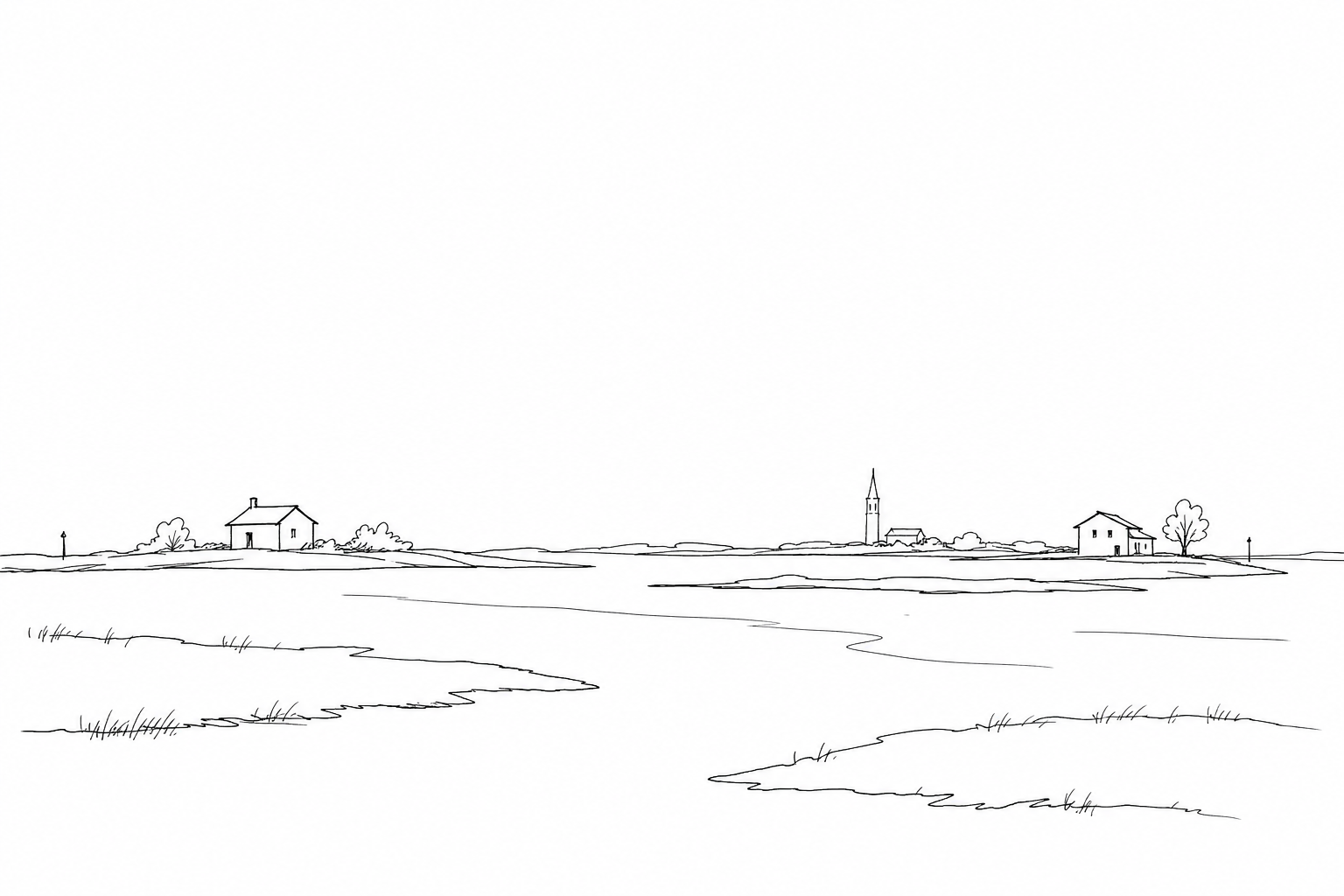
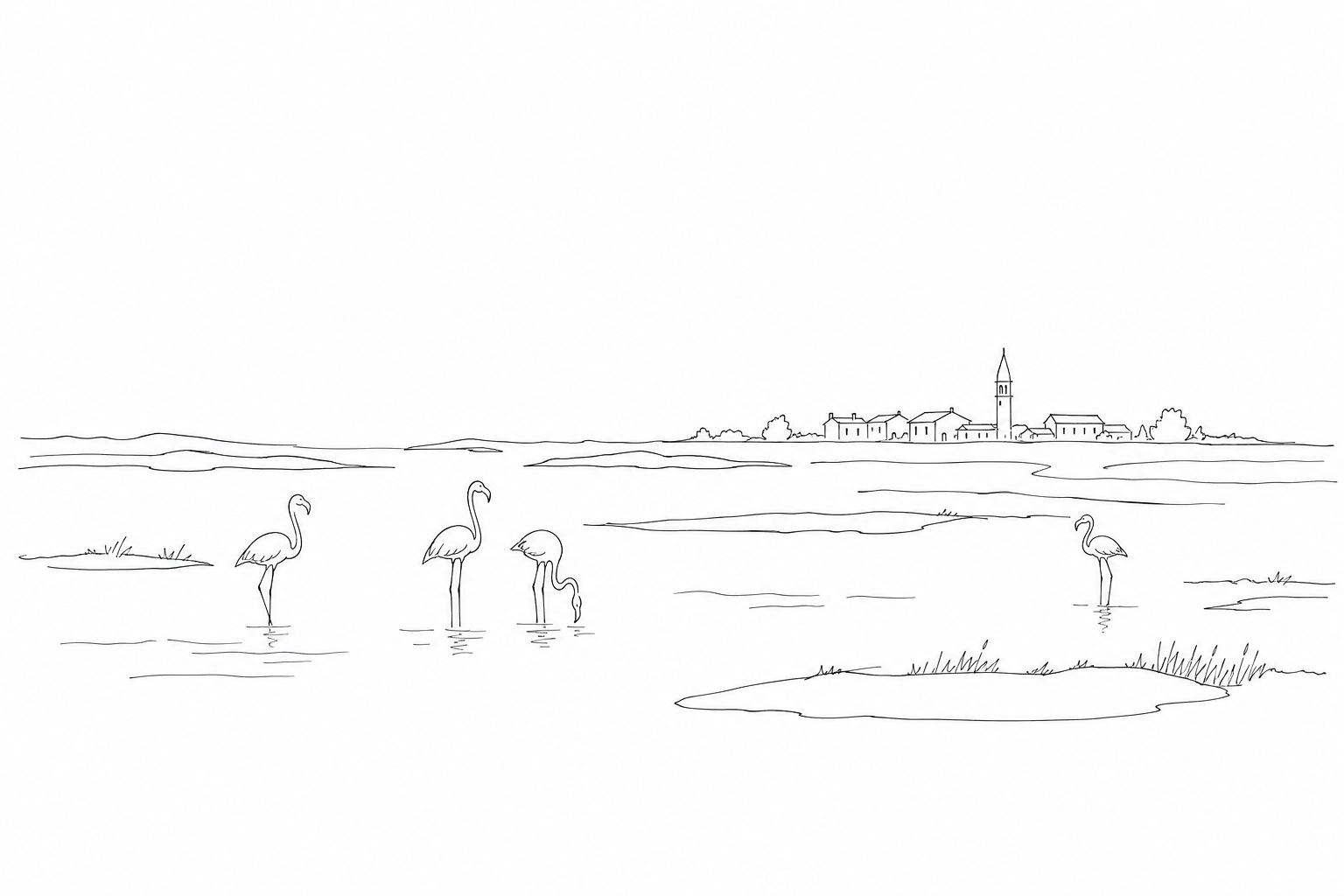
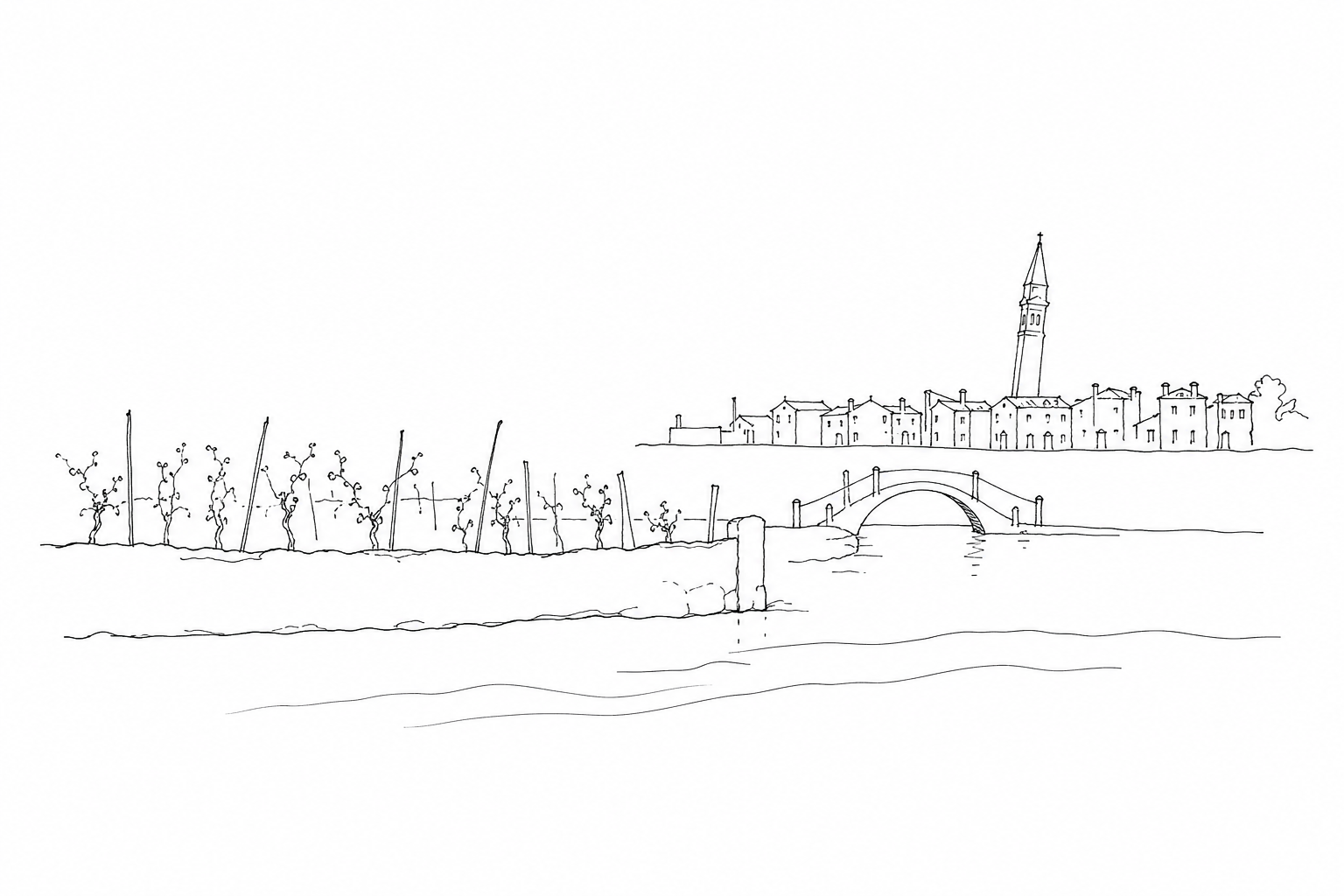

Santa Maria della Visitazione is a discreet presence along the Zattere, often overshadowed by the nearby church of the Gesuati and by the scenic force of the Giudecca Canal. Yet precisely its contained scale helps to read an important piece of Dorsoduro: the history of the order of the Gesuati, the relationship between devotion and urban life, the layering of religious buildings that here overlook the water. Stopping in front of this small church means observing Venice without pursuing only the most famous monuments, but following minute traces, proportions, continuities and changes.
A small church between the Zattere and Dorsoduro
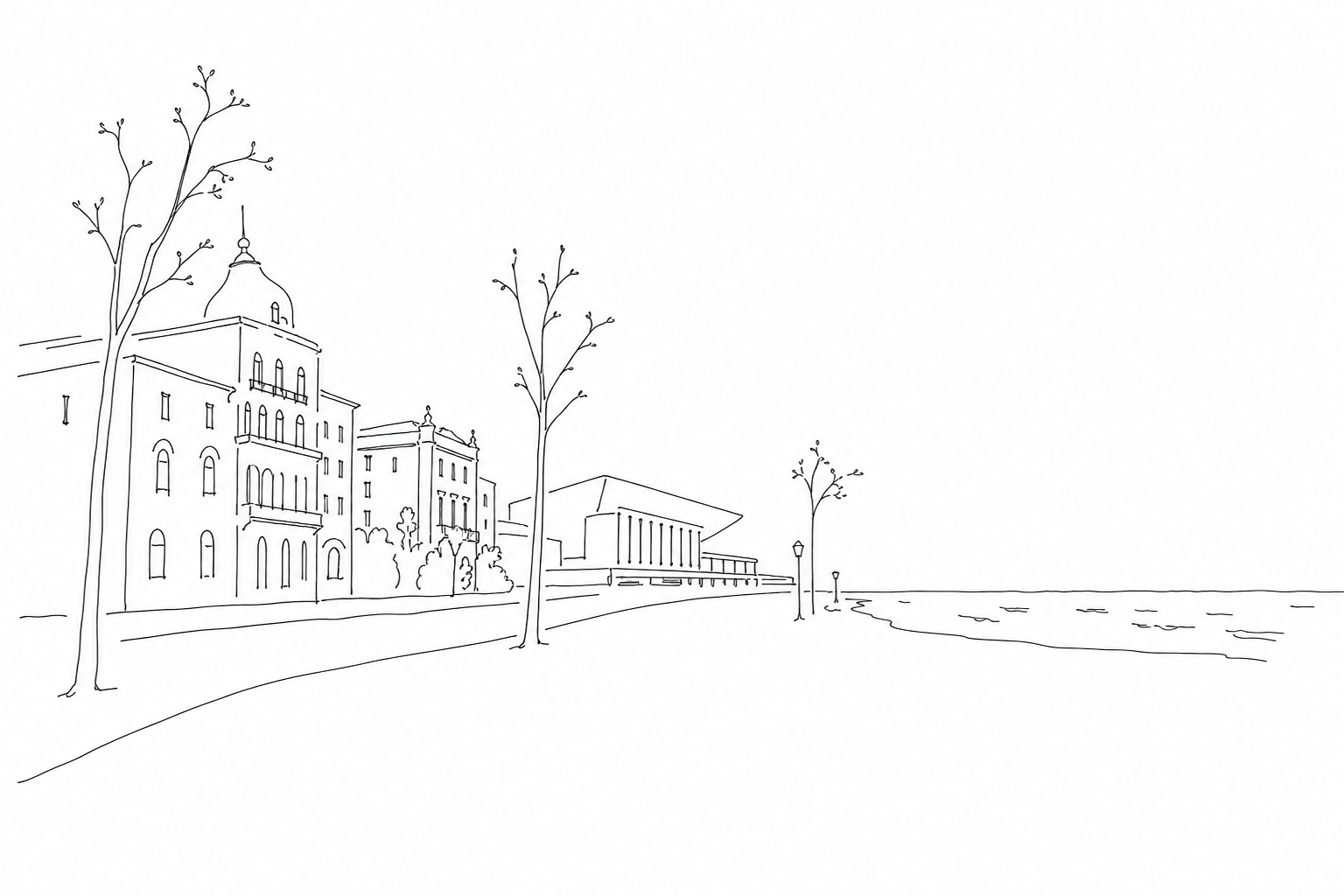
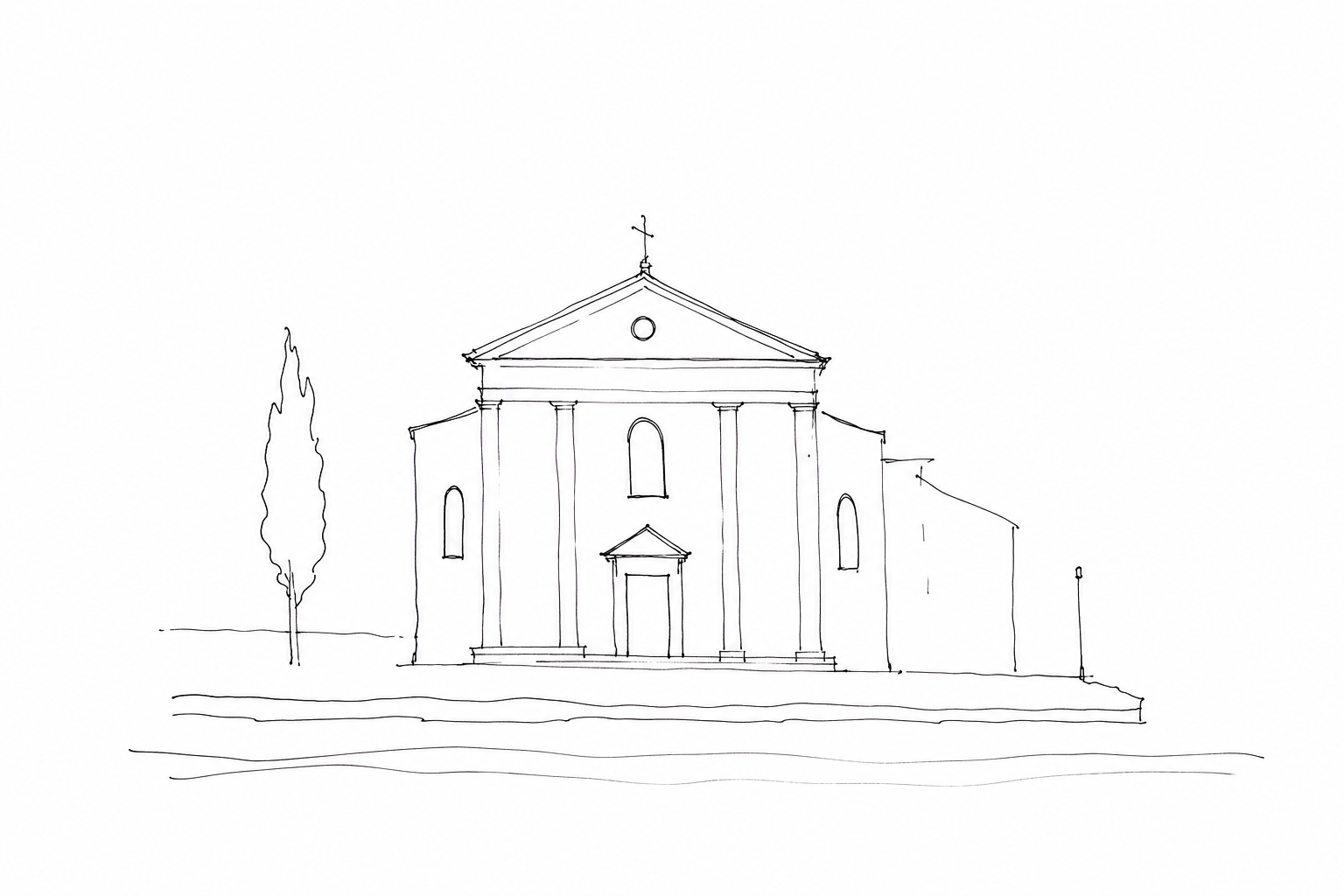
Santa Maria della Visitazione is located along the Zattere, in the sestiere of Dorsoduro, in one of the brightest stretches of the southern Venetian waterfront. It is a discreet presence: low, compact, almost compressed by the open perspective of the Giudecca Canal and, above all, by the proximity of the more scenic church of Santa Maria del Rosario, known as the Gesuati.
It is precisely this proximity that explains why many passersby barely notice it. Before the more famous eighteenth-century building, however, it was this small church that marked the presence of the Gesuati at the Zattere. The order, not to be confused with the Jesuits, settled there between the late Middle Ages and the Renaissance, giving form to a religious complex overlooking the water.
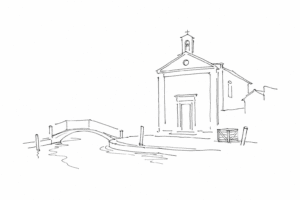
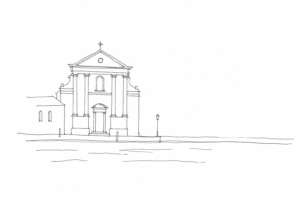
Its interest therefore arises from the contrast: not a great Baroque machine, but an older testimony, linked to the everyday scale of Dorsoduro and to the earlier history of the place.
Before the famous Gesuati: order, place, memory
The name “Gesuati” often creates a misunderstanding: it does not indicate the Jesuits, but the poor Gesuati, a community founded in the fourteenth century around Giovanni Colombini and devoted to religious life, assistance and craft practices. In Venice, their settlement on this shore of Dorsoduro preceded the large nearby Baroque building: Santa Maria della Visitazione was the first sacred focus of the complex, begun between the fifteenth and early sixteenth centuries.
When the order was suppressed in 1668, the convent and area passed to the Dominicans. It was they, in the eighteenth century, who promoted the vast Santa Maria del Rosario, commonly known as “the Gesuati,” designed by Giorgio Massari. Thus the nickname remained linked to the place, even though the religious protagonists had by then changed.
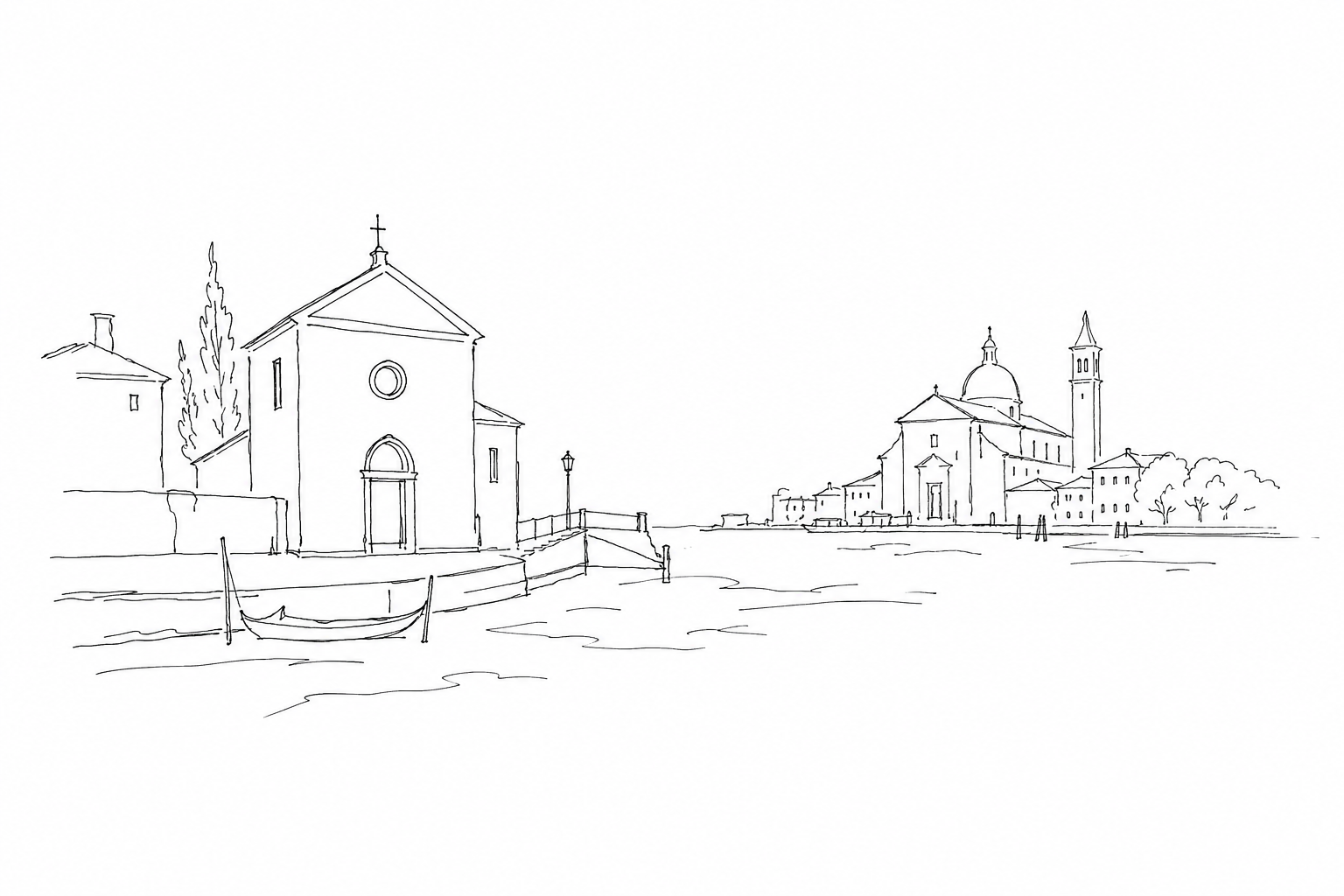
The small church therefore preserves an earlier memory: it is not simply a satellite of the larger temple, but the original trace that explains why that stretch of the Zattere is still identified with the Gesuati. Looking at it in relation to the nearby eighteenth-century façade helps to read two different seasons: the compact measure of a Renaissance settlement and the subsequent Dominican monumental ambition.
Façade and interior: reading the Renaissance measure
Here the gaze should slow down. The façade does not seek the scenic effect that, a little farther on, will dominate the eighteenth-century front: instead it works through simple relationships, with a composition ordered by pilasters, cornices and calibrated openings. The light stone highlights the geometric design, while the contained profile confirms the original function of the settlement: a place of gathered devotion, overlooking the water but not built to impose itself on the panorama.
Inside, the single nave makes it possible to immediately grasp the proportion between walls, presbytery and roof. The element to observe with greatest attention is the wooden coffered ceiling, linked to Venetian figurative culture between the fifteenth and sixteenth centuries: it is not only decoration, but a visual grid that accompanies the path toward the altar. The painted panels, attributed to different hands from the lagoon environment, transform the ceiling into a narrative sequence.
- First impression: Renaissance sobriety, without ornamental overload.
- Key detail: the regular rhythm of the ceiling, to be read as architecture and image together.
- Useful comparison: the nearby Dominican building shows a very different idea of monumentality.
Why it matters in the landscape of the Zattere
When walking along the fondamenta, Santa Maria della Visitazione functions as a historical threshold: it shows the sober face of the fifteenth-sixteenth-century settlement before the great Dominican temple of the Rosary imposed a different scale. For this reason it should not be read as a simple antechamber: it is the visible remnant of a previous religious and urban season, linked to the Gesuati friars and then redesigned, in the eighteenth century, by the arrival of the Dominicans.
Including it in a visit means using it as a point of comparison. First one observes the façade, proportions and ceiling; then, a few steps farther on, one measures the leap toward Baroque theatricality. The local toponym also preserves the memory of this passage, making this stretch of the Zattere a small open-air manual of Venetian history. For any entrance or internal access, it is advisable to check the updated conditions before planning the stop.
Santa Maria della Visitazione matters because it does not try to impose itself: it remains in the landscape of the Zattere as a silent threshold between religious memory, architecture and everyday life. Looking at it carefully also makes it possible to better understand what surrounds it, from the monumentality of the Gesuati to the open rhythm of the fondamenta. In a slow itinerary in Dorsoduro, this church invites a different pause, less spectacular and more precise: a way to recognize how Venice is also made of minor buildings, which are nevertheless capable of preserving essential relationships, passages and details.