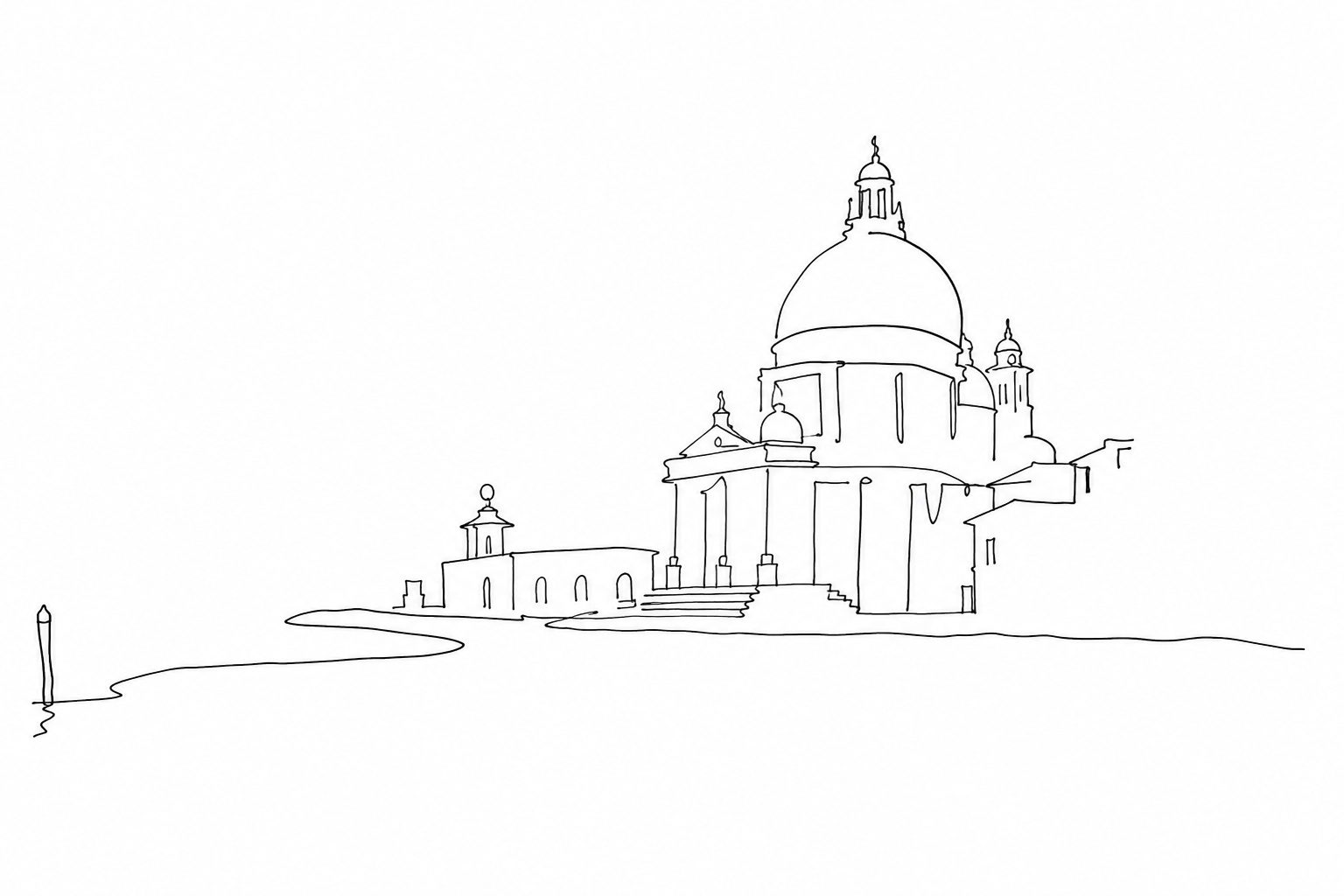

To understand the Venetian Baroque of Baldassare Longhena, the Basilica of the Salute is an almost obligatory starting point: not only because it dominates the entrance to the Grand Canal, but because it makes visible, in a single building, urban ambition, public devotion and architectural invention. Born as a vow after the plague of 1630, the Salute is not an isolated monument to be contemplated in haste: it is a presence that dialogues with the water, with the Dogana, with St. Mark’s and with the city’s daily movement. Observing it carefully means learning to recognize a language made of scenography, balance, light and construction details.
Why start from the Salute
To understand Baldassare Longhena’s Baroque in Venice, it is best to begin with the Basilica of Santa Maria della Salute, because here architecture, civic history and lagoon landscape coincide in an exemplary way. The church was born as a public vow of the Serenissima during the plague of 1630-31: the Senate promised a temple to the Virgin if the city were freed from the contagion. It is therefore not only a devotional building, but an urban monument to Venice’s survival.
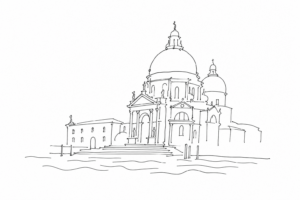
The position is decisive: at the point between the Grand Canal and St. Mark’s Basin, the Salute functions as a visual threshold for those arriving by water. Longhena designs a central body dominated by the great dome, readable from afar, and sets it on a scenographic base that seems to emerge from the lagoon. The lateral volutes, the buttresses and the pale stone are not isolated decoration: they serve to give rhythm, stability and public presence. Starting from here means recognizing Venetian Baroque as urban theater, not as simple ornament.
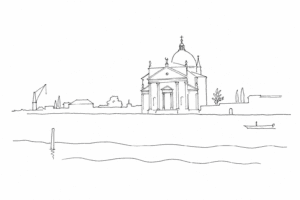
The plan and the dome: Baroque in the form of a stage machine
At the Salute, Longhena does not build a church “in depth,” with the gaze pushed only toward the altar. Instead, he organizes a central space: the large octagonal hall gathers the visitor under the dome and invites them to turn, to compare axes, side chapels, openings and passages. It is a Baroque designed for the movement of the gaze.
The main dome is the most recognizable sign. Seen from the Grand Canal or from the Basin, it does not function only as a covering: it becomes an urban presence, tall and compact, capable of ordering the nearby facades and marking the entrance from the water. The raised drum, the windows, the large external volutes and the statues create a continuous visual ascent, almost a direction in stone.
A useful detail for reading Longhena is the relationship between balance and surprise. The plan is clear, almost geometric; the effect, however, is dynamic. The architect uses solid masses, light and curved profiles to transform votive devotion into a public scene, clearly visible in the Venetian landscape.
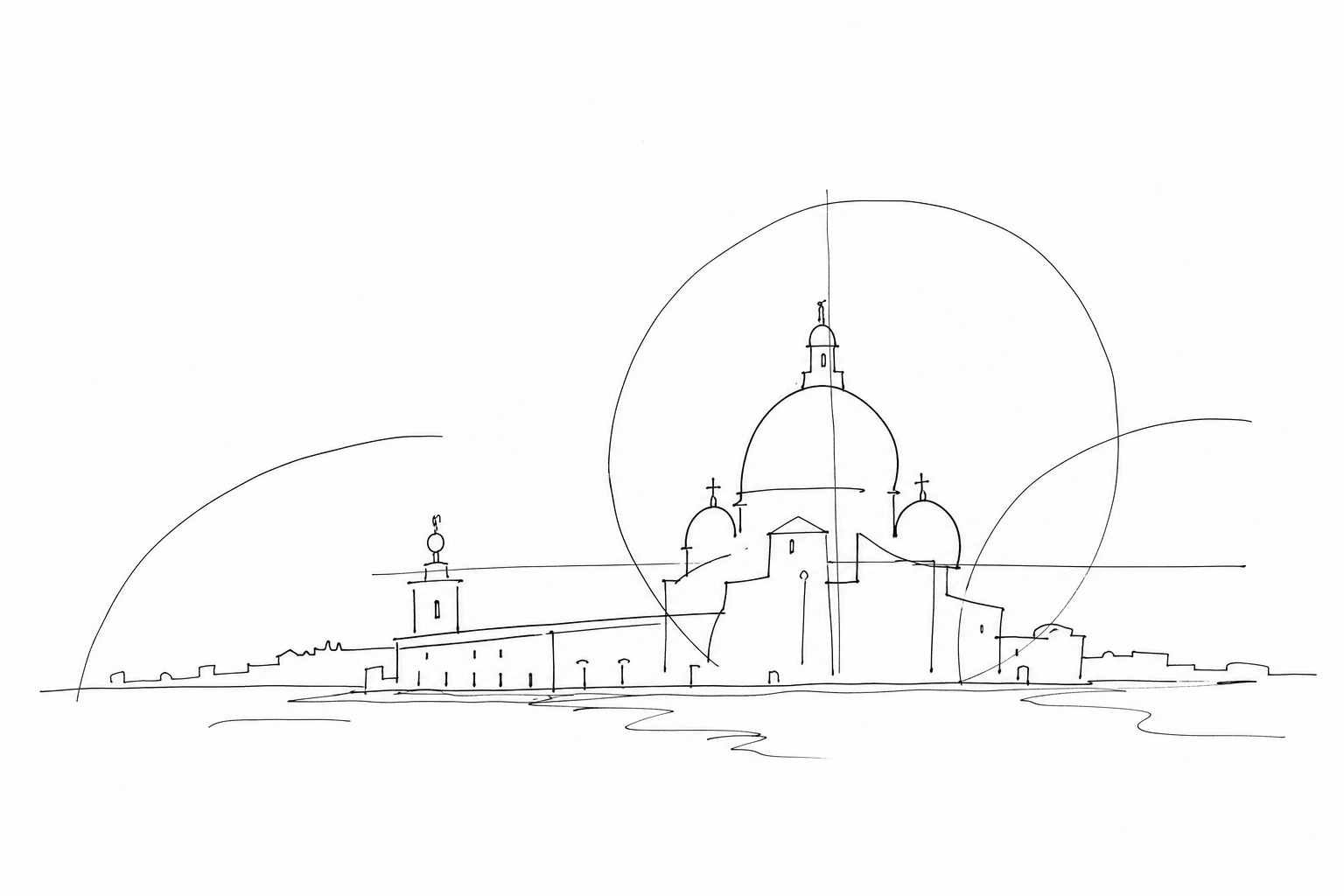
Visual clues for reading Baldassare Longhena’s language
To recognize Longhena’s Venetian Baroque during a walk, it is best to start from some very concrete signs. At the Salute the facade is not a flat wall: it advances, recedes, swells into curved profiles. The large lateral volutes, similar to stone ears, are not simple decorations; they serve to connect the parts of the building and to give the front a movement that is readable even from the Grand Canal.
Then observe the relationship between columns, niches and statues. The columns are often paired or superimposed, creating deep shadows; the sculpted figures occupy strategic points, high up and at the edges, so the architecture seems populated and theatrical. The white Istrian marble increases this effect: with Venetian light it makes frames, broken pediments and reliefs stand out.
- Movement: curved lines, projections, plastic connections.
- Urban scene: building designed to be seen from the water and from the landing places.
- Chiaroscuro: columns and recesses that change face at different hours of the day.
- Votive solemnity: formal richness linked to the memory of the plague and to public thanksgiving.
Leaving the Salute, the most useful comparison is on the Grand Canal: some palaces translate the same sacred direction onto a civil scale. Ca’ Pesaro, begun in 1659 for the Pesaro family, presents a powerful base, recessed windows and paired columns; the facade seems to advance and recede, while the water multiplies shadows and reliefs.
- Ca’ Rezzonico: designed for the Bon and completed in the eighteenth century by Giorgio Massari, it preserves the idea of a monumental front ordered by bands, with a central portal and a very marked vertical rhythm.
- Reading scale: in the church, theatricality culminates in the dome; in the palaces it concentrates on atriums, windows, frames and the relationship with the canal.
- Common clue: Baldassare Longhena always seeks an effect of apparition, visible from afar but rich in details when one approaches.
This short route helps distinguish his language: solemn, plastic, designed to be read in motion.
Starting from the Salute allows one to read Longhena not as a name from a handbook, but as an architect capable of shaping Venetian space with intelligence and measure. The dome, the plan, the facades and the relationship with the Grand Canal show a Baroque different from the Roman one: less explosive, more linked to lagoon light, water perspectives and urban continuity. From here, recognizing other clues of Longhena in Venice becomes an exercise in attention: it is enough to slow down, look at the corners, the proportions, the passages between solid and void, and let the city reveal its architecture gradually.