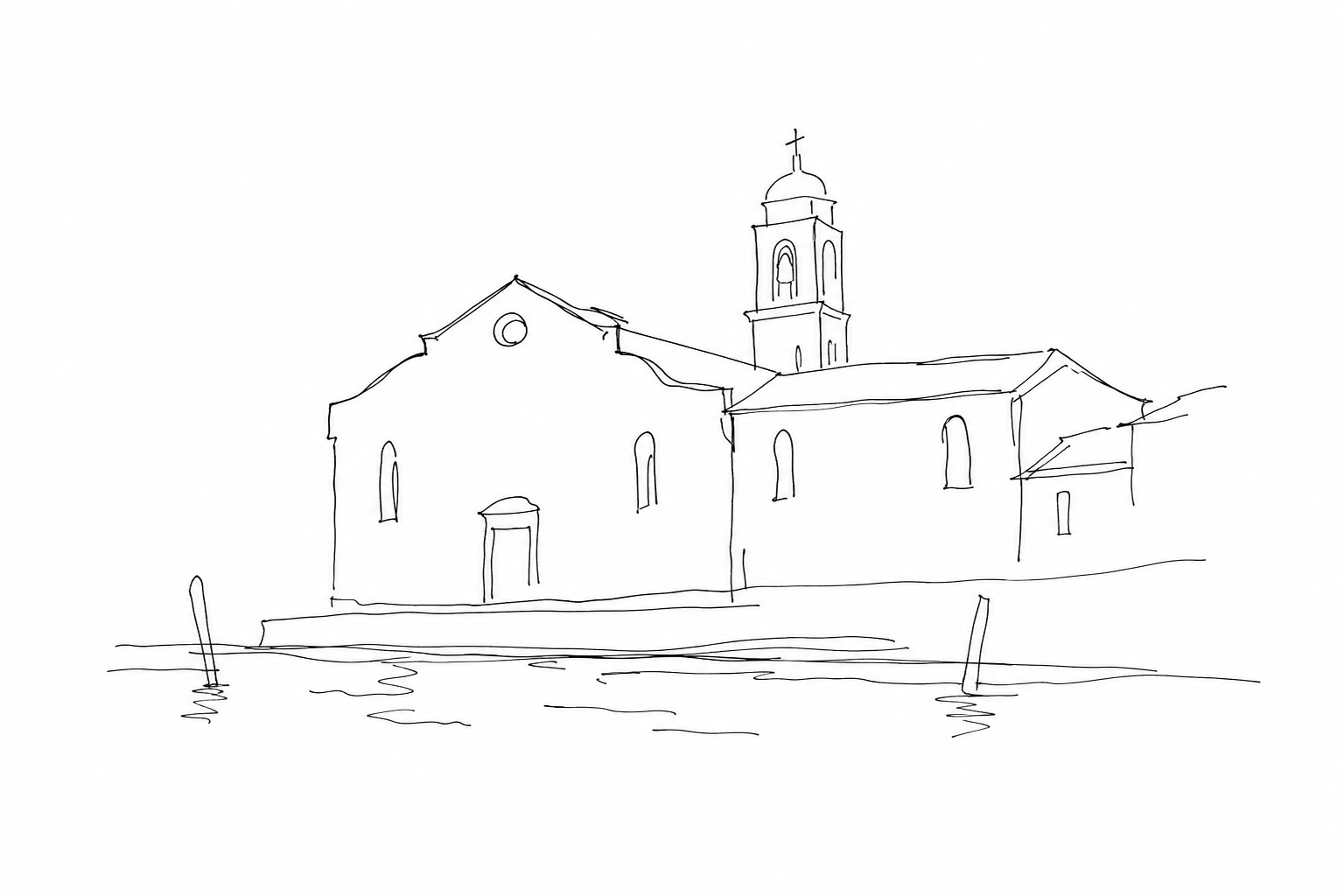
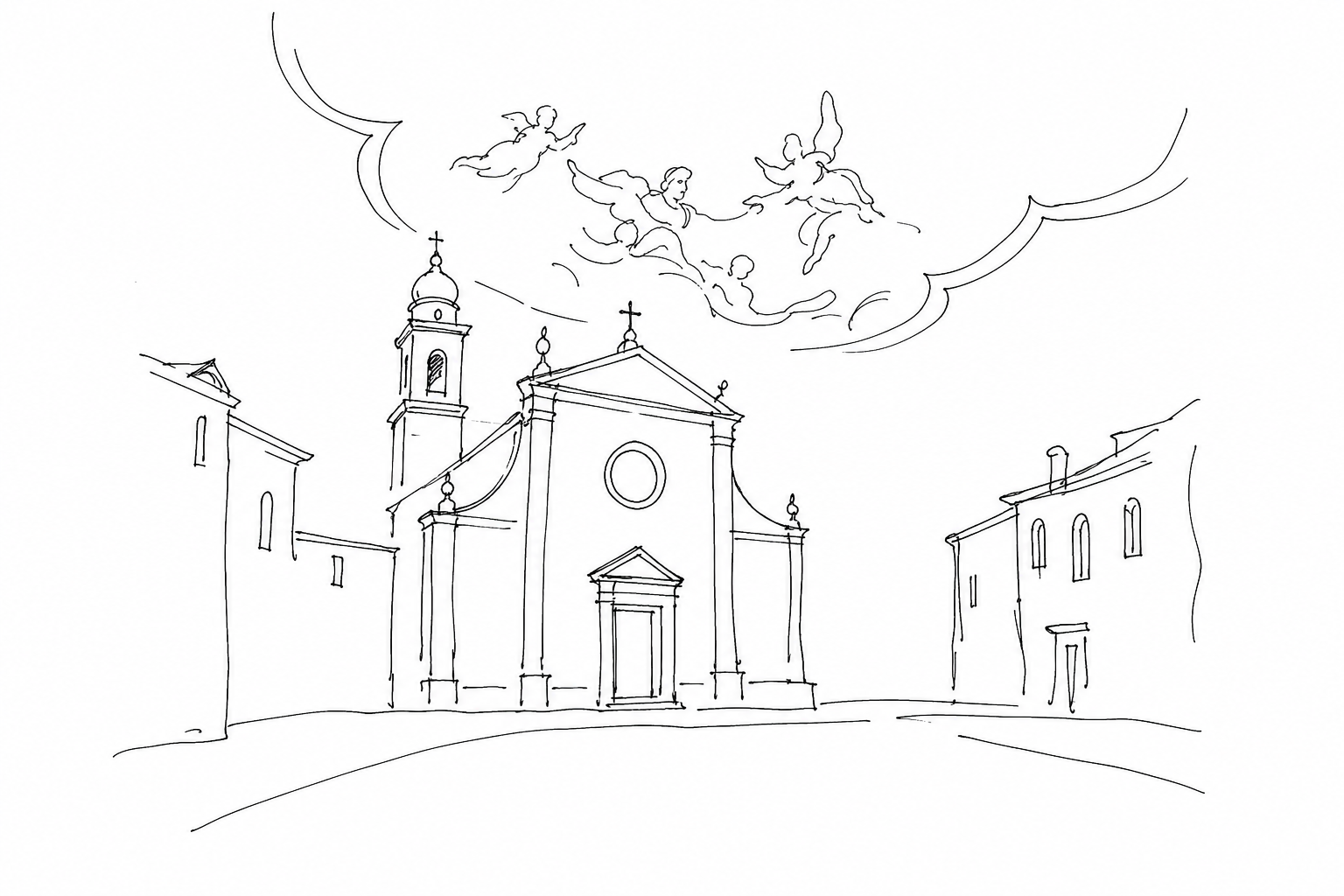

Between Campo Santa Margherita and the quieter edge of Dorsoduro, Santa Maria dei Carmini often remains in the background: a church one passes in front of, rather than a threshold to cross. Yet right here, far from the automatic gestures of the most beaten itineraries, one of Giambattista Tiepolo’s most surprising ceilings is preserved. To understand it, you need to slow down, distinguish the church from the nearby Scuola dei Carmini, and look up carefully. It is not a long detour, but it changes the way you read this part of Venice: less as a passage, more as a fabric of places, works and everyday habits.
Why many people pass by the Carmini
Santa Maria dei Carmini is located in one of those points in Venice where the pace tends to quicken. Those arriving from Piazzale Roma or from the Frari area often cross this stretch heading toward Campo Santa Margherita, Ca’ Foscari, the Accademia or the Zattere: Dorsoduro becomes a destination, not a district to read calmly.
The church, dedicated to Santa Maria del Carmelo and overlooking the Carmini area, thus remains slightly to the side of the visitor’s mental trajectory. Next to it is the Scuola Grande dei Carmini, also linked to Giambattista Tiepolo, and this proximity can create a further misunderstanding: many look for the great decorative cycle of the Scuola and do not enter the church, or think they have already “seen the Carmini”.
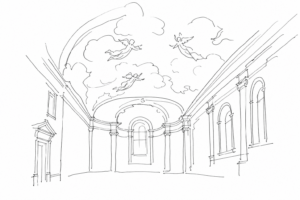
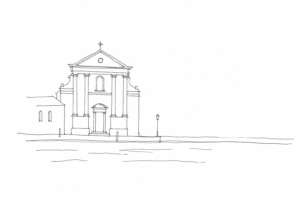
The ceiling attributed to Tiepolo instead requires a simple but decisive gesture: stop, cross the threshold, and look up. Nothing, from the flow of the calli, truly prepares you for the luminous richness that awaits inside.
Church and Scuola: what not to confuse
The essential point, often skipped by those who enter in a hurry, is this: the famous ceiling by Giambattista Tiepolo should not be sought in the nave of Santa Maria del Carmelo, but in the nearby Scuola Grande di Santa Maria del Carmelo. The two buildings are linked by the same Marian devotion and by the history of the district, but they are not the same thing.
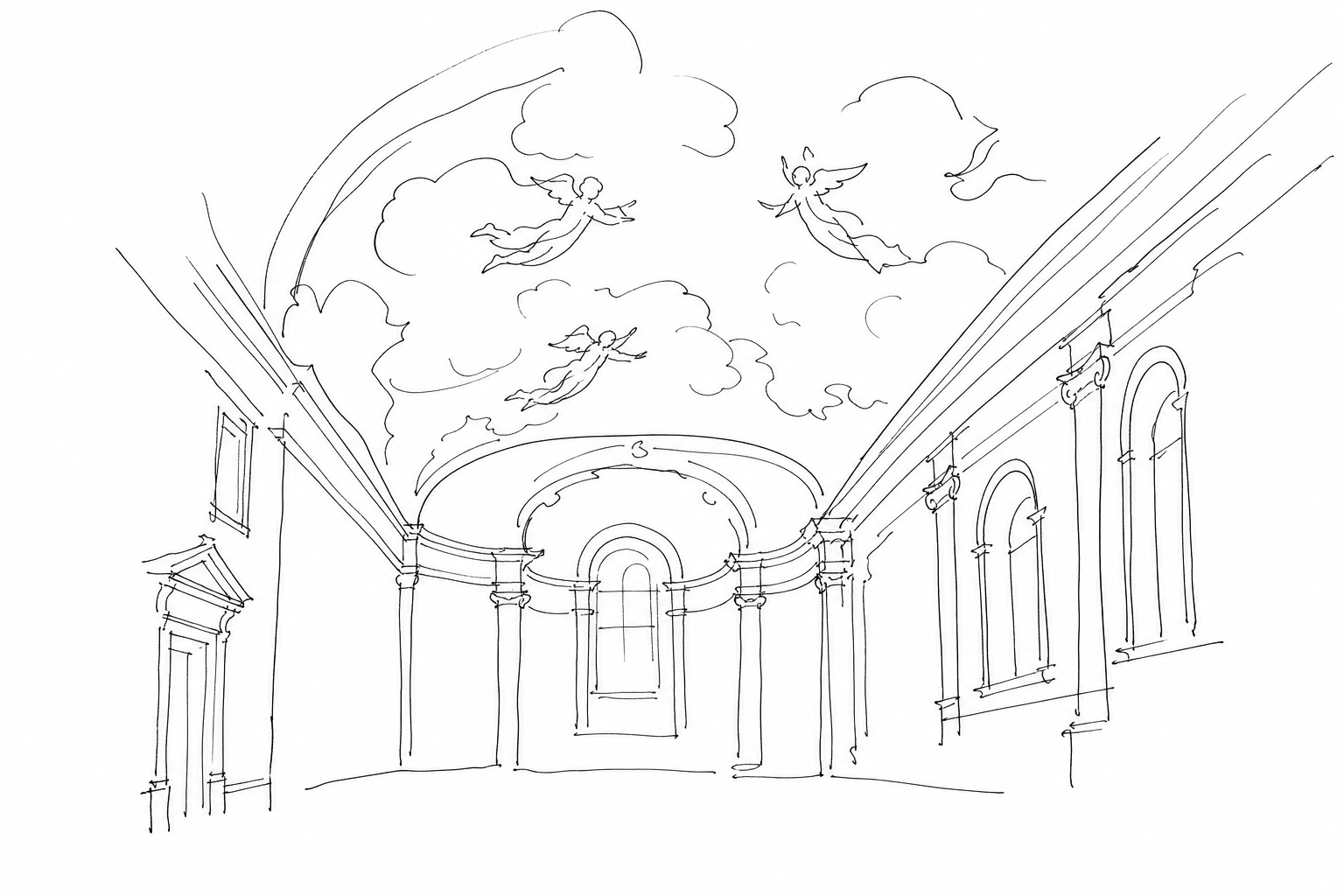
The church preserves its own religious and architectural character, with a Gothic layout altered over the centuries. The Scuola, on the other hand, was the seat of the confraternity: a place of meeting, representation and ceremony. It was there that Tiepolo worked in the eighteenth century, decorating the ceiling of the great hall with a painting designed to be seen from below, in motion, as the Venetian light lightens figures, clouds and apparitions.
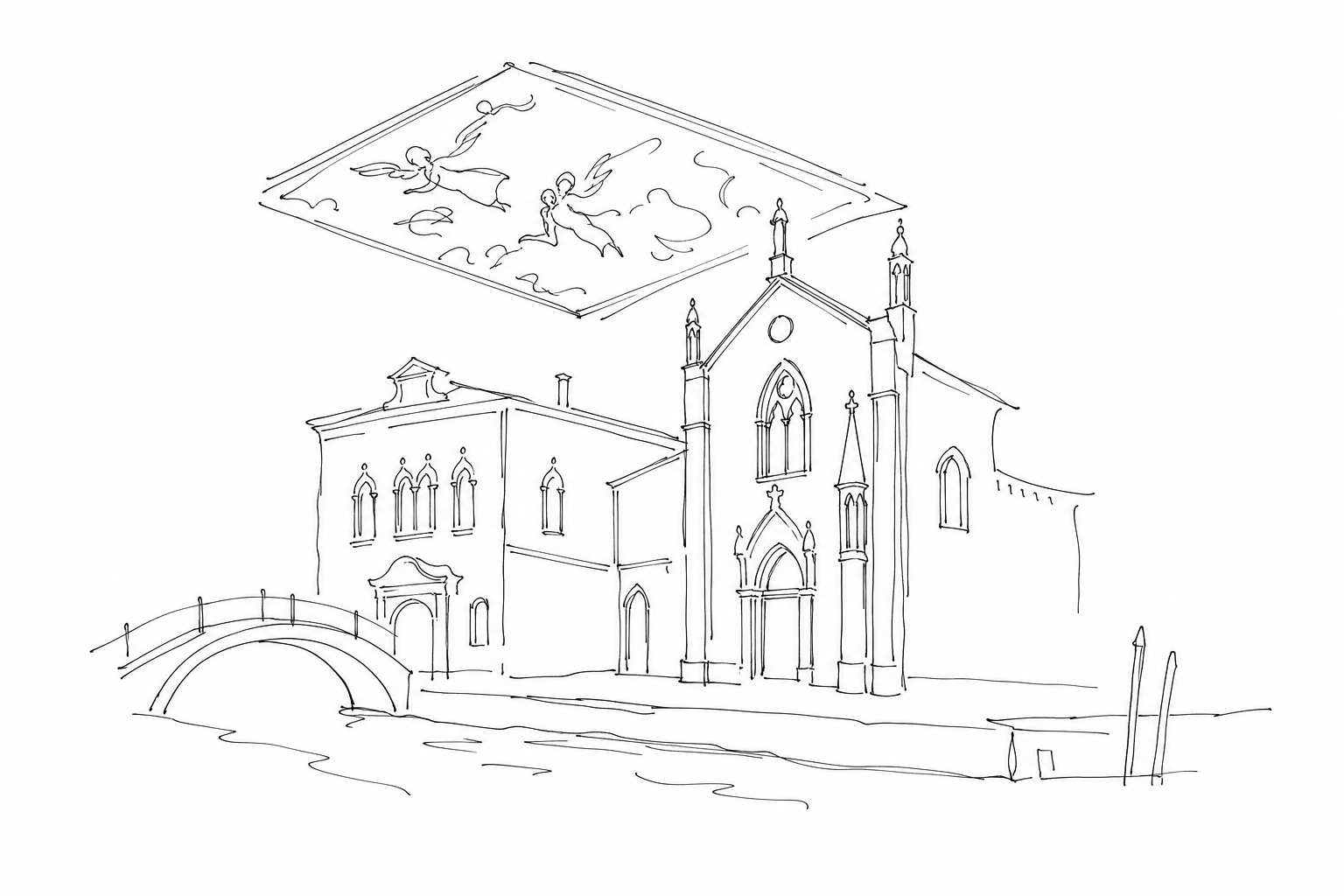
This distinction changes the visit: it is not enough to “pass by the church” expecting to find the Tiepolo masterpiece above the altar. You need to identify the Scuola building next to the sacred complex and check the updated access arrangements. Only then does the name of the Carmini stop being a vague indication and become a precise address for the gaze.
Tiepolo’s painting: what to really look at
Once inside the confraternal space, it is not worth limiting yourself to recognizing “a Tiepolo” and moving on. The central scene is linked to Carmelite devotion: the Virgin appears to Saint Simon Stock and gives him the scapular, a sign of spiritual protection. It is a very precise subject, not a generic heavenly vision, and it explains why this work is here, next to the complex dedicated to Our Lady of Mount Carmel.
- The movement from bottom to top. The figures are not still on a plane: they seem to rise into open light, with clouds, angels and diagonals pushing the eye toward the center.
- The staging of the light. Tiepolo uses golden and blue brightness to separate the earthly world from the divine zone. It is not just decoration: it is a visual hierarchy.
- The scapular. Looking for it helps you read the story. That small textile element is the theological focus of the image, more important than many spectacular details.
- The relationship with the hall. The painting works because it is seen from the floor: the proportions, the foreshortenings and the theatricality are designed for those who raise their heads from below.
Around the main scene, the allegorical figures and angels broaden the message: they do not recount an isolated episode, but transform the hall into a space of religious and confraternal identity.
A slow stop before Dorsoduro
To avoid missing it, treat it as an intentional detour, not as a passage “if there is time left”. Arriving from Piazzale Roma or the station, the complex fits well before Campo Santa Margherita: it is a quiet pause among calli that are still everyday, useful for slowing your gaze before the better-known destinations.
If, on the other hand, you are going toward San Barnaba, Ca’ Rezzonico or the Zattere, stopping here changes the rhythm of the walk: you enter, look up, then continue with a different perception of eighteenth-century Venetian painting. The visit works best if you mentally separate two moments: first the exterior and the campo, then the confraternal hall with the vault painted by Giambattista.
- Allow for a short but unhurried stop.
- Always check the updated access arrangements before setting off.
- Avoid placing it after too many visits: it requires attention upward and calm.
Stopping at the Carmini means accepting a less immediate Venice, where value does not always coincide with the crowd or with the most recognizable façade. Tiepolo’s ceiling asks for only a few minutes, but it asks for them fully: without haste, without treating it as a point to tick off. Inserted into a slow walk toward Dorsoduro, it becomes a pause for visual and historical orientation, capable of connecting campi, calli, religious institutions and Venetian painting. It is one of those places that do not impose a visit, but reward those who know how to interrupt their pace.
Related Posts
The Scuola Grande dei Carmini: clouds, angels and Venetian painting above a hidden hall
A brief guide to the upper hall of the Carmini, among Tiepolo, Carmelite devotion and Dorsoduro.The Gesuati at the Zattere: Tiepolo, light and white façades in front of the Giudecca Canal
A brief guide to the Gesuati at the Zattere: history, façade, light of the Giudecca Canal and Tiepolo’s ceilings.
San Pantalon: the ceiling that pretends to break through the church without using frescoes
The ceiling of San Pantalon in Venice explained through canvas, illusion, Fumiani and the view from below.Questions Answered
Why do many visitors miss the Tiepolo ceiling at Santa Maria dei Carmini?
Because they rush through or confuse the church with the nearby Scuola building.Where exactly is Tiepolo's ceiling located?
In the Scuola Grande di Santa Maria del Carmelo, not inside the church itself.What is the main subject matter of the Tiepolo ceiling painting?
The Virgin appears to Saint Simon Stock, giving him the scapular as a sign of protection.How should visitors approach their visit to appreciate the ceiling fully?
By making a slow, attentive stop, checking access, and avoiding rushing after other visits.
Stay a little longer in Dorsoduro
Would you like to move from this place to nearby stories among churches, palaces and fondamenta?
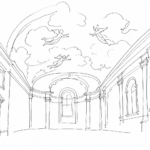 The Scuola Grande dei Carmini: clouds, angels and Venetian painting above a hidden hallA brief guide to the upper hall of the Carmini, among Tiepolo, Carmelite devotion and Dorsoduro.
 The Gesuati at the Zattere: Tiepolo, light and white façades in front of the Giudecca CanalA brief guide to the Gesuati at the Zattere: history, façade, light of the Giudecca Canal and Tiepolo’s ceilings.
 The Church of San Sebastiano: Veronese’s pictorial refuge hidden in DorsoduroGuide to the church of San Sebastiano in Dorsoduro, where Veronese worked for years and was buried.
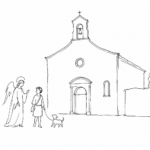 Angelo Raffaele: Tobias, the dog and a Dorsoduro church with an almost narrative toneA reading of the church of Angelo Raffaele in Dorsoduro, between Tobias, the dog, Guardi and the sacred story in Venetian space.