
At the Zattere, in front of the broad line of the Giudecca Canal, the Gesuati are not just a church to come across during a walk. The light façade in Istrian stone, Giorgio Massari’s measured design and the ceiling painted by Tiepolo create a point of balance between water, light and architecture. Here Venice appears less theatrical and more legible: in the reflections on the white surfaces, in the rhythm of the fondamenta, in the continuity between urban space and sacred space. To enter means shifting one’s gaze from the view to the material, from famous names to the details that make them come alive.
Where the Gesuati are and why they matter at the Zattere
The Gesuati are located in the sestiere of Dorsoduro, along the stretch of the Zattere overlooking the Giudecca Canal. The church seen today is Santa Maria del Rosario, but the popular name preserves the memory of the Gesuati, the religious order that occupied this area before the arrival of the Dominicans in the seventeenth century.
Its position is decisive: it is not a church hidden in an inner campo, but a building that takes part in the great Venetian waterfront. The light façade, in Istrian stone, receives an open and shifting light, different from that of the narrow rii; in front pass boats, reflections and the broad horizon of the Giudecca.
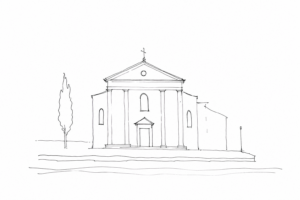
This is why the Gesuati matter at the Zattere: they mark a point where architecture, Dominican devotion and the lagoon landscape meet. Inside, then, Giambattista Tiepolo’s cycle dedicated to the Rosary transforms that external luminosity into a lofty, theatrical and very Venetian pictorial vision.
White façade: Massari, Istrian stone and waterfront
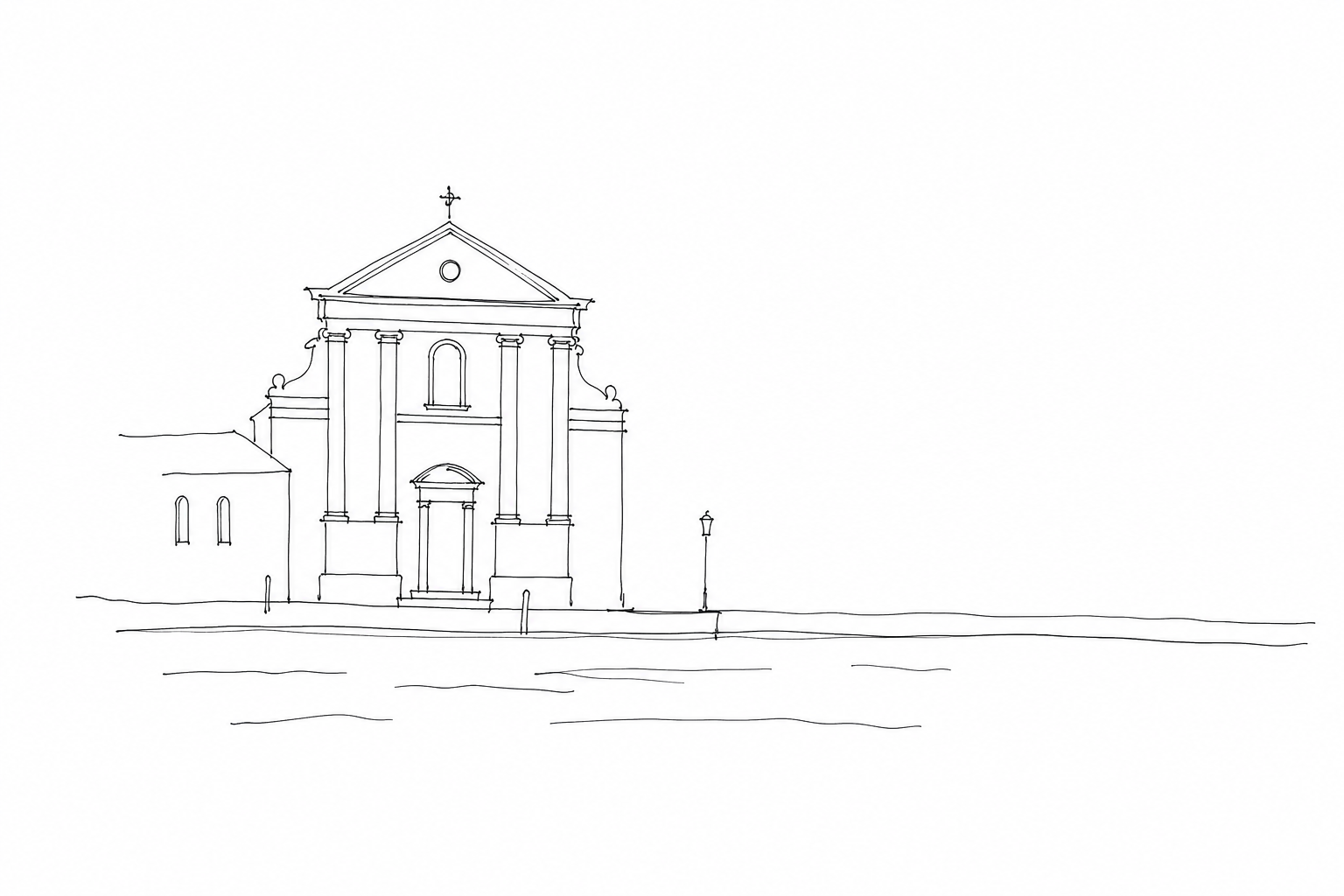
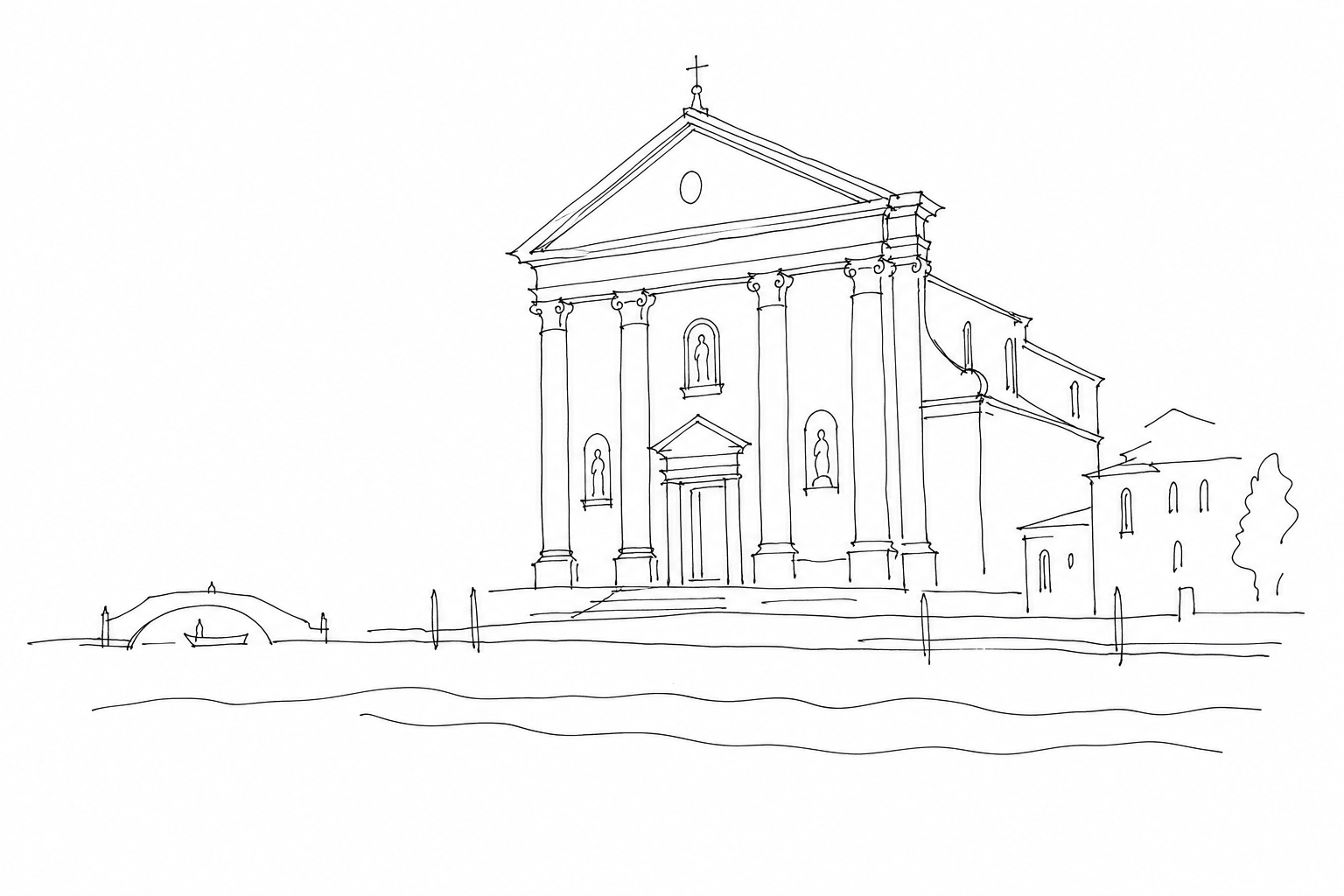
The façade of Santa Maria del Rosario should be read from the water side. Giorgio Massari conceived it as a light backdrop for the Zattere: not a simple entrance wall, but an urban presence that dialogues with the Giudecca Canal, with the boats and with the open light of the lagoon.
Istrian stone is decisive. Compact, resistant to salt air and naturally luminous, it transforms the front into a surface that changes tone during the day: sharper in the sun, softer in the low hours, almost silvery when the sky is veiled. It is a Venetian material par excellence, used here to give order and splendor without resorting to showy chromatic effects.
Massari organizes the front with a classical language: columns and pilasters vertically mark out the façade, the tympanum concludes the composition, the niches and statues introduce a devotional measure. Seen from the Zattere, this white architecture prepares the eye for the theatrical luminosity that Tiepolo will develop inside.
Tiepolo on the ceiling: the Rosary and Saint Dominic
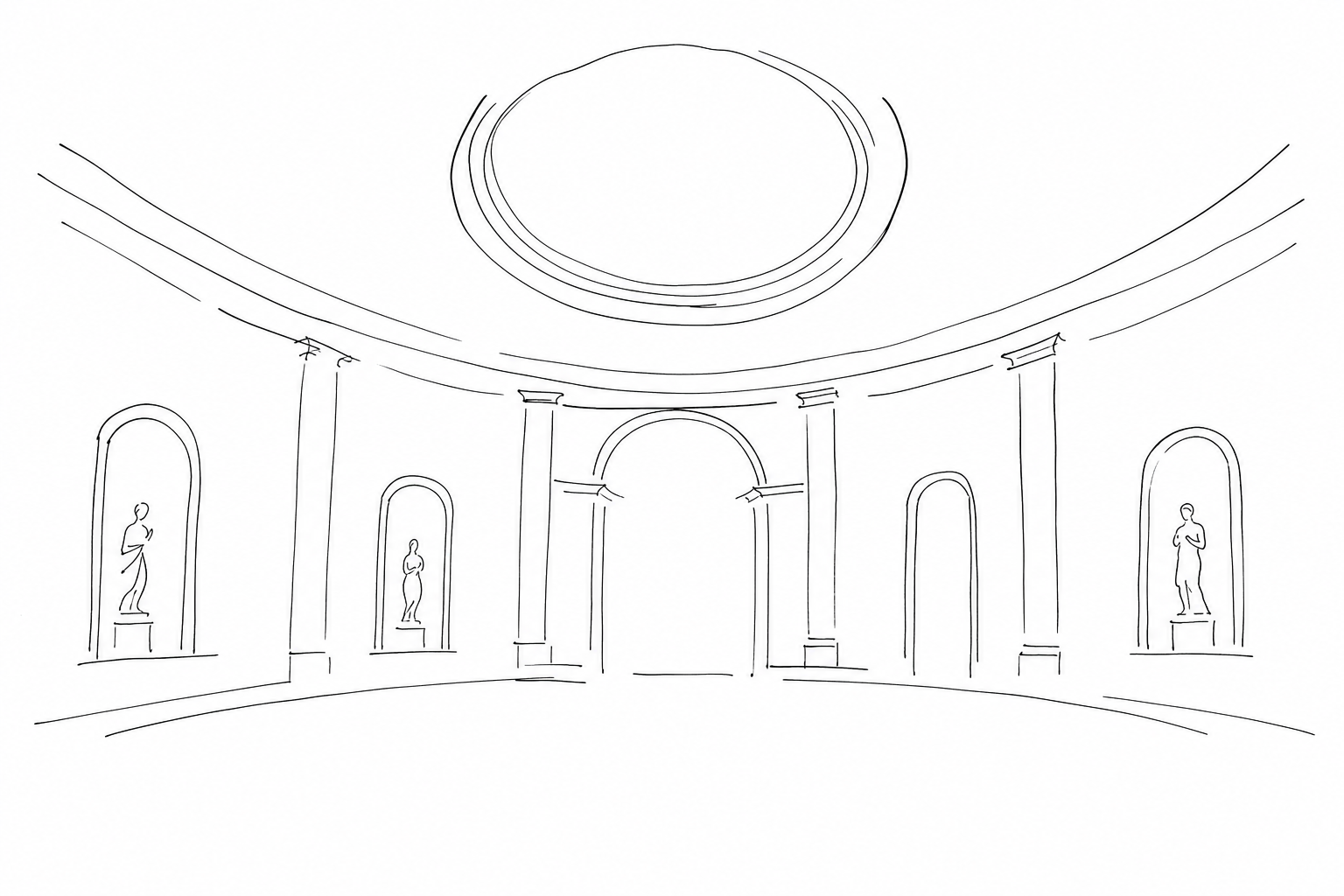
Entering Santa Maria del Rosario, the exterior white finds an answer above: the vault painted by Giambattista Tiepolo transforms the nave into an open sky. The frescoes, executed in the 1730s, are linked to Dominican devotion to the Rosary and should be read as an ascending narrative, rather than as simple paintings applied to the ceiling.
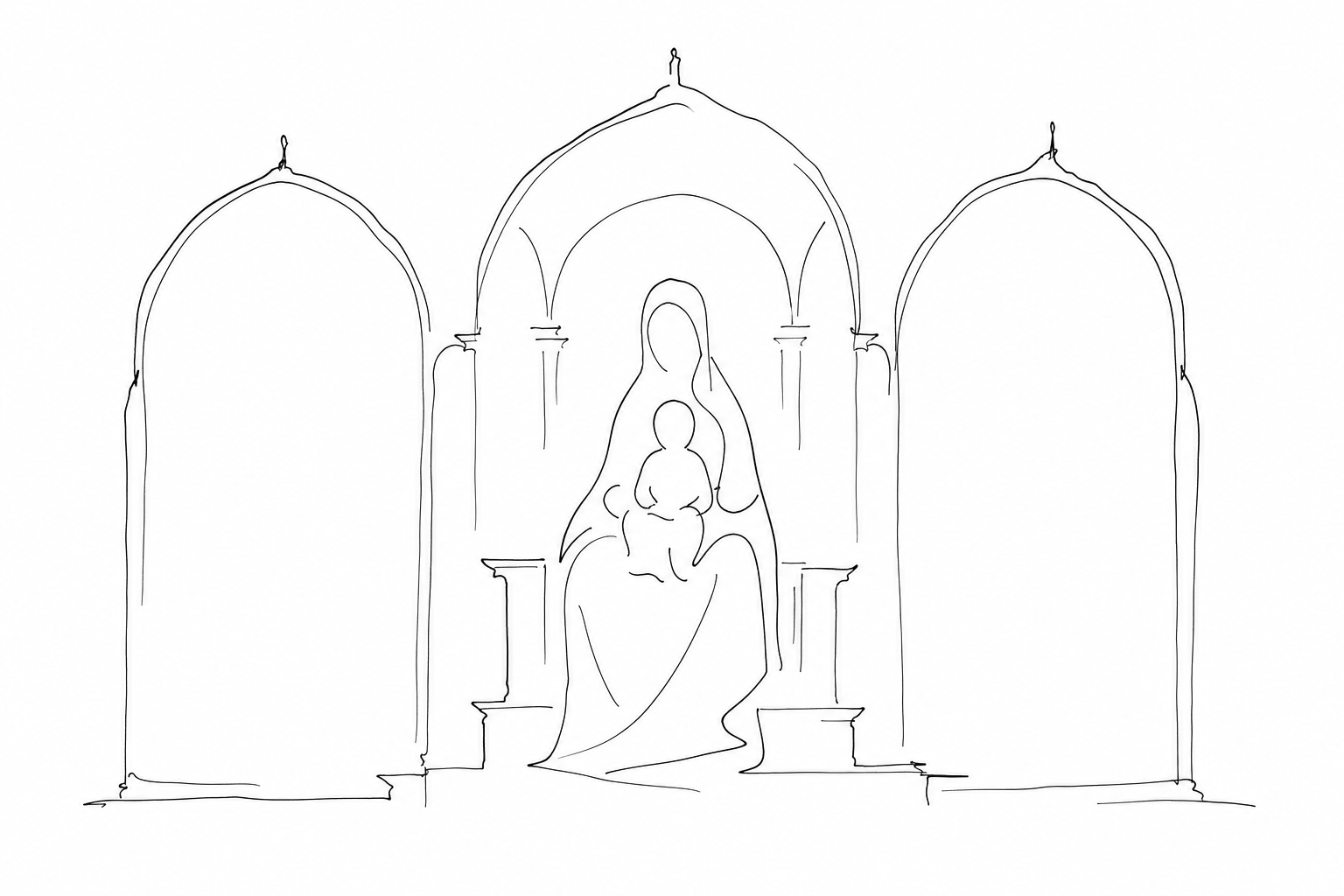
The iconographic core shows the Virgin, the Child and Saint Dominic: the saint receives and spreads the Rosary, presented as an instrument of prayer, preaching and spiritual victory. Around them, angels, allegorical figures and the faithful organize the scene in light diagonals. Tiepolo avoids a heavy effect: the bodies seem suspended, the colors become lighter, the shadows are transparent.
The visual effect also depends on the observer’s position. From the center of the nave the figures open upward, while the real light entering from the side windows dialogues with the painted light. The result is typically Venetian: a luminous theology, built with blues, pinks, pale golds and airy clouds.
Thus the interior completes what the shore had announced: after the light front facing the Giudecca Canal, Tiepolo brings that same light into the church, making it narrative material and visible devotion.
How to observe the church without hurry
A good way to read Santa Maria del Rosario is not to enter immediately. Stop on the fondamenta and look at the front from a slightly lateral position: the Corinthian order, the tympanum and the niches are better understood when the eye follows the vertical lines, not only the whole.
- First stop outside: observe how the brightness bounces off the cladding and separates the church from the profile of the Canal.
- Slow entrance: once you have crossed the door, remain for a few moments at the back of the nave; from there the axis toward the altar and the vault appears more legible.
- Gaze upward: look for Tiepolo’s frescoes without immediately chasing the details: first take in the overall movement, then identify the main figures.
- Exit: looking again at the front, the relationship between the light exterior and the painted ceiling becomes more evident.
Observing the Gesuati without hurry helps one understand a precise part of Venice: the one that never fully separates art, light and daily life. The church dialogues with the Zattere, with the passage of boats, with the white of the stone and with Tiepolo’s luminous painting. There is no need to turn it into an obligatory stop: it is enough to give it time, look at the façade from afar and then up close, follow the ceiling calmly, go out again toward the canal. It is in this simple movement that the building reveals its measure.
Related Posts
Santa Maria dei Carmini: the Tiepolo ceiling that many miss while rushing toward Dorsoduro
A brief guide to the Carmini: church, Scuola Grande and Tiepolo ceiling, often skipped between Campo Santa Margherita and Dorsoduro.Santa Maria della Visitazione: the small church of the Zattere before the more famous Gesuati
History and reading of Santa Maria della Visitazione, the small church of the Zattere that precedes the great temple of the Gesuati.
Sant’Alvise in Cannaregio: the secluded church with Tiepolo and an almost domestic Venice
A brief guide to Sant’Alvise, between the northern edge of Cannaregio, Tiepolo’s canvases and daily rhythm.Questions Answered
Where are the Gesuati located and why are they important?
They stand along the Zattere waterfront, combining architecture, devotion, and landscape.What materials and design characterize the church façade?
Istrian stone and classical elements create a luminous, urban presence.What themes does Tiepolo’s ceiling illustrate?
It depicts the Rosary and Saint Dominic in a light-filled, ascending narrative.How should visitors best observe the church?
By taking time to view from different angles and appreciate light interplay.
Stay a little longer in Dorsoduro
Would you like to move from this place to nearby stories among churches, palaces and fondamenta?
 Santa Maria dei Carmini: the Tiepolo ceiling that many miss while rushing toward DorsoduroA brief guide to the Carmini: church, Scuola Grande and Tiepolo ceiling, often skipped between Campo Santa Margherita and Dorsoduro.
 Le Zattere: the Venetian walk where the sun says more than the monumentsA slow guide to Le Zattere, the fondamenta in Dorsoduro where light, lagoon and everyday history matter more than the list of...
 San Sebastiano in Dorsoduro: the church where Veronese transformed the walls into theaterA slow guide to San Sebastiano, the church in Dorsoduro marked by Paolo Veronese’s long work.
 San Pantalon and the Painted Ceiling That Pretends to Be a FrescoAt San Pantalon, in the Dorsoduro sestiere, an enormous painting on canvas creates the illusion of a fresco: history, technique and details...