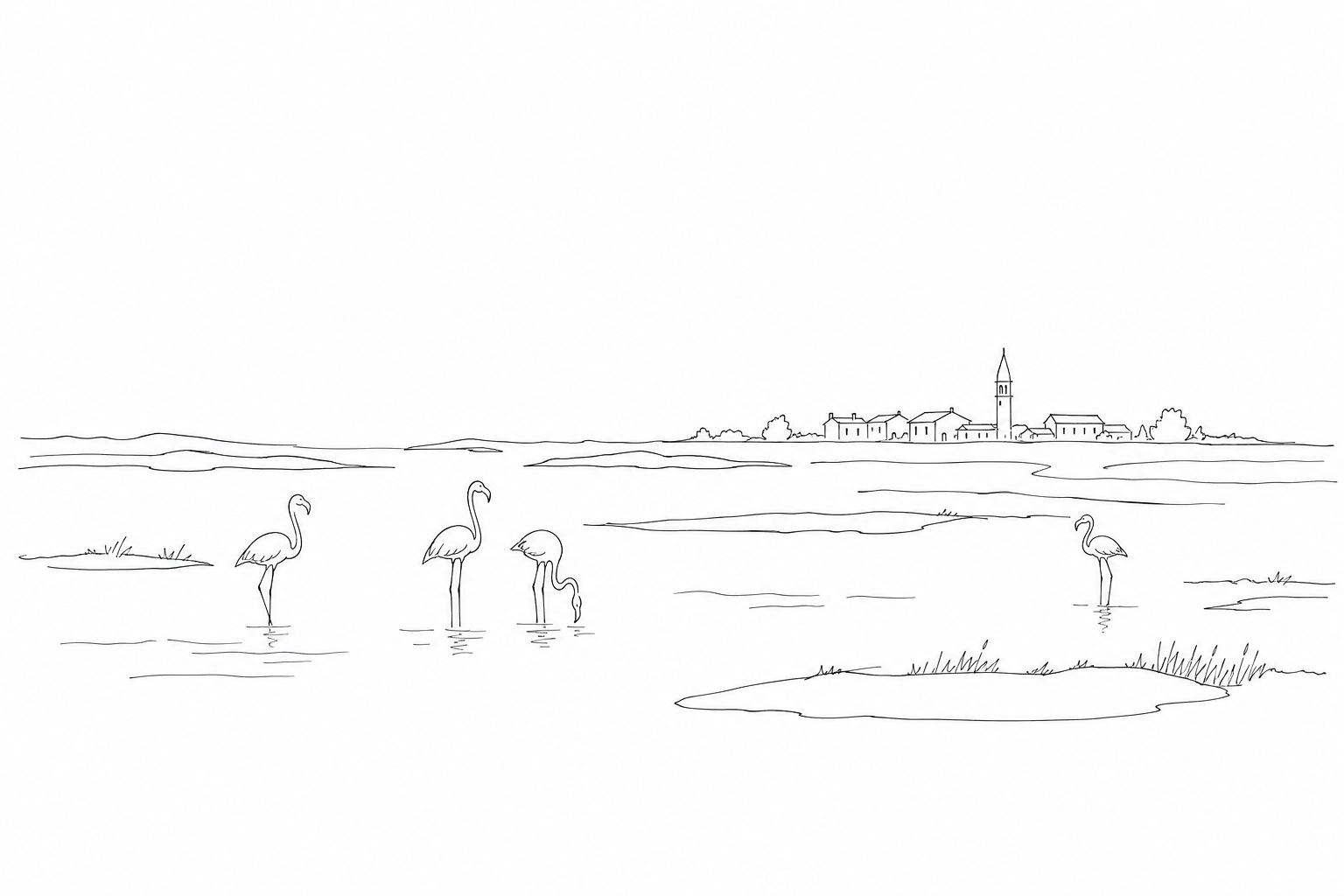
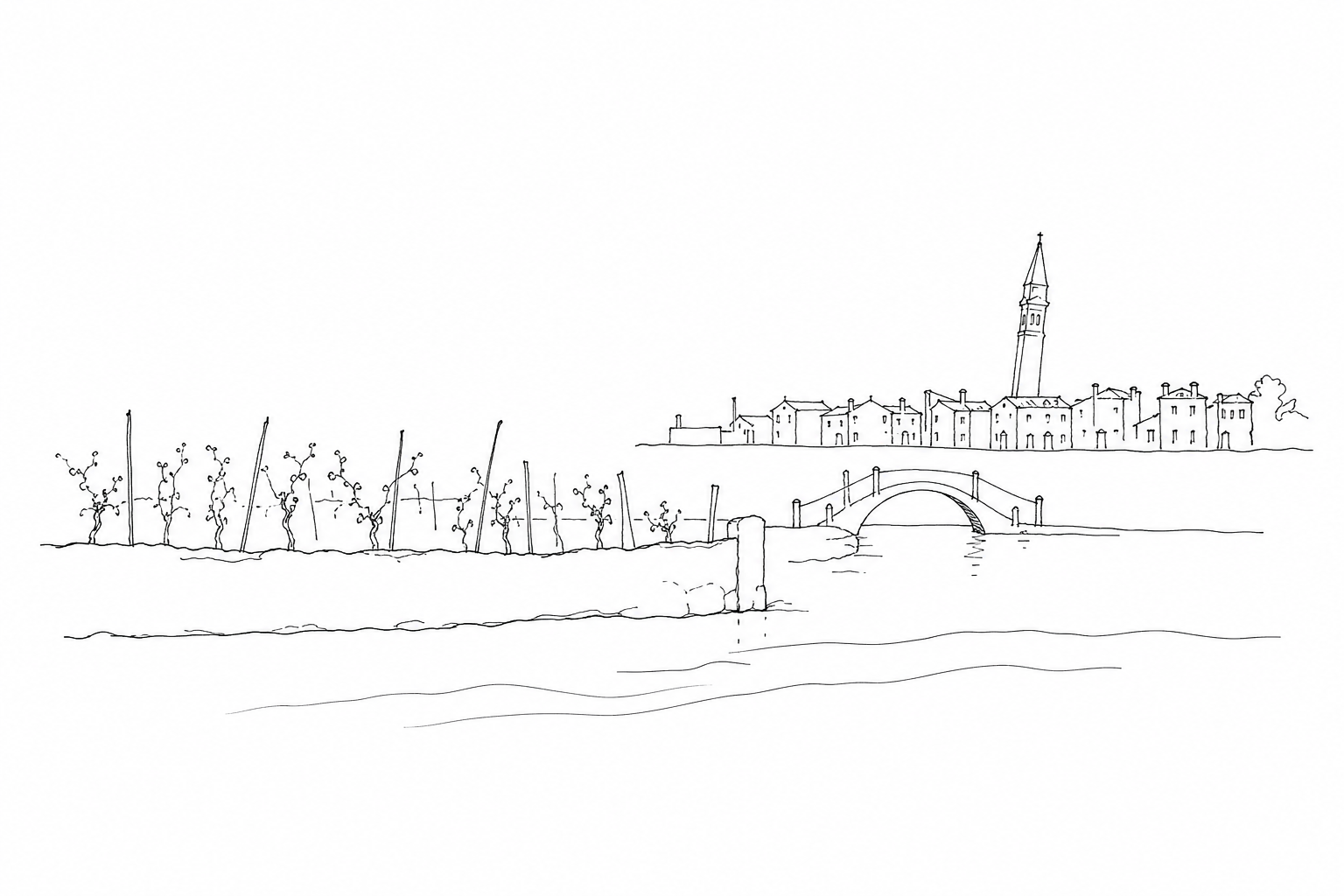

Polenta and schie is one of those Venetian dishes that seem minimal yet open up an entire landscape: the shallow lagoon, the markets, home kitchens, the rhythm of the seasons. Schie, small gray shrimp with a delicate flavor, belong to an everyday food memory, closer to necessity than to celebration. Telling their story means moving beyond the idea of a merely scenic Venice and following a humble food on its journey from water to table, among domestic gestures, fish stalls and new interpretations in contemporary bacari.
What schie are and why they matter
Schie are small gray lagoon shrimp, tiny and flavorful, once gathered in the shallow waters and salt marshes of the Venetian area. Their value lies not in their size, but in their concentration of flavor: a briny taste, delicate yet distinct, that tells of the environment they come from.
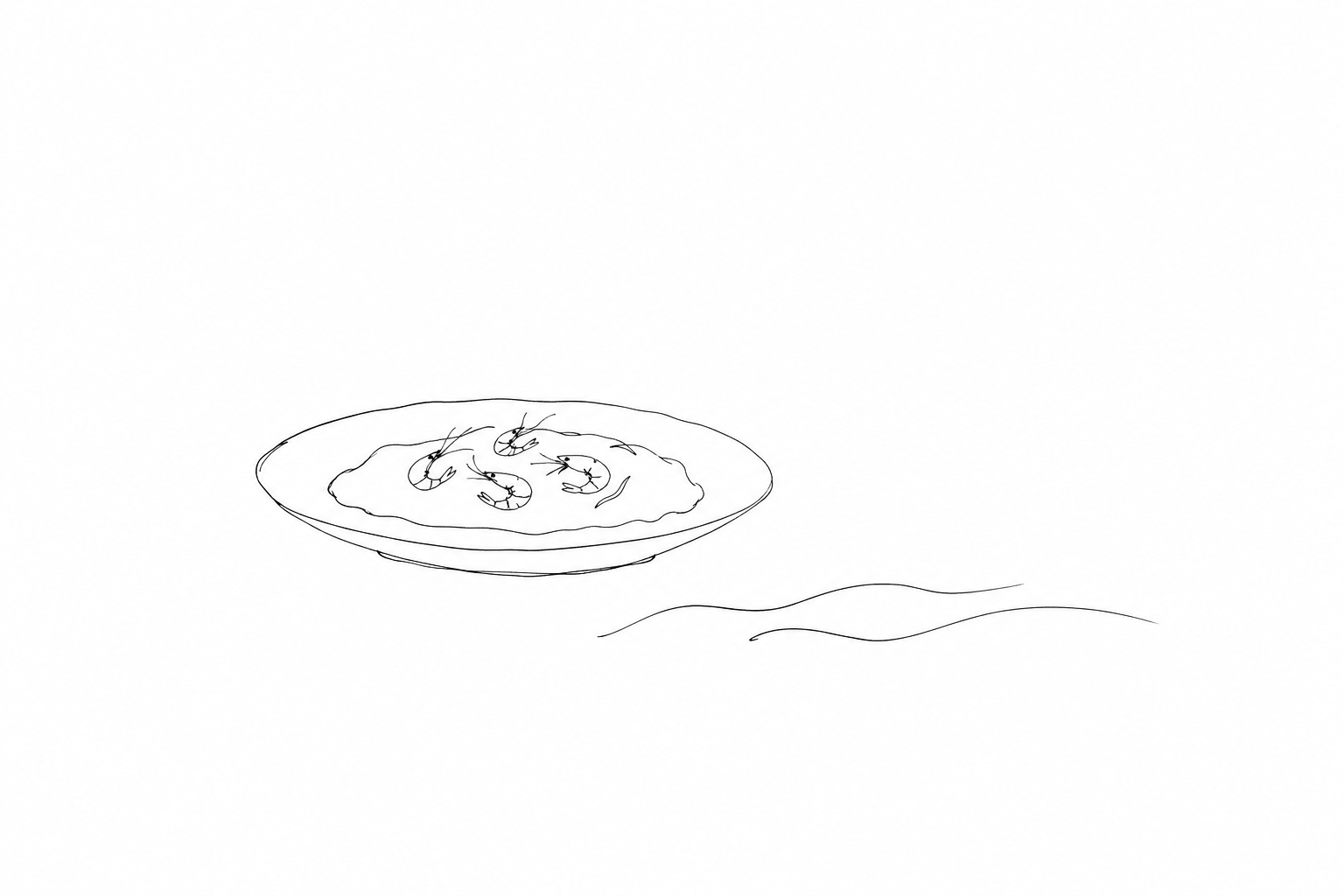
The most recognizable dish is polenta and schie: soft polenta, often white in Venetian habits, accompanied by these crustaceans cooked quickly and served whole or only lightly seasoned. Simplicity is part of its identity. It did not originate as a luxury recipe, but as everyday food, tied to small-scale fishing, local markets and home kitchens.
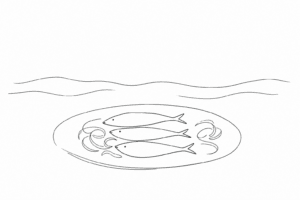
For this reason it matters in the gastronomic memory of the lagoon: it brings together land and water, corn and fishing, a humble table and practical intelligence. In a single dish come together the geography of the lagoon, the work of fishermen and a cuisine capable of transforming small ingredients into a strong cultural sign.
From the lagoon to the table: fishing, markets, seasons
The journey of polenta and schie begins in the shallow waters, where muddy seabeds, minor canals and tidal flats offered a suitable environment for small lagoon crustaceans. Their gathering belonged to small-scale fishing, often integrated with other activities: not a major outing at sea, but work attentive to the tides, salinity and passages between salt marsh and canal.
Once landed, the catch entered the network of Venetian markets and lagoon towns. Rialto, Chioggia and the quays of smaller centers were not only places of sale: they functioned as points of exchange among fishermen, innkeepers and families, where freshness determined the price and its use in the kitchen. Polenta, prepared with cornmeal, completed the dish because it was inexpensive, filling and suited to absorbing the savory juices.
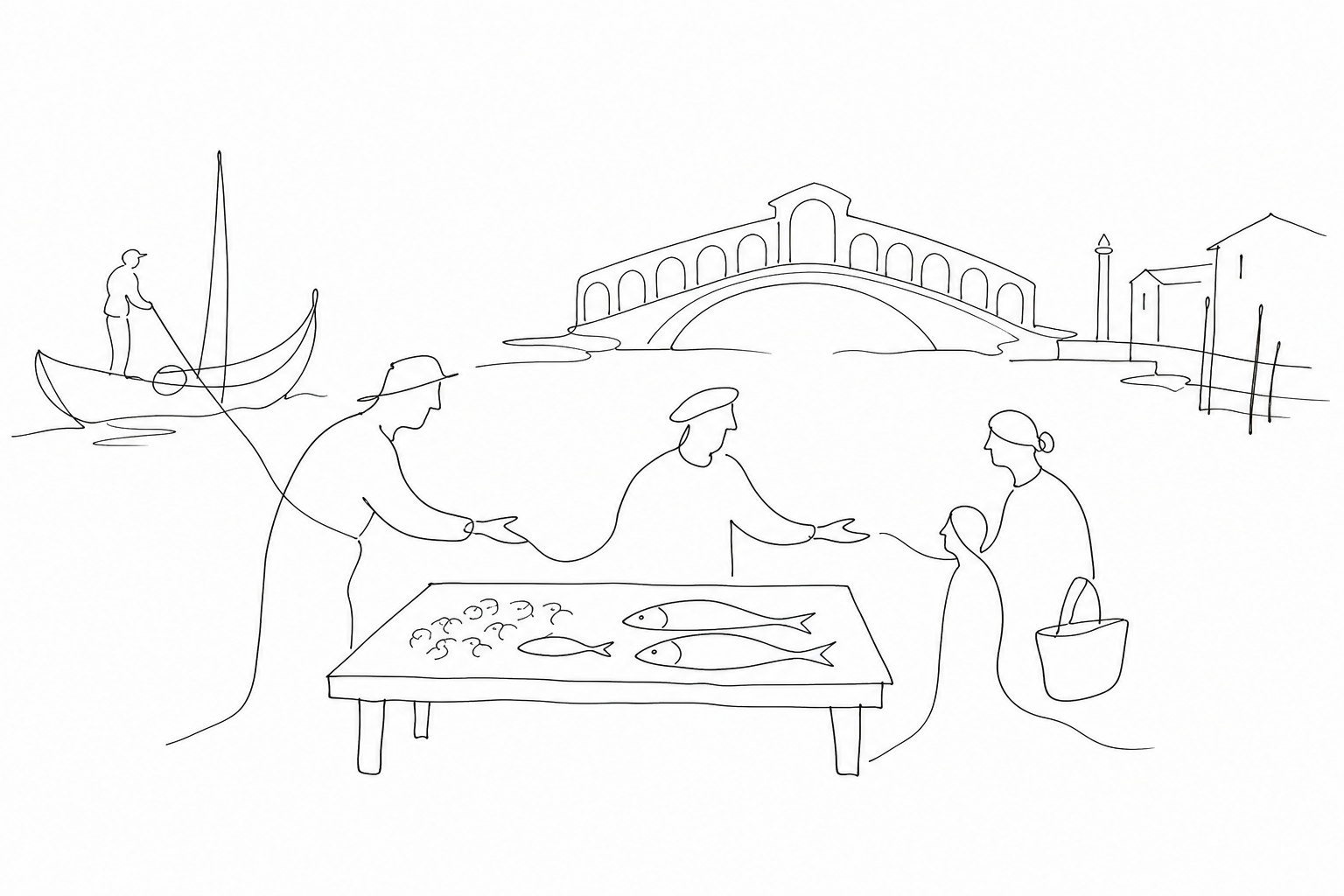
Seasonality mattered: availability, size and flavor varied with water temperature and lagoon cycles. For this reason the recipe tells of a short supply chain even before it tells of a domestic habit: boat, stall, kitchen and table in the same daily rhythm.
A domestic flavor more than a festive one
Before becoming a recognizable item on Venetian menus, polenta and schie belonged to the vocabulary of weekdays. It was a food of necessity: inexpensive, quick, tied to what the fisherman brought home or sold at the market after keeping the less remunerative part. In the homes of islands and working-class waterfronts, corn cooked in the pot gave volume and warmth; the crustaceans, often sautéed whole or only lightly floured, added savoriness without turning the meal into a solemn occasion.
The memory of the dish also passes through small gestures: cleaning the catch on the service table, frying in a little fat, pouring the yellow cream onto a cutting board, distributing equal portions to the children. It was not celebratory gastronomy, but the daily management of scarce resources. Precisely for this reason it preserves a social value: it tells of working families, boatmen, women selling at the stalls, women who managed the fire and pantry. Today its charm comes from that sobriety, more than from the idea of a “typical” recipe.
How to read it today among bacari and Venetian menus
In Venetian bacari and trattorias, polenta and schie should first be read as an indicator of the relationship with the territory, not as a simple folkloric label. When it appears among cicchetti, appetizers or daily specials, it is worth observing a few concrete details.
- Declared origin: if the menu speaks generically of small shrimp, the link with lagoon tradition is weaker; if it names schie or local catch, the reference is more precise, while still needing to be checked at the moment.
- Cooking: in the most recognizable version the crustaceans are just boiled, sautéed or fried, without intrusive sauces. The taste should remain briny and small, not covered.
- Corn base: it can be soft, served by the spoon, or firmer and sliced. The yellow or white cream changes the register, but should not become a secondary decoration.
- Portion: it is often a tasting portion, not a monumental course: its measure recalls its domestic and popular origin.
A good way to interpret it today is to ask simply how it is prepared and whether it depends on the available catch. The answer tells more than the name written on the menu.
Reading polenta and schie today means recognizing a fragment of lagoon cuisine before it becomes a menu image. In Venetian bacari and trattorias it can still tell of the relationship between shallow water, markets, domestic work and seasons, provided one does not seek in it only a picturesque taste. It is a small dish, almost modest, but precisely for this reason exact: it invites us to observe Venice through what was cleaned, fried and brought to the table without ceremony, within an everyday memory that endures in the simplest flavors.