


Venetian-style liver is one of those dishes that does not seek half measures: either it arouses curiosity, or it creates distance. And yet, behind the apparent simplicity of liver and onions, there is an urban cuisine made of market, poor cuts, quick timing and calibrated sweetness. In Venice it is not just an osteria recipe, but a way of reading the relationship between a decisive taste and delicacy, between domestic memory and the public table. Understanding it means looking beyond prejudice toward the fifth quarter and observing how a few ingredients can tell of habits, trade and palates that have changed over time.
Venetian-style liver seems like an essential recipe: a few slices of liver, lots of onions, a wide pan, quick cooking. In reality, it is precisely this nakedness that makes it divisive. There is no sauce to mask it, no long braising to soften everything: the ferrous flavor of the liver remains recognizable, while the onion accompanies it with an almost insistent sweetness.
Venetian tradition focuses on the balance between opposites. The liver, often veal for its delicacy, must remain soft and just pink; the onions, ideally white and thinly sliced, must yield slowly without burning. If one of the two parts prevails, the dish changes character: overcooked it becomes dry and bitter, too sweet it can seem cloying.
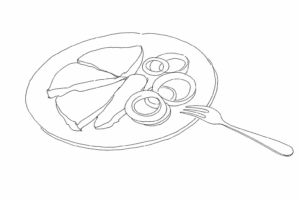
It divides because it puts an offal at the center, but also because it asks one to accept a clear contrast: Venice here does not seek neutral delicacy, but rather a sweetness capable of taming, not erasing, the intensity of the liver.
From Venice to osteria tables
The connection with Venice is not only in the name. The recipe was born in a city accustomed to transforming humble ingredients into recognizable dishes, thanks to the Rialto market, domestic kitchens and the osterie where the fifth quarter had a concrete role. The Venetian word figà refers to the offal, while the onions, cooked for a long time until they become soft and sweet, tell of a lagoon taste made of controlled contrasts.
In many traditional versions, the white onion of Chioggia is used, appreciated for its delicacy, thinly sliced and left to soften without burning. It is here that the dish finds its balance: not a sugary covering, but a base capable of dampening the bitterness and the ferrous hint of the meat.
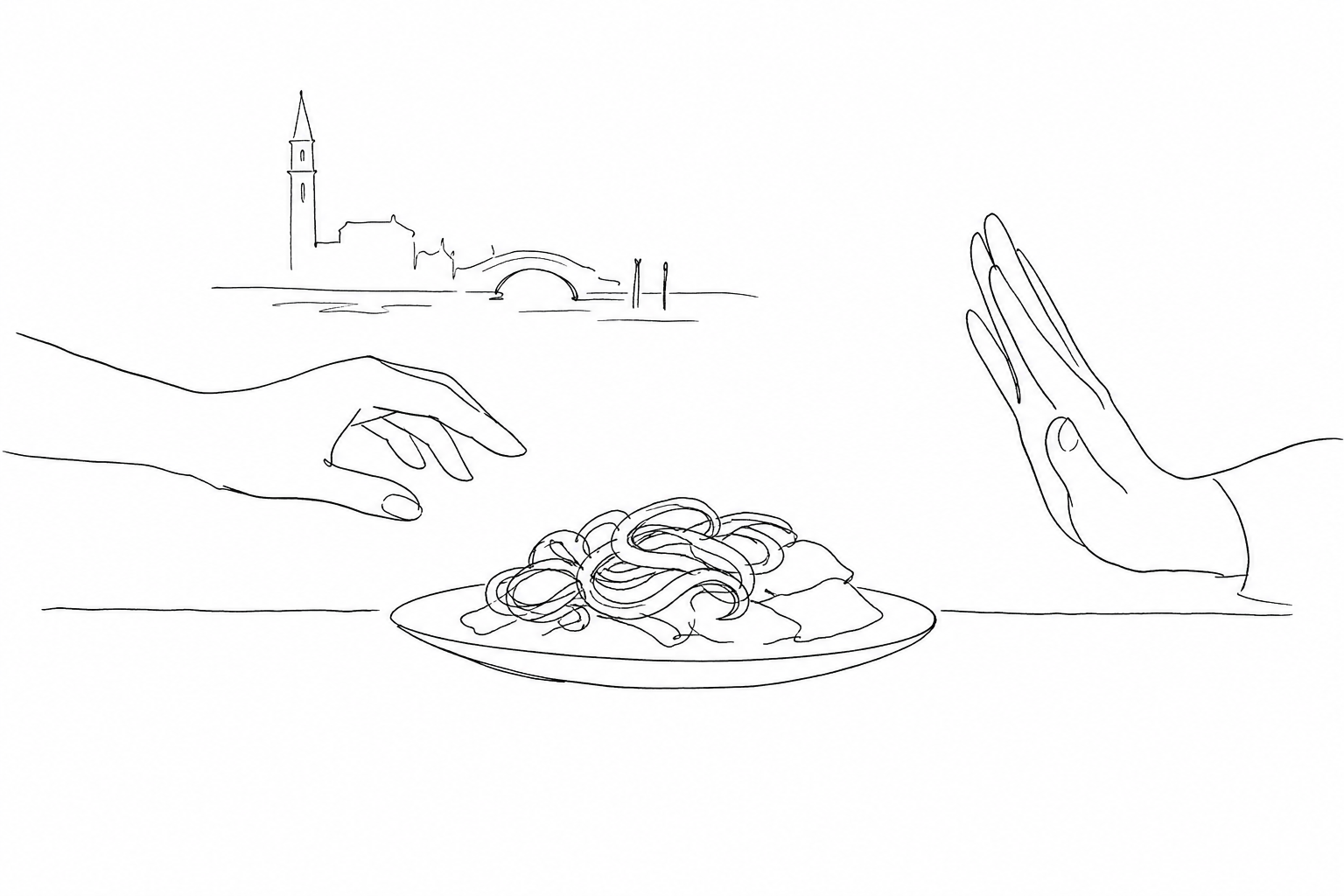
On osteria tables, often served with soft polenta, it becomes almost a test of gastronomic belonging: those who love it seek precisely that intense persistence; those who reject it perceive the same note as excessive. Venetian memory remains entirely in this division.
The decisive point is the balance between sweetness and speed. In a good execution, the onions must not seem like an added side dish: they are the sauce of the dish, sliced very finely, almost veil-thin, so as to fall apart without becoming a heavy cream. Proper cooking makes them soft, glossy, pale; if they take on too much color, they bring a bitter note and cover the protagonist.
The offal, instead, asks for the opposite: a thin cut and a quick pass in the pan. It must remain tender, just pink inside, because a few minutes too many are enough to make it dry, grainy, with that ferrous flavor that many associate with rejection of the dish. Salt too must be dosed carefully, often toward the end, so as not to stiffen the meat.
What should be sought, therefore, is not a sugary sweetness, but a vegetal sweetness that accompanies the intensity. Any touch of vinegar or white wine must remain discreet: it serves to clean the palate, not to transform the recipe into sweet and sour. When it works, each bite alternates softness, warmth and persistence; when it fails, the division between admirers and opponents becomes inevitable.
Tasting it does not necessarily mean loving it: it means entering a concrete part of lagoon cuisine, where taste often arises from the compromise between domestic necessity and mercantile refinement. Offal belongs to an economical and waste-free tradition; the way in which it is made soft, fragrant and almost elegant instead tells of a city accustomed to transforming simple ingredients with technique and measure.
There is also a historical reason: already in ancient cuisine, liver was sweetened with sugary elements, such as figs; the local version replaced that note with the patience of white onions, more everyday and less showy. It is a very Venetian choice: not to completely cover the strong flavor, but to make it habitable.
For this reason the recipe divides. Those looking for immediacy may find it intense; those who accept the bitterness, the light fat and the vegetal softness understand something of Venice’s character: splendor and sobriety, market and home, the nearby sea and the mainland in the background, all in the same bite.
Tasting Venetian-style liver does not necessarily mean falling in love with it, and perhaps this is precisely its interest. It is a clear-cut dish, tied to the precision of the cut, to the slow sweetness of the onions and to cooking that forgives no distractions. On a trip to Venice it can become a less predictable pause, far from the idea of cuisine tamed for everyone. It is worth trying it in an attentive osteria, asking how it is prepared and leaving room for doubt: some recipes do not convince immediately, but they help you better understand the city that has preserved them.