

Castradina is one of those Venetian dishes that cannot really be understood by separating it from the city. It is salted and smoked meat, cabbage, slow cooking; but it is also the memory of the plague of 1630, of the vow to the Madonna della Salute and of trade relations with Dalmatia. Every November, around the Festa della Salute, it returns to the table as an essential and rugged recipe, far from the polished image of Venice. To tell its story means following, together, a history of public devotion, supplies, domestic habits and Adriatic geographies.
What castradina is
Castradina is one of the most identity-defining dishes of Venetian cuisine: a preparation based on salted, smoked or dried sheep meat, then cooked for a long time until it becomes tender and flavorful. The name refers to castrato, that is, mutton, and to the practice of preserving meat to withstand journeys and cold seasons.
In Venice, castradina is linked above all to the Festa della Madonna della Salute, celebrated on November 21 in memory of the end of the plague of 1630-1631 and of the vow that led to the construction of the basilica of Santa Maria della Salute. According to tradition, during the emergency the supplies that arrived from Dalmatia were decisive: this preserved meat also came from those coasts, suitable for maritime transport.
For this reason, the dish is not only a winter recipe, often accompanied by savoy cabbage, but an edible memory of the relationship between Venice, the plague and the Dalmatian Adriatic.
In 1630 Venice was struck by a new plague epidemic, triggered in the context of military and diplomatic movements also linked to the War of the Mantuan Succession. The contagion brought the city to its knees: tens of thousands of people died, and Doge Nicolò Contarini himself did not see the full end of the emergency. In that climate, the Senate pronounced a public vow: if the Serenissima were freed from the disease, it would raise a church dedicated to Mary.
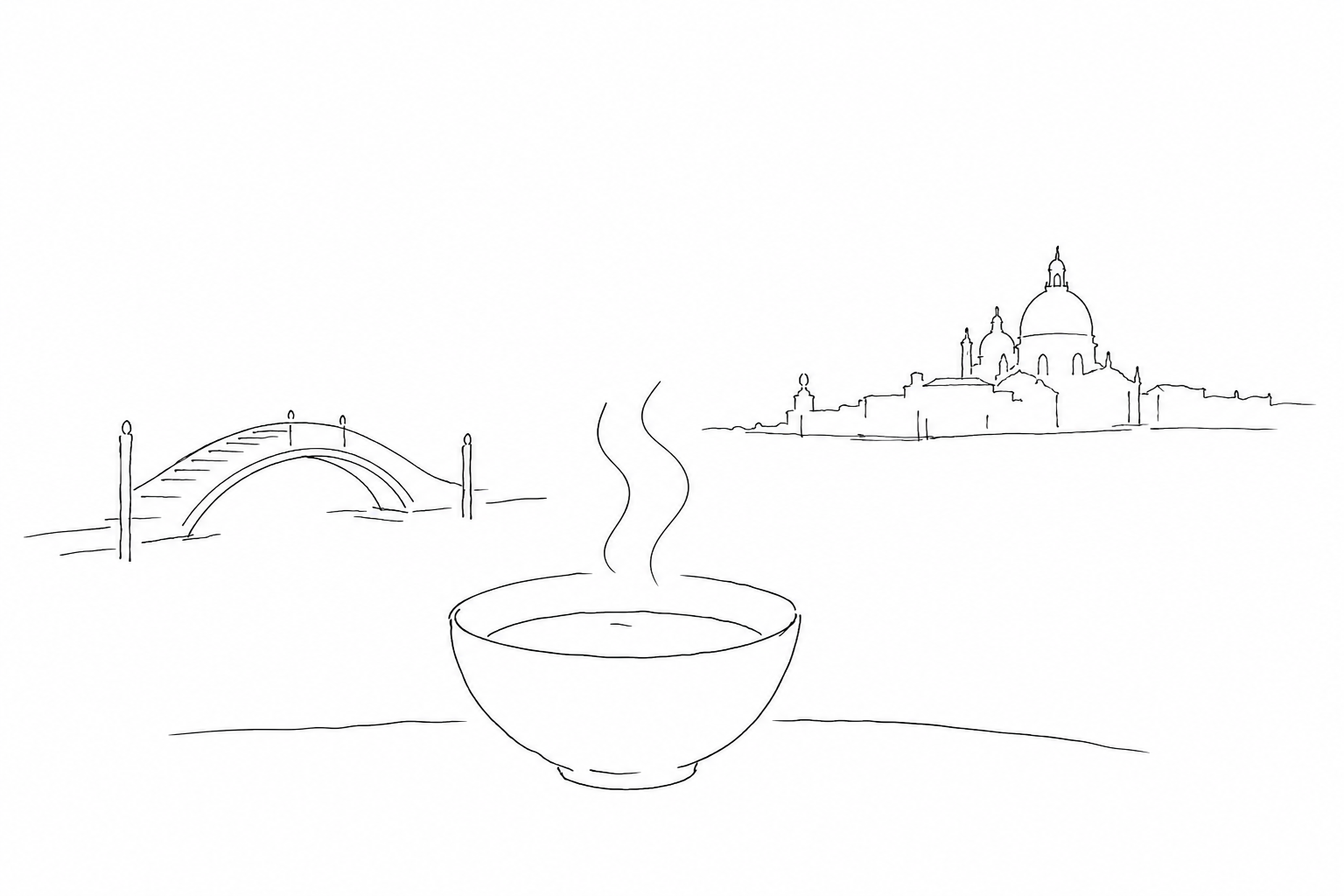
From that vow came Santa Maria della Salute, designed by Baldassare Longhena and placed in a highly symbolic location, toward the entrance of the Grand Canal. The feast of November 21 preserves the core of that collective gesture: the walk toward the basilica, often across a temporary votive bridge, repeats in civil and religious form the request for protection. Castradina enters here as ritual food. Consumed in those days, it recalls material survival during the crisis and the role of Adriatic trade: preserved meat, capable of arriving by sea when Venice needed safe and long-lasting supplies.

Why Dalmatia enters the story
In this passage, Dalmatia is not an exotic detail, but the shore that made the dish possible. Between the seventeenth and eighteenth centuries, many coasts and islands of the eastern Adriatic were within the orbit of the Serenissima: from there departed ships loaded with salt, timber, wine and, above all, sheep meat prepared to withstand the journey. The castrato, an adult and robust animal, was salted, smoked or dried; in this way it could cross the sea without spoiling and arrive on the lagoon stalls when fresh supplies were uncertain.
The Dalmatian memory also remained in places. The name of the Schiavoni, by which Adriatic Slavs were often indicated in Venice, is fixed in the Riva degli Schiavoni and in the Scuola di San Giorgio degli Schiavoni, signs of a stable mercantile and devotional presence. For this reason, castradina does not tell only of hunger and contagion: it speaks of routes, smaller ports, inland farms connected to the coast and of a community capable of bringing a decisive provision into the lagoon. Eating it in the time of the Salute also means remembering that Adriatic geography.
How to read it at the table today
Today this dish should be read first of all as a preserve transformed into a ritual. The sheep meat, salted and smoked to withstand the journey, was not created for delicacy: it required soaking, several boilings and patience. This very processing explains the strong, almost rough taste that still distinguishes it from an ordinary winter soup.
In the dish, savoy cabbage is not a random side dish: it sweetens the broth, absorbs the fat and makes domestic a provision born for transport. The most useful reading is therefore material: salt, smoke, water, cabbage and time together tell of a port city, a health crisis and an Adriatic route.
- Do not look for absolute lightness: the meaning lies in the density, including the symbolic density.
- Observe the broth: it is the point where preserved meat and the lagoon vegetable garden meet.
- Contextualize the date: around November 21 its consumption takes on memorial value, but availability and recipes may vary; it is advisable to check the updated details with those who prepare it.
Reading castradina today only as a gastronomic curiosity would be reductive. In its intense flavor, a health crisis, a collective promise, the construction of a basilica and a network of exchanges that united Venice with the other shore of the Adriatic intersect. Tasting it during the days of the Salute makes it possible to approach the city from a concrete perspective: not the isolated monument, but the link between stone, water, cuisine and calendar. It is a dish that is simple only in appearance, and precisely for this reason still capable of telling a great deal.
Related Posts
Baccalà mantecato: why a fish from the North became one of the most Venetian flavors
History, technique and places of baccalà mantecato, from Nordic cod to Venetian tables.Polenta and schie: small shrimp, lagoon cuisine and the memory of an everyday food
Origin, taste and meaning of polenta and schie, a small dish from the Venetian lagoon.
Bigoli in salsa: the poor pasta that tells of anchovies, onions and days of abstinence
An outline on bigoli in salsa: poor Venetian pasta, slow-cooked onions, salted anchovies and the memory of days of abstinence.Questions Answered
What is castradina and what are its main ingredients?
Salted, smoked sheep meat slow-cooked with savoy cabbage defines this Venetian dish.How is castradina connected to Venice’s history with the plague?
It symbolizes survival from the 1630 plague and the vow to build Santa Maria della Salute.Why is Dalmatia important in the story of castradina?
Dalmatia supplied preserved sheep meat crucial for Venice’s maritime trade and food security.When and why is castradina traditionally eaten today?
It’s consumed around the Festa della Salute to commemorate the plague’s end and historic trade links.
Keep tasting your way through Venice
Want to see how dishes, cicchetti and counter habits tell the city better than a simple menu?
 Baccalà mantecato: why a fish from the North became one of the most Venetian flavorsHistory, technique and places of baccalà mantecato, from Nordic cod to Venetian tables.
 Moeche: what the lagoon’s soft-shell crabs are and why they are so sought afterWhat moeche are, when they are found, how they originate in the lagoon and why in Venice they are considered a rare...
 Sarde in saor: the sweet-and-sour dish that tells of sailors, preservation and the lagoonHistory, taste and everyday use of sarde in saor, a Venetian dish born among fishing, onions, vinegar and long preservation.
 Risi e bisi: why a simple dish tells the story of spring in the SerenissimaHistory, season and everyday gesture of a Venetian dish linked to April 25 and the lagoon.