
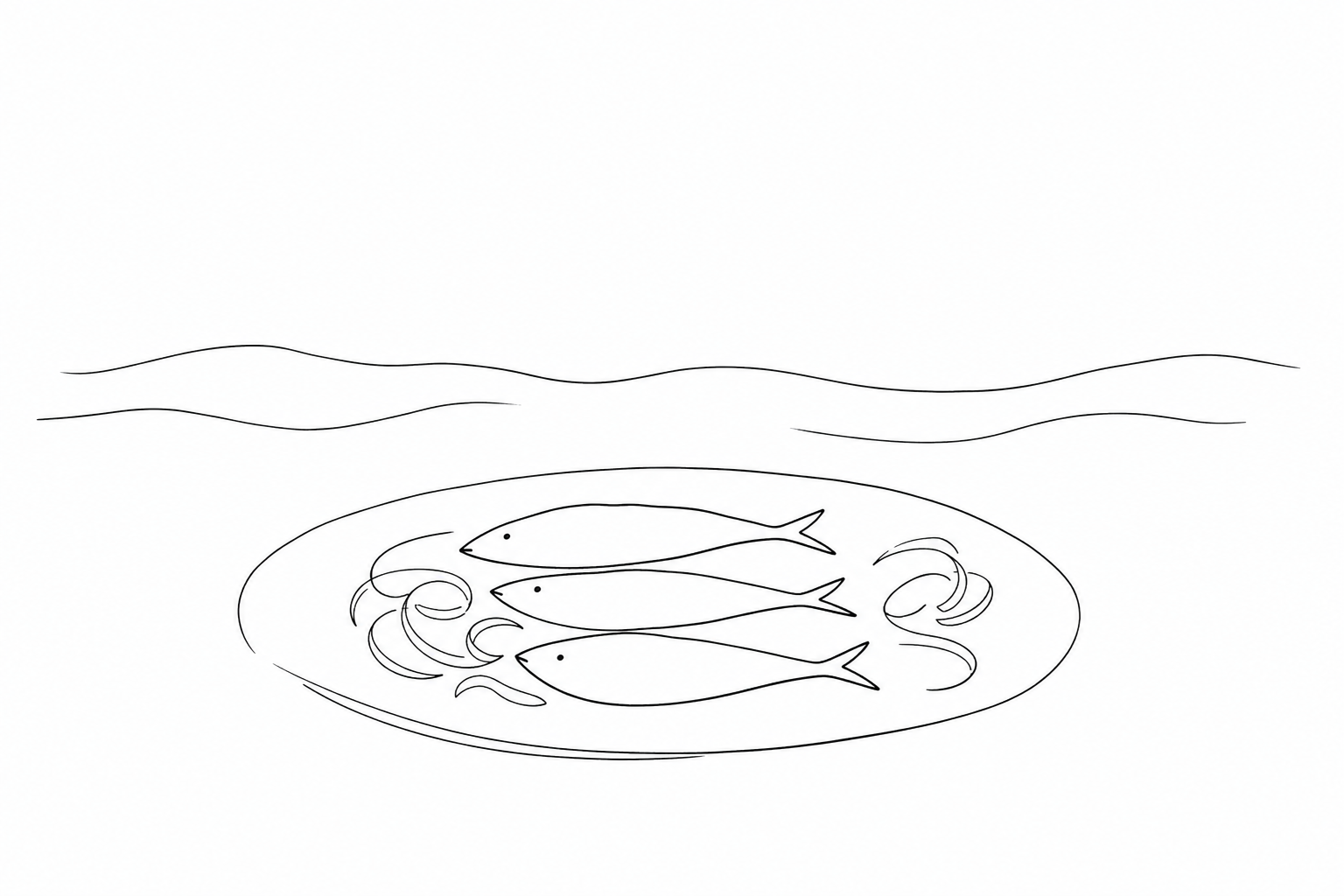

Sarde in saor are one of those dishes in which Venice does not appear as a backdrop, but as a practical city: made of boats, markets, pantries, fishing days and ingenious solutions to make food last. Behind the balance of vinegar, onion, raisins and pine nuts there is a story of preservation and taste, born before the modern idea of “typical” cuisine. Understanding them means reading a fragment of the lagoon: the work of sailors, the circulation of goods, the domestic table and that of the osterias, where a sweet-and-sour flavor still tells of a concrete relationship with water and with time.
What sarde in saor are
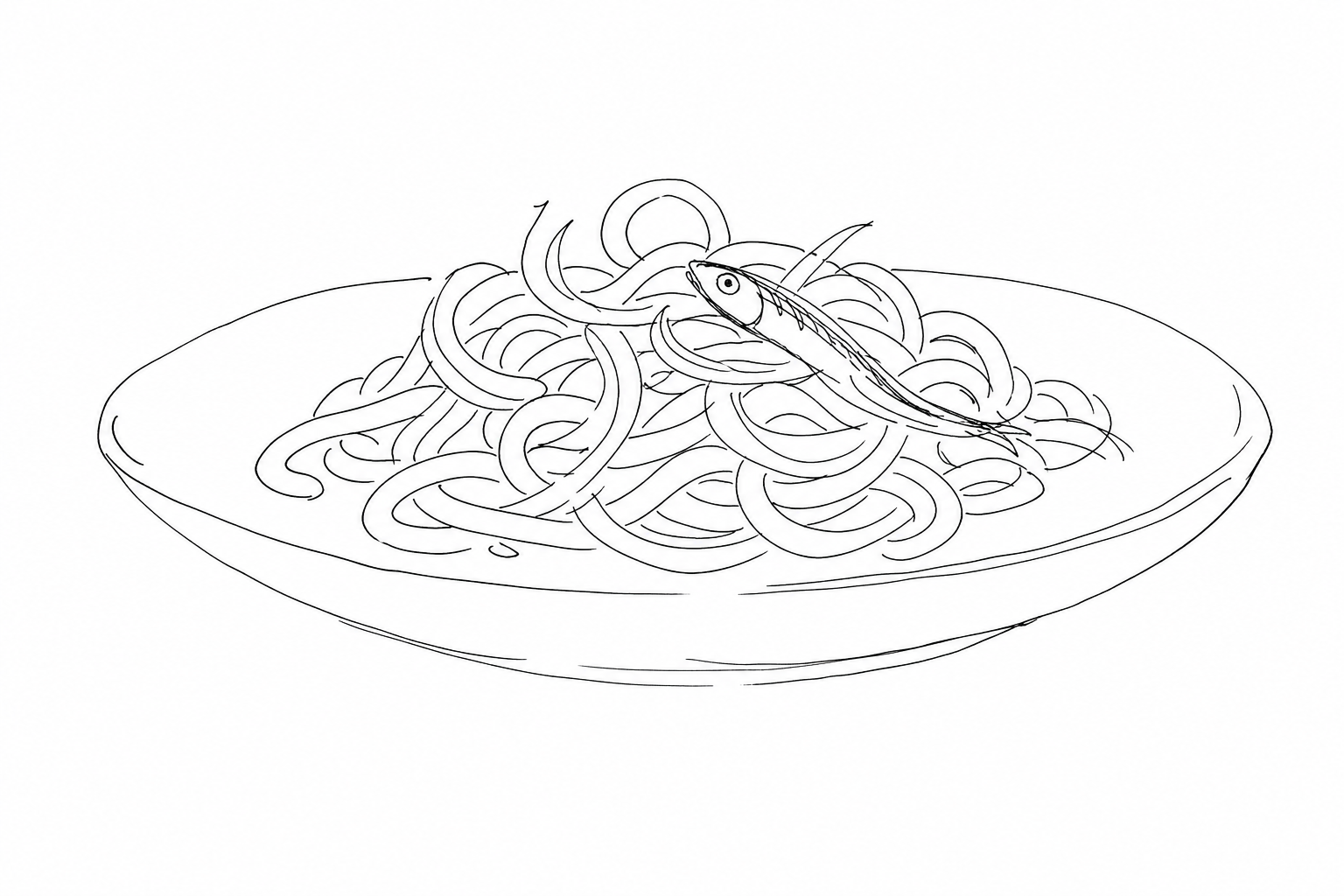
Sarde in saor are one of the most recognizable dishes of Venetian cuisine: fried oily fish, covered with slowly stewed onions and seasoned with vinegar, sugar, raisins and pine nuts. The result is a sweet-and-sour balance, where the fatty and savory part of the sardine meets the sweetness of the onion and the acidic note of the dressing.
The term saor, in the Venetian dialect, means “flavor,” but it also indicates a preservation technique. Before refrigeration, vinegar and onion helped keep the fish longer, making it suitable for life on board and for the times of fishing in the lagoon and in the Adriatic.
It is therefore not just an appetizer: it is a recipe born from the encounter between practical necessity, maritime trade and Venetian taste. Traditionally it is prepared in advance, because resting allows the ingredients to blend and the dish to express its fullest character.
Sailors, fishing and the need to preserve
Before becoming a specialty for a bacaro or for a festive table, sarde in saor responded to a concrete problem: keeping fish edible during workdays in the lagoon and on sea routes. Sardines were abundant, inexpensive and easily available to Venetian fishermen; precisely for this reason they often entered the diet of those who lived by boats, nets and markets.
Frying dried the fish and made it more resistant, while the covering of onions cooked with vinegar created an acidic environment useful for slowing deterioration. The term saor, meaning “flavor,” therefore also indicates a technique: not only seasoning, but protection. In a city founded on water, where transport and fishing marked the daily rhythm, this solution made it possible to prepare food in advance and consume it even after many hours.
Over time, taste joined the practical function. Sweet-and-sour, already familiar in Venetian trade with the eastern Mediterranean, transformed a seafaring necessity into an identity-forming dish of the lagoon.
Where it enters the Venetian table
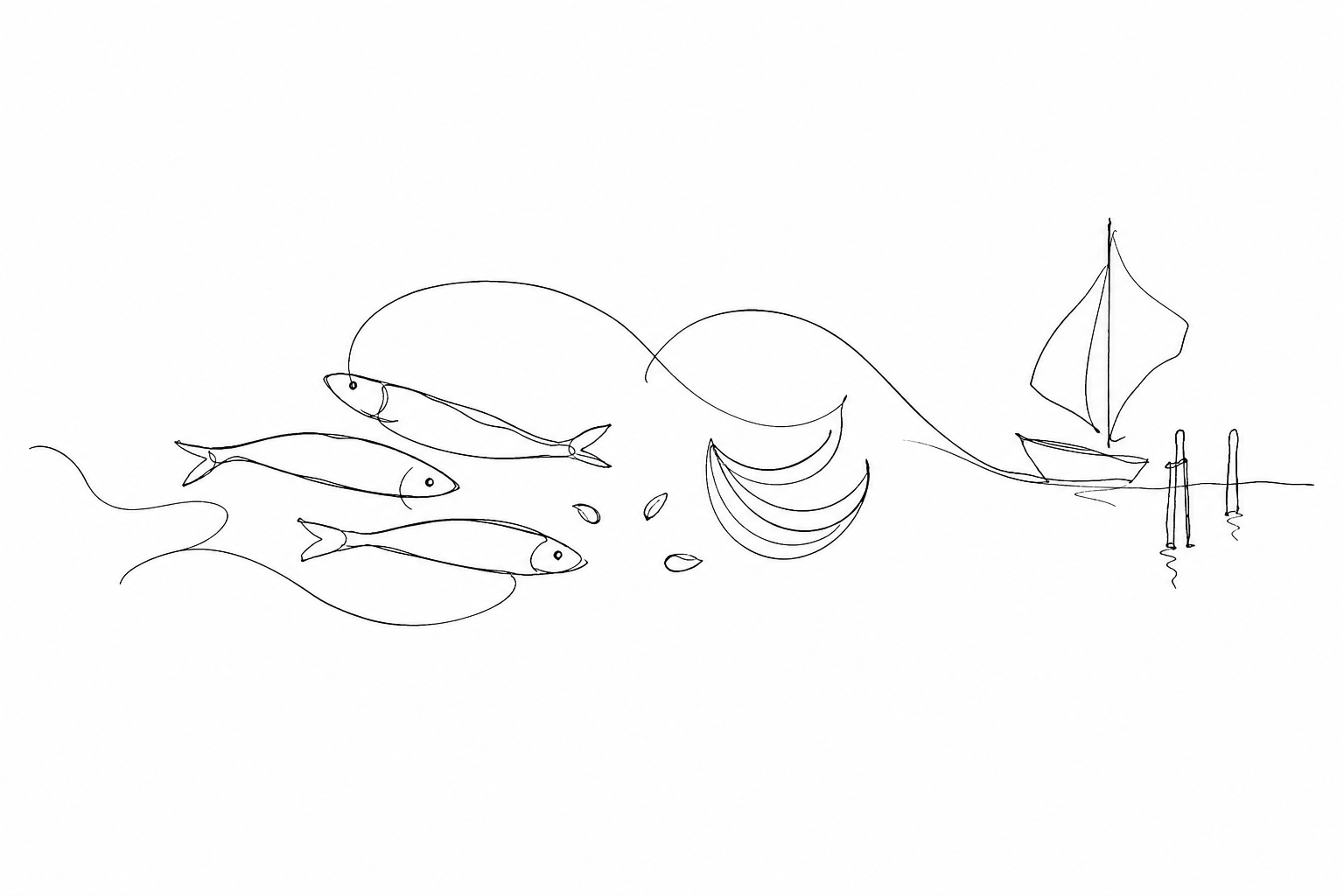
Today sarde in saor live in three very Venetian spaces: the counter of the bacaro, the table for special occasions and the home kitchen. In the bacaro they appear as a cicchetto, often served at room temperature, because resting is part of their balance: the onion sweetens, the raisins and pine nuts round out the flavor, the fish remains compact.
At city festivals the dish has a special place. It is linked in particular to the Redentore, when many families prepare dishes suitable for being eaten without haste, even on a boat or on a terrace. It is not a “last-minute” course: it is made beforehand, left to settle and brought to the table when the ingredients have found their measure.
- In bacari: small portion, decisive taste, convivial function.
- At home: orderly layers in an earthenware dish, according to family recipes.
- At festivals: practical, shareable, deeply local preparation.
Thus a method born to last becomes a domestic and urban ritual.
How to read it today without trivializing it
Reading sarde in saor today means recognizing a technique even before a recipe. It is not a simple “typical” appetizer: it is frying, marinade, resting and transformation. The most useful criterion is balance: the onion must be sweet but not cloying, the acidity present but not aggressive, the fish still legible in its texture.
When choosing it, it is worth observing some concrete clues. The layers should not seem random: the preparation is born precisely from order, so that every part is reached by the dressing. Resting is decisive: eating it as soon as it is made impoverishes its meaning, while time rounds off the edges and unites the ingredients. Raisins and pine nuts, when present, are not folkloric decoration: they tell of the Venetian encounter between poor cuisine, trade and a taste for sweet-and-sour.
Avoiding its trivialization also means not seeking a “light” version at all costs: its identity lies in preservation, not in immediacy.
Reading sarde in saor today without trivializing them means going beyond the label of the Venetian cicchetto. They are a simple dish only in appearance: they speak of necessity, of exchanges, of a cuisine capable of transforming poor ingredients into shared memory. Tasting them attentively, perhaps far from the more hasty formulas, makes it possible to grasp a less illustrated and more everyday Venice, where flavor is not a souvenir but a historical trace. In their sweet-and-sour quality something essential remains: the city’s ability to adapt, preserve, mix and continue to tell its story through minimal gestures.
Related Posts
Bigoli in salsa: the poor pasta that tells of anchovies, onions and days of abstinence
An outline on bigoli in salsa: poor Venetian pasta, slow-cooked onions, salted anchovies and the memory of days of abstinence.Bigoli in salsa: the humble Venetian pasta that smells of onion and anchovy
History, ingredients and gestures of bigoli in salsa, a Venetian dish of rough pasta, slow-cooked onion and anchovies.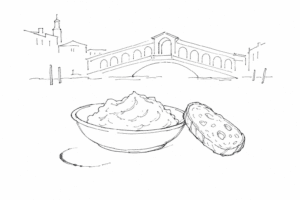
Baccalà mantecato: why a fish from the North became one of the most Venetian flavors
History, technique and places of baccalà mantecato, from Nordic cod to Venetian tables.Questions Answered
What are sarde in saor made of?
Fried sardines with onion, vinegar, sugar, raisins, and pine nuts.Why was saor used in preparing these sardines?
Saor is a preservation technique using vinegar and onion to keep fish longer.In which settings is sarde in saor typically served today?
It is served in bacari, at home, and during Venetian festivals.How should sarde in saor be properly prepared and enjoyed?
It requires resting for balance, respecting its preservation identity.From the dish to the Venetian ritual
Which other flavours explain the link between the lagoon, preservation and everyday life?
 Baccalà mantecato: why a fish from the North became one of the most Venetian flavorsHistory, technique and places of baccalà mantecato, from Nordic cod to Venetian tables.
 Venetian-style liver: onion, sweetness and character in a dish more refined than it seemsHistory, balance and a local reading of Venetian-style liver, among onions, bacari and city taste.
 The Venetian tramezzino: how a simple food became a counter habitHistory, form and daily ritual of the Venetian tramezzino, among bars, bacari and stops at the counter.
 Moeche: what the lagoon’s soft-shell crabs are and why they are so sought afterWhat moeche are, when they are found, how they originate in the lagoon and why in Venice they are considered a rare...