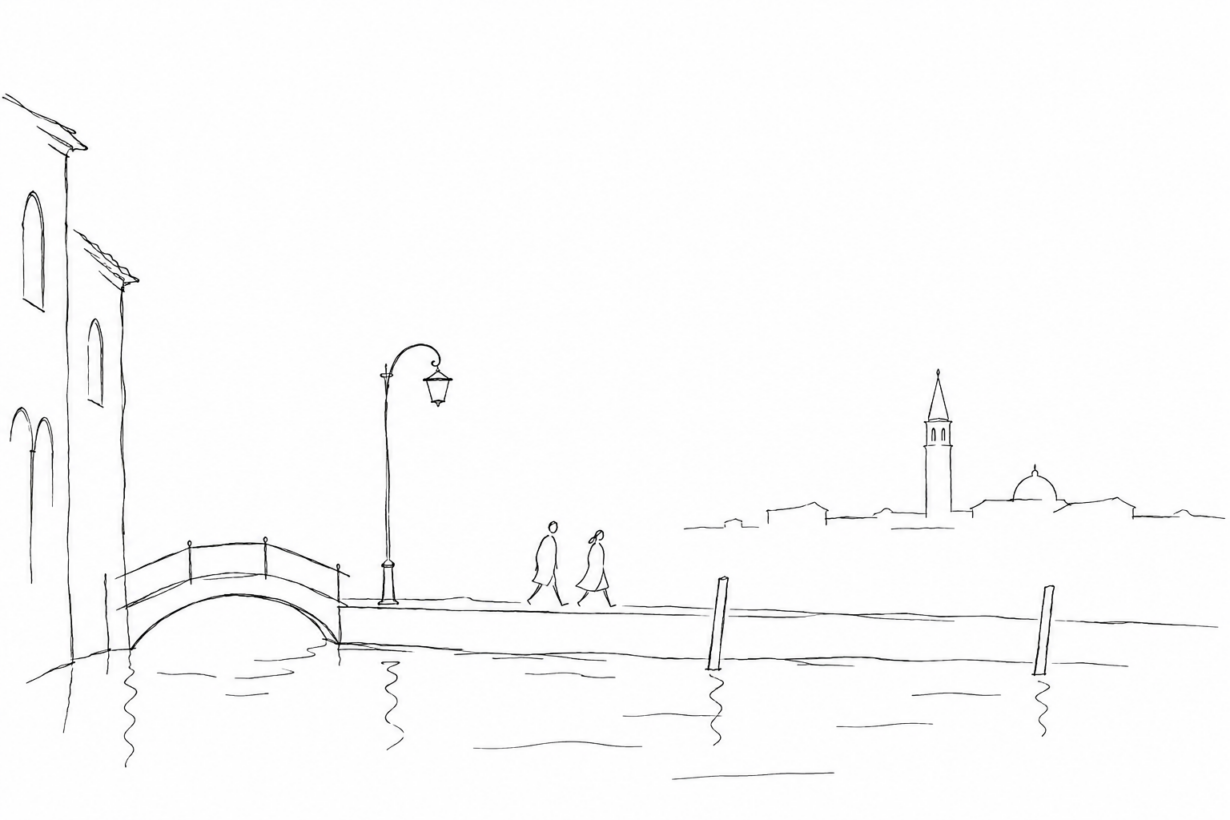

Venice after sunset is not simply the nighttime version of the city seen by day. The points of reference change, some passages empty out and others remain lively, the lights bring out façades, embankments and campi that are often crossed distractedly in the afternoon. To get your bearings well, it is best to think of the evening as a walk built to suit your feet, not as a race between monuments. This guide helps you choose central but walkable areas, read the illuminated spaces and include, when it makes sense, an evening visit or an organized return without improvising at the last minute.
After sunset: how Venice changes on foot
In the evening, Venice is better understood if you do not approach it as a list of stops. After sunset, it is best to choose a compact route, to read calmly: one sestiere at a time, a few bridges, a well-lit fondamenta, a campo where you can stop and direct your gaze. Distances on the map seem short, but between narrow calli, sudden turns and bridges over the rii, the real pace is slower.
A good evening itinerary stays on recognizable axes: calli that are wide enough, embankments with continuous light, open campi where you can find points of reference again. The nizioleti, the street names painted on the walls, help more than expected: they indicate parishes, trades, families, courtyards and small urban stories. Reading them without hurry is already a concrete way to see the city.
It is better to avoid detours into dark calli just to shorten the route. Venice after dinner is also an inhabited city: low voices, no stopping on the narrowest bridges, attention to doorways and lit windows. This way the walk remains pleasant, legible and respectful.
From San Marco to Rialto: campi, façades and lit-up theaters
The stretch between San Marco, La Fenice and Rialto works well after sunset because it alternates wide spaces and more intimate passages, with many architectural reference points that can be read even without entering the monuments. In Piazza San Marco, the evening light brings order to the façades: the Procuratie outline the three long sides of the square, while the Napoleonic Wing closes the side opposite the basilica and today gives access to the Museo Correr. Looking at it in the evening, you better understand the square’s function as the city’s great public hall, not only as a point of passage.
It is also worth pausing at the Clock Tower, on the Mercerie side. The astronomical dial, the Moors at the top and the passageway underneath toward the main commercial route clearly convey the Venetian relationship between representation, time and trade. At night there is no need to look for too many minute details: just step back a few paces to read the whole between tower, basilica and Procuratie.
From here you can reach Campo San Fantin by heading toward Calle Larga XXII Marzo and the nearby calli. The campo is small, but important: the Teatro La Fenice overlooks it, in Campo San Fantin 1965, active since 1792 and rebuilt twice after fires. The façade, sober compared with the theater’s fame, surprises precisely for this reason: Venice often does not announce its richest interiors with monumental exteriors. In the evening, when there is a performance, the campo changes tone with arrivals, low voices and entrance lights; when the theater is closed, it remains an interesting point for understanding the fine-grained fabric around San Marco.
To continue toward Rialto, the most natural route returns to the Mercerie area and follows the direction of the bridge. The area is busier, but when observed carefully it offers details often skipped during the day: Istrian stone frames, worn capitals at the corners, sottoporteghi that open sudden glimpses onto the rii. Once at Rialto, attention should not go only to the bridge. The side canals, the wellheads in the nearby campi and the stones of the parapets tell of a district built around exchange, water and obligatory passages. In the evening the commercial traffic fades and the structure remains clearer: short bridges, working embankments, tall houses and fondaci transformed over time.
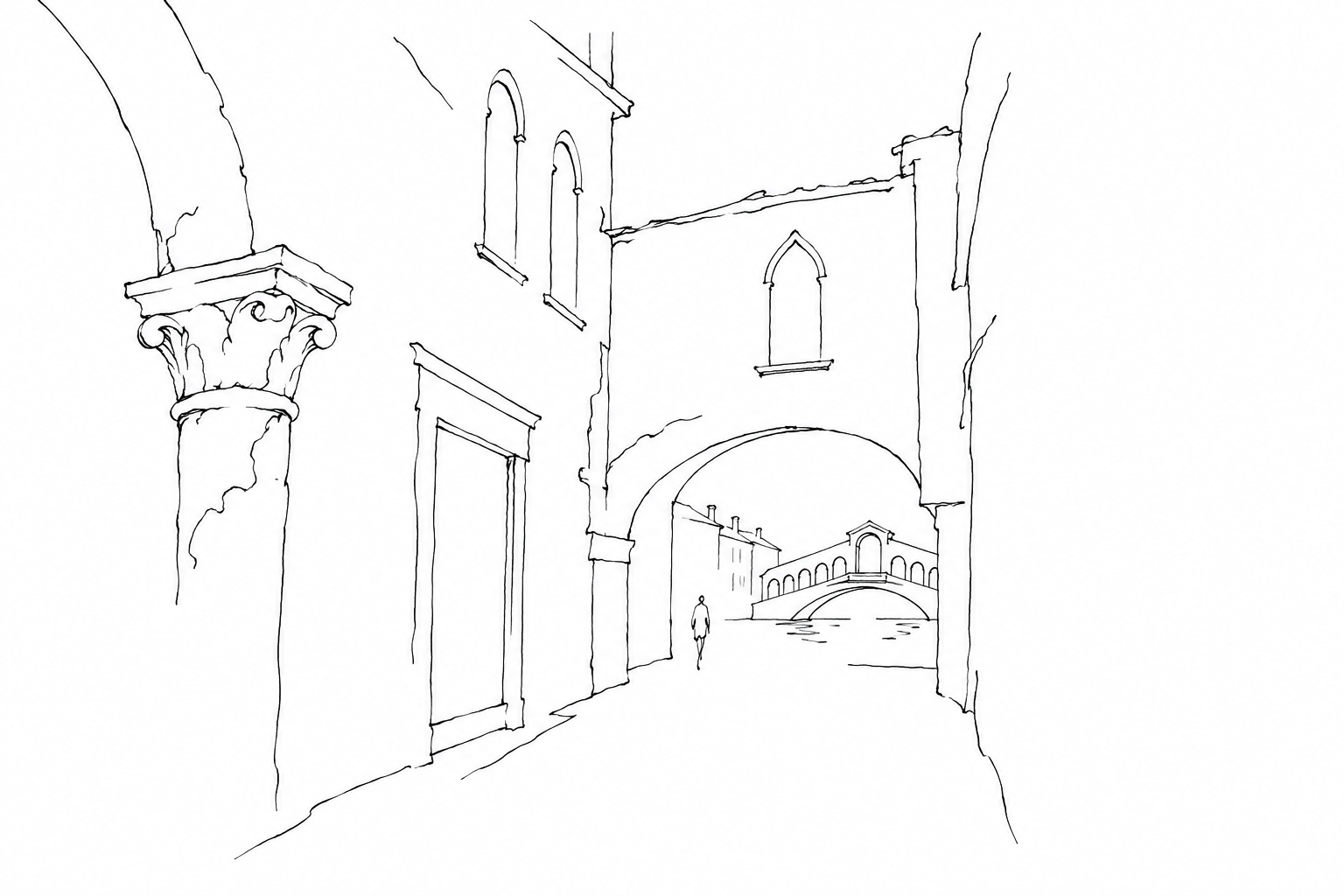
Cannaregio, San Polo and Dorsoduro: fondamenta and small campi
For an evening that is central but less compressed, Cannaregio is a solid choice: from Fondamenta della Misericordia to Fondamenta degli Ormesini you walk along low rii, with tables, bacari and water doors still legible. Here the “ombra” is not a folkloric detail: it is the glass of wine at the counter, often accompanied by simple cicchetti, and it clearly explains why many Venetian stops remain brief, standing up, without turning the fondamenta into a dining room.
Extending the walk toward the Ghetto Nuovo, the space changes scale. The campo is broad, almost severe, surrounded by buildings that are tall compared with the Venetian average: a consequence of the housing density imposed over the centuries on the Jewish community. In the evening it is a place to cross with a measured pace, more suited to observing the façades and sottoporticos than to looking for venues.
Between San Polo and Santa Croce it is best to aim for lived-in campi: Campo San Polo, the Frari area, Campo San Giacomo dall’Orio. They are useful junctions because they hold together churches, wells, small shops and passages toward Rialto without forcing you to remain in the densest flow. The side calli work well if you follow the network of campi, avoiding cuts that are too dark or blind alleys.
Dorsoduro instead offers a more airy evening. From the Zattere the view runs over the Giudecca Canal, with long façades, low bridges and clearly recognizable landing places. Going back up toward San Trovaso and San Barnaba, you find small campi, minor embankments and the squero seen from the outside: close enough to the center, but with a different pace.
Evening museums, reservations and returning without improvising
Before aiming for a museum in the evening time slot, it is best to distinguish ordinary openings from special events. The MUVE circuit announces some extended openings: Palazzo Ducale and Museo Correr until 9 p.m., with last admission at 8 p.m., on December 25 and 26, 2026 and January 1 and 2, 2027. On other winter days the Correr, in the Napoleonic Wing, closes earlier: the route should therefore be placed at the beginning of the afternoon, not after dinner.
For those looking for a more intimate visit, the Royal Rooms of the Correr are accessible only by reservation, with an accompanying guide and small groups; the dedicated ticket starts from 15 euros. La Fenice, too, in Campo San Fantin 1965, requires prior checking: it is an active theater, so visits, rehearsals and performances modify the availability of the rooms.
For the return, setting the final point in advance avoids unnecessary wandering: train from Santa Lucia if you are sleeping near central Mestre, bus from Piazzale Roma if the stop is more convenient. At night, here, improvisation weighs more than distance.
The Venetian evening works better when you leave a little margin: a short detour, a stop in a campo, the time to understand where a fondamenta leads before crossing it. There is no need to fill the night with stops; you need to choose the area well, check the times when entering a museum or a theater, and decide in advance how to get back. This way Venice after sunset remains legible and surprising, without becoming tiring: a city to cross slowly, with attention to detail and respect for those who live there.