
Visiting Venice in a wheelchair means, first of all, changing the way you read the city. Not a continuous line to cross on foot, but a set of areas reachable by water, with landings, flat calli, well-organized museums and some passages to avoid without drama. The difference is made by the correct stop, the right entrance and an itinerary planned before departure. This guide starts from the practical questions: where to arrive, which vaporetti to use, which routes really work and which museums deserve attention also for access, lifts and excluded rooms.
Venice in a wheelchair: what is truly accessible
The first surprise, when talking about accessible Venice in a wheelchair, is that the city does not match the image of an endless sequence of bridges. Venice is made up of 129 insulae, that is, portions of the city separated by water: according to Venezia Unica, more than half are also accessible to those who move in a wheelchair. The point is not to cross every bridge, but to choose the right insula and get there from the correct side.
This is where the vaporetti come into play: they are not just scenic means of transport, but real “horizontal lifts” between one flat area and another. Once you get off at the suitable stop, you can often move among calli, campi and fondamente without significant differences in level. Bridges remain the most obvious limit, especially the small and steep ones, but they do not define the whole experience.
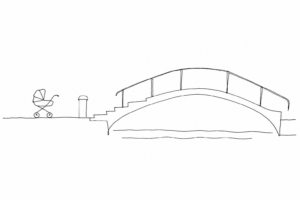
To find your way around there is the MoveIn guide, which brings together 14 accessible routes across Venice, Murano, Burano and Torcello. It is useful to read it as an island map: each itinerary combines vaporetto sections and practicable walkways, avoiding turning the visit into a continuous hunt for a ramp. Venice requires planning, yes; but it should not be dismissed as impossible.
Arriving and getting around: Piazzale Roma, buses and vaporetti
For those arriving in Venice in a wheelchair, the first practical hub is Piazzale Roma: it is the road terminal of the historic city, the point where cars, taxis and buses end and the Venice of water truly begins. If you arrive by car, the Municipal Garage provides disabled parking spaces, but booking must be done online: it is better not to consider it a last-minute formality, because Piazzale Roma is small and in great demand. ACTV also indicates free parking on blue lines for people with disabilities, with no time limit, useful especially in the urban stretches connected to the road network.
Those arriving by bus must distinguish between an “accessible vehicle” and a “comfortable ride.” ACTV reports that the new buses purchased since 2000 are equipped with a mobile ramp and reserved space, with the fleet progressively equipped for transporting people in wheelchairs. In practice, it is advisable to check the line in advance and, if possible, avoid the most crowded times: a ramp works better when there is room to maneuver and the driver can intervene without haste.
From Piazzale Roma the most natural transfer is the vaporetto. Lines 1 and 2 are the most useful for setting up a visit along the Grand Canal: line 1 serves the axis toward Rialto and is indicated in the municipal accessible itineraries for that area; for the St. Mark’s area, lines 1 and 2 go toward San Marco Vallaresso and Giardinetti. They are strategic stops because they allow you to arrive near Piazza San Marco without having to “challenge” the most inconvenient bridges.
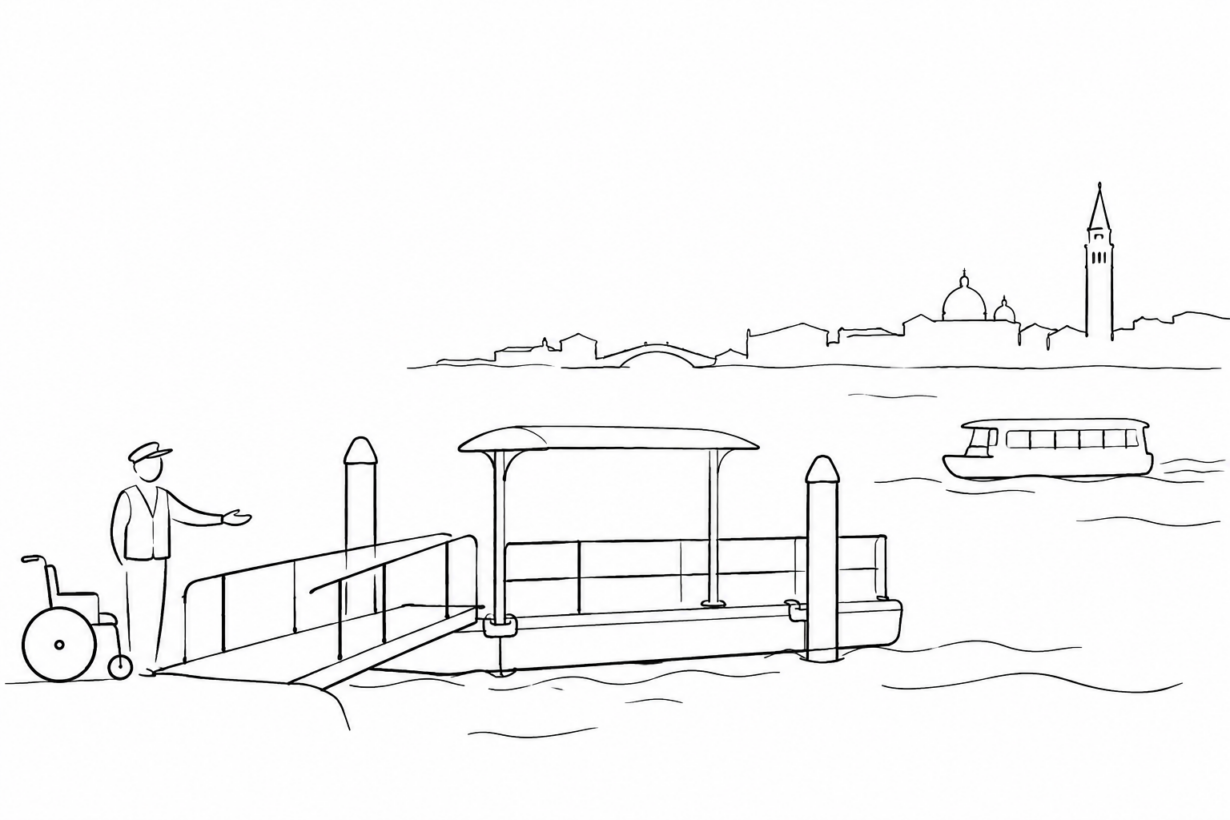
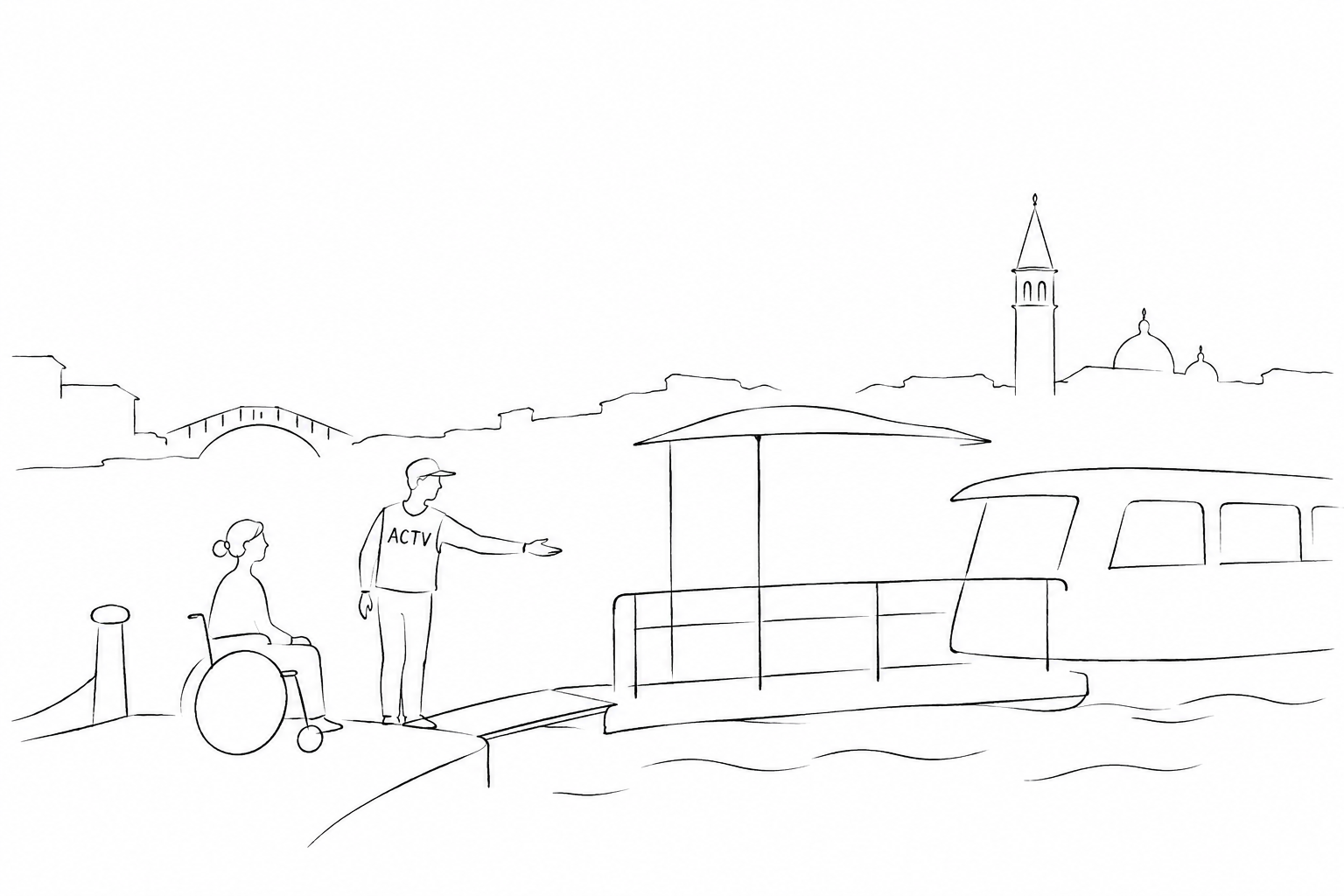
A Venetian detail not to underestimate: the floating pier moves with the tide and with the passage of boats. It is normal to ask ACTV staff for directions before boarding, especially to choose the easiest gate. In Venice, often, the difference between a tiring transfer and a straightforward one lies precisely in the right pier.
Barrier-free itineraries: St. Mark’s, Rialto and islands
To visit St. Mark’s in a wheelchair, it is best to think in terms of landings, not bridges. The St. Mark’s area indicated in the municipal accessible itineraries can be reached with ACTV lines 1 and 2 to San Marco Vallaresso or San Marco Giardinetti: from here the route toward Piazza San Marco runs over wide spaces and regular paving, passing between the basin, the Royal Gardens and the Procuratie. It is a very busy area, so timing matters: in the middle of the day, the crowd can be the most concrete obstacle.
For Rialto, the most straightforward choice is line 1, which stops along the Grand Canal. Here more attention is needed: the Rialto Bridge is not the passage to take into account if you travel in a wheelchair, and some smaller bridges nearby can also close off the route after only a few meters. It is better to stay in the accessible area around the stop, among banks, campielli and views of the market, without improvising shortcuts through the calli.
The islands help change the pace. The MoveIn guide also indicates accessible routes on Murano, Burano and Torcello: Murano works well for an itinerary among fondamente and furnaces visible from the outside; Burano offers flat stretches among colorful calli and low canals; Torcello requires more selection, but allows for a compact and quiet visit. In all three cases, the idea is simple: get off at the correct stop and follow the recommended route, without turning the island into a labyrinth of small bridges.
Museums to visit: entrances, lifts and excluded rooms
In Venetian museums, the right question is not only “can you get in?”, but “which part of the visit is really practicable?”. The most useful case to understand is that of the Piazza San Marco museum hub: the Doge’s Palace, at San Marco 1, is included in the integrated ticket for the Museums of Piazza San Marco, together with the Museo Correr, the National Archaeological Museum and the Monumental Rooms of the Marciana. The MUVE circuit provides free admission for people with disabilities and a companion.
The Museo Correr is a solid choice: the ordinary visit is indicated as fully accessible and it has equipped toilets on the ground floor. However, you should avoid building the day around the special routes: Secret Itineraries, Prisons and Armoury are not accessible, so those who want to focus on the art and civic history of the Serenissima will find more continuity in the Correr rooms and in the reachable monumental spaces.
In Dorsoduro, the Peggy Guggenheim Collection, in Palazzo Venier dei Leoni, Dorsoduro 701, uses lifting platforms for the garden, entrance, bistro and temporary exhibitions; the last two rooms of the temporary exhibitions remain excluded. At the Gallerie dell’Accademia, the barrier-free entrance is in Calle della Carità: lifts, platforms and equipped facilities help a great deal, but between rooms XXII and XXIV on the first floor there is no practicable connection. It is better to choose the priority works in advance: Bellini, Carpaccio, Titian and Tintoretto deserve time, not a race between lifts.
Accessible Venice is not a generic promise: it is a city to be read by landings, flat routes, right entrances and a few limits declared without embarrassment. With a reasoned map, generous timing and an up-to-date check on vaporetti, lifts and visitable rooms, you can build rich days without chasing impossible views. The most Venetian advice is also the most practical: choose fewer stops, but well chosen ones. This leaves room for a pause in a campo, to watch the slow traffic on the canal and to understand that accessibility, here, often passes through water even before stone.