

Cuttlefish in black ink is one of those Venetian dishes in which the lagoon is not a backdrop, but becomes living matter: fishing, home cooking, osterie, markets and everyday memory. Its dark, almost graphic color can surprise those who encounter it for the first time, but it tells of a precise logic: using every part of the animal, including the ink, to obtain flavor, density and character. Understanding this dish means entering a less decorative and more concrete Venice, made of boats, fish stalls, polenta, rice and gestures handed down without fanfare.
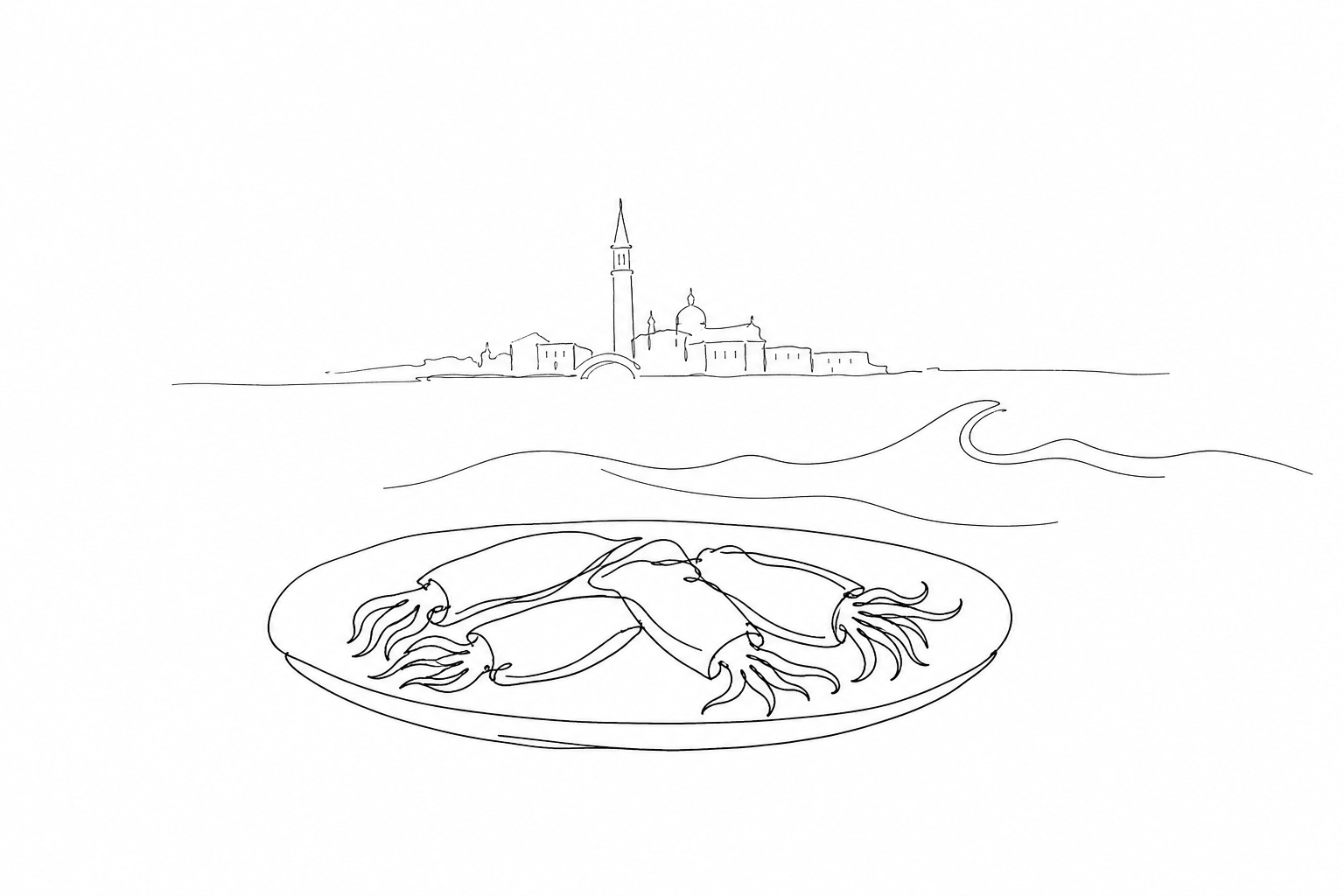
Cuttlefish in black ink is one of the most recognizable dishes of Venetian cuisine: mollusks cut into pieces and cooked slowly with onion, oil, white wine and their ink sac, which dyes the sauce a deep, glossy black. It is not just a scenic effect: the black ink concentrates marine savoriness, a slightly iodine note and a velvety consistency that binds every bite.
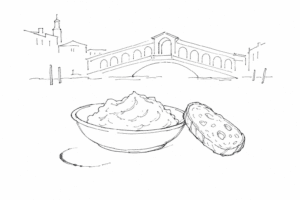
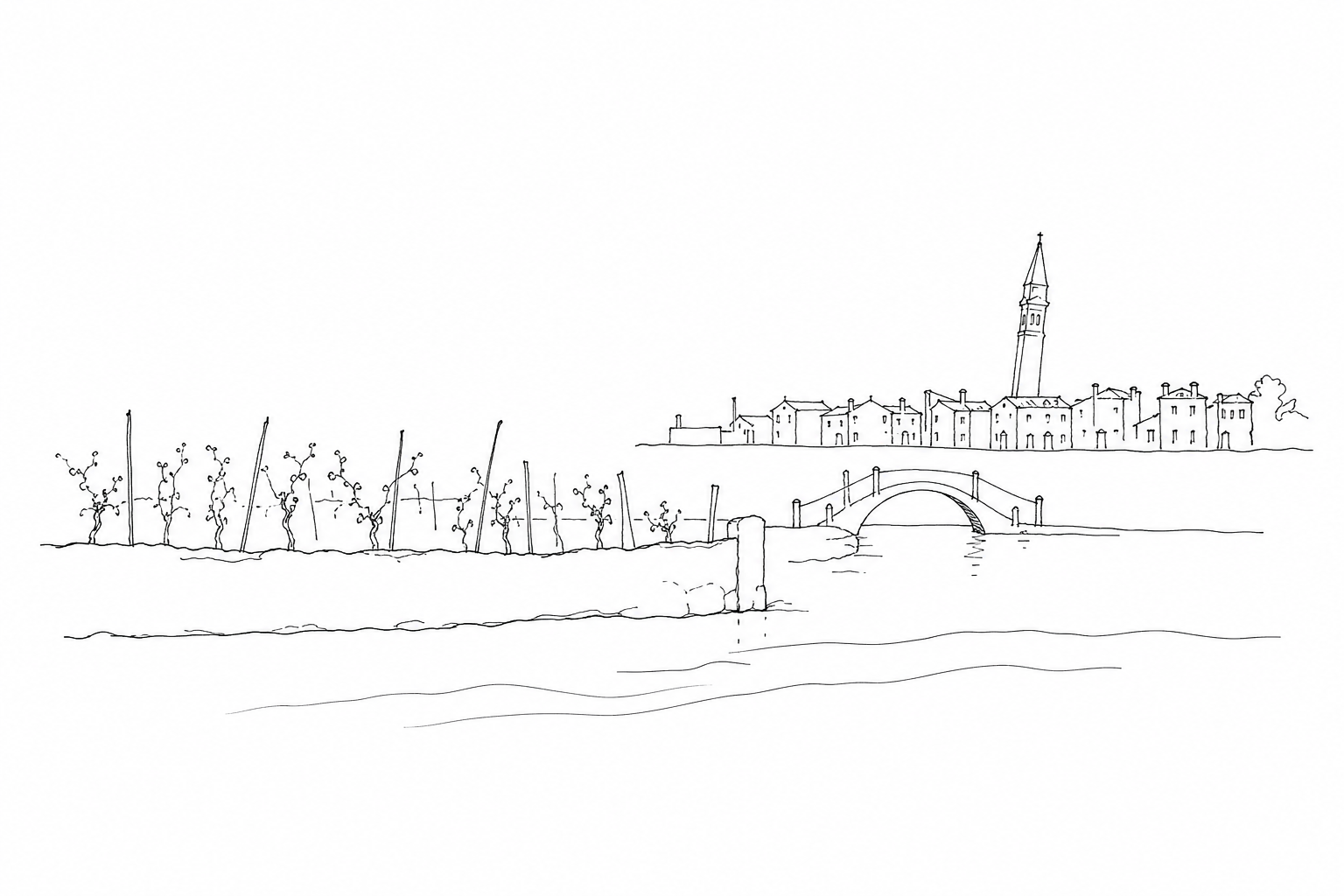
The connection with the lagoon is direct. Cuttlefish lives on the sandy seabeds and in the shallow waters of the northern Adriatic, where for centuries it was caught with traditional tools and brought to the city markets, starting with Rialto. In the kitchen it becomes a story of Venetian domestic economy: nothing is wasted, not even the ink, transformed into a condiment.
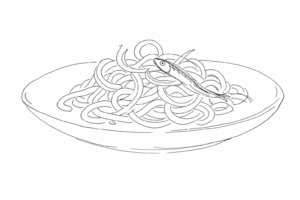
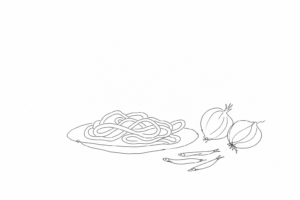
The dish can arrive at the table with white polenta, more delicate than yellow polenta, or as a sauce for spaghetti or risotto. In every version it preserves the same idea: putting the dark, brackish and concrete taste of the lagoon on the plate.
From fishing to the plate: a cuisine of necessity
Cuttlefish in black ink comes from a simple logic: using everything the sea and the lagoon offered. In Venetian homes and in fishermen’s kitchens, the ink sac was not waste, but a resource. It served to give flavor, color and depth to a mollusk often present on market stalls, linked to the rhythms of lagoon and Adriatic fishing.
This cuisine of necessity describes a precise environment. In Venice fish was not only a “valuable” food: it was everyday life, work, boats, nets, markets such as Rialto and exchanges with the places along the lagoon edge, from Chioggia to the islands. The ink concentrated the brackish and slightly mineral taste of the cuttlefish, transforming a humble pan into a recognizable dish.
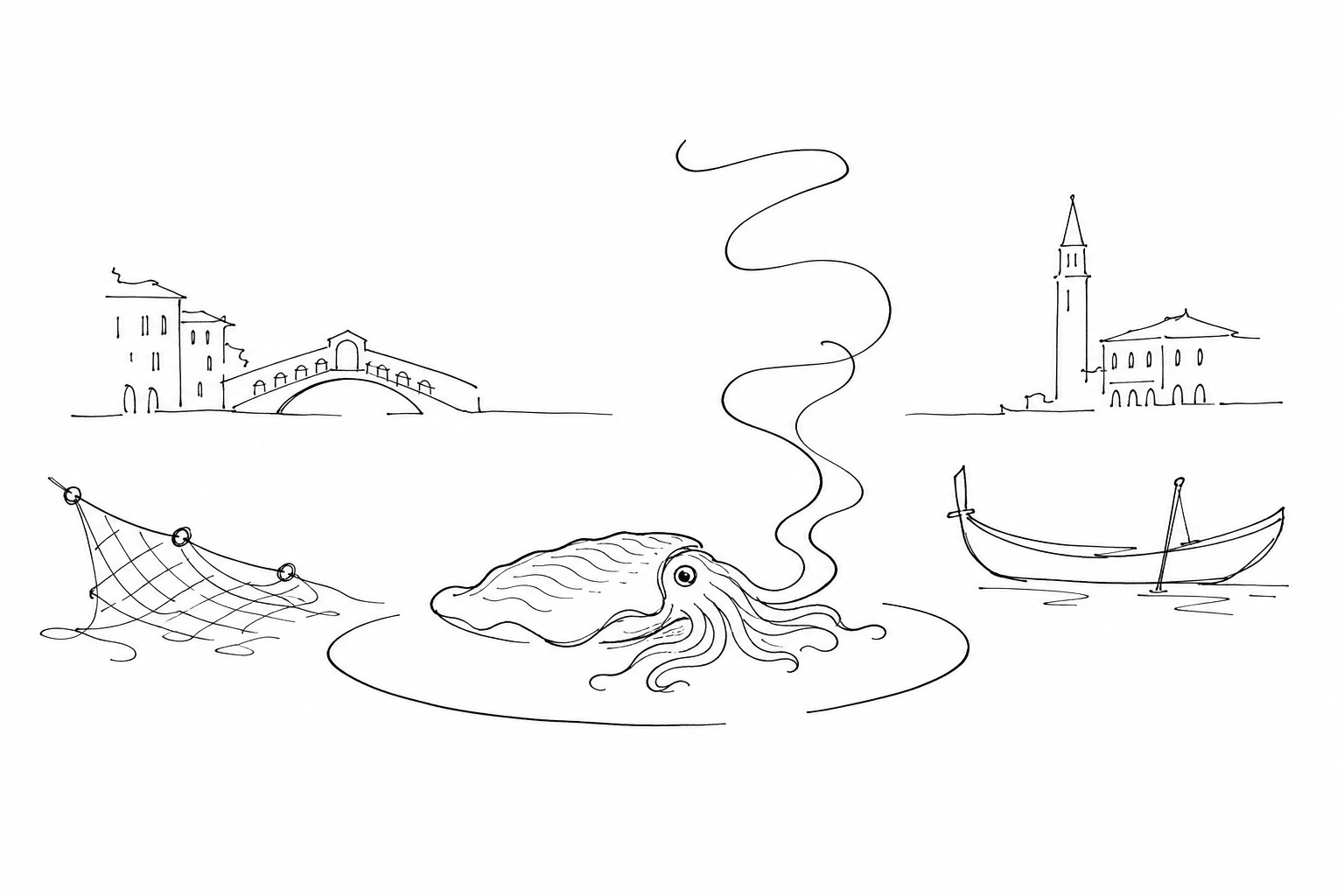
Its cultural value lies precisely here: not embellishing the lagoon, but showing it as it is, dark, intense, concrete. Every bite preserves the memory of a home cooking capable of transforming necessity into Venetian identity.
How they are eaten in Venice
In Venice, cuttlefish in black ink is encountered in two classic forms: with polenta, soft or left to firm up and then grilled, or as a condiment for spaghetti, bigoli or risotto. Polenta has a precise role: it gathers the dense base, softens the marine savoriness and makes the bite more domestic, from an osteria or a family lunch.
In traditional service, many side dishes are not needed. Slow cooking, well-softened onion, white wine, a few spoonfuls from the ink sac and cuttlefish cut into strips are enough. The result is eaten with bread or polenta, without looking for lightness out of context: it is a preparation for the cool season, for a convivial table, often linked to the days when the market offered suitable catch.
The most natural pairing is with white wines from Veneto and the Adriatic area, dry and not too aromatic, capable of cleansing the palate without covering the iodine intensity of the sauce.
Where to look for them and how to recognize them well
In Venice it is worth looking for them in osterie that handle Adriatic fish with a short and seasonal menu: more often in the Rialto area, historically linked to the fish market, in the less touristy sestieri, or in bacari that offer a few hot cicheti in addition to ombre. A good clue is the presence of simple Venetian preparations, not just fried dishes or generic pasta dishes.
- Color: the sauce must be dark and glossy, not faded gray or opaque; a uniform but flat tint may indicate a poorly cared-for preparation.
- Aroma: it should recall the sea, a light sauté and a savory base; if a bitter or burnt smell dominates, something is wrong.
- Consistency: the pieces should be tender but intact, never rubbery; slow cooking is essential.
- Condiment: the base should veil polenta or pasta without flooding them; a sauce that is too liquid loses intensity.
- Useful question: ask whether the ink is cooked together with the mollusk: the answer often reveals attention to the recipe.
Looking for cuttlefish in black ink in Venice means observing better what comes from the lagoon and how it is transformed in the kitchen. It is not a dish to choose only out of chromatic curiosity: it should be read in its robust simplicity, in the patience of the cooking, in the link with the seasons and with a city that has always conversed with water even at the table. Whether served with white polenta, with rice or in a neighborhood trattoria, it remains an essential taste for understanding an everyday Venice, sober and deeply tied to its environment.