
In Venice, the tramezzino is not a filler for a quick break, but a small urban object: it sits behind the counter glass, next to a small glass of wine or a coffee, and tells of a very precise way of eating while standing, between a calle and a pier. Its swollen shape, moist crumb, and clean, generous cut are not random details. They depend on service habits, climate, narrow spaces, passing times and on a bar tradition that in Venice has learned to give substance even to apparently simple things.
A counter triangle taken seriously
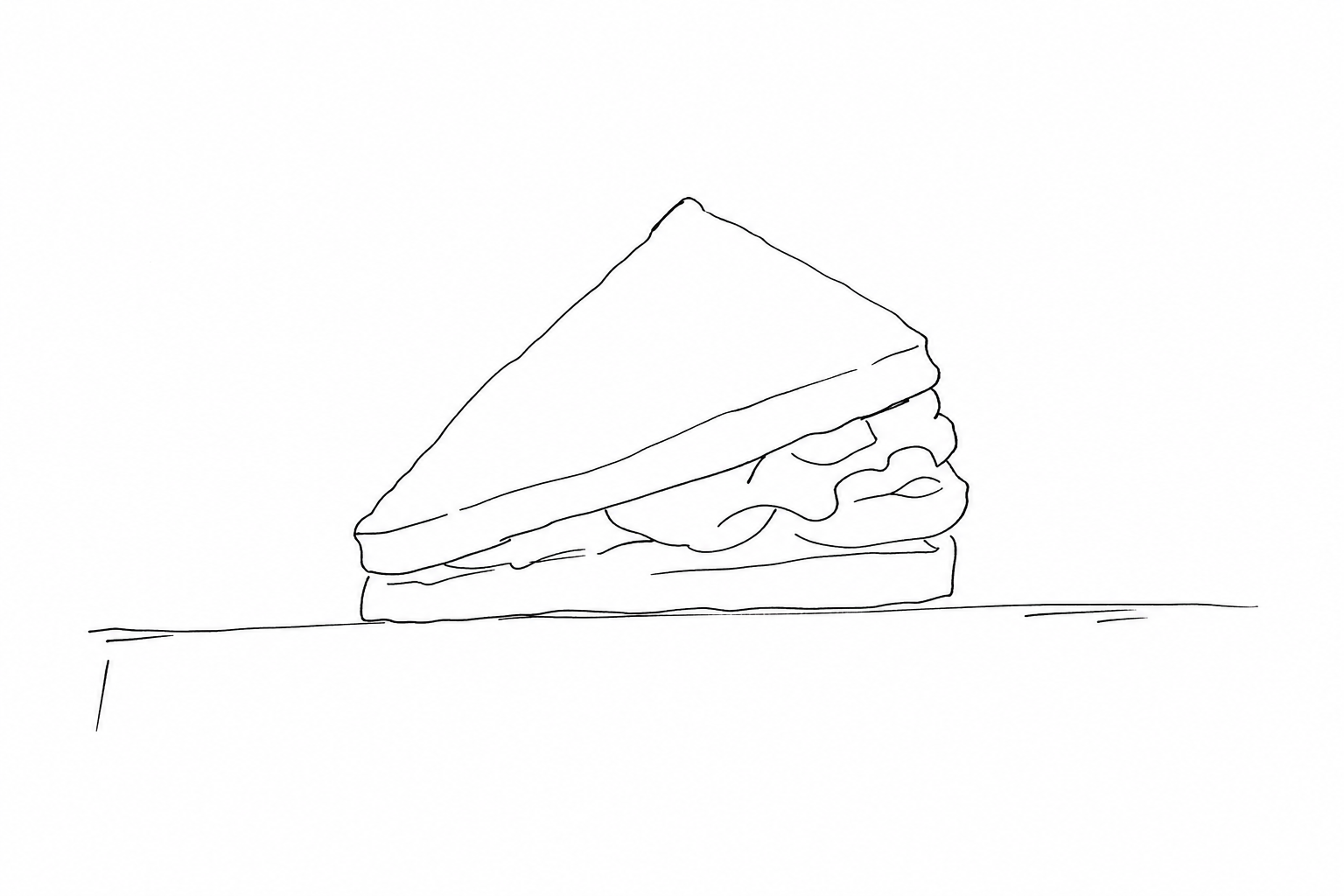
The Venetian tramezzino is not simply a sandwich cut diagonally. In Venice it becomes a counter object with a precise physiognomy: white bread without crust, abundant filling in the center, edges pressed just enough and a soft dome that often seems almost to swell under the film or the glass dome.
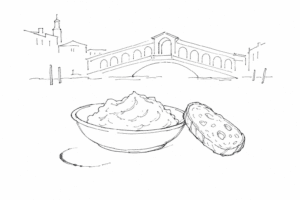
The difference can be seen even before eating it. Elsewhere the tramezzino tends to be flat, regular, designed to remain composed. The Venetian one instead focuses on visible generosity: eggs, tuna, ham, baby artichokes, mushrooms, shrimp or Russian salad are not a veil, but a creamy mass. Moisture is not a defect: it is part of the style, obtained with mayonnaise, soft ingredients and storage protected from the air.
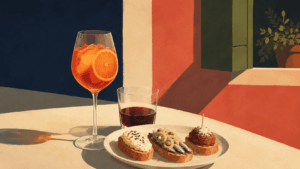
Taken at the counter of a bar or a bacaro, the Venetian tramezzino also has an urban function: quick, substantial, suitable for a standing break. That is why it appears more serious: it does not decorate the aperitif, it supports it.
Why they seem so full
The impression of abundance comes first of all from the shape. The lagoon tramezzino is not conceived as two flat slices holding a thin filling: it is assembled with a central belly, allowing the filling to rise toward the tip of the triangle. The visible section, therefore, does not show only bread and condiment, but a small domed architecture.
The bread also matters a great deal. The white, soft, crustless kind bends without breaking and makes it possible to hold Russian salads, eggs, tuna, ham, mushrooms or vegetables with a compactness that elsewhere would be difficult to obtain with drier slices. Mayonnaise is not only a condiment: it works as a binder and as a barrier, maintains moisture and makes the cut more compact.
The result is both optical and tactile. The edge remains relatively thin, while the center swells; those who look at it immediately see the filling, those who pick it up feel an unexpected weight. That is why they seem fuller: not because they are only bigger, but because they are built to display volume.
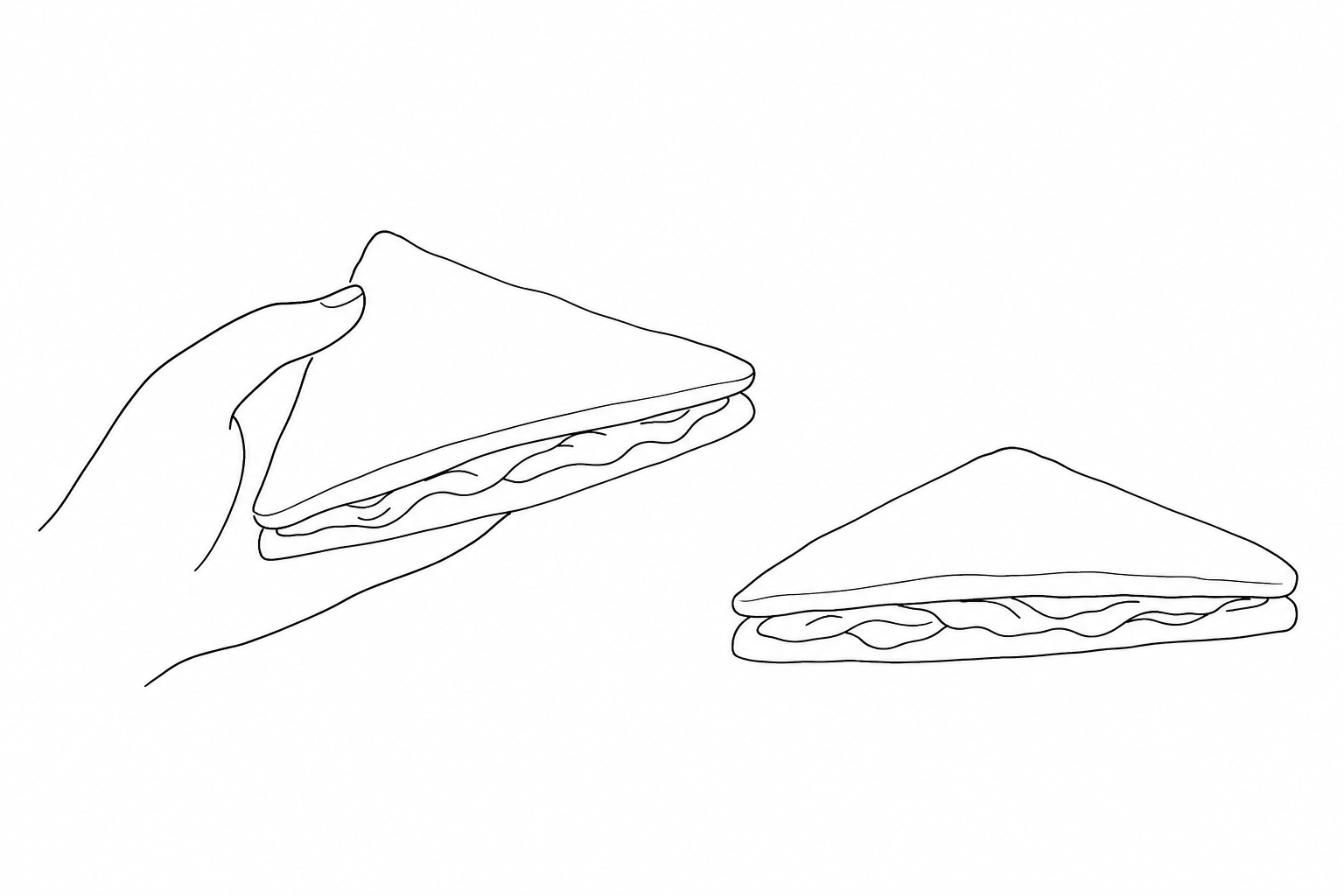
In the Venice tramezzino, moisture is not a defect to be corrected, but a condition of service. Tramezzino bread, white, crustless and thinly sliced, absorbs a share of condiment: but it must remain elastic, not soggy. The difference lies in the control of free water. Mayonnaise, chopped hard-boiled egg, tuna, Russian salad or baby artichokes bring softness; if the filling is well bound, the moisture remains distributed and does not drip.
Time also matters. A freshly assembled tramezzino may seem dry and separate: bread on one side, filling on the other. After a short rest, instead, the crumb relaxes, adheres to the cream and loses that “new sponge” effect. The triangular cut helps: the tip concentrates the pressure of the fingers, while the long side maintains a soft area to bite into.
The correct result is a slice that bends slightly without breaking, with a fresh surface and an intact edge. If the bread shines, tears or leaves wet marks, the limit has been exceeded: it is not lagoon softness, it is collapse.
How to read them among calli, bacari and bars
To recognize them without chasing changing addresses, it is useful to observe three signs. The first is the sail shape: two triangles high in the center, not flattened, with the filling gathered like a small hump. It is not a sandwich stuffed at random, but an object built to be held in the hand during a short break, often next to a small glass of wine or a coffee.
The second sign is the display case. In the bacari and bars of the sestieri, a convincing tramezzino usually appears compact, protected, with a clean cut and readable filling: egg and anchovy, tuna and pearl onions, ham and mushrooms, shrimp in sauce. Mayonnaise must not erase the ingredients, but bind them.
The third is the tone. In Venice it rarely seeks a gourmet effect: it remains white, soft, almost austere. Its seriousness comes from proportion, freshness and speed of consumption, not from decorations.
Reading a Venetian tramezzino means observing Venice on a minute scale: not whole palaces, but gestures at the counter; not the postcard, but the rhythm of those who enter, order, eat and set off again. Its controlled abundance and measured moisture speak of practicality, taste and craft. Looking for it carefully, in the less shouted-about bars and in the bacari frequented naturally, makes it possible to understand something about the everyday city: a concrete, precise Venice, capable of transforming a triangle of bread into a small form of gastronomic seriousness.