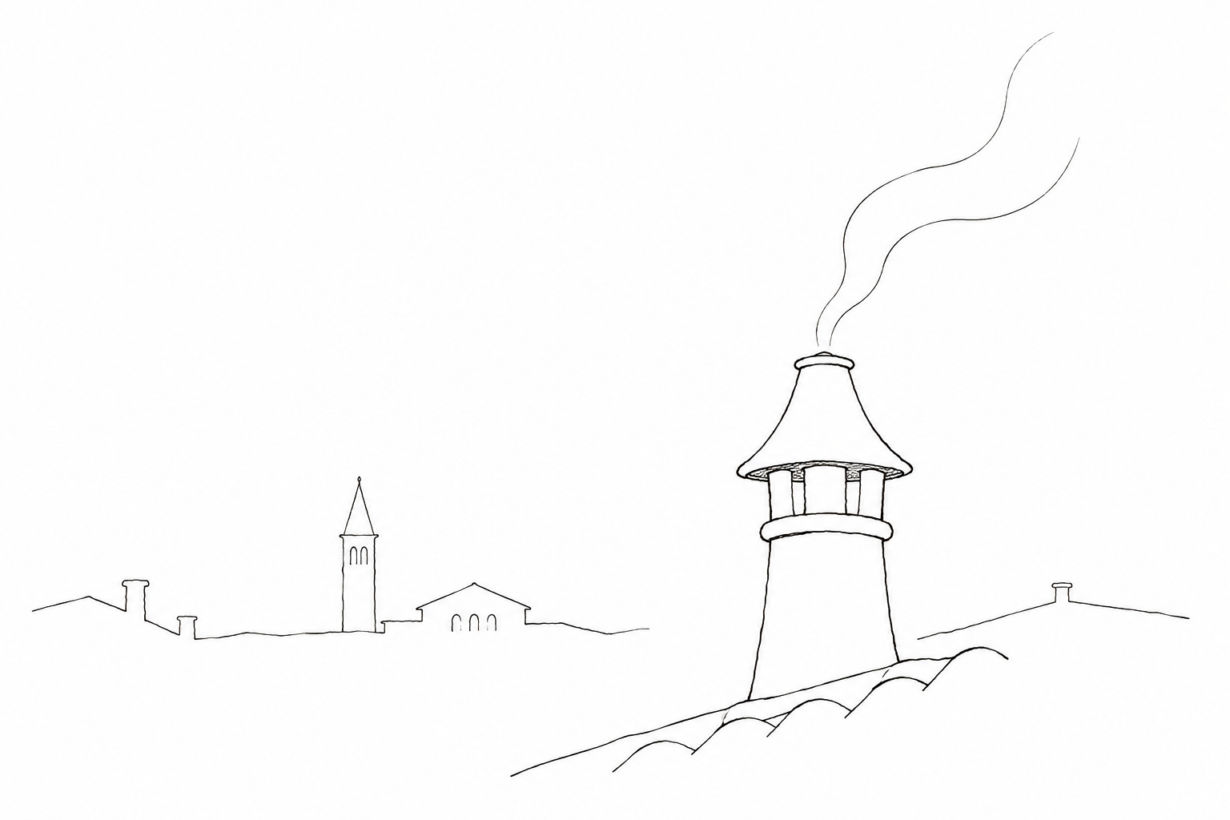

In Venice it is worth looking above the windows too. Among rooftop terraces, roof tiles and irregular outlines, chimney pots with an unusual shape appear, wide at the top, almost like small upside-down bells. They are not a picturesque whim created to embellish the skyline: they tell of a very concrete problem, that of smoke and sparks in a densely built, fragile city battered by the wind. Understanding why they have that shape helps you read the Venetian rooftops better, but also notice details that often escape you while walking with your eyes fixed on bridges, calli and canals.
Why Venetian chimney pots look like upside-down bells
The short answer is this: on the rooftops of Venice many chimney pots have the shape of an upside-down bell because that outline helped the chimney work better in a very dense city, exposed to the wind and built with buildings very close to one another. It is therefore not a decorative whim, even though over time it has become one of the most recognizable details of the Venetian profile.
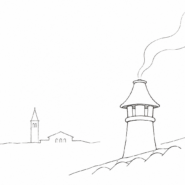
The most common type is the bell-shaped chimney: above the flue rises a flared structure, similar to an upside-down cone. This upper part works as a screen and as a small expansion chamber: it slows the exit of the smoke, directs its dispersion and reduces the risk that sparks will be projected directly onto nearby roofs.
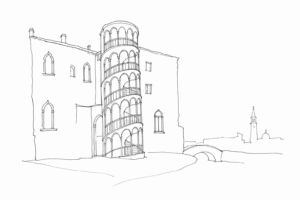
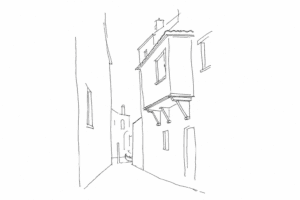
The context matters a great deal. In Venice the roofs almost touch within sight, the calli are narrow, the currents change between canals and tall façades. A normal chimney pot would have had to deal with draught, gusts and safety; the Venetian one responded to all three needs with a simple, visible and very effective shape.
A solution created to protect a city built very close together
The bell shape should first of all be read as a safety measure. In a Venice made of adjoining buildings, wooden floors, attics, beams and roofs very close together, a spark was not a detail: it could become the start of a fire that was difficult to contain among narrow calli and inner courtyards.
The practical problem was simple: hot smoke and sparks rose from the domestic hearth. If these came straight out of the flue, the wind could carry them onto nearby roofs. The flared part of the Venetian chimney served precisely to interrupt this course. Inside the “bell”, the flow widened, lost strength and the incandescent particles were more likely to go out or fall back before reaching the outside.
For this reason the chimney pot was not considered an ornament added at the last moment, but an important piece of the art of building. As early as the thirteenth century the Scuola dei Mureri, that is, the guild of masons, is attested in Venice: a significant fact, because it tells of a city in which work on brick, masonry and domestic systems had precise rules, skills and responsibilities.
A good chimney was part of the mason’s mastery. It had to draw well, not send smoke back into the rooms and, above all, not turn the roof into a point of risk. The bell outline comes from this: not from a picturesque fantasy, but from a technical response to a compact city, intensely inhabited and forced to take the daily fire of homes very seriously.
Bell, cube, bell tower: how to recognize the variants
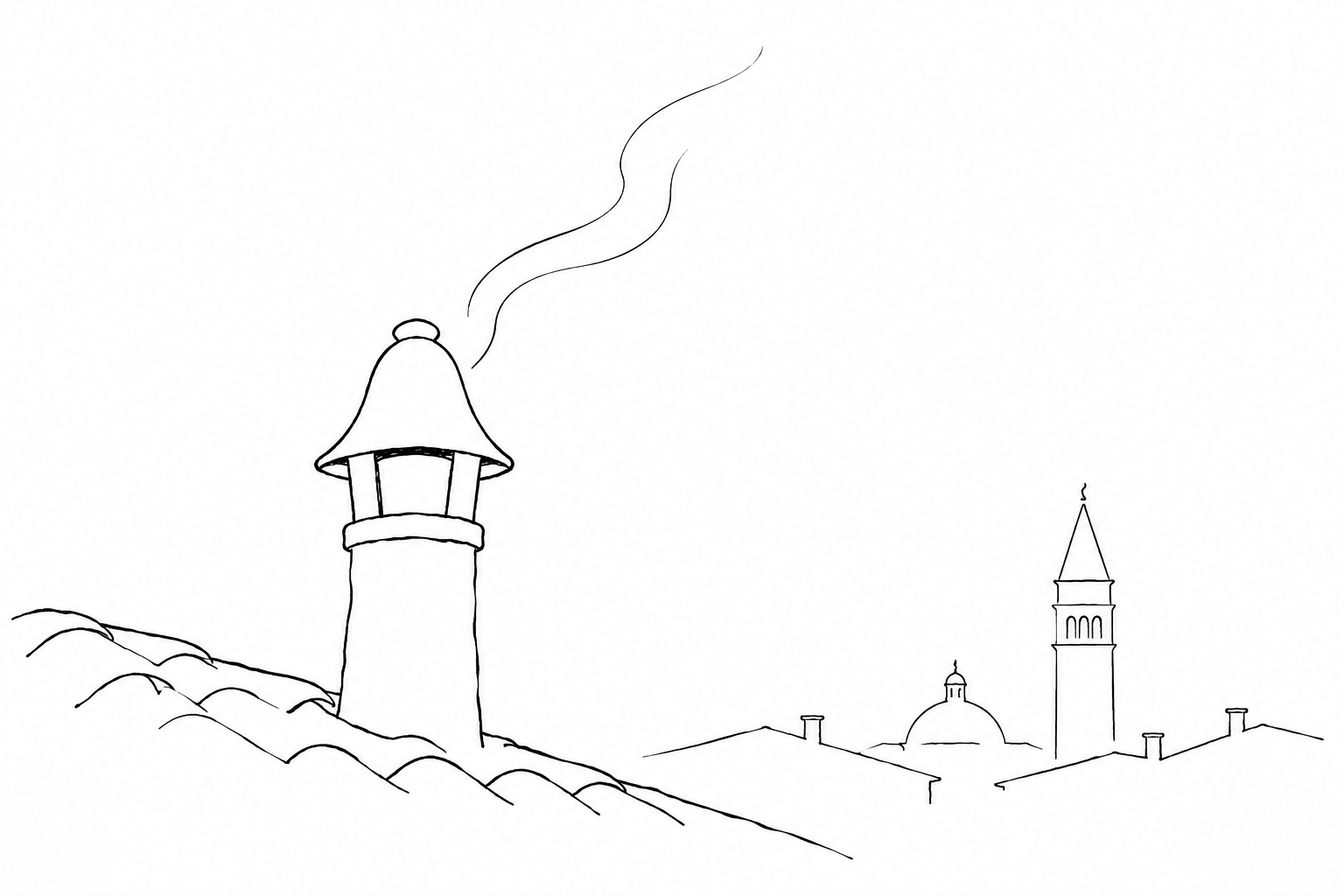
Once the principle is understood, recognizing the variants becomes almost an exercise in reading the roof. The bell-shaped chimney is the easiest one: above the flue rises a flared body, wide at the top, similar to an upside-down cone. Its upper part is not pure ornament: it works as a screen and as an expansion chamber, that is, it offers the smoke a wider space before the exit.
More compact solutions derive from this shape. The flattened bell retains the idea of the flare, but with a lower and less slender profile: it looks like a shortened bell, adapted to different roofs or proportions. The cube-shaped chimney, instead, simplifies the outline into a squared volume, often more massive; the principle remains that of protecting the mouth of the flue, but the design appears less conical and more geometric.
The bell-tower type is recognized by its vertical development, almost like a small tower: it is a variation in which the technical function is combined with a more scenic presence. Over the centuries, especially between the late Middle Ages and the Renaissance, these elements also absorbed decorative taste, classical and Lombard influences, without abandoning the traditional bell-shaped solution. Some chimney pots of private houses were even painted or frescoed: a detail often lost today, but important for remembering that on the rooftops technique could also become a sign of domestic prestige.
Where to notice them: rooftops, paintings and views of Venice
To train your eye, it is useful to look for chimney pots in the points where the profile of the roofs remains legible: along the Grand Canal, from the more open bridges, in courtyards with low buildings around them, or by looking above the façades when a calle opens into a campo. From the ground you cannot always see the base of the flue, but the bell is easily recognized by the flared upper part, which interrupts the line of the roofs.
An example cited for bell-shaped chimneys is Ca’ Dario, in Dorsoduro, overlooking the Grand Canal: here the detail should be observed not only on the façade, but also by raising your gaze toward the crowning part. For a different variant, in Castello, the area of Ca’ di Dio and the so-called House of the Seven Chimneys is linked to cube-shaped chimneys: more compact, squared volumes, useful for understanding how much the same technical need could produce different outlines.
The best way to see the whole, however, is to move from the streets to images. Jacopo de’ Barbari’s View of Venice from a Bird’s Eye View, from 1500, kept at the Museo Correr, is an extraordinary visual map: it shows not only palaces and canals, but also the dense landscape of the rooftops. In the paintings of Gentile Bellini and Vittore Carpaccio, moreover, chimney pots often appear in the background of urban scenes. Looking at them there helps to recognize them better even from below: not isolated elements, but a continuous punctuation above houses, fondachi and courtyards.
In the end, bell-shaped chimney pots teach something very Venetian: here even a technical element can become landscape. They served to let the smoke out, to control sparks, to protect roofs that were too close together; then, over time, they gave rhythm and character to the high line of the city. The next time you cross a campo or come out of a narrow calle, try raising your gaze before looking for the next bridge: above the façades you will find a less photographed Venice, but one that is very precise in telling how this city was truly lived in.