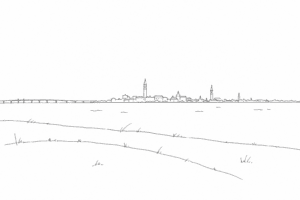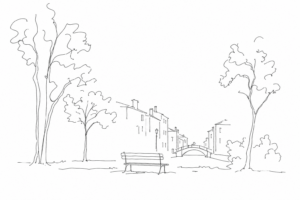
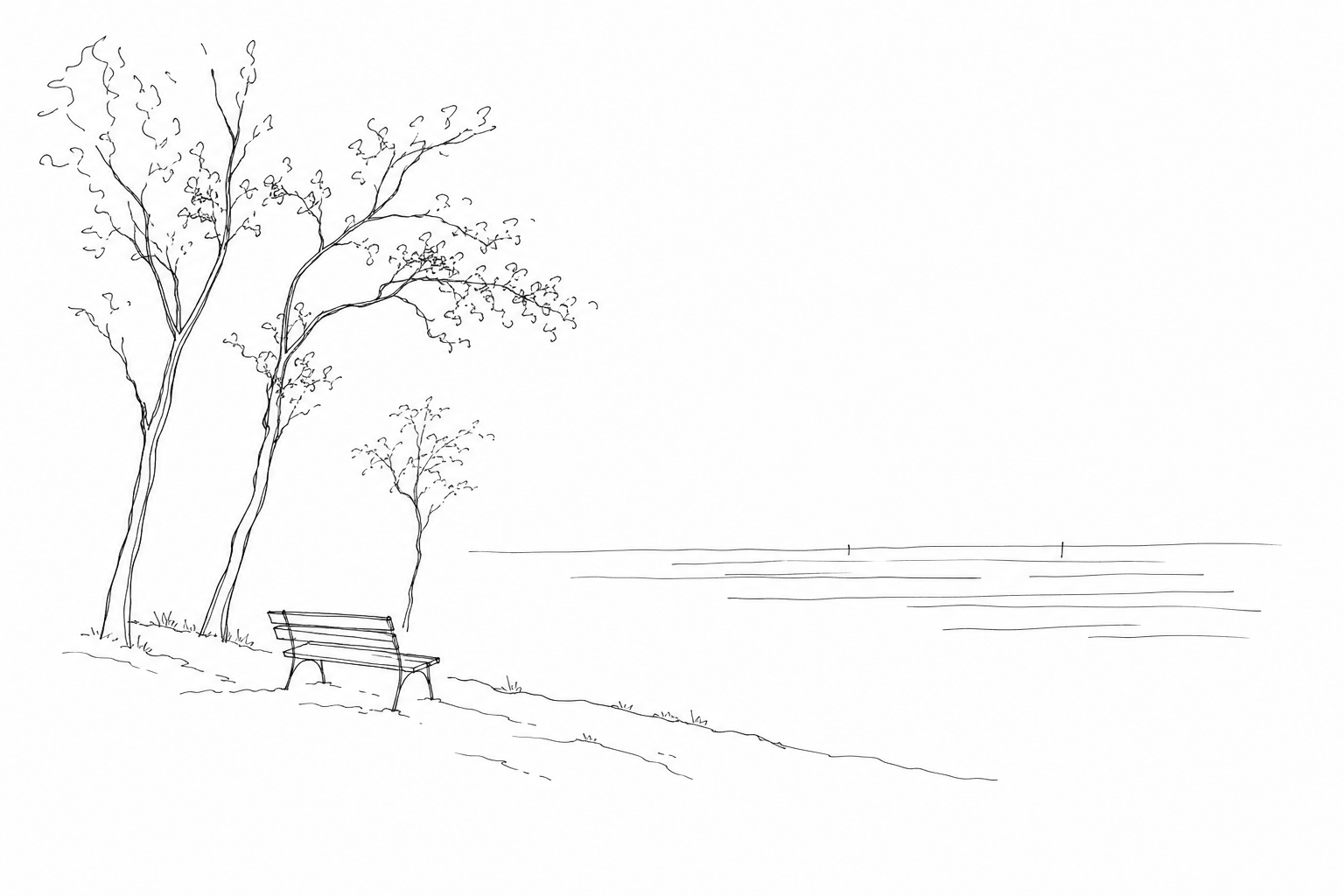

The Parco delle Rimembranze is one of the places where Castello changes pace: the compact city opens up, the noises ease and the lagoon once again becomes the horizon. Created as a space of memory, linked to the trees dedicated to the fallen, the park is also a living urban edge, frequented by those who walk, read, accompany children or cross the sestiere without hurry. To describe it means observing public greenery, civic history and Venetian geography together, in an area where the everyday dimension coexists with the broad presence of the water.
Where it is and why it matters in the sestiere of Castello
The Parco delle Rimembranze is found at the eastern end of Venice, in the sestiere of Castello, where the compact city gives way to tree-lined avenues, sports fields and open views over the lagoon. It is connected to the area of Sant’Elena, reached by walking beyond the Biennale and the Napoleonic Gardens, in an area that marks the transition from monumental Venice to a more airy and everyday edge.
Its name refers to the memory of the fallen: like other Italian parks created after the First World War, it associates walking among the trees with a civic act of remembrance. Here this function takes on a particular character, because memory is not gathered in an enclosed space, but distributed along green paths facing the water.
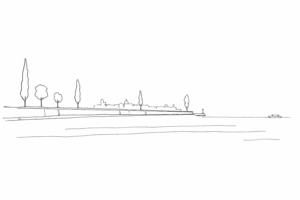
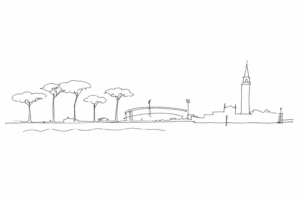
For Castello, the park is also important as an urban threshold. On one side it extends the inhabited city; on the other it opens the gaze toward the lagoon basin, making Venice perceived not only as stone and calli, but as a landscape of wind, trees and horizon.
Trees and memory: reading the Parco delle Rimembranze
The name of the park is not a simple ornament. “Rimembranze” refers to the period after the First World War, when gardens and avenues dedicated to the fallen spread in many Italian cities. A ministerial circular promoted by Dario Lupi in 1922 helped establish a precise idea: to associate each fallen soldier with a tree, a living sign and not an immobile statue.
On the edge of Castello this memory takes on a particular tone. The isolated monument, to be viewed frontally, does not prevail, but rather a network of paths, shade and places to pause. Remembrance is encountered while walking: in the rows of trees, in the rhythm of the avenues, in the relationship between the greenery and the brackish air of the open lagoon.
Reading the Parco delle Rimembranze without rhetoric means recognizing this dual nature. On one side it is an everyday public space, crossed by those who live in or reach Sant’Elena; on the other it preserves the imprint of a twentieth-century civic pedagogy, in which collective mourning was entrusted to the growth of trees and the shared care of the place.
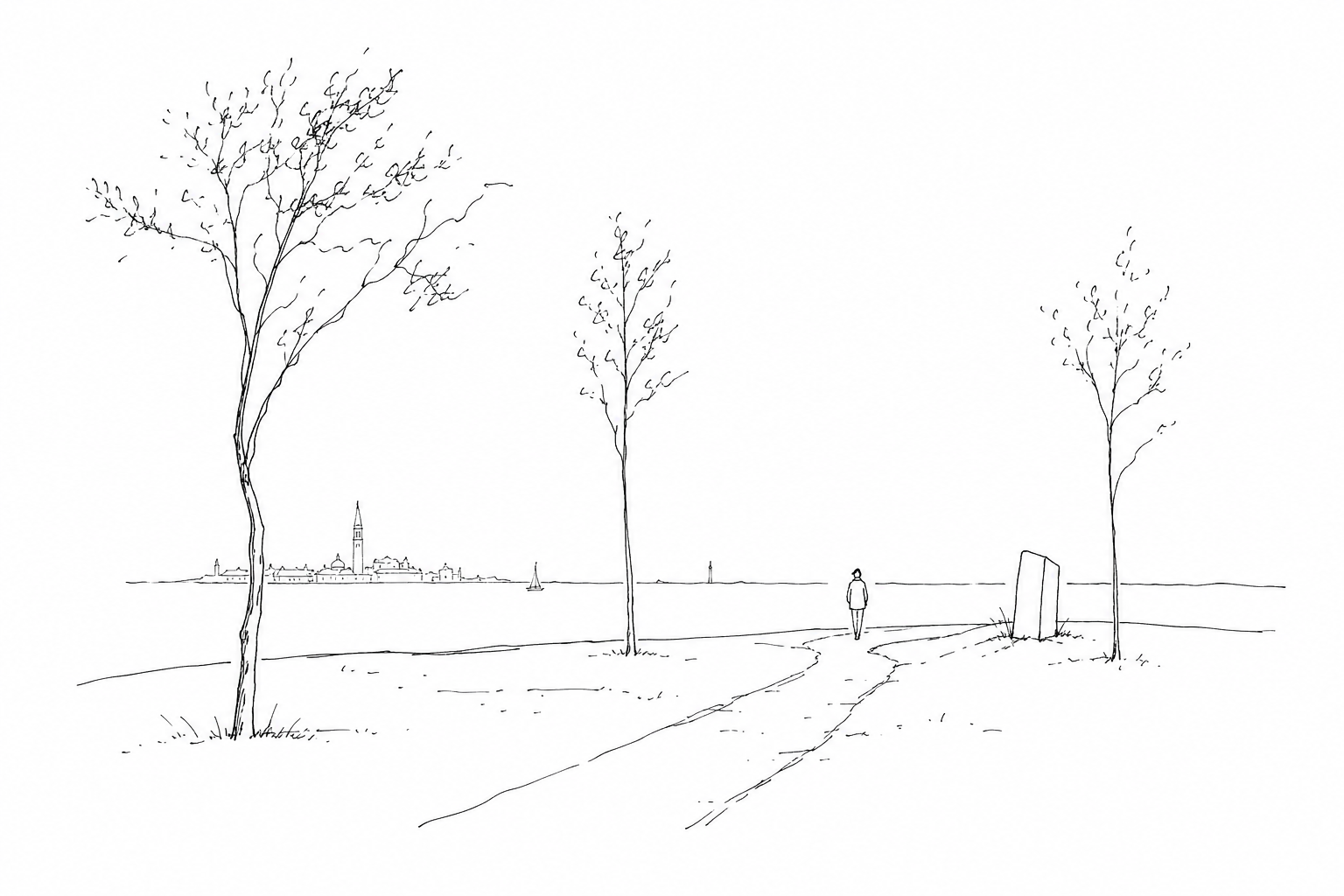
Walking among avenues, shade and lagoon
The walk here has a different rhythm from that of the calli. Arriving from the Sant’Elena area, the space widens: the straight paths invite you to proceed without hurry, with the tree canopies filtering the light and softening the urban noise. The ground, the low walls, the benches and the side openings create a simple, almost everyday sequence, in which walking becomes the best way to read the place.
The most characteristic stretch is the continuous relationship with the open water. Between one avenue and another the lagoon can be perceived, not as a decorative backdrop but as a physical presence: more mobile air, reflections, changes of light, views toward Sant’Elena and the Basin of San Marco. It is one of the rare areas where the greenery of the eastern sestiere dialogues directly with the lagoon horizon.
Walking in this area means alternating shade and openings, reflection and broad views. The rows of trees order the space, while the proximity of the water prevents the route from becoming closed: every side detour returns to the maritime dimension of the city.
Including it in a short itinerary in Castello
In a route of a few hours, the green area can become the central pause between two faces of the sestiere: the urban one of the Giardini and the more secluded one of Sant’Elena. The simplest order is to start from via Garibaldi, cross the Giardini area, enter among the tree-lined avenues and then exit toward the waterfront, where the lagoon opens the view again.
- First stop: via Garibaldi and surroundings, useful for reading the popular and nineteenth-century part of the sestiere.
- Slow pause: the avenues of the Parco delle Rimembranze, to be walked without hurry, observing plaques, rows of trees and openings onto the water.
- Closing: Sant’Elena or San Pietro di Castello, if you want to add a quieter and more historic place.
For details subject to change, for example construction sites or temporary limitations on the paths, it is advisable to check updated information before the visit.
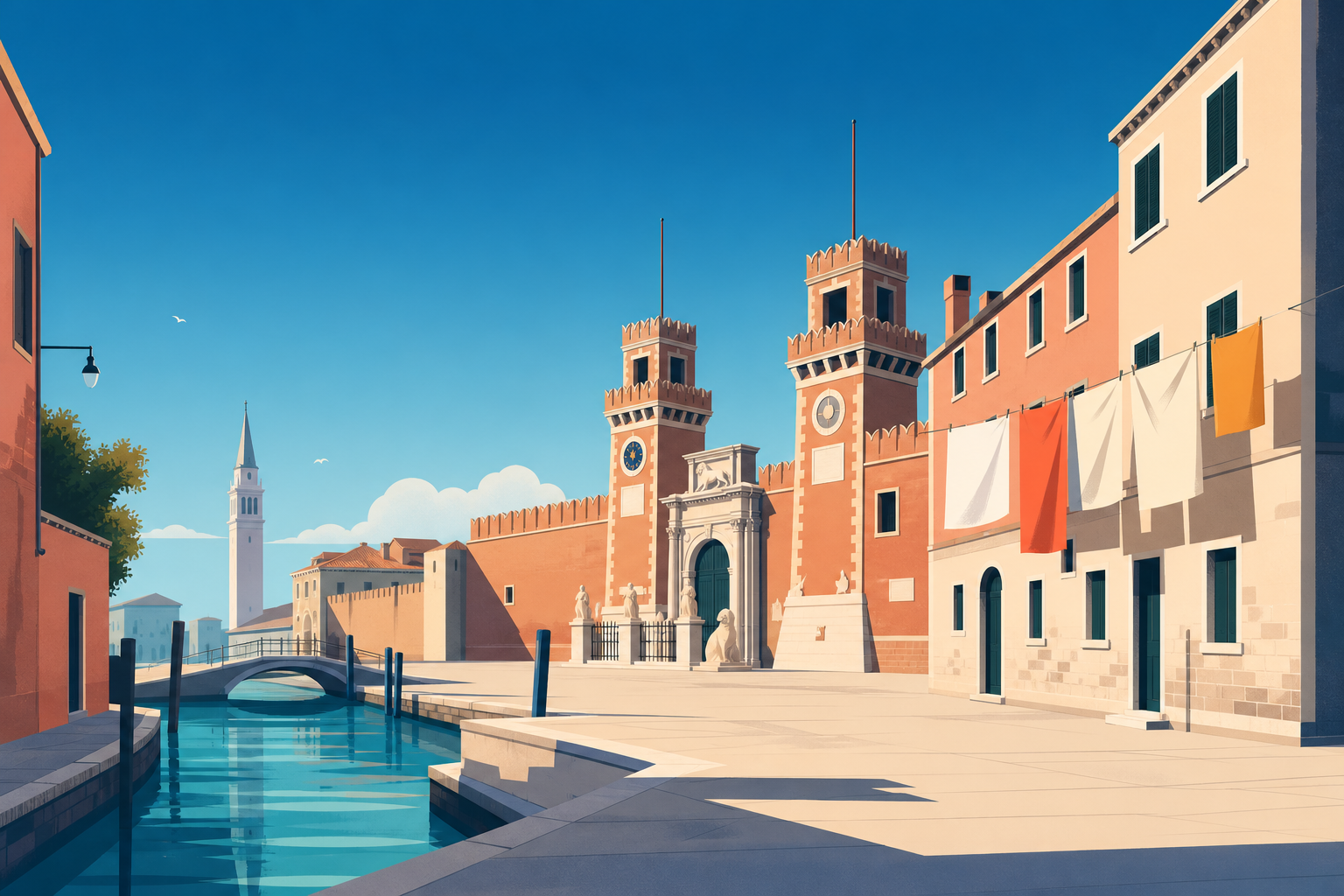
Walking in the Parco delle Rimembranze helps to read Castello beyond its best-known images: not only calli, campi and churches, but also tree-lined avenues, public memory and sudden openings toward the lagoon. It is a simple stop, but not a secondary one, especially if included in a slow itinerary between Sant’Elena, the Biennale, via Garibaldi and the Arsenale. Here Venice shows a more relaxed and concrete form, made of shade, names, everyday paths and silences: a different way to understand the relationship between the city, its inhabitants and its eastern edge.