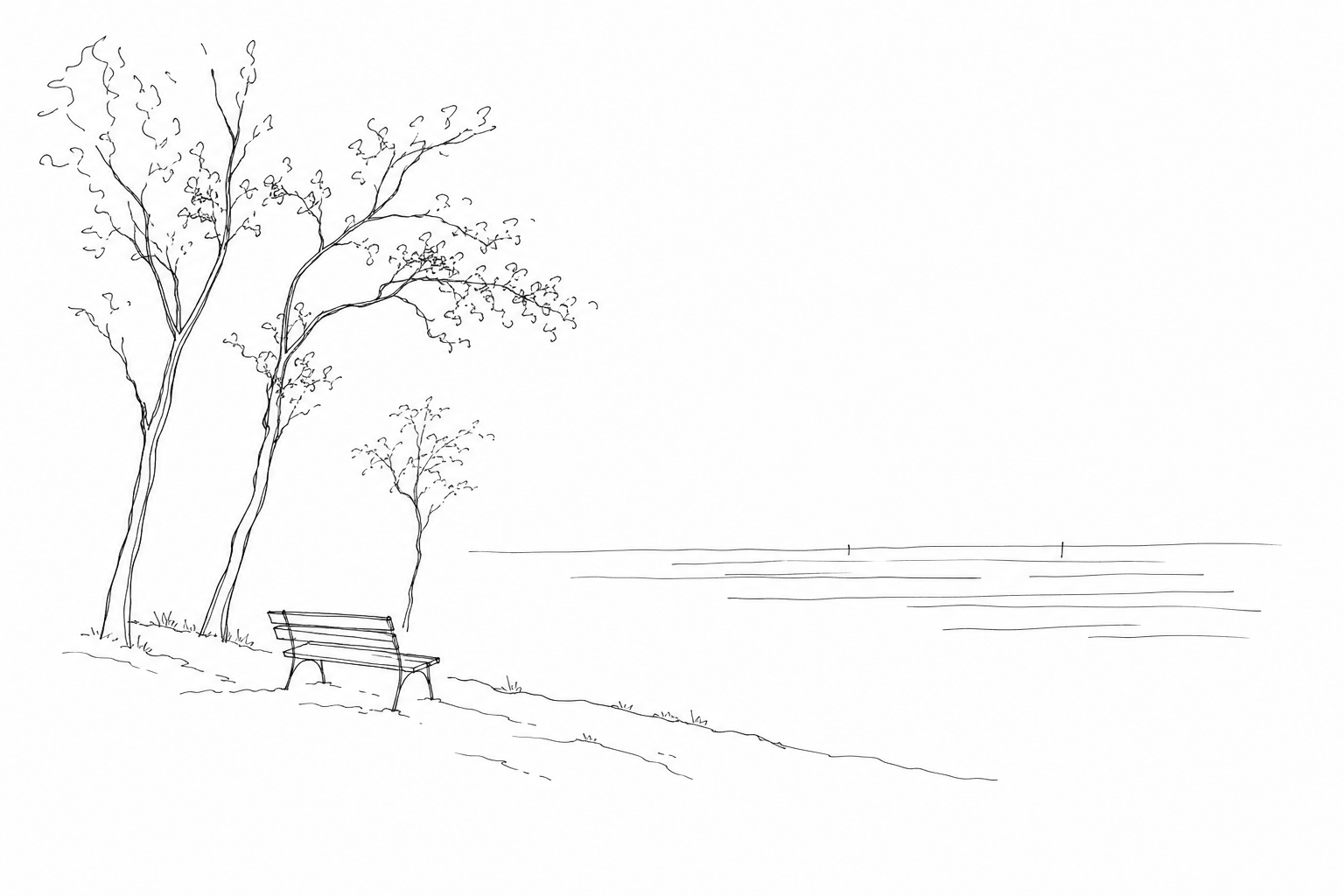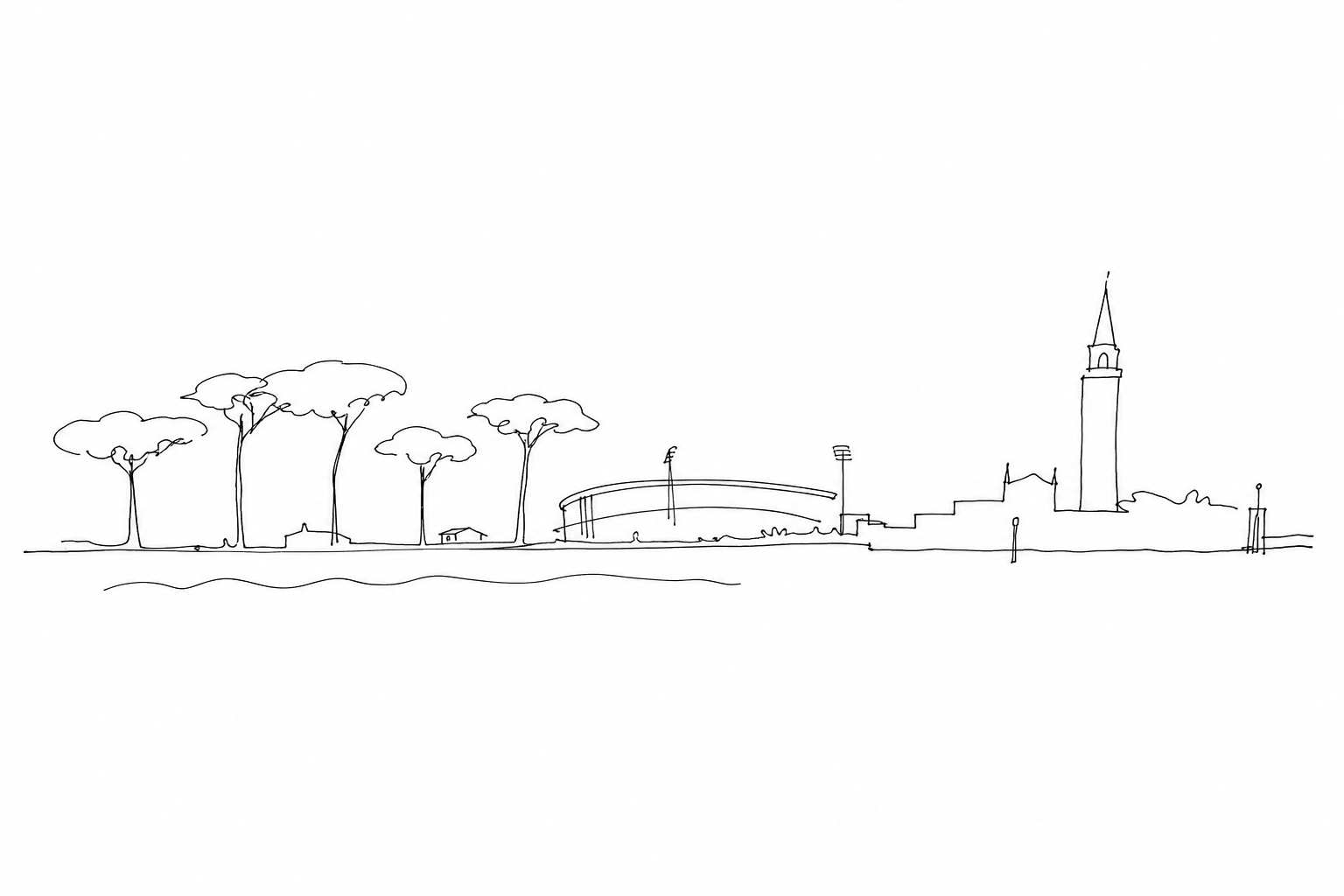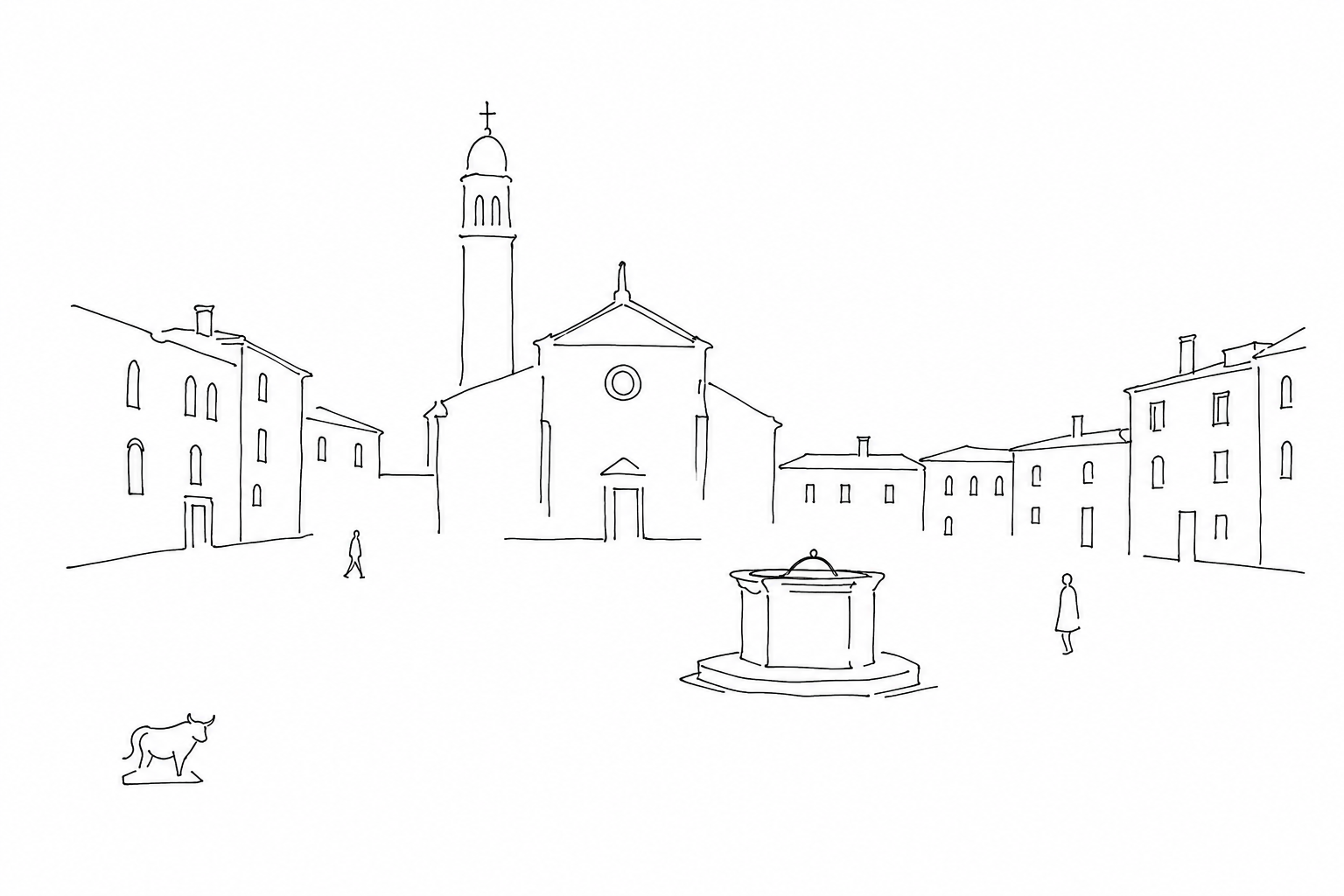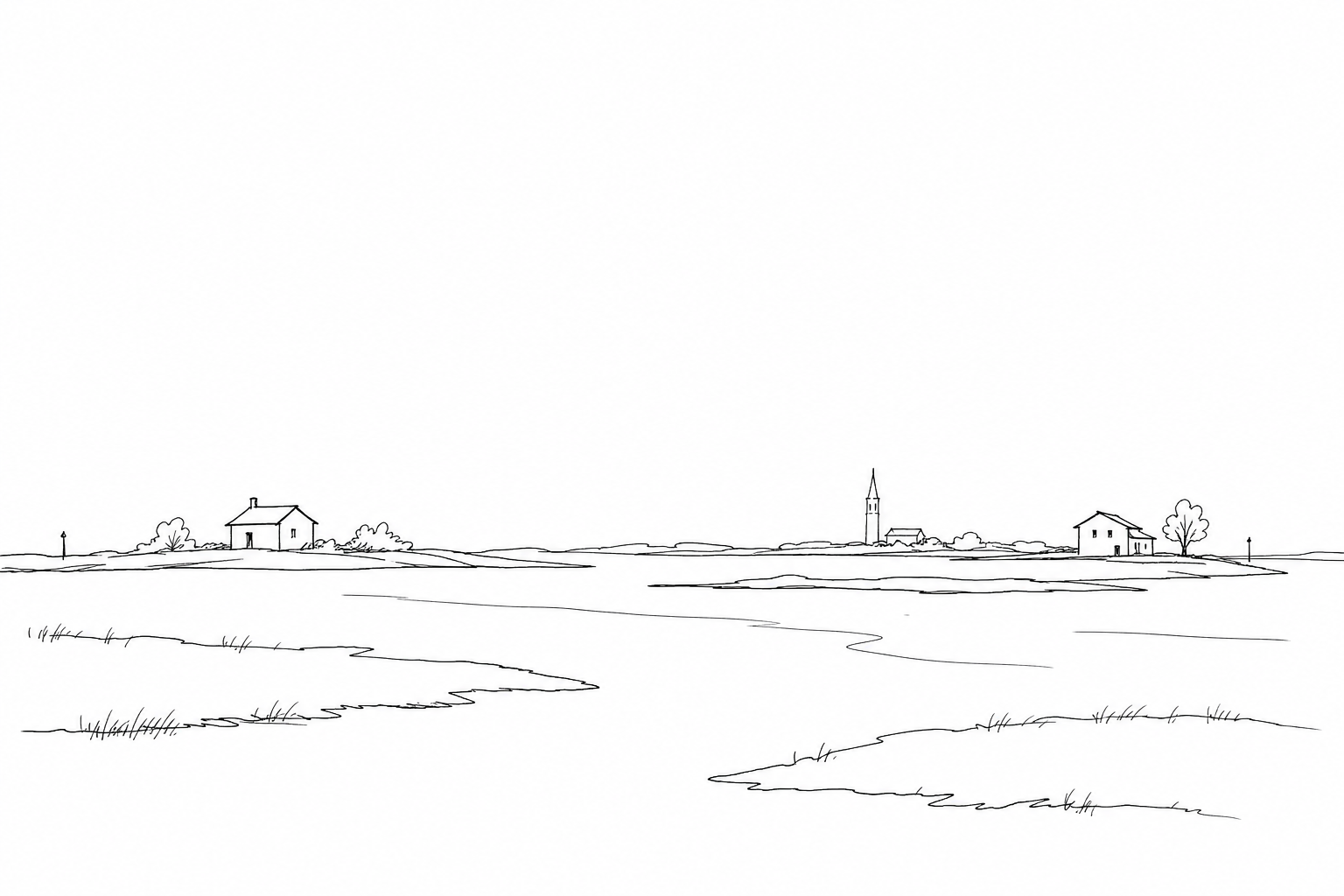
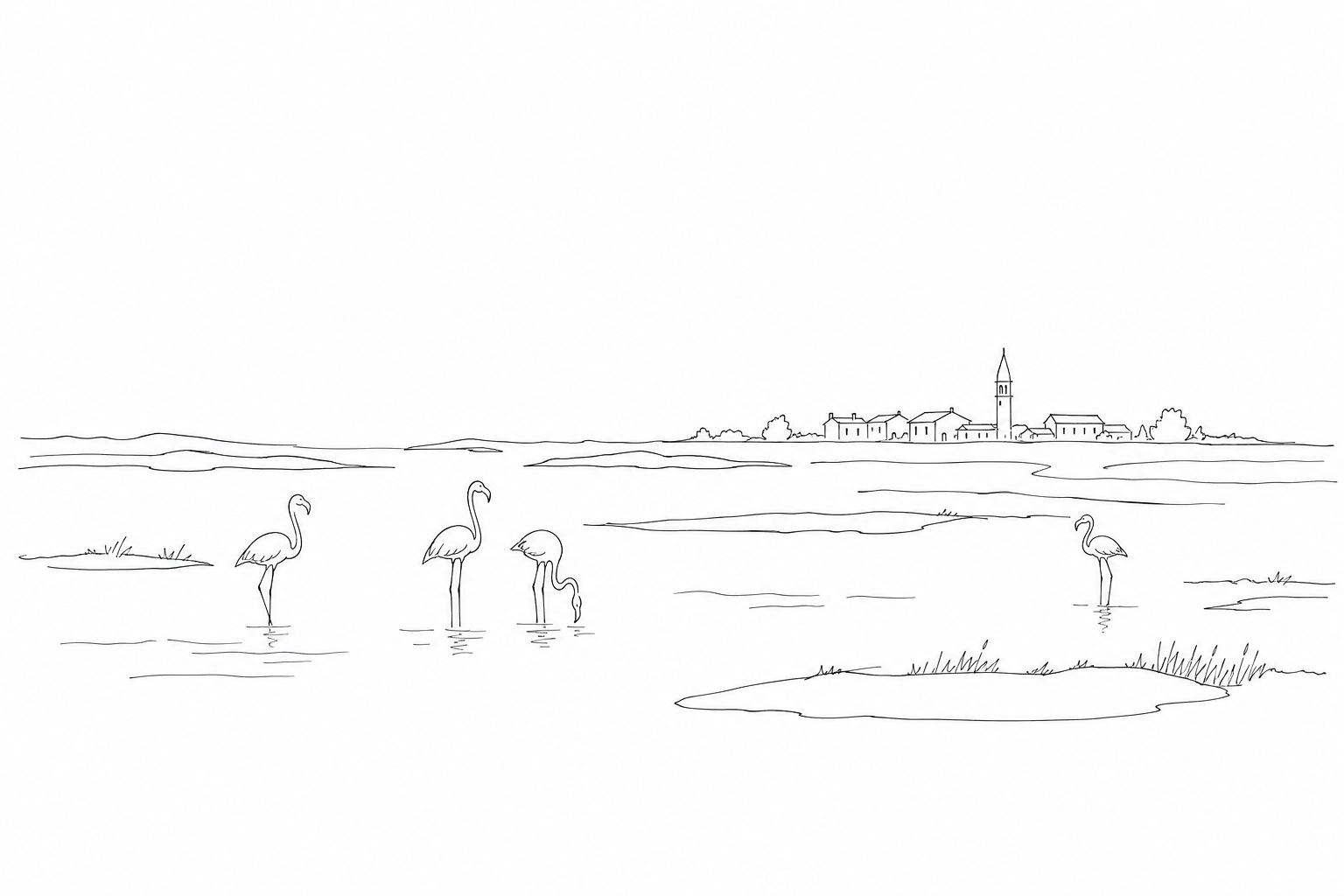
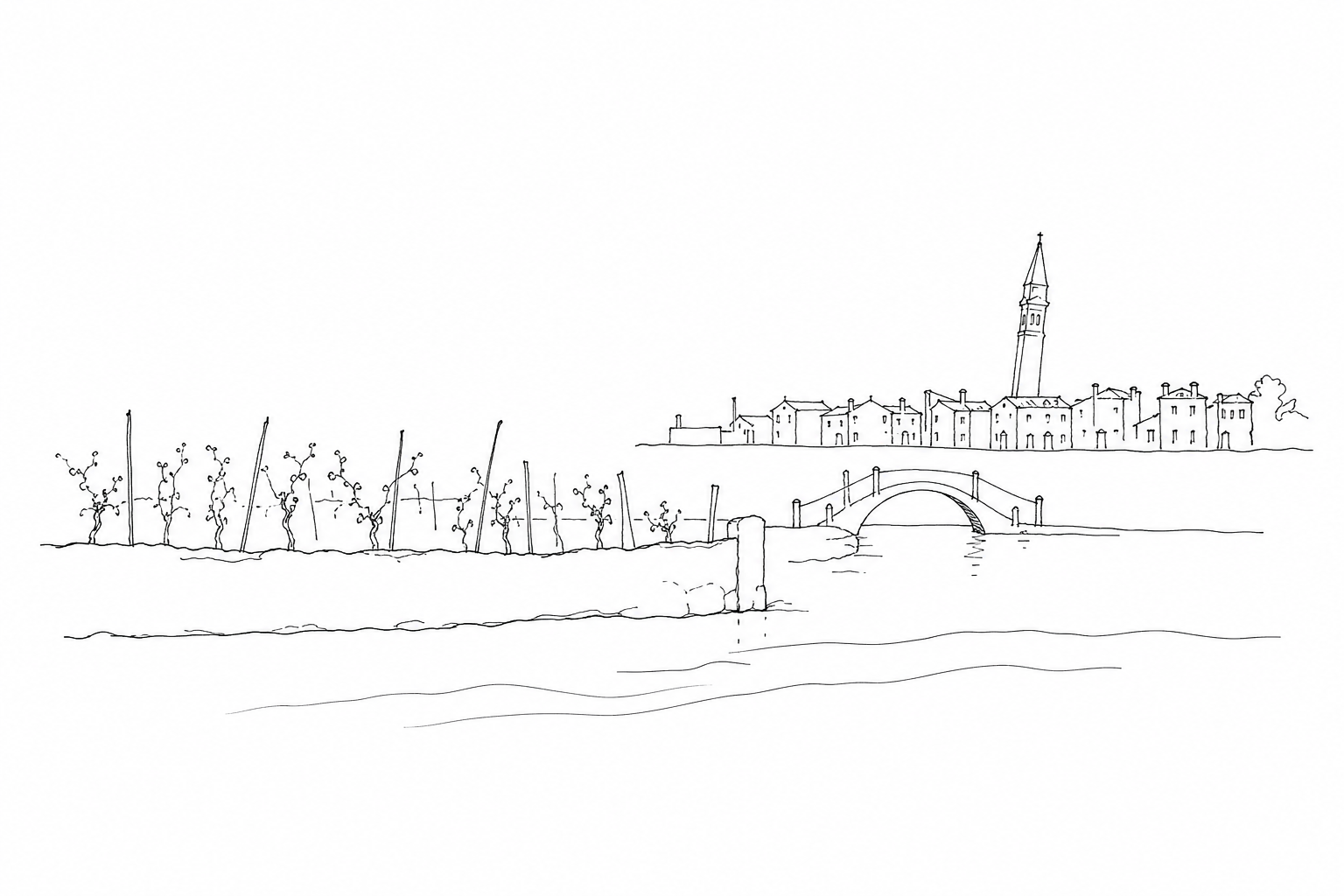
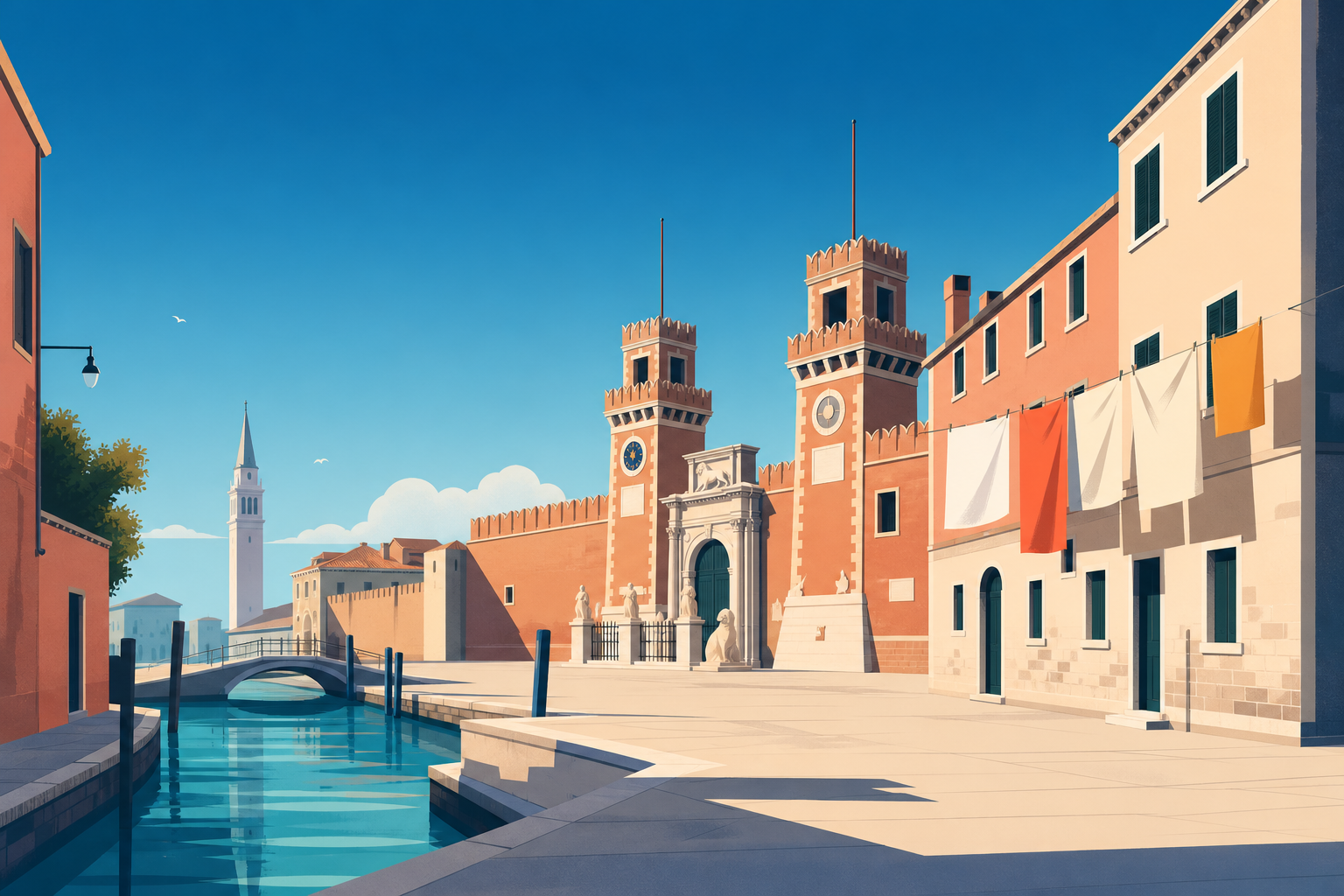

Castello is the sestiere where Venice seems to stretch out, lose for a moment its compressed measure and find breathing room among wider calli, lived-in campi and sudden views over the lagoon. Here the monumental city does not disappear, but coexists with an everyday fabric: the Arsenale, public housing, hanging laundry, worn nizioleti, neighborhood shops. Walking in Castello means reading a less frontal and more layered Venice, where the naval history of the Serenissima still meets ordinary gestures and inhabited spaces.
Why Castello seems like Venice at its widest
Castello gives the impression of a wider Venice because here the city, at times, stops compressing itself into a sequence of narrow calli and opens up into spaces of work, passage and daily life. The sestiere occupies the entire eastern part of Venice: from San Marco it stretches toward the Arsenale, San Pietro di Castello and Sant’Elena, as far as the green edges overlooking the lagoon.
The rhythm already changes along Riva degli Schiavoni, but becomes more evident when you enter toward Via Garibaldi, one of the widest streets in the city, created by filling in a canal in the Napoleonic era. A little further on, the Arsenale recalls productive Venice: shipyards, walls, towers and docks linked to the maritime power of the Serenissima.
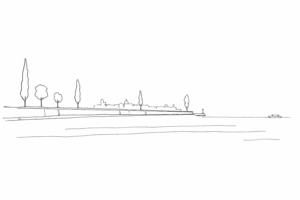
Alongside this monumental scale, Castello preserves a domestic measure: laundry hanging between windows, campi used as courtyards, neighborhood shops, children crossing the fondamenta. It is this alternation that makes it different: not a periphery, but an inhabited and spread-out Venice.
To understand why the sestiere widens toward the east, you need to start from the Arsenale, not as an isolated monument but as an urban organism. Founded in the medieval era and expanded over the centuries, it was the great shipyard of the Serenissima: basins, workshops, warehouses, foundries and above all the long Corderie, where the hawsers needed for the ships were prepared.
Around those walls, not a stage set but a city of work was born. The arsenalotti went in and out every day, the nearby parishes gathered families, trades and services, the fondamenta served to move materials as well as people. Even the shape of the streets bears its memory: less winding passages, working waterfronts, campi that seem like pauses between home and shop.
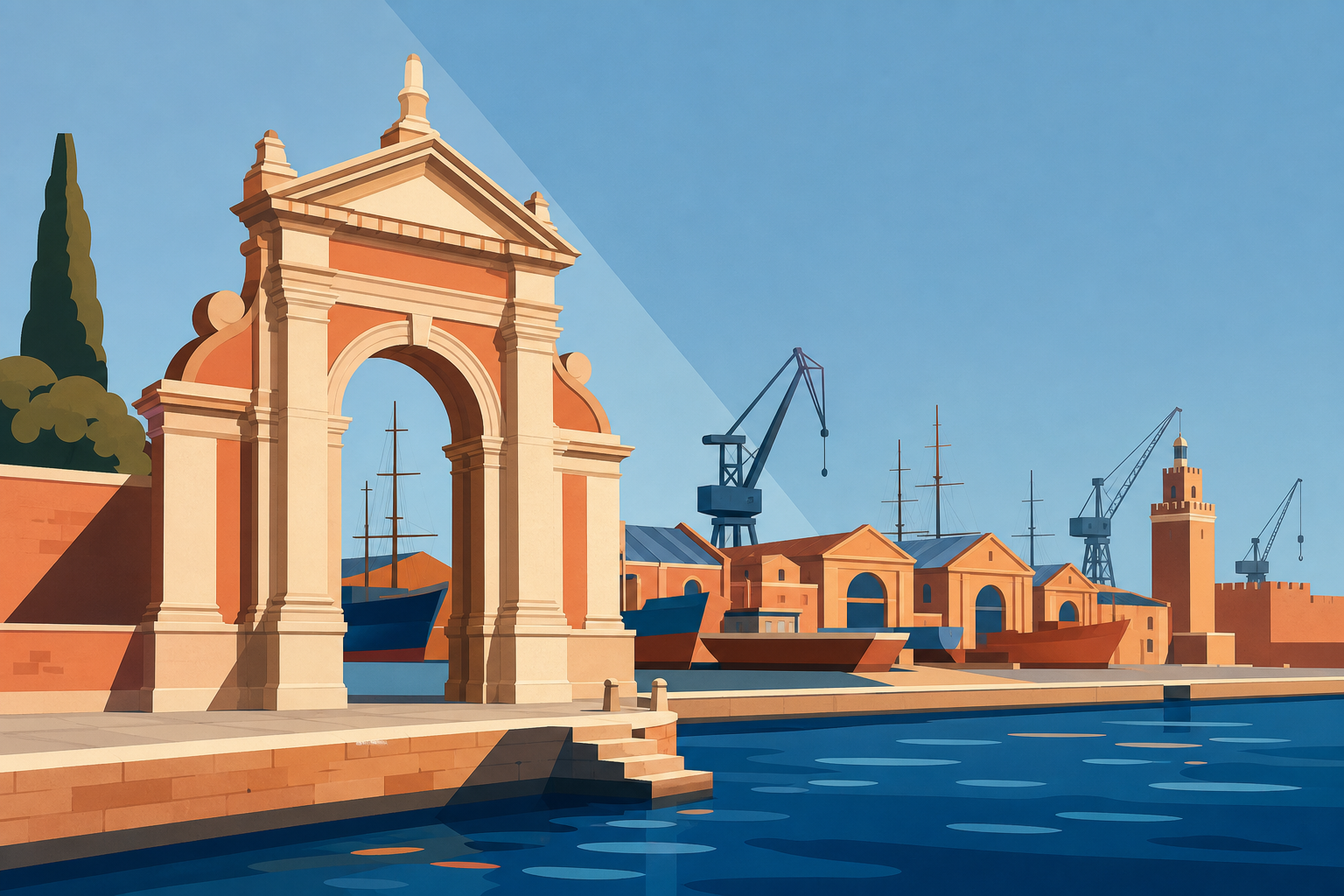
The Porta Magna, with its Renaissance language, signals the public prestige of the shipyard; behind it, however, the more concrete idea remains: Venice’s maritime power depended on a productive, noisy, specialized district. Walking here means reading that function in the scale of the spaces, even before the decorative details.
Hanging laundry, nizioleti and inhabited campi
Here the everyday is not a picturesque backdrop: it is a key to interpretation. Laundry hanging between one façade and another indicates homes that are still lived in, narrow calli where the wind dries quickly and courtyards that function like open-air rooms. Observing them without folklore means noticing heights, distances, windows, pulleys: small adaptations to a compressed domestic space.
The nizioleti, the names painted in black on a white background at the corners, also help to read the local fabric. Words such as calle, ramo, fondamenta, corte and salizada distinguish routes, water margins, secondary passages and stretches that were once paved. Some place names preserve memories of trades, materials and communities: the Tana recalls ropes and hemp, the Barbaria de le Tole refers to timber and planks.
The smaller campi, often without dominant monuments, show the inhabited part of the sestiere: children, elderly people, neighborhood shops, wellheads, low entrances. They are minute squares, not stage sets, and they explain better than many guides how this eastern sector has maintained a neighborhood scale.
A slow walk between Via Garibaldi and the lagoon
A simple itinerary can begin from Via Garibaldi, one of the widest streets in the sestiere: it was not born as a calle, but from the filling in of the rio of Sant’Anna in the Napoleonic era. This explains its unusual width, the tables, the neighborhood shops and the less compressed pace compared with the monumental center.
- Start from the stretch near the bridge of the Veneta Marina and observe the low houses, often marked by water entrances and warehouses on the ground floor.
- Continue toward the canal of Sant’Anna: here the route narrows again and the passage between modern street and ancient fabric becomes clear.
- Turn off toward San Pietro di Castello, the ancient patriarchal seat, where the wide and secluded campo preserves an almost island-like rhythm.
- Return toward the Riva dei Sette Martiri: the frontage opens onto the basin and the perception of space changes, from the inhabited district to the waterline.
It is a walk to take without haste, reading bridges, waterfronts, courtyards and fondamenta as stages of an everyday geography.
A walk among the Arsenale, Via Garibaldi and the lagoon edges shows why Castello is perceived as Venice at its widest: not only because of its urban form, but because of the way it leaves room for the gaze and for daily life. It is an itinerary to approach without haste, observing minor details and historical continuities, rather than looking for a sequence of monuments. In this balance between memory, work and living, Castello restores one of the city’s most concrete and least predictable images.
Related Posts
Via Garibaldi: Venice’s only “via” and the district that breathes like a village
History, urban form and daily life of Via Garibaldi, a wide and popular axis in the Castello sestiere.Riva dei Sette Martiri: a Castello walk among memory, trees and open lagoon
A slow guide to Riva dei Sette Martiri, among historical memory, trees, Castello houses and views of the lagoon.
Parco delle Rimembranze: walking in Castello among trees, memory and the open lagoon
A slow route through the Parco delle Rimembranze, among Sant'Elena, commemorative trees and the lagoon horizon.Questions Answered
Why does Castello feel like Venice at its widest?
Because it features wider streets, open spaces and a blend of productive and residential zones.What role does the Arsenale play in Castello?
It operates as a large, historically significant shipyard influencing local streets and community.How does everyday life manifest in Castello?
Through hanging laundry, neighborhood shops, nizioleti and inhabited campi.What is a recommended walking route to experience Castello?
A slow walk along Via Garibaldi, San Pietro di Castello, and lagoon edges.
Follow Castello’s naval history
After this stop, which details show Venice from the side of those who built and sailed its ships?
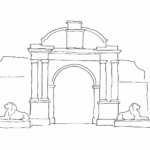 The Porta Magna of the Arsenale: lions, symbols and propaganda carved at the entrance to Venetian naval powerHistory and interpretation of the Porta Magna of the Arsenale, amid Renaissance architecture, marble lions and Venetian political messages.
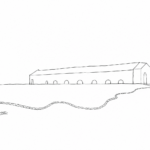 The Arsenale ropewalks: where the ropes that held Venetian naval power together were bornHistory, function, and interpretation of the Arsenale ropewalks, the long space where Venice produced the ropes for its fleet.
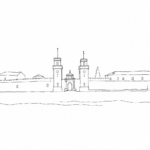 The Venice Arsenal: the place where the Serenissima built its powerHistory, spaces and meaning of the Arsenal, the productive and military heart of maritime Venice.
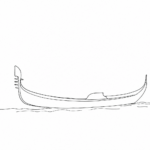 The Ships Pavilion: seeing Venice from the side of boats, not postcardsA route through the Ships Pavilion, among the Arsenale, historic boats and Venice seen from the water.