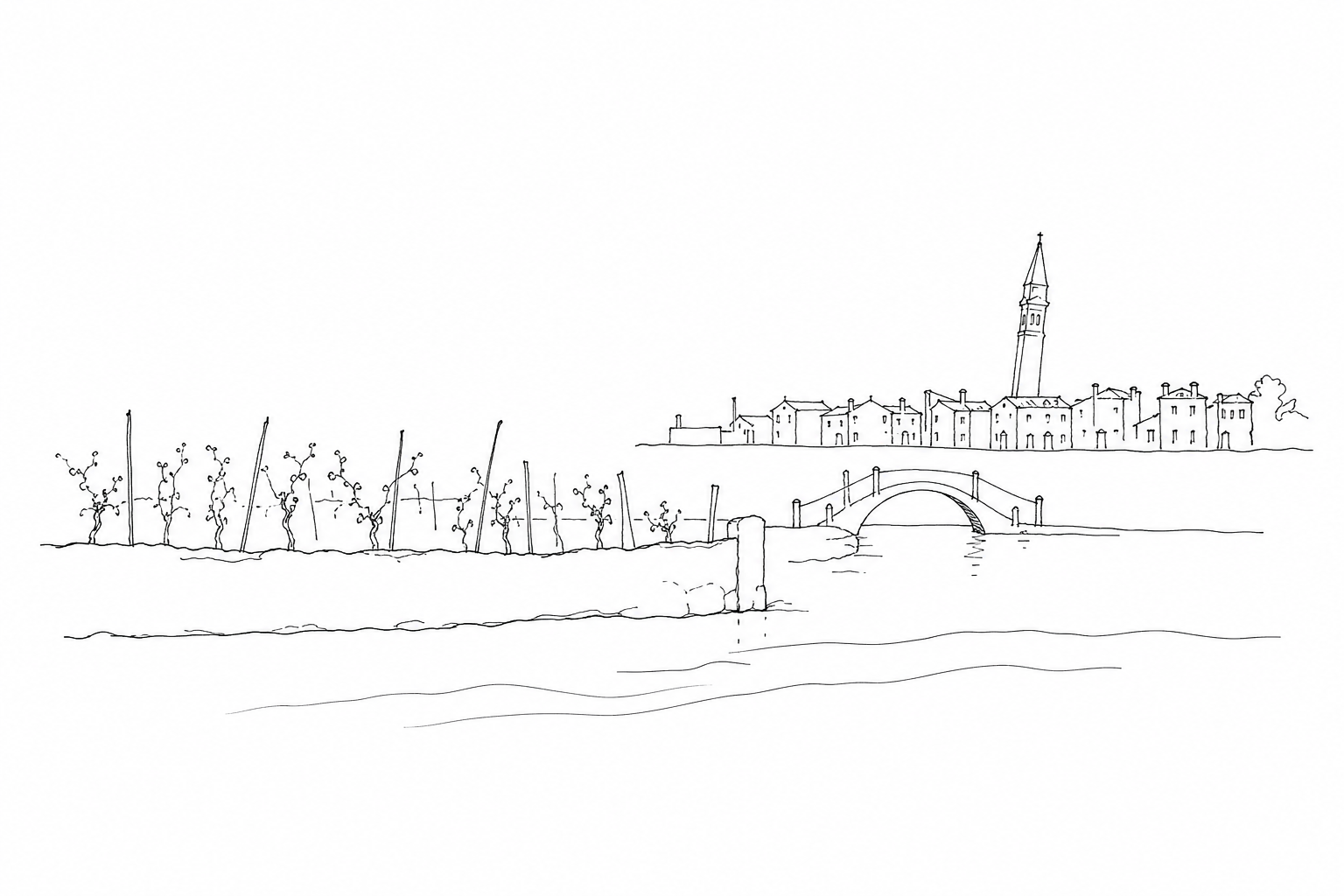

Santa Croce is often the first sestiere one encounters when arriving in Venice, but it is rarely truly looked at. Between Piazzale Roma, the smaller bridges, the secluded campi and the views over the Grand Canal, the city changes pace even before showing its most famous monuments. Here modern access points, medieval traces, noble palaces, warehouses, churches and a less exposed Venetian everyday life coexist. Crossing it with attention means understanding how Venice welcomes those who arrive: not with an immediate scene, but with a series of passages, thresholds and urban details that prepare the gaze.
Where Venice changes rhythm
For those arriving in Venice by land, Santa Croce is often the first real contact with the city: not yet the Venice of the great monuments, but that of the threshold. At Piazzale Roma, the only point in the historic center that can be steadily reached by vehicles, the rhythm changes suddenly: the noise of wheels gives way to footsteps, bridges, vaporetti, service boats.
This sestiere tells of the entrance into the lagoon better than a celebratory facade. The Rio Novo, opened in the twentieth century to connect the arrival area more directly to the Grand Canal, shows a Venice that has adapted to modern needs without ceasing to be water, stone and slow movement. A little further on, the calli narrow and the campi recover an everyday dimension.
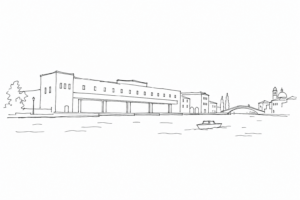
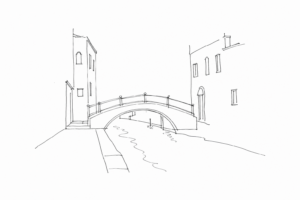
Santa Croce is therefore a zone of transition: between mainland and islands, between logistics and neighborhood life, between practical arrival and gradual discovery. Even before looking for churches, palaces or museums, here one learns Venice’s fundamental gesture: leaving the road behind.
From Piazzale Roma to the first campi
From Piazzale Roma the route should not be read as a simple exit from the terminal, but as a change of scale. The buses remain behind; ahead begin short bridges, narrow banks and detours that force you to slow down. Looking toward the Giardini Papadopoli, one immediately perceives a rare green pause in this urban entrance, while the Rio Novo introduces water not as a panorama, but as everyday infrastructure.
Proceeding toward the Tolentini area, the passage becomes clearer. The church of San Nicolò da Tolentino, with its unfinished facade and its interior linked to the Baroque period, signals that the sestiere is not only transit. Next to it, the former convent now linked to the university shows another face of Santa Croce: reused historic buildings, courtyards, students, residents.
- First orientation: following the fondamenta helps to understand canals and bridges before the inner calli.
- First campi: from the Tolentini toward San Simeon Grande and San Giacomo dall’Orio the neighborhood becomes legible on foot.
Churches, palaces and water on the Grand Canal
Past the first campi, the neighborhood shows its oldest side precisely where water becomes the protagonist again. The Grand Canal here is not a postcard setting, but an urban threshold: those arriving from the mainland immediately encounter facades designed to be seen from the oar, not only from the calle.
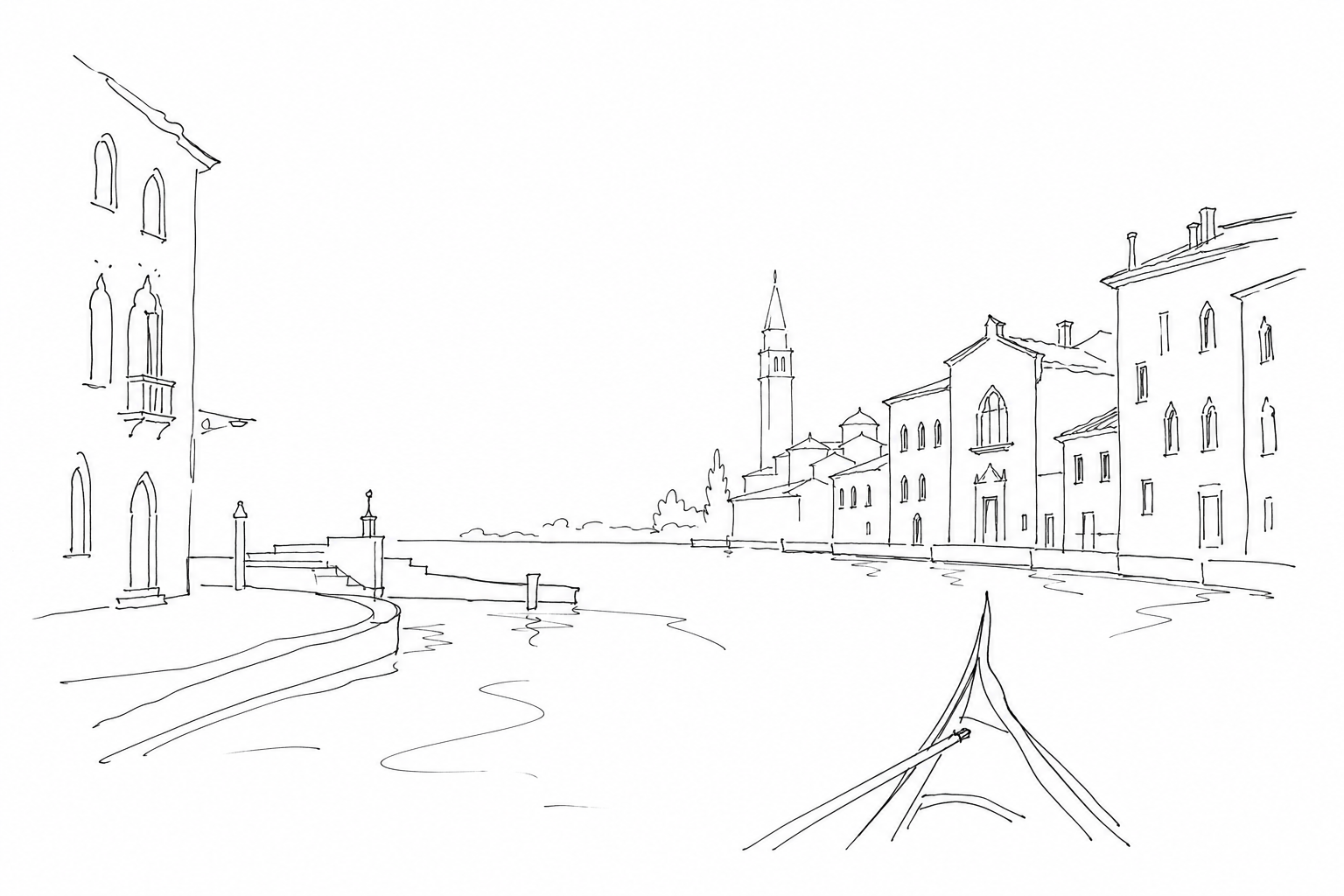
The church of San Simeon Piccolo, with its neoclassical dome facing the station, marks this passage with a language unusual for the lagoon city. A little further inland, San Simeon Grande instead preserves a more intimate measure, linked to parish life and the minute routes of the sestiere.
Proceeding along the water, the palaces tell of another function of the neighborhood: storage, representation, commercial traffic. The Fondaco dei Turchi recalls the regulated presence of Ottoman merchants; Ca’ Pesaro, with the Baroque mass of Baldassarre Longhena, transforms the bank into monumental architecture.
The meaning of the route lies in this overlap: one enters from a modern node, but the heritage appears by degrees, through churches, banks and facades that explain how the city was read for centuries from the water before from pedestrian maps.
For those with little time, the most useful choice is not to rush immediately toward Rialto or San Marco, but to allow yourself a brief detour into the fabric of the entrance. From Piazzale Roma, just a few minutes are enough to understand something that elsewhere risks being lost: the city does not begin with the famous monument, but with the passage between landing place, low bridges, narrow calli and fondamenta.
A stop in this area makes it possible to read on a reduced scale many Venetian characteristics: neighborhood churches such as San Giacomo dall’Orio, palaces overlooking the water, noble facades today linked to museums such as Ca’ Pesaro and Palazzo Mocenigo, the contrast between contemporary transit and mercantile memory. There is no need to turn the visit into a list: even a short route shows how living, trading and representing oneself have always been intertwined.
Before heading to the most crowded places, stopping here means gaining orientation. One arrives at the great symbols with less haste and with a more concrete key to interpretation.
Stopping in Santa Croce before heading toward Rialto or San Marco allows you to read Venice from a side entrance, more concrete and less predictable. It is a sestiere of transition, but not of mere passage: it preserves silent courtyards, perspectives of water, layered architectures and fragments of ordinary life that help one orient oneself in the real city. For those arriving, dedicating time to it means slowing down immediately, recognizing the value of short distances and discovering that Venice also begins far from its best-known images.