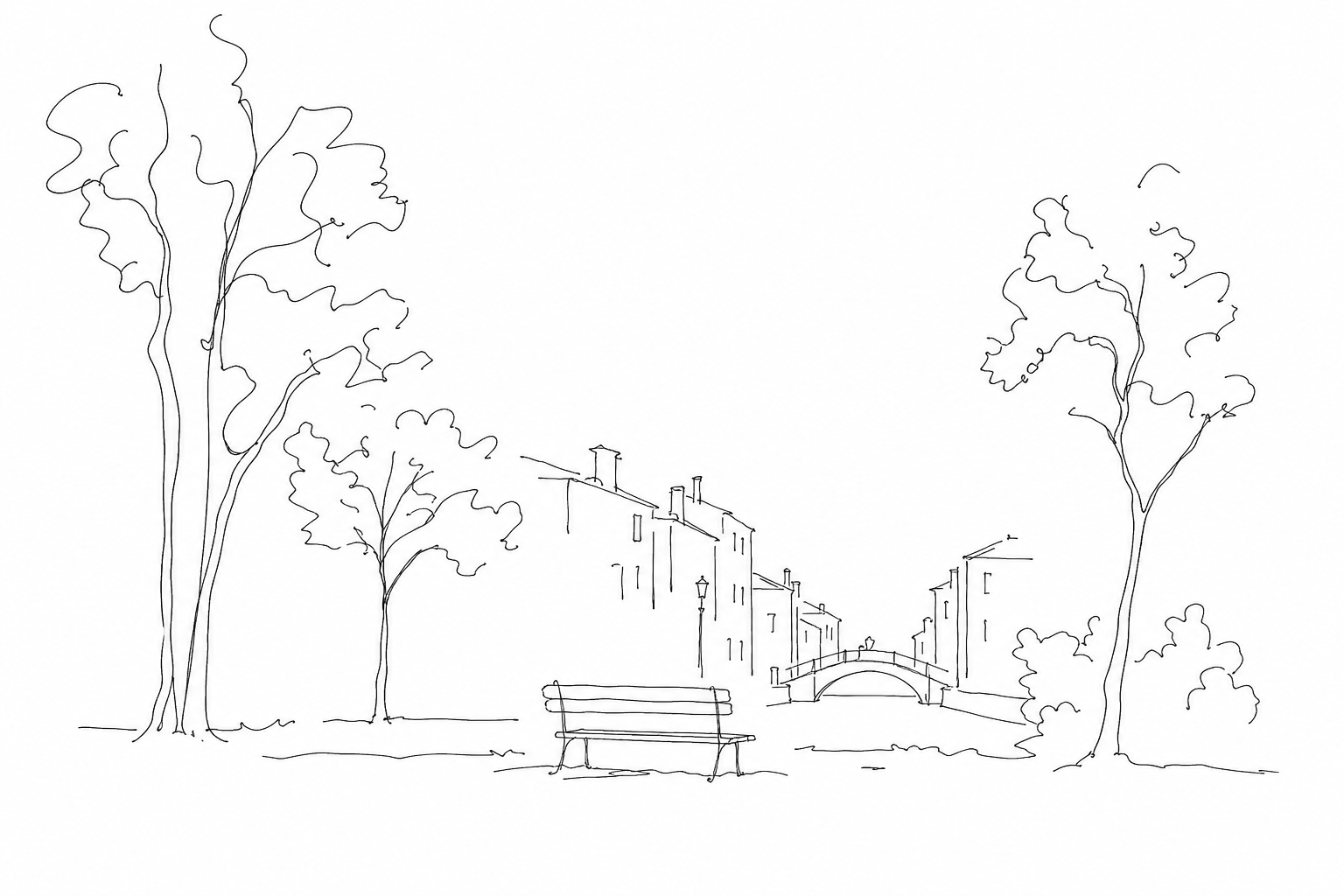

Between Santa Lucia station and the Ghetto, the Giardini Savorgnan are one of those places that change the pace of Cannaregio without announcing it. You enter almost from the side, leaving the flow of travelers behind, and find a green space born from a private history, then absorbed into the public life of the sestiere. It is not a monumental garden or a postcard address: it matters precisely for its everyday scale, for its relationship with the houses, schools and nearby calli. Stopping here helps you read Venice not only as a sequence of bridges and façades, but as an inhabited, layered city, capable of discreet pauses.
Where they are and why they matter in the rhythm of Cannaregio
The Giardini Savorgnan are one of the most surprising green pauses in Cannaregio because they appear at a busy transit point: not far from Venezia Santa Lucia station, behind the axis that leads toward Lista di Spagna and the Ponte delle Guglie. In this stretch the city changes pace: from the flows of travelers you enter the more everyday fabric of the sestiere, made up of side calli, courtyards, schools and residences.
Their position matters precisely for this reason. Before reaching the Ghetto area, with its enclosed campi and the memory of the Venetian Jewish community, the garden offers a silent interruption from the more heavily traveled route. It is neither a monumental viewpoint nor a scenic square: it is an internal space, historically linked to the nearby Palazzo Savorgnan, which preserves the Venetian idea of greenery hidden behind façades and walls.
Those who cross Cannaregio between Guglie and the Ghetto can read them as a threshold: a simple place, but one capable of restoring proportion to the route.
From private garden to public space
The origin of the Giardini Savorgnan can be understood by looking at the palace that bears their name. Palazzo Savorgnan was an aristocratic residence set within the dense fabric of Cannaregio, and its open space was not born as an urban park, but as a private garden belonging to the nobility: a protected space, separated from the street, designed for strolling, shade and domestic representation.
This origin explains the character of the place. It is not a large monumental area, but a compact green fragment, with a layout that preserves the Venetian idea of the garden behind the palace: discreet entrances, trees that filter the city, and paths that are simple rather than scenic.
The transition to public use transformed that private privilege into an everyday resource for the sestiere. Between the station and the Ghetto, the Giardini Savorgnan therefore also tell a small social story: what was part of a patrician residence becomes a shared pause, without entirely losing the memory of its secluded origin.
What to observe during the stop
A pause here works best if your gaze slows down. In the Giardini Savorgnan, what stands out is not a single monument, but the balance between trees, small paths and built boundaries: elements that explain why this place seems more secluded than its position suggests, a short distance from the flows of the station.
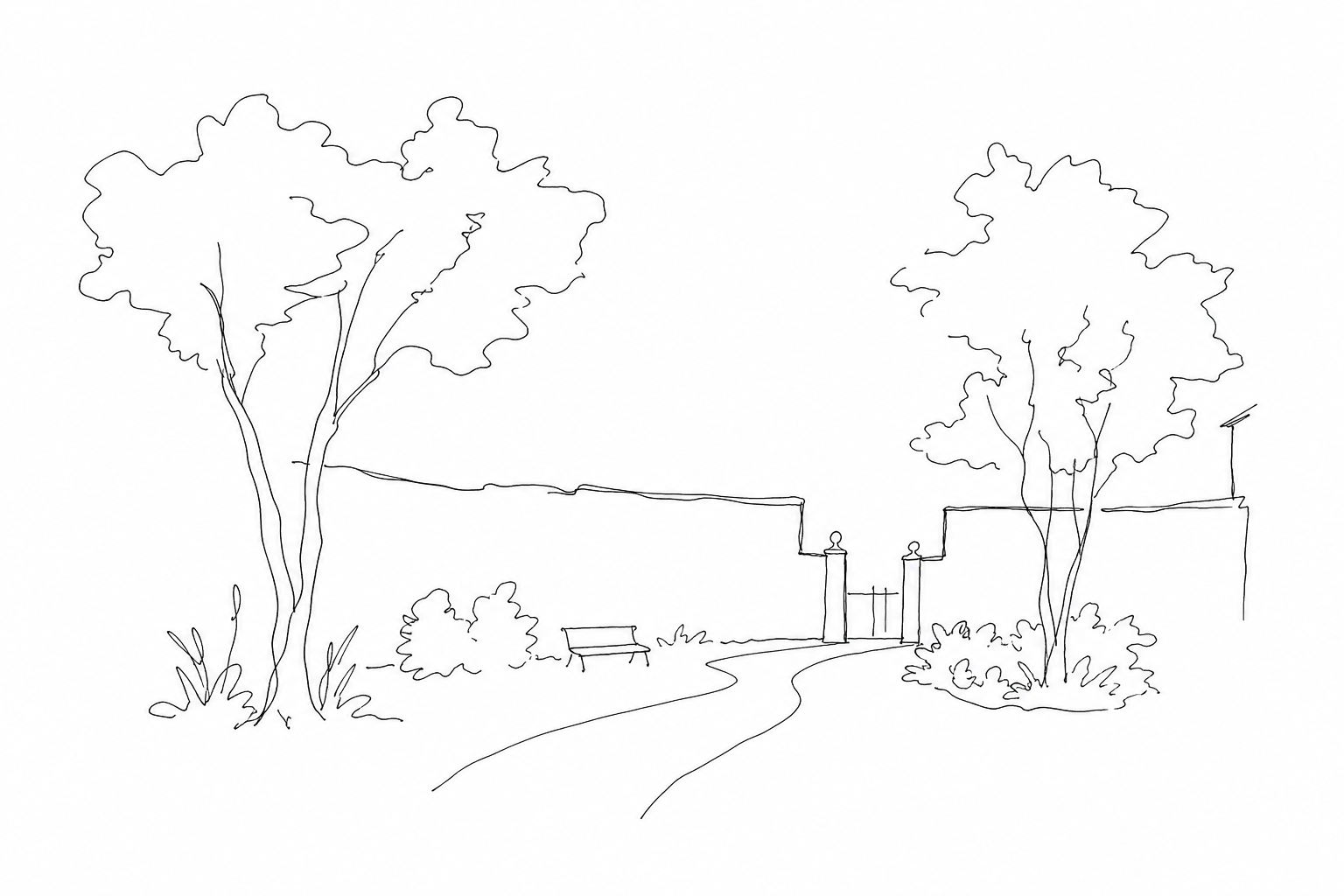
First observe the mature canopies, which create an irregular cover and change the perception of the light. It is not the scenery of a large park, but a weave of shade, openings and passages that invites you to stop on a bench or follow the path without hurry.
Then look at the edges: walls, nearby façades and urban entrances recall that the green area is set into the dense fabric of Cannaregio. It is precisely this built edge that makes the break from the noise of the calli and the route toward the Ghetto more evident.
Finally, notice the simple design of the paths. The stop becomes a small reading of the city: Venice not only as stone and water, but also as green interiors that have survived among residences, everyday crossings and patrician memory.
How to include them in a walk toward the Ghetto
To use them well during the walk, consider them a brief detour before the route becomes denser. Arriving from Santa Lucia, instead of following only the commercial flow of Lista di Spagna and Rio Terà San Leonardo, look for the access to the green area indicated by updated maps: the stop breaks up the most crowded stretch without taking you away from the direction of the Ponte delle Guglie.
The most sensible moment is after the first impact with the bridges and luggage of the railway area, but before entering the system of calli that leads to Campo del Ghetto Nuovo. In this way the pause becomes a threshold: behind you remains the arrival in the city, ahead opens a part of Venice linked to Jewish history, the inner rii and neighborhood life.
Avoid planning the visit by relying on unverified opening hours or services: always check current information. Instead, bring with you a clear idea of the role of the place, not an isolated attraction but a silent interlude between transit, residence and urban memory.
Including the Giardini Savorgnan in a walk toward the Ghetto means allowing yourself a brief but revealing detour. The greenery, the traces of the old property, the position between Lista di Spagna and inner Cannaregio tell of a less exposed Venice, where urban history and everyday use coexist without scenery. It is a useful stop to slow down, get oriented and observe the gradual passage from the station arrival area to a more enclosed neighborhood. From here the route toward the Ghetto gains continuity: not only a destination to reach, but a sequence of spaces that prepare the gaze.