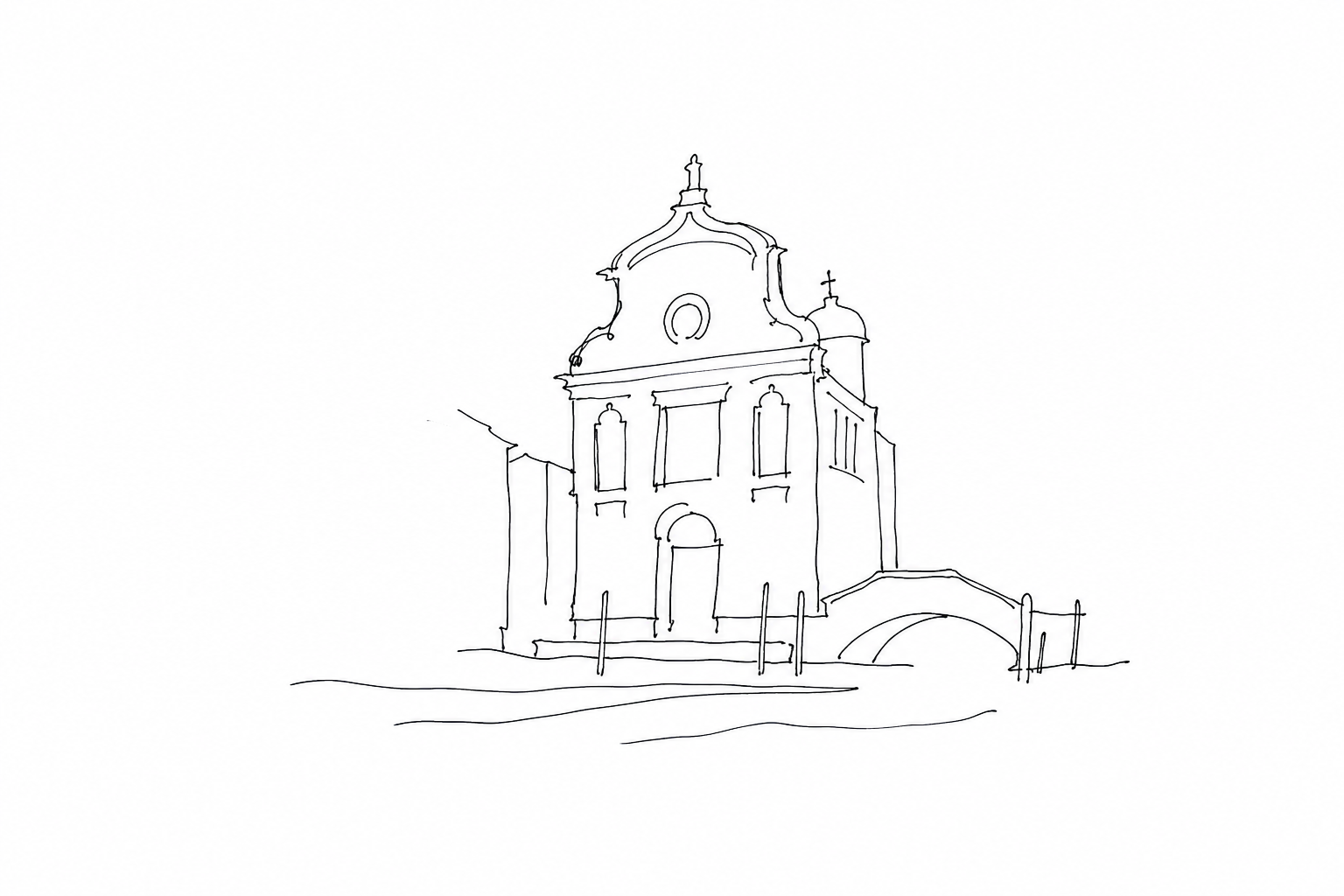

Santa Maria dei Miracoli appears almost suddenly among the calli, low bridges and houses of Cannaregio: a small, compact church, clad in polychrome marbles like a precious object rather than an urban building. Its strength lies precisely in this intimate scale, in the orderly facade, in the surfaces that seem crafted to preserve something. Born around an image believed to be miraculous, it still preserves an intimate and surprising character today, far from the more predictable monumentality of Venice.
Why it looks like a marble reliquary
Santa Maria dei Miracoli is striking because it does not present itself as just any Venetian church: it appears compact, precious, almost kept in a display case. Its facade and sides are clad in polychrome marbles, with pale surfaces, pink, green and gray veining that create a minute and luminous order. It is this stone skin, more than the size of the building, that suggests the image of the reliquary: an enlarged sacred object, worked with the care of a goldsmith’s artifact.
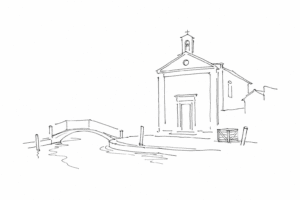
In the heart of Cannaregio, among narrow calli and canals, the effect is even stronger. The church emerges suddenly, without a large square in front of it, and its Renaissance architecture seems to concentrate itself in a perfect volume. Pietro Lombardo and his workshop built it at the end of the fifteenth century to house an image of the Virgin believed to be miraculous: the devotional function also helps explain this casket-like form, designed to protect and enhance a venerated image.
A church born for a venerated Madonna
The history of Santa Maria dei Miracoli begins with a very concrete devotion, grown within the daily fabric of Cannaregio. At the origin there was not the project of a large parish church, but the cult of a panel of the Virgin and Child, believed capable of granting graces and for this reason increasingly frequented by Venetians.
In the second half of the fifteenth century, the fame of the prodigies made an adequate space necessary. Construction was begun in the 1480s and entrusted to Pietro Lombardo, with the contribution of his family workshop. This explains why the building seems so unified: not a church grown through successive additions, but a work conceived almost as a precious container from the very beginning.
The context is important: Cannaregio was a lively sestiere, crossed by trade, patrician houses and water-side calli. In that urban landscape, the small sanctuary transformed a local devotion into an exceptional architectural episode, where marble, proportions and the memory of the original cult remain inseparable.
Marbles, proportions and Lombardesque details
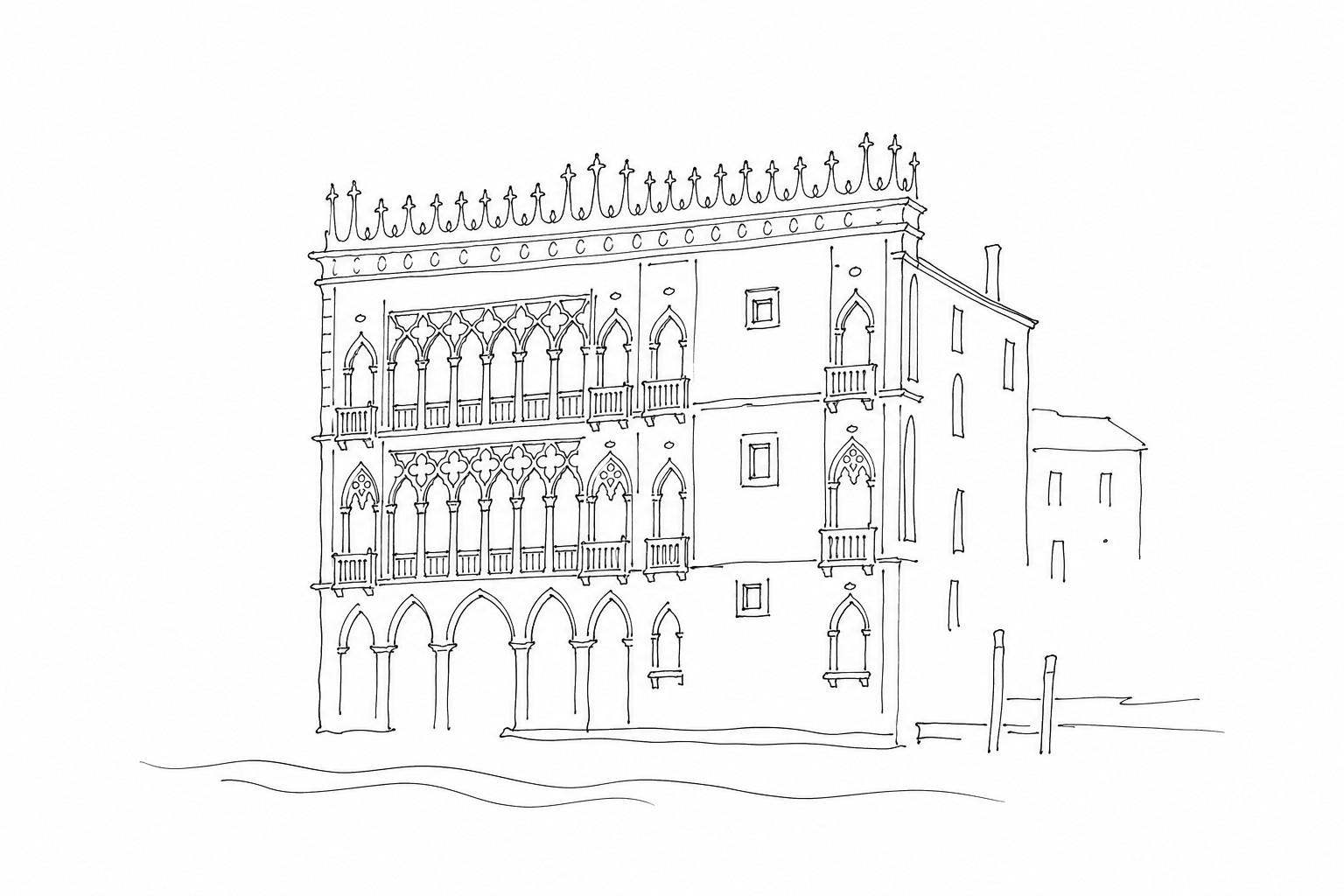
Santa Maria dei Miracoli reads almost like a precious object enlarged to the urban scale. The project is linked to the workshop of Pietro Lombardo, a leading figure of the Venetian Renaissance, and shows a typically sculptural care: not only clad walls, but surfaces conceived as the faces of a reliquary, marked by pilasters, small arches, cornices and roundels.
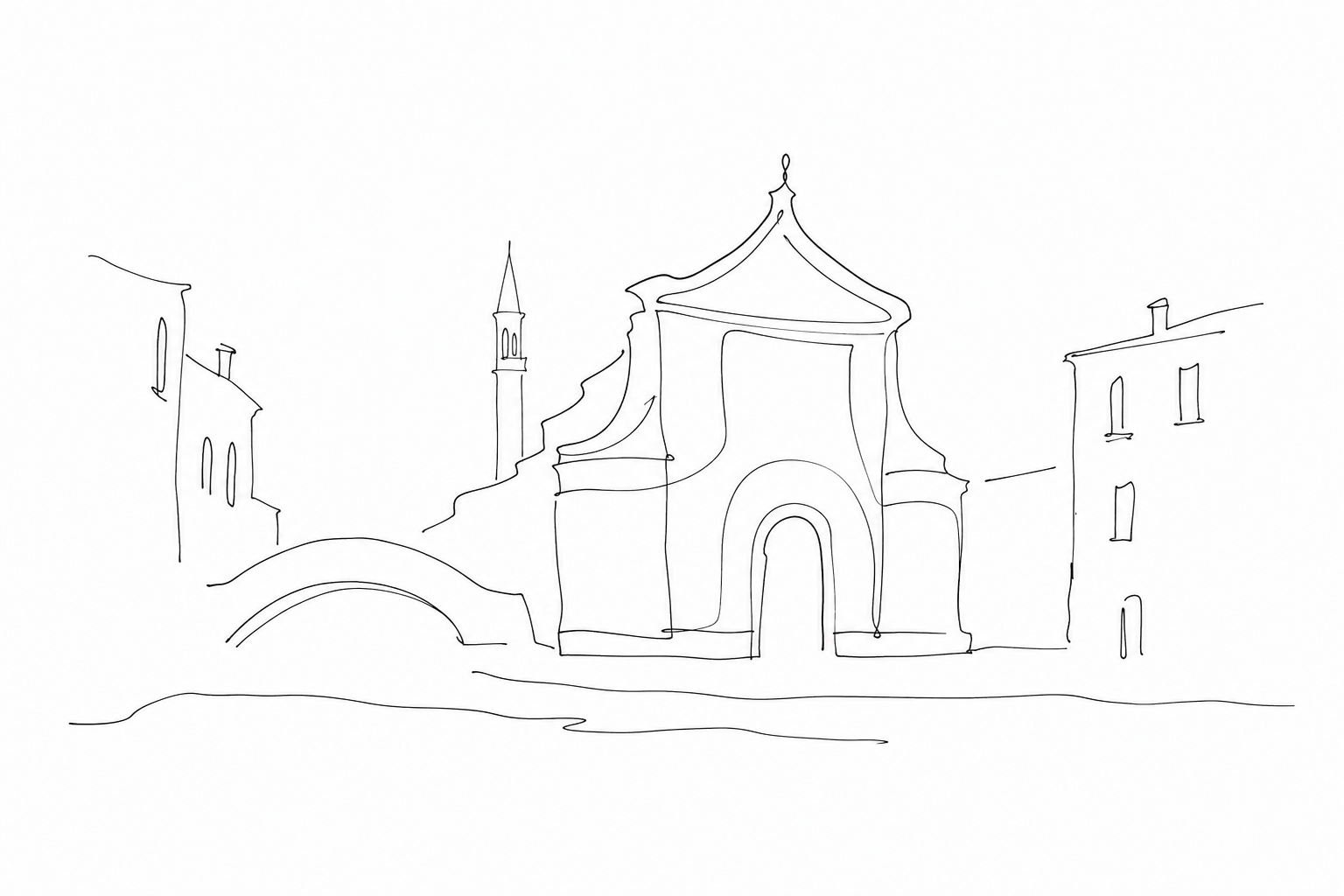
Here marble does not have only a decorative function. The polychrome slabs, with different veins and tones, build an ordered visual rhythm: base, middle band, crowning element. The facade, narrow and tall, is composed with clear proportions; the upper pediment gives the small sanctuary a classical solemnity, while the marble incrustations make it luminous even in the intimate space of the campo.
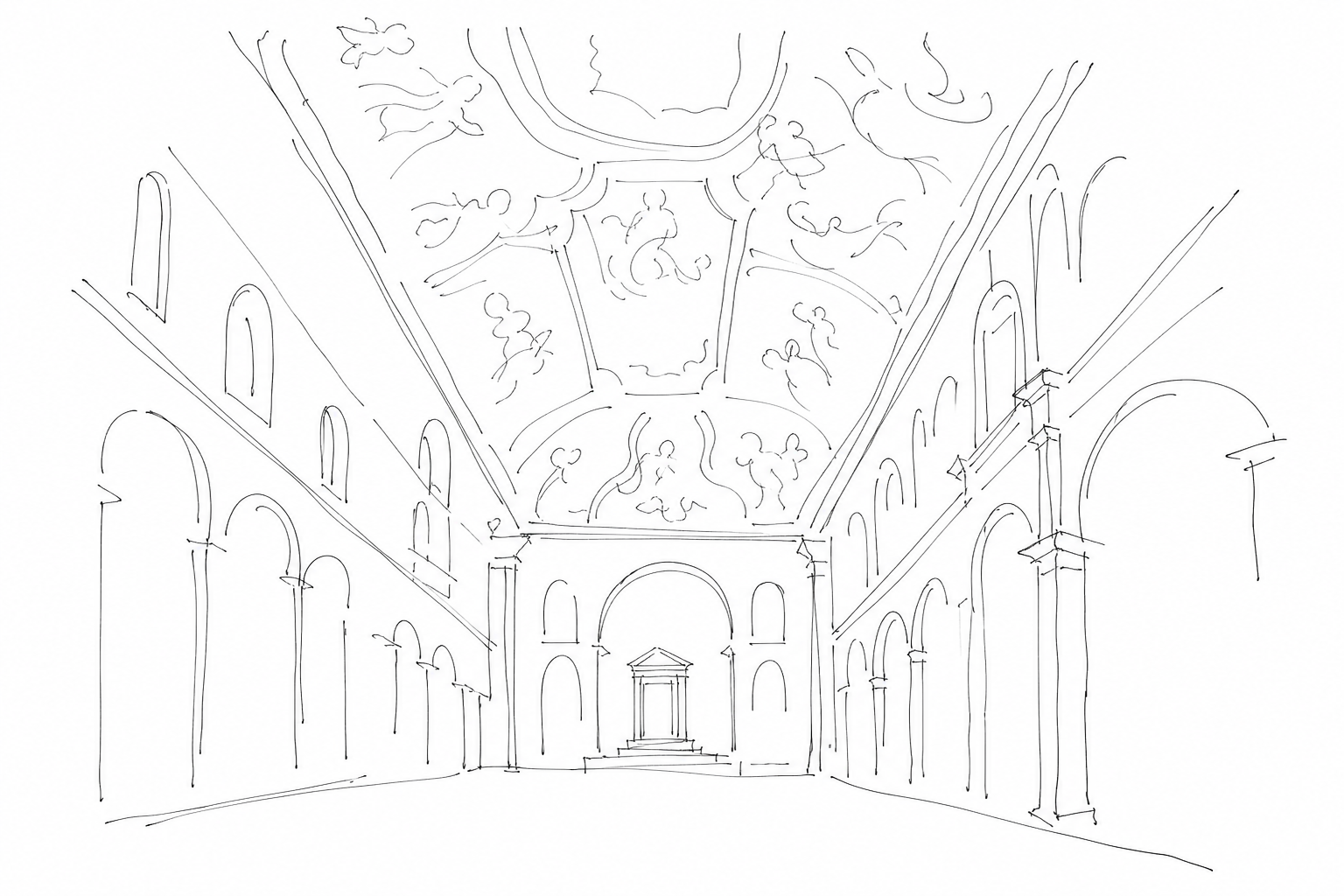
Inside, the same logic continues in a more intimate way. The single nave leads the gaze toward the raised presbytery, as if on a path of approach to the most sacred part. The decorated barrel vault and the marble divisions avoid the effect of a great basilica: everything remains measured, compact, almost kept safe.
The “Lombardesque” character lies precisely in this fusion between architecture and ornament. Every detail seems sculpted to belong to the whole: capitals, balustrades, moldings and panels are not added to the structure, but make it legible.
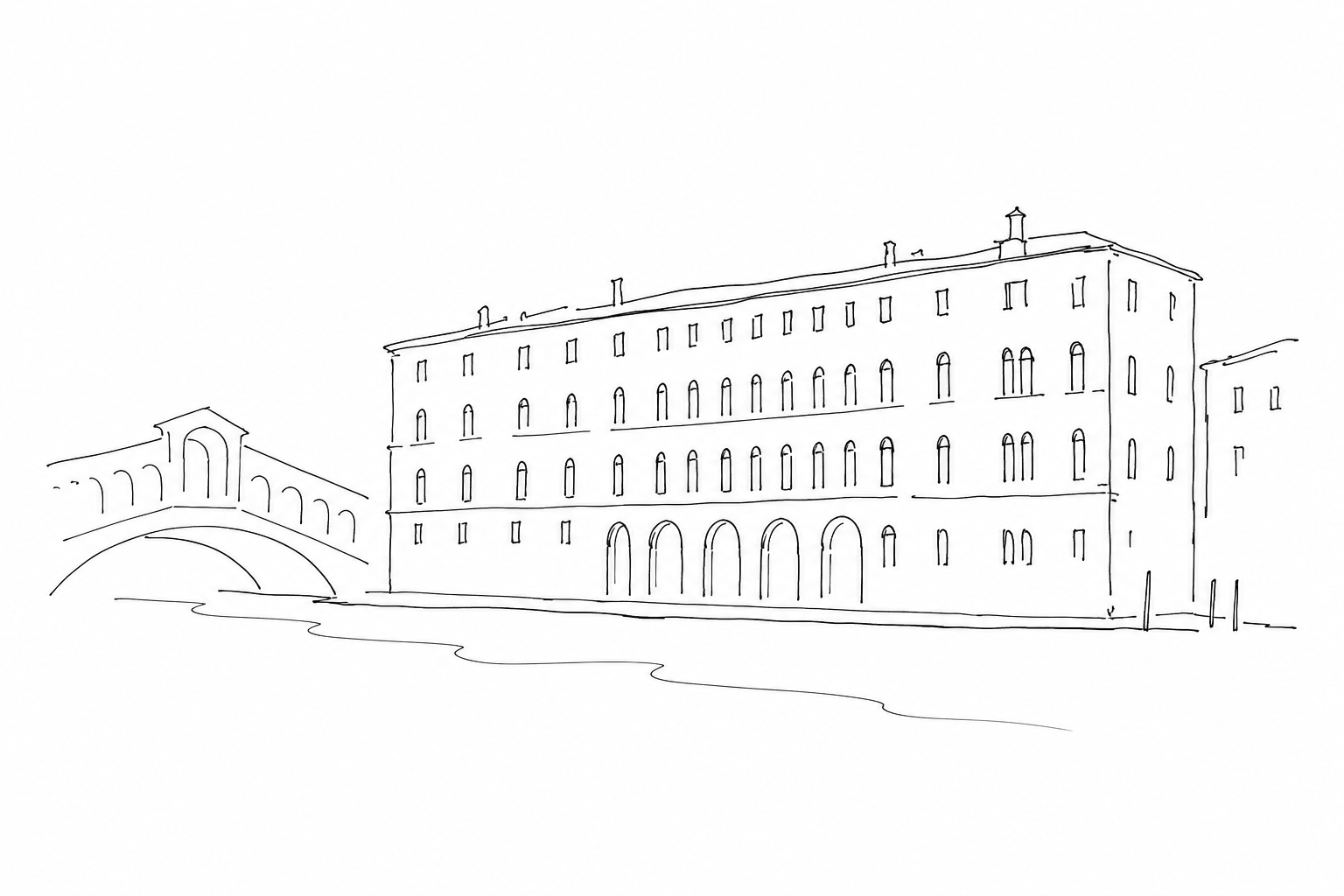
To truly understand it, it is best to approach slowly from the narrow calli and small bridges around Campo Santa Maria Nova. The building does not dominate a large square: it appears set among water, domestic walls and minute passageways, and precisely this contrast increases its precious effect. The marble facade should also be observed from the side, along the canal: the surfaces continue like a continuous garment, with polychrome bands that interact with the light reflected from the water.
A useful reading is to compare scale and material. The nearby houses are sober, irregular, marked by everyday use; the temple instead concentrates order, symmetry and color. Stopping on the bridge makes it possible to grasp the relationship between base, steps and canal, while the close-up entrance makes one perceive how much the cladding transforms a compact urban plot into a sacred object, visible but not monumental.
Looking at Santa Maria dei Miracoli means slowing down and reading Venice on a smaller scale: not that of great perspectives, but that of details, materials, and the interlocking of devotion, architecture and daily life. In the fabric of Cannaregio the church functions as a visual pause, a marble reliquary inserted among homes and ordinary routes. To truly understand it, it is best to arrive without haste, observe its proportions from the outside and then enter, letting its measured precision replace any spectacular effect.
Related Posts
Santa Maria dei Miracoli: why this small church looks like a marble casket
History, marbles and proportions of Santa Maria dei Miracoli, the small church in Cannaregio that concentrates Venice in an intimate space.Santa Maria Mater Domini: a small church for understanding the mercantile Venice of Santa Croce
A slow reading of Santa Maria Mater Domini, among campo, mercantile history, art and the urban fabric of Santa Croce.
Santa Maria Formosa: one campo, two façades, and a Venice that changes sides with every step
A narrative guide to Santa Maria Formosa: the campo, the two façades, the bell tower, and the details that change the way you look.Questions Answered
Why does Santa Maria dei Miracoli resemble a reliquary?
Because its polychrome marble cladding and sculptural details mimic a precious sacred container.What motivated the construction of Santa Maria dei Miracoli?
The need to house and honor a miraculous image of the Virgin and Child.Who designed the church and what is distinctive about its architecture?
Pietro Lombardo designed it as a unified, sculptural Renaissance work.How does the church relate to its Cannaregio surroundings?
Its intimate scale and marble facade contrast with nearby ordinary houses and narrow canals.
Inside the less obvious Cannaregio
Would you like to follow nearby details that give the district its distinctive character?
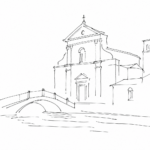 San Giobbe in Cannaregio: the hidden Venetian Renaissance near the stationGuide to San Giobbe, a Renaissance church in Cannaregio just a short walk from Santa Lucia.
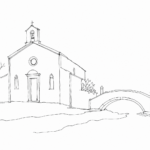 Sant’Alvise in Cannaregio: the secluded church with Tiepolo and an almost domestic VeniceA brief guide to Sant’Alvise, between the northern edge of Cannaregio, Tiepolo’s canvases and daily rhythm.
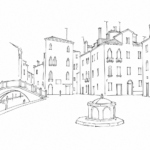 The Ghetto Nuovo of Cannaregio: why the world’s first ghetto is called “new”Origin of the name Ghetto Nuovo: from the Venetian foundry to the Jewish enclosure of 1516.
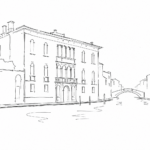 Palazzo Labia: Tiepolo, Cleopatra and the Eighteenth Century Overlooking CannaregioHistory, frescoes and urban context of Palazzo Labia, between Tiepolo, Cleopatra and the eighteenth-century face of Cannaregio.