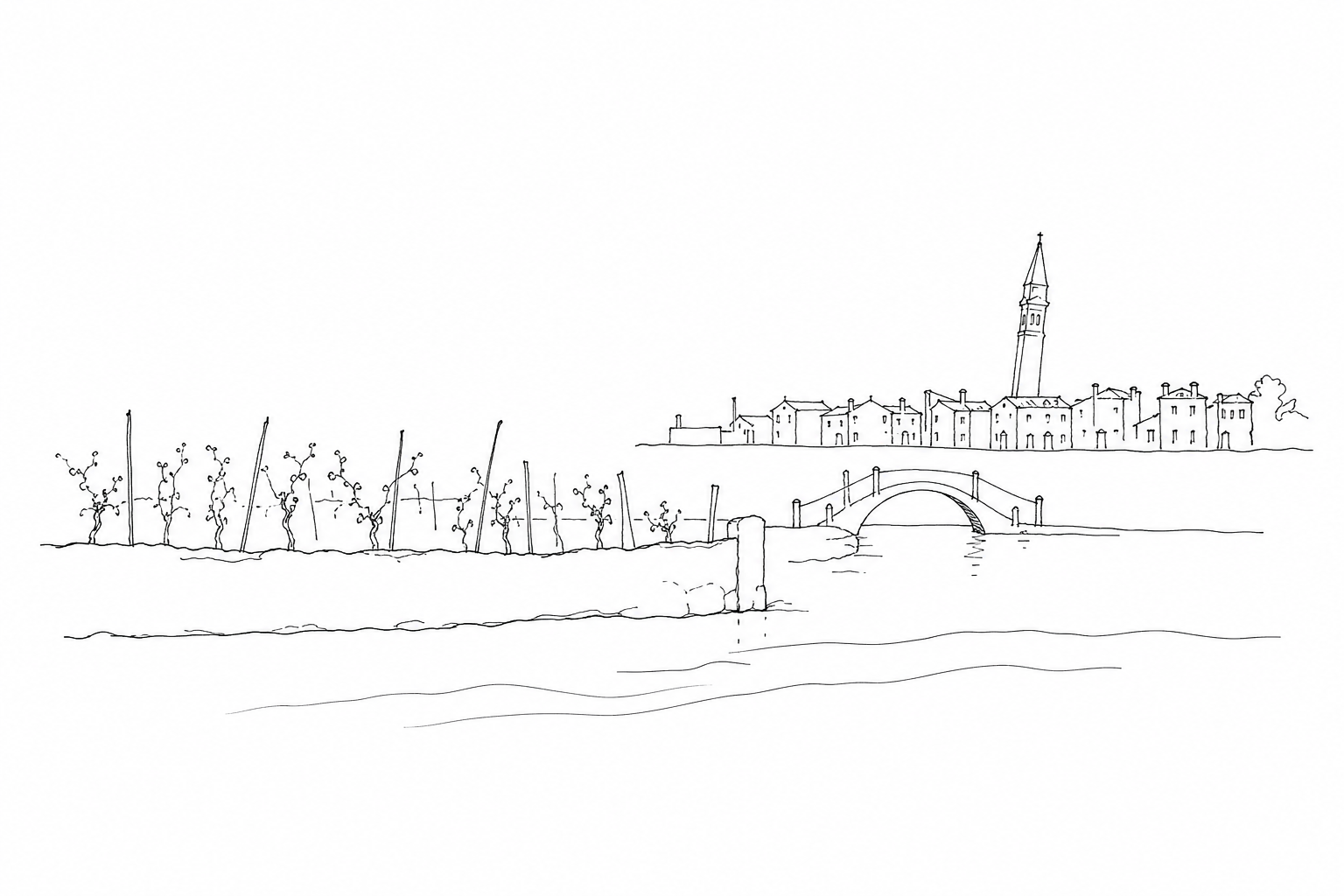
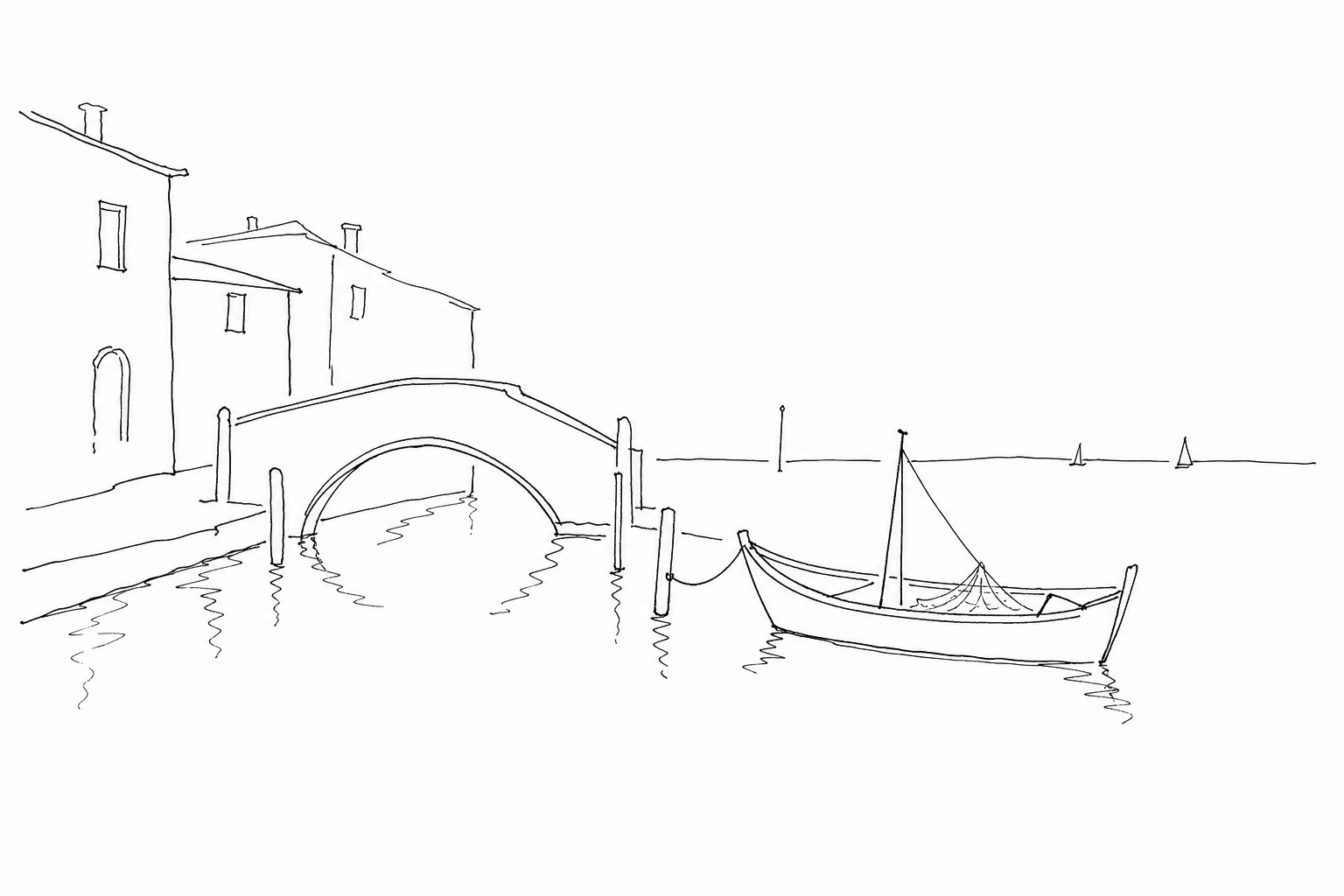

Chioggia is not a small Venice, and precisely for this reason it is worth the detour. In one day, the lagoon here changes scale and character: it becomes wider, more popular, more connected to the work of the sea and to the presence of the Adriatic. Between Corso del Popolo, Canal Vena, the low bridges, the fishing boats and the façades worn by salt, the city shows an autonomous urban history, made of devotion, trade, toil and everyday continuity. Looking at it carefully means understanding another form of lagoon, less monumental but no less complex.
Why Chioggia changes the way of seeing the lagoon
Arriving in Chioggia for the day means looking at the lagoon from its southern edge, where Venice is no longer the inevitable center of the landscape. Here the water does not appear only as a stage for palaces and gondolas, but as a wide, productive space, crossed by fishing boats, straight canals, embankments and outlets toward the Adriatic.
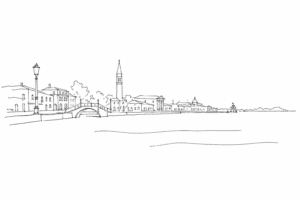
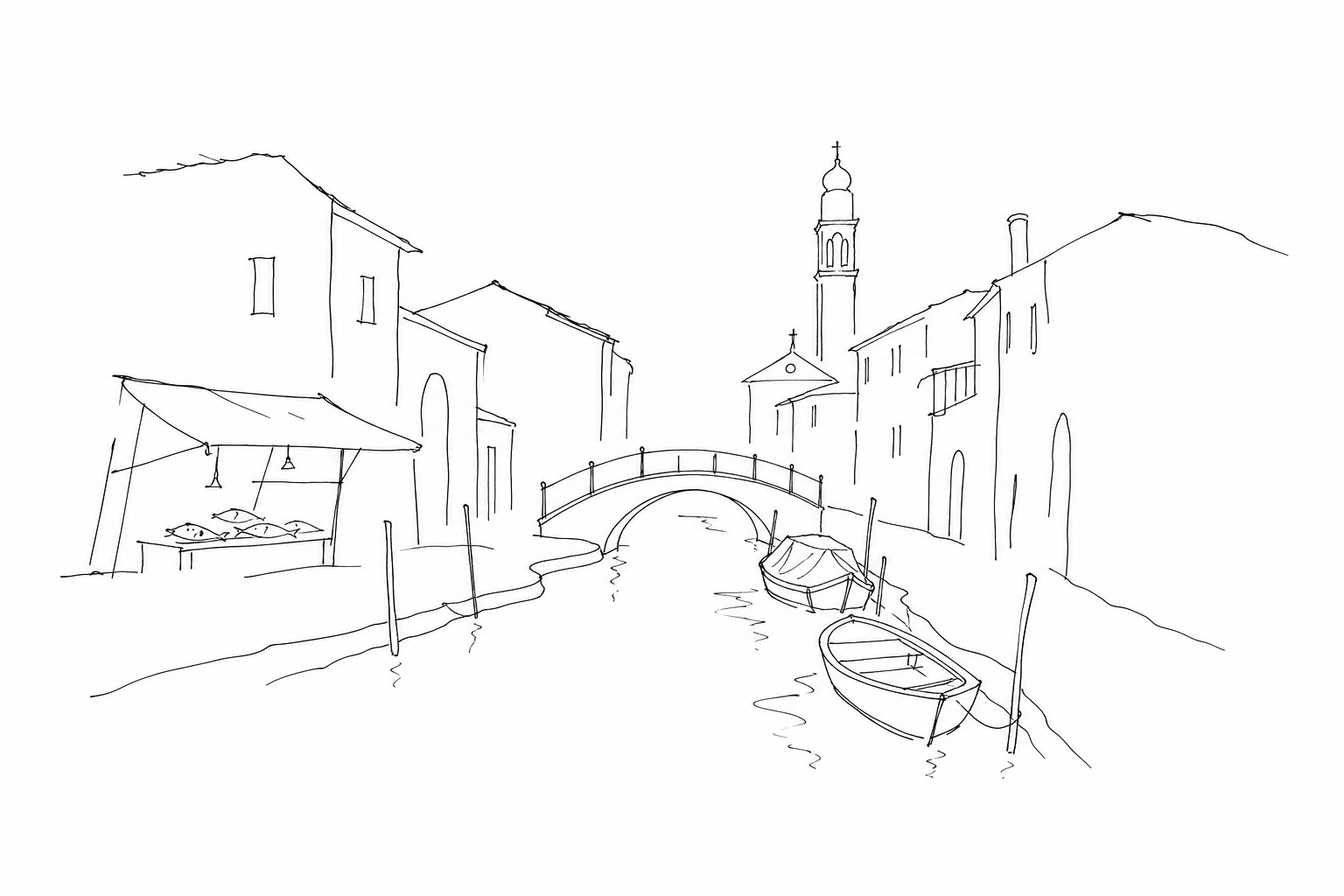
The difference is immediately clear along the Canal Vena, which cuts through the historic center with low bridges, porticoed houses and façades that are less solemn but more everyday. Chioggia has often been given the nickname “little Venice,” but the phrase risks reducing it: its identity is more popular, linked to the fish market, to seafaring, to the narrow calli and to the great axis of Corso del Popolo.
The title speaks of a “more Adriatic” lagoon because in Chioggia the sea is close and perceptible: Sottomarina, the murazzi, the harbor mouths and the open horizon change the measure of the gaze. Not a lesser Venice, therefore, but another gateway to the same lagoon complexity.
From Corso del Popolo to Canal Vena
To give the visit a readable form, it is best to start from Corso del Popolo, a long, straight axis that crosses the historic center like an extended square. Here the urban structure is immediately clear: not a monumental labyrinth, but a broad backbone, flanked by porticoes, civic façades, churches and side openings toward the water.
At the southern end, the Cathedral of Santa Maria Assunta, rebuilt in the seventeenth century to a design attributed to Baldassare Longhena, introduces a solemn note; moving back up the corso, everyday life returns to the foreground. The church of San Giacomo, the tower of Sant’Andrea with its famous clock and the Palazzo Granaio tell of a city that is mercantile, devotional and maritime all at once.
From the corso you then go down toward the Canal Vena, the inner canal that makes the relationship with boats, bridges and fishing evident. Between the Fish Market, the narrow banks and Ponte Vigo, the walk changes rhythm: the water is not a scenic backdrop, but a living infrastructure. For any entrances or interior visits, it is always best to check the updated information.
Fish, devotion and inhabited memory
To understand the character of the city, it is best to look at three registers together: fish, devotion and civic memory. The fish markets are not a picturesque backdrop: they tell of an everyday economy linked to the Adriatic, to boats, to the seasons of the catch and to a vocabulary of the trade still recognizable in the gestures of the sellers and in the smells of the crates.
A few steps away, the churches bring the same world into a sacred language. The cathedral of Santa Maria Assunta, rebuilt in the seventeenth century with the design by Baldassare Longhena, shows a solid urban devotion, not a decorative one. San Domenico, secluded on the water, preserves works and cults linked to seafaring people, including the famous crucifix venerated locally and important paintings such as the Saint Paul by Vittore Carpaccio.
History, then, does not remain in manuals: the War of Chioggia of 1378-1381, fought between Genoa and the Serenissima, recalls how strategic this lagoon margin was. Thus a day visit becomes the reading of an inhabited city, not a folkloric postcard.
Where the lagoon ends and the Adriatic begins
The ideal ending to the day is toward the southeast, where the inner water ceases to be only canal and salt marsh and takes on the smell of the sea. Crossing the Isola dell’Unione, the scale changes: the narrow calli give way to the Lusenzo basin, the open banks and then Sottomarina, with the long sandy line facing the Adriatic. It is here that the double nature of the place becomes clear: a lagoon port, a fishing community, but also a seaside and maritime threshold.
To read this passage well, it is best not to hurry. The late-afternoon light makes the distances evident: bell towers behind, fishing boats, embankments, breakwaters and the marine horizon ahead. In a day visit, the ending by the sea works if it remains simple and prudent.
- Leave a margin for the return: connections and last transport should be checked before setting off.
- Consider wind, sun and humidity: the perception of distances changes along the exposed banks.
- If time is short, choose between a walk along the Lusenzo and a view over Sottomarina, without forcing both.
Visiting Chioggia in a day allows you to move beyond the more usual idea of the lagoon and follow one of its living edges, where inner water and open sea meet without theatricality. The city is read by walking: in the porticoes, in the fish markets, in the churches, in the reflections of the Canal Vena and in the more brackish air toward Sottomarina. There is no need to look for a postcard effect: Chioggia convinces through an accumulation of details, through its practical and inhabited rhythm, through that continuous threshold between Venice and the Adriatic that here becomes evident, concrete, everyday.