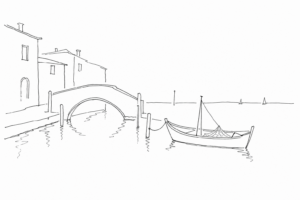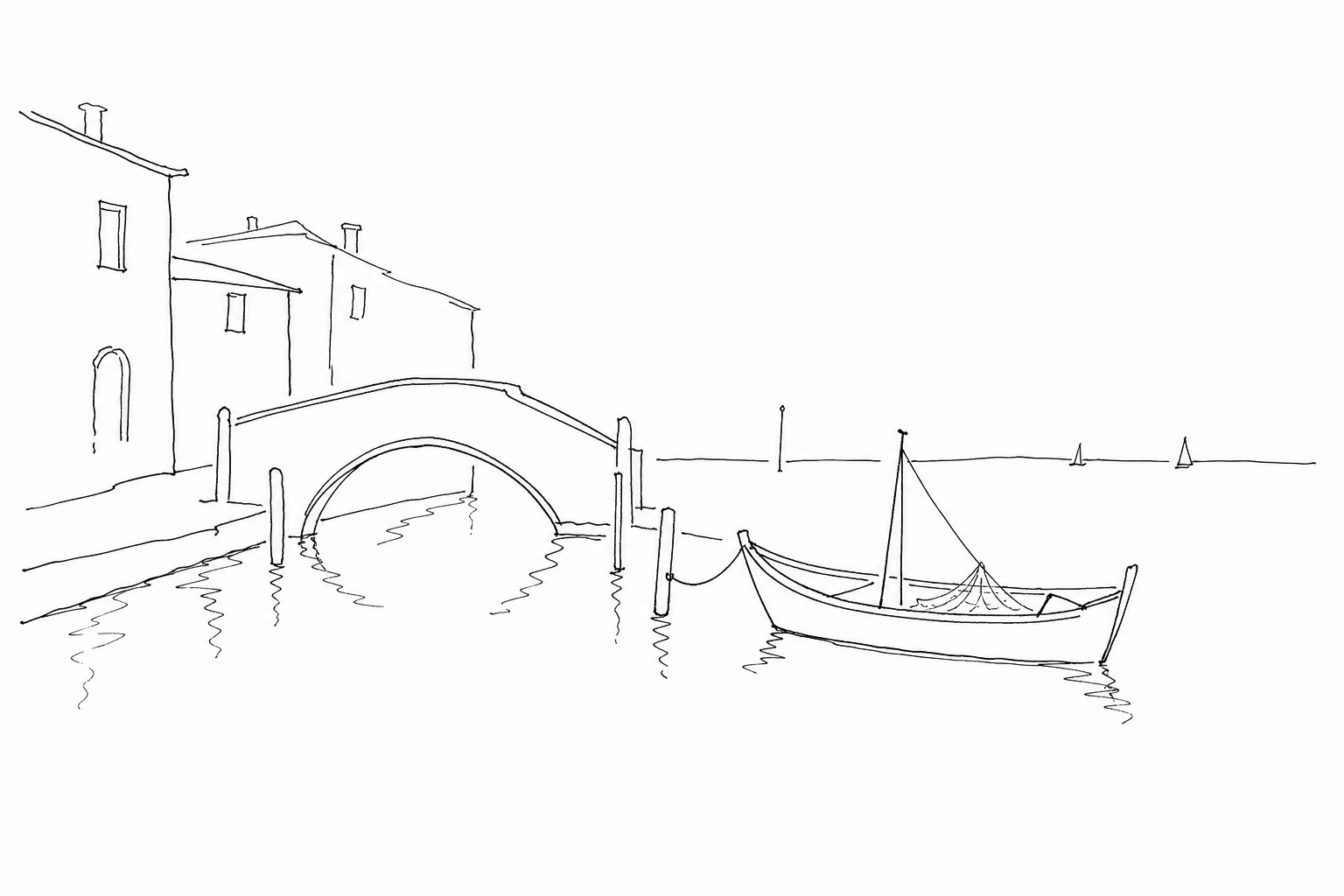

Kayaking in the lagoon is not just a different way to look at Venice: it is a change of scale. From the shallow water, among secondary canals, salt marshes, lived-in shores and unusual perspectives on the urban edges, the city appears less scenic and more concrete. It makes sense to choose it when you want to understand the relationship between Venice and its environment, not simply add an evocative activity to the trip. It requires attention, a slow pace and awareness of the rules of lagoon navigation.
When it makes sense to choose kayaking in the lagoon
Kayaking in the lagoon makes sense when the goal is not “to take a different kind of tour,” but to read an amphibious environment up close: shallow water, mudflats that emerge with the tide, salt marshes covered with glasswort, minor canals where the landscape changes within a few hours. It is a choice suited to those who accept a slow and physical pace, closer to observation than to a romantic stroll.
Expectations, however, need to be scaled back. The lagoon is not a calm lake: tidal currents, wind, waves from motorized vessels and traffic in the main canals can make the route tiring or not very intuitive. Orientation also requires attention, because low shores, islands and reed beds can look alike.
It makes sense above all to understand the less monumental Venice: the balance between the historic city, islands, fishing, navigation and environmental fragility. It is not the ideal activity if you are only looking for an evocative photo at sunset or a completely passive experience.
What you really encounter from the water
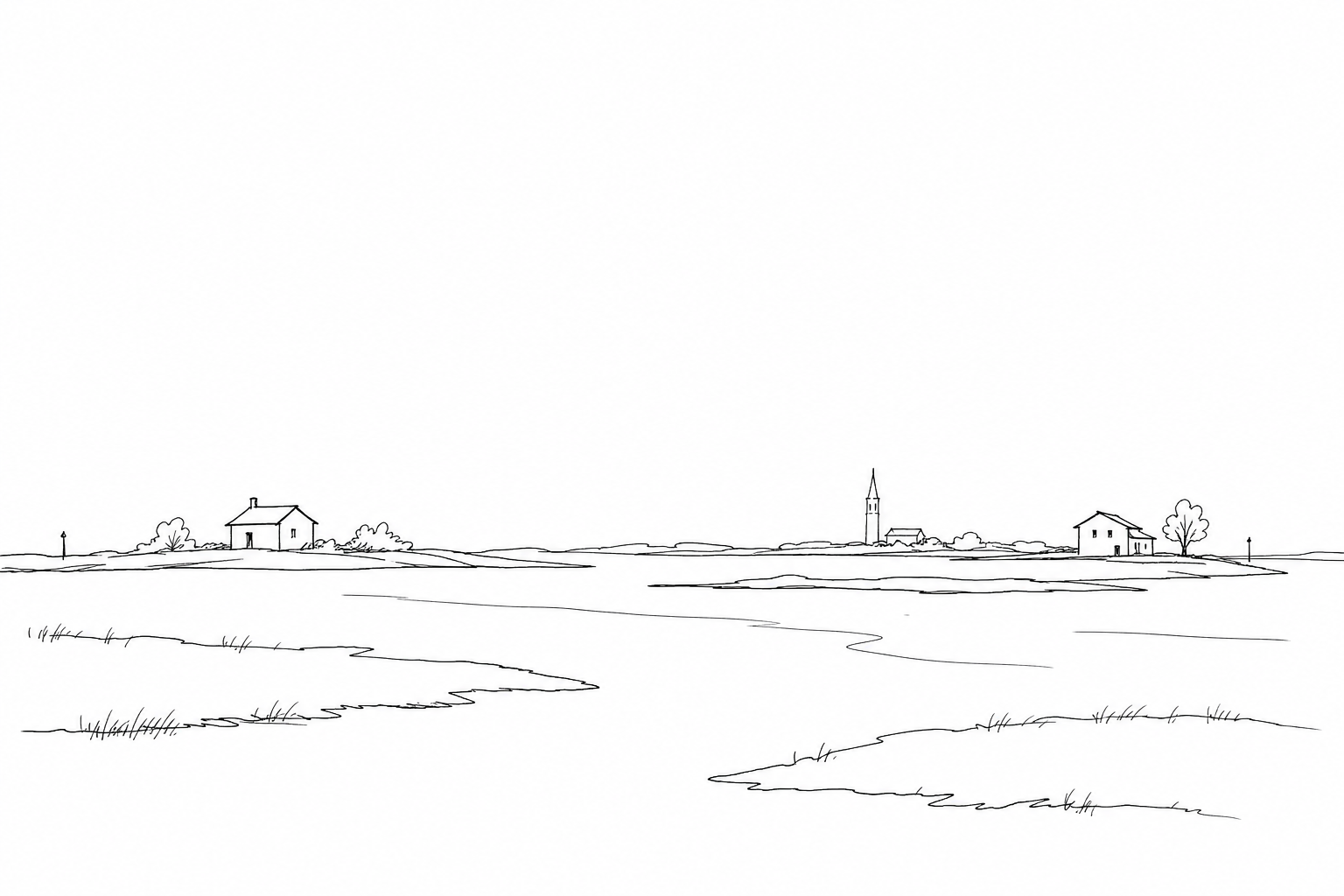
From a kayak, the lagoon does not appear as a backdrop, but as a pattern of low-lying signs: canals marked by the bricole, salt marshes cut by small tidal creeks, tongues of mud exposed by the tide, reed beds and grassy edges where the water seems to merge with the land.
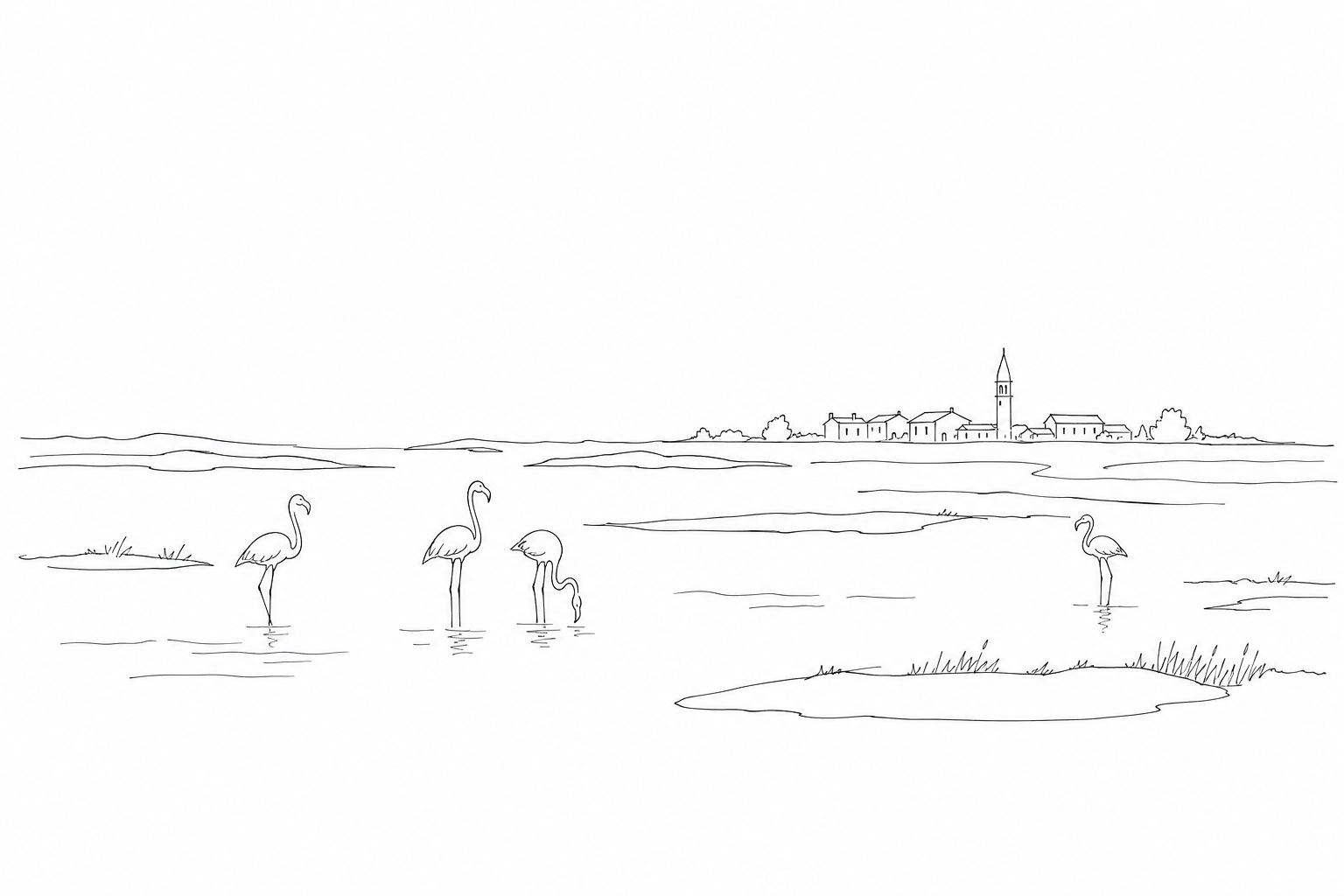
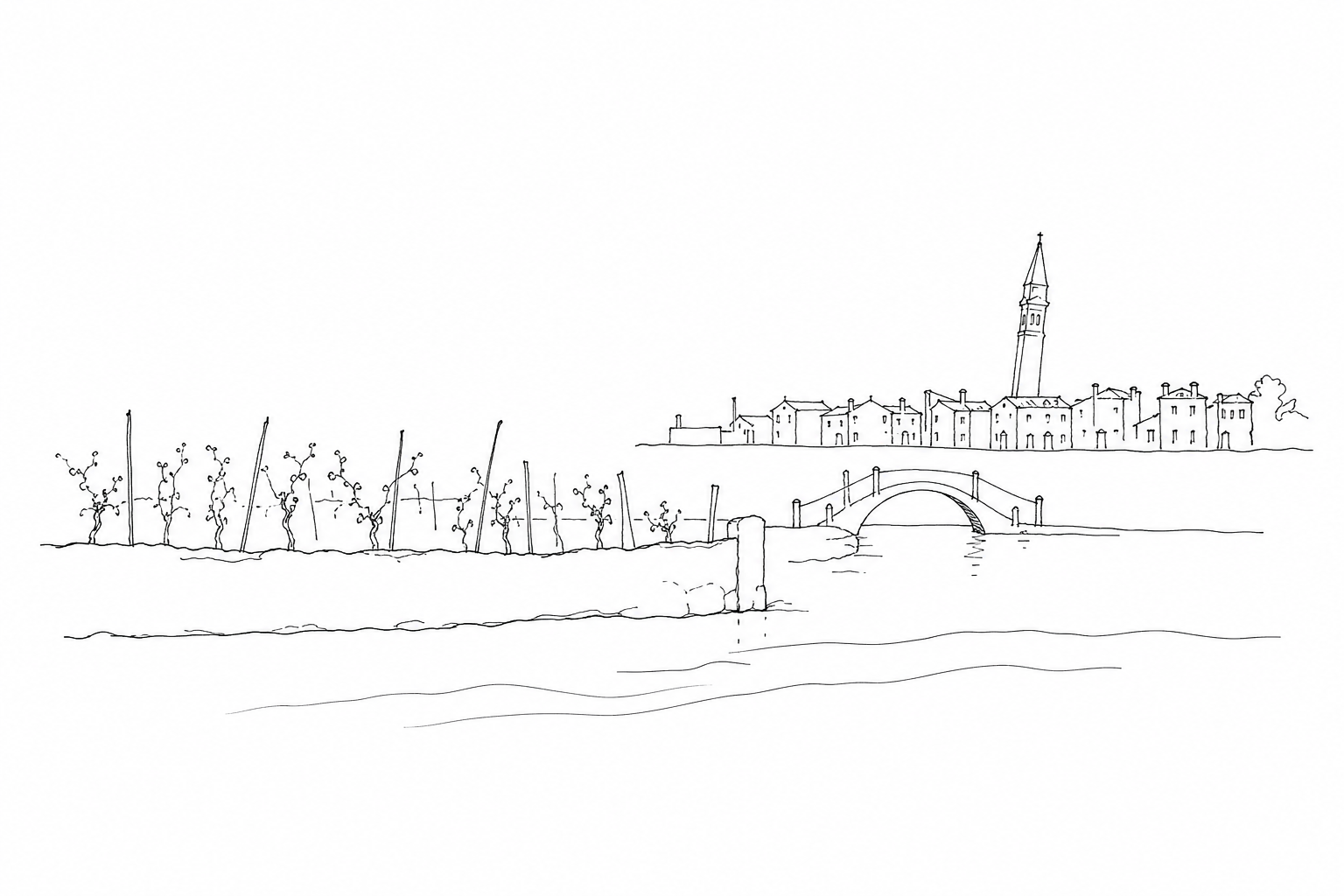
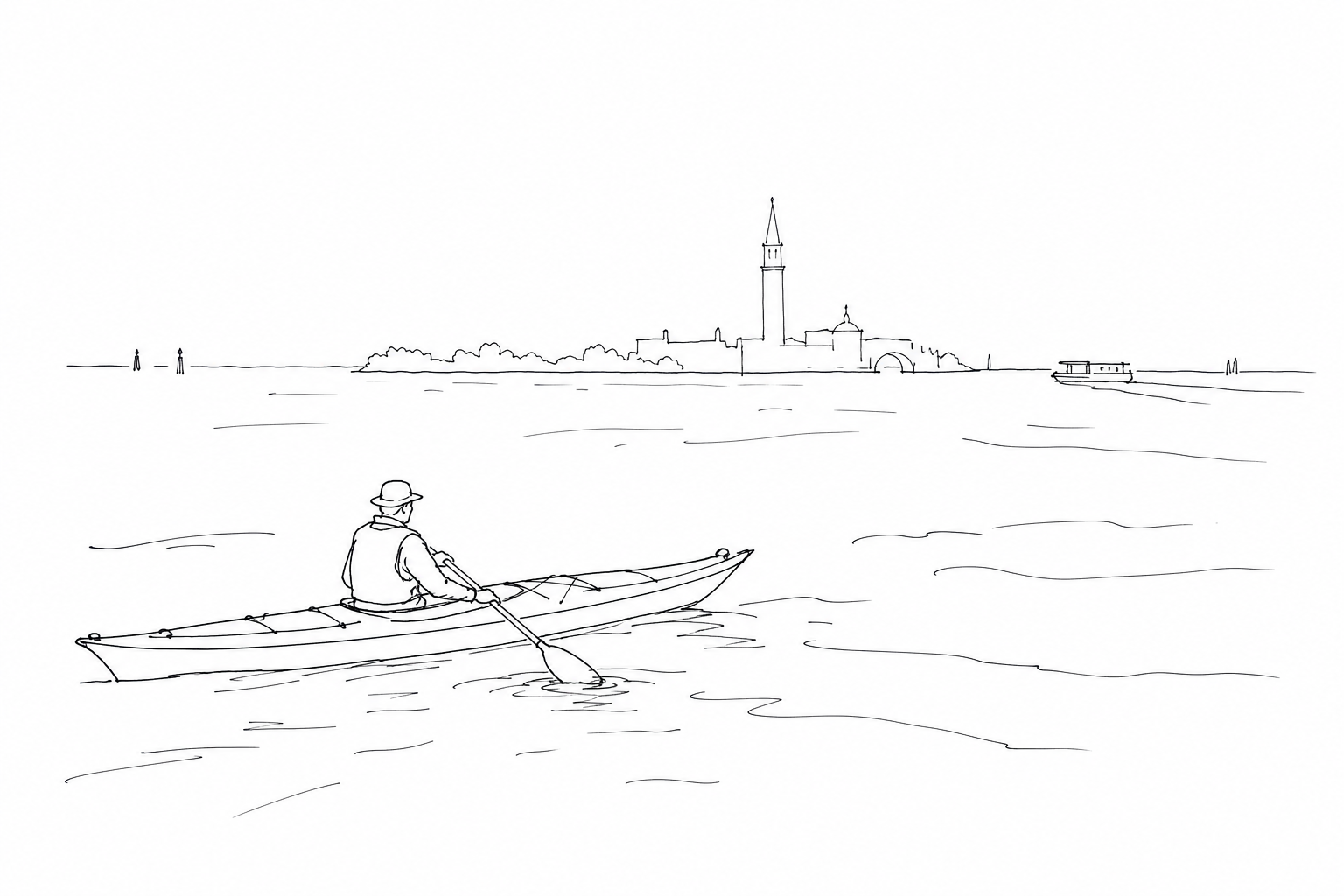
The perspective is different from that of a higher boat. You see the roots, the worn banks, the algae carried by the current, the leaning poles, the fishing huts and, in the distance, bell towers and island profiles that also serve as orientation points. In some areas little egrets, herons, cormorants or gulls may appear, but the encounter is not guaranteed nor always close up.
This closeness makes the experience less polished and more physical: you notice the brackish smell, hear the sound of the paddle in the shallow water, feel the passage of waves produced by other boats. The historic landscape also changes face: Venice, the smaller islands and the fishing structures are not romantic backdrops, but parts of a system built over the centuries to coexist with currents, sediments, tides and human labor.
Why it is not a simple romantic outing
Going out in a kayak with a low, close-to-the-water perspective makes everything feel closer, but also more demanding. Paddling in a lagoon environment requires rhythm, reading the wind and the ability to stop before tiredness reduces clarity. The tidal current can change the perception of distances: an easy stretch on the way out can become slow on the way back, especially in the more exposed canals.
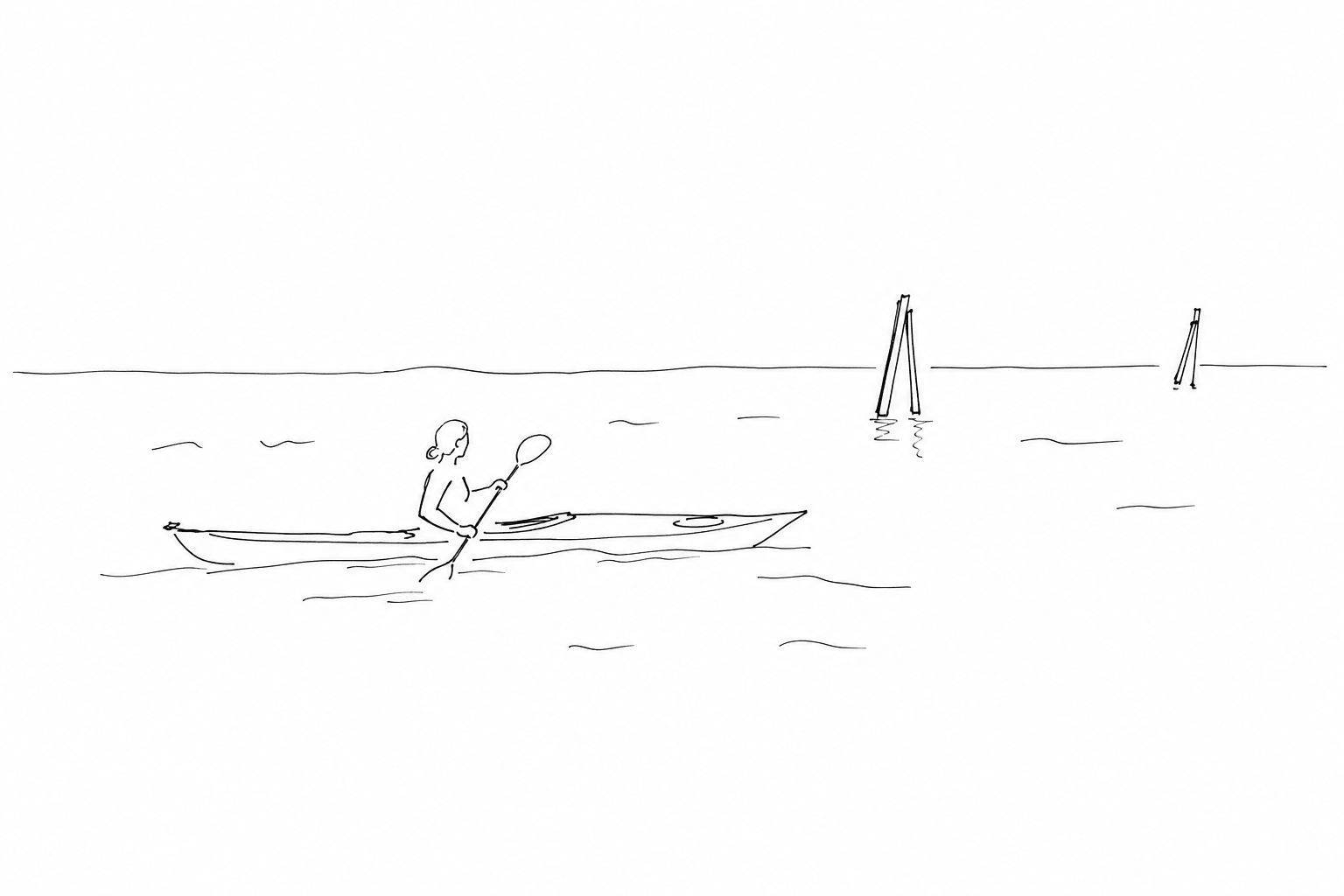
Concrete attention is needed: the bricole are not decoration, they indicate navigation routes; crossing them without understanding the traffic means putting yourself on a collision course with motorboats, work boats or service vessels. Silence also needs to be managed: getting too close to salt marshes, mudflats or nesting areas disturbs birds and fragile habitats, the very ones that make the experience special.
For this reason it is not a postcard for two, but a slow and responsible activity. Before setting out, you need to consider the weather, tide, group competence, equipment and updated local rules. The charm remains, but it comes from interpreting a living territory, not from consuming it distractedly.
How to prepare without idealizing the outing
Before booking, it is worth assessing the group’s real experience, not the image you have in mind. Paddling in a lagoon environment exposes you to crosswinds, waves produced by boat traffic and orientation that is not always intuitive among salt marshes, mudflats and canals. Those going out for the first time should prefer short routes, qualified accompaniment and very stable weather conditions, always checking updated local rules.
A useful criterion is to ask yourself how much you are willing to give up: if the tide changes, if the wind increases or if a passage turns out to be too busy, the itinerary can be changed. This flexibility is not a detail: it is part of safety.
- Clothing: technical garments, sun protection and a dry change of clothes are better, avoiding “strolling” solutions.
- Personal items: phone, documents and glasses should be protected with suitable cases.
- Attitude: listening to the guide, keeping away from fragile shores and respecting local navigation are needed.
Preparing well does not take away the poetry: it prevents the experience from becoming improvisation.
Going out by kayak in the lagoon can be an intense experience precisely because it does not promise a simplified Venice. There are silences, currents, water traffic, glimpses of everyday architecture and traces of a fragile balance between city, water and work. Preparing well means accepting that not everything depends on the perfect photograph: the weather, the tide, the route and respect for an inhabited environment matter. In this way the kayak becomes a tool for observation, not a packaged romantic interlude.