

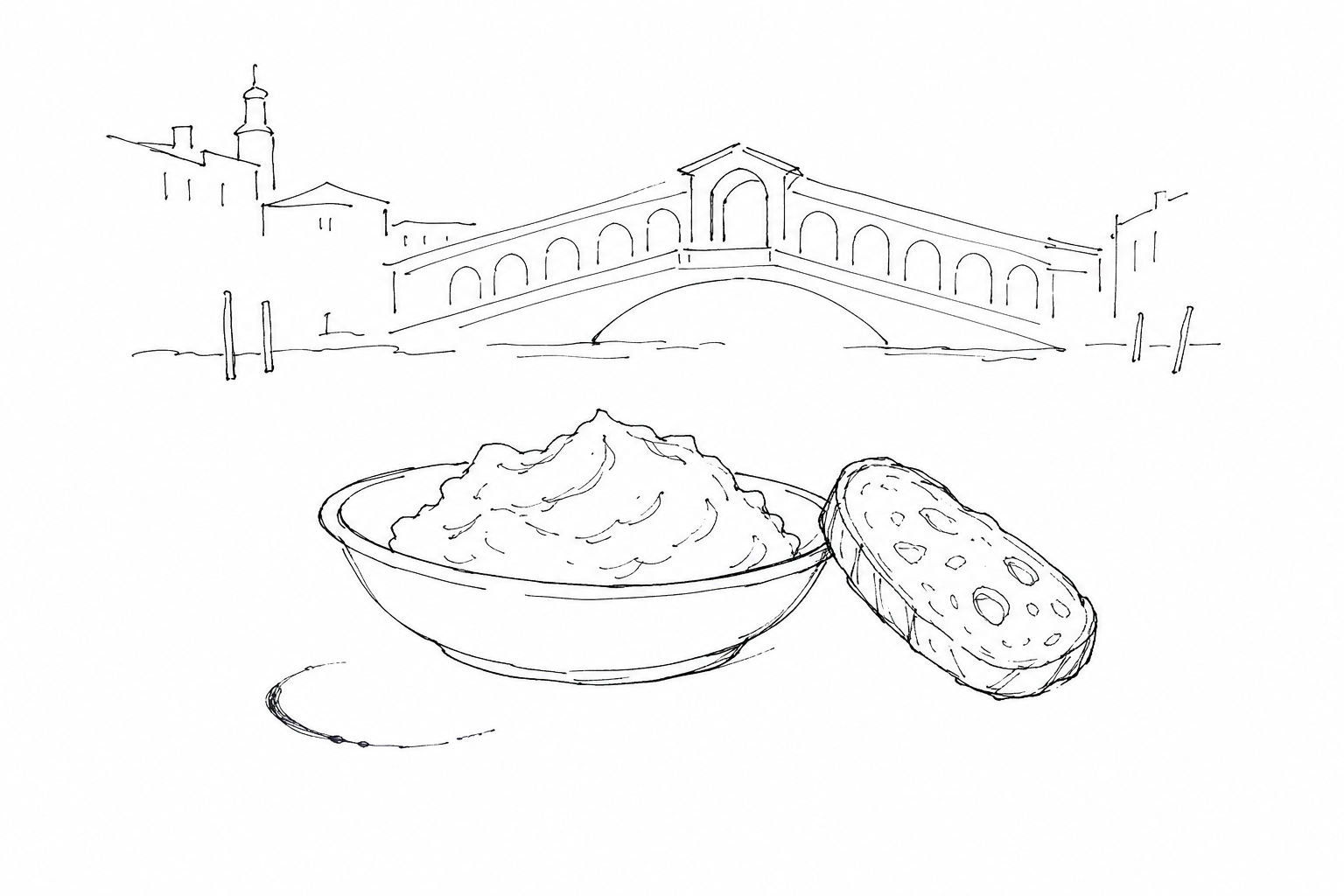

Baccalà mantecato tells the story of Venice better than many dishes born in the lagoon: it comes from afar, changes its name along the way and becomes familiar through trade, lean-day cooking and domestic patience. Behind that pale cream, served on bread or polenta in bacari, there is a geography made of northern islands, ships, fondaci, spices less showy than gold but just as decisive. Understanding why a stockfish from the Lofoten became a Venetian flavor means following the routes of the Serenissima right into the city’s everyday habits.
A Venetian name for a northern stockfish
The first secret of baccalà mantecato is linguistic: in Venice, what is called “baccalà” is not cod preserved in salt, but stockfish, that is, cod dried in the cold air of the North. The misunderstanding is ancient and by now is part of the dish’s identity: in Venetian vocabulary, “bacalà” indicates precisely that hard, light, almost woody fish, which arrived from the northern routes and which in the kitchen was rehydrated for a long time before being transformed into a cream.
The difference is not a technical detail. Salted cod preserves a more direct savoriness; stockfish, instead, carries a drier and deeper taste, which the Venetian creaming softens with oil, patient working and a fluffy consistency. This is where a product from the North becomes Venetian: not by geographical origin, but by the way the city interprets it, names it and serves it, often on toasted polenta or crostini.
From the Lofoten to Venice: routes, merchants and preservation
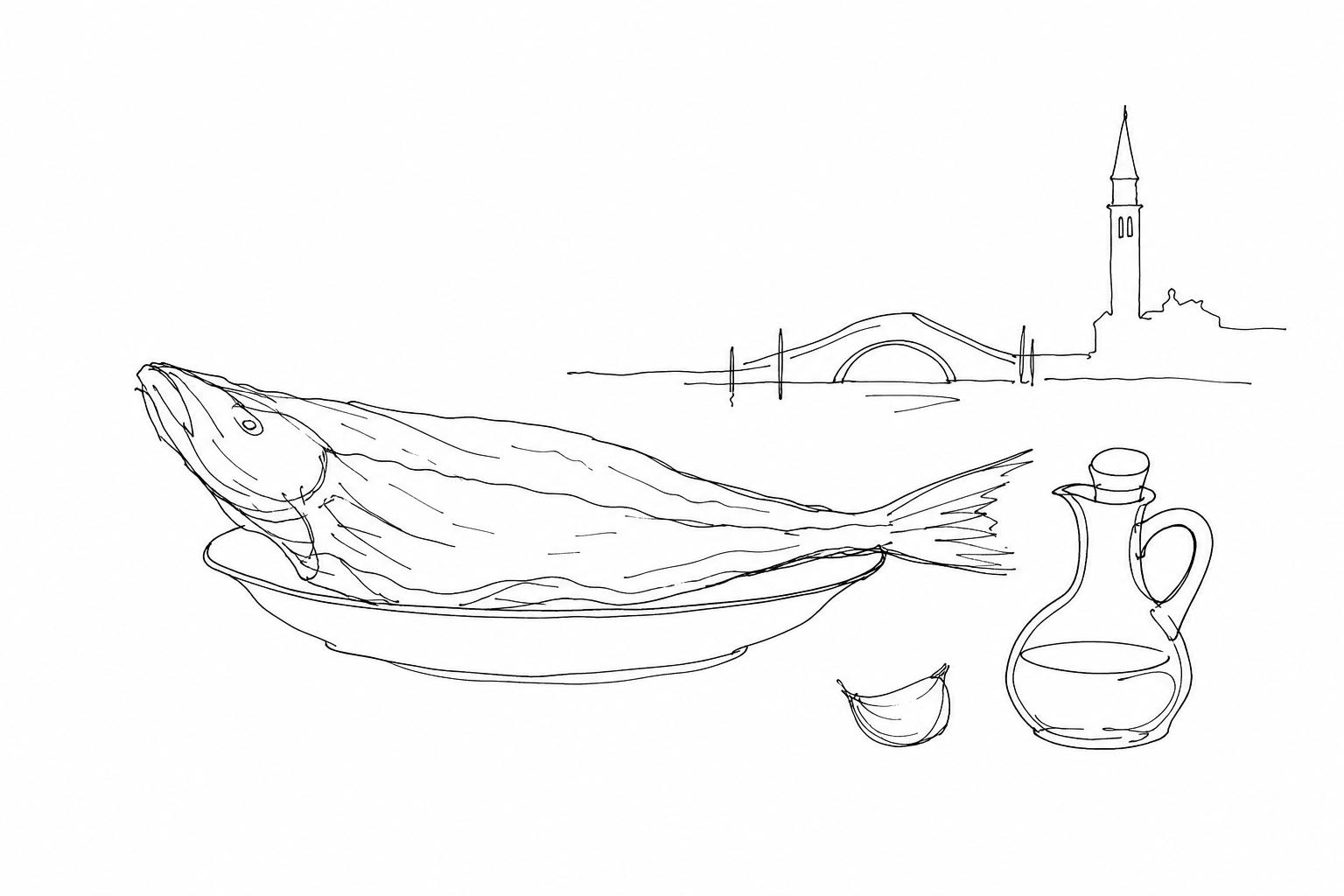
The fortune of baccalà mantecato began long before cooking: it began with a route. In 1432 the patrician Pietro Querini, shipwrecked with his crew in the North Atlantic, found refuge on Røst, in the Lofoten Islands. There he observed a simple and powerful method: the fish opened and hung in the cold air, dried by the Arctic wind without the need for salt.
For a city of merchants, that product had decisive qualities. It was light compared to fresh fish, took up space neatly in the holds, lasted for months and could endure long journeys by sea and by land. From the Norwegian coasts it passed through northern European trade circuits, connected to the ports and markets where Venice knew how to buy, resell and transform.
There was also a religious and practical reason: on the lean days imposed by the Christian calendar, nutritious, preservable and non-perishable foods were needed. The northern fish responded perfectly to this need. Once rehydrated, beaten and worked with oil, garlic and patience, it stopped being only a long-distance commodity: it became a flavorful cream, suitable for bacari, domestic tables and the gastronomic memory of the lagoon.
Lean days, oil and patience: the transformation into a lagoon flavor
The reason why baccalà mantecato became so Venetian lies not only in trade, but in the way the city made it compatible with its own daily life. In Catholic tradition, “lean” days were numerous: Lent, vigils, Fridays. A preservable, protein-rich food was needed, suited to cooking without meat and able to reach pantries without depending on local fishing.
Technique did the rest. After soaking and slow cooking, the flesh was worked at length with oil, not butter: a choice consistent with the mercantile Adriatic, where oil circulated more naturally than animal fats. The creaming, done with a wooden spoon or mortar, incorporated air and transformed a fibrous material into cream.
Here domestic patience and that of the osterie come into play: spread on white polenta or served in bacari, that food of penance became an urban pleasure. No longer an austere provision, but a recognizable gesture of the inhabited lagoon.
How to recognize it today among calli, campi and bacari
To understand whether a taste truly respects tradition, it is best to look first at the consistency. Baccalà mantecato should not appear as a smooth and anonymous sauce: the cream is pale, almost ivory, but retains a fine fiber, a sign of stockfish beaten or worked at length with oil.
- Color: pale, not deep yellow; the oil should gloss, not cover.
- Flavor: savory but not aggressive, with the cod recognizable and without excesses of garlic or spices.
- Service: it often arrives on a crostino or white polenta, an ideal format for the bacaro counter.
- Useful question: asking whether it is prepared in-house helps more than any sign, because recipes change from kitchen to kitchen.
Among calli and campi, the best sign remains balance: a poor preparation that should not seem heavy, but precise, patient, tied to the practical measure of the city of water.
Recognizing a good baccalà mantecato today is not only a matter of taste: it means grasping a balance between humble material, technique and urban memory. It must be soft but not anonymous, flavorful without covering the fish, bound by oil and slow work rather than shortcuts. Tasting it among calli, campi and bacari allows you to read Venice from a discreet point of view: not that of declared monuments, but of trade routes turned into habit, of lean days transformed into pleasure, of foreign flavors that the city knew how to make its own.
Related Posts
Bigoli in salsa: the poor pasta that tells of anchovies, onions and days of abstinence
An outline on bigoli in salsa: poor Venetian pasta, slow-cooked onions, salted anchovies and the memory of days of abstinence.Bigoli in salsa: the humble Venetian pasta that smells of onion and anchovy
History, ingredients and gestures of bigoli in salsa, a Venetian dish of rough pasta, slow-cooked onion and anchovies.
Sarde in saor: the sweet-and-sour dish that tells of sailors, preservation and the lagoon
History, taste and everyday use of sarde in saor, a Venetian dish born among fishing, onions, vinegar and long preservation.Questions Answered
What is baccalà mantecato and how is it distinct in Venetian tradition?
It is a creamy dish made from dried stockfish, not salted cod, unique to Venice.Where does the stockfish used for baccalà mantecato come from?
It originates from the Lofoten Islands in Norway, dried naturally without salt.Why was stockfish important for Venice historically?
Its preservation qualities made it ideal for long trade routes and religious lean days.How can one recognize an authentic baccalà mantecato today?
By its pale, fibrous texture, balanced flavor, and traditional serving style.
More flavours for understanding Venice
Want to move from this recipe to the stories still eaten in bacari and Venetian homes?
 Why in Venice They Say “ombra”: history and legend of the most Venetian glass of wineOrigin, legend and everyday use of the ombra, the glass of wine linked to Venetian bacari.
 Moeche: what the lagoon’s soft-shell crabs are and why they are so sought afterWhat moeche are, when they are found, how they originate in the lagoon and why in Venice they are considered a rare...
 Venetian-style liver: onion, sweetness and character in a dish more refined than it seemsHistory, balance and a local reading of Venetian-style liver, among onions, bacari and city taste.
 The Venetian tramezzino: how a simple food became a counter habitHistory, form and daily ritual of the Venetian tramezzino, among bars, bacari and stops at the counter.