
In Venice, some experiences do not need to be overplanned. You enter a small place, look at the counter, choose a couple of bites, order a glass and stop for a few minutes. Not a full dinner, not a proper lunch, not a tasting experience designed to impress. Something simpler: a pause.
The ritual of bacari in Venice works exactly like this. It lives through the counter, the voices, the small glasses, the plates that change during the day, the possibility of staying only briefly before continuing your walk. It is one of the Venetian habits most often described to visitors, but also one of the easiest to misunderstand if it becomes just another list of addresses to collect.
A bacaro is not simply a place where you eat something. And cicchetti are not merely “Venetian tapas”, even though the comparison can help at first. They are part of a way of experiencing the city made of short stops, small spaces, walking routes and conversations that begin without much ceremony.
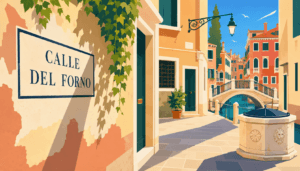
Understanding bacari and cicchetti means understanding an important detail of Venice: here, even food often moves together with the city.
A Bacaro Is Not Just a Bar
The word bacaro refers, in Venetian usage, to a small place where people drink a glass of wine and eat something quick. It may have a few tables, sometimes very few seats, and often a counter that matters more than the dining room. Its centre is not the long comfort of a restaurant, but the gesture of stopping.
Entering a bacaro means accepting a different rhythm. You look at what is on the counter, order without making things too complicated, eat standing up if needed, talk for a while, and leave space for others. At certain times of the day the place may be full, noisy, almost compressed. That is part of the experience, as long as it does not become intrusive confusion.
The difference from a generic bar lies in its relationship with the city. The bacaro belongs to an urban fabric made of narrow calli, campi, fondamenta and journeys on foot. It is a place of passage and encounter, not necessarily a destination to be reached with a rigid plan.
For this reason, the best way to experience one is not to immediately ask “which is the most famous?”, but to understand where you are, what time it is, how much you feel like stopping and what that counter is offering in that particular moment.
Cicchetti: Small Bites, Not Miniature Lunches
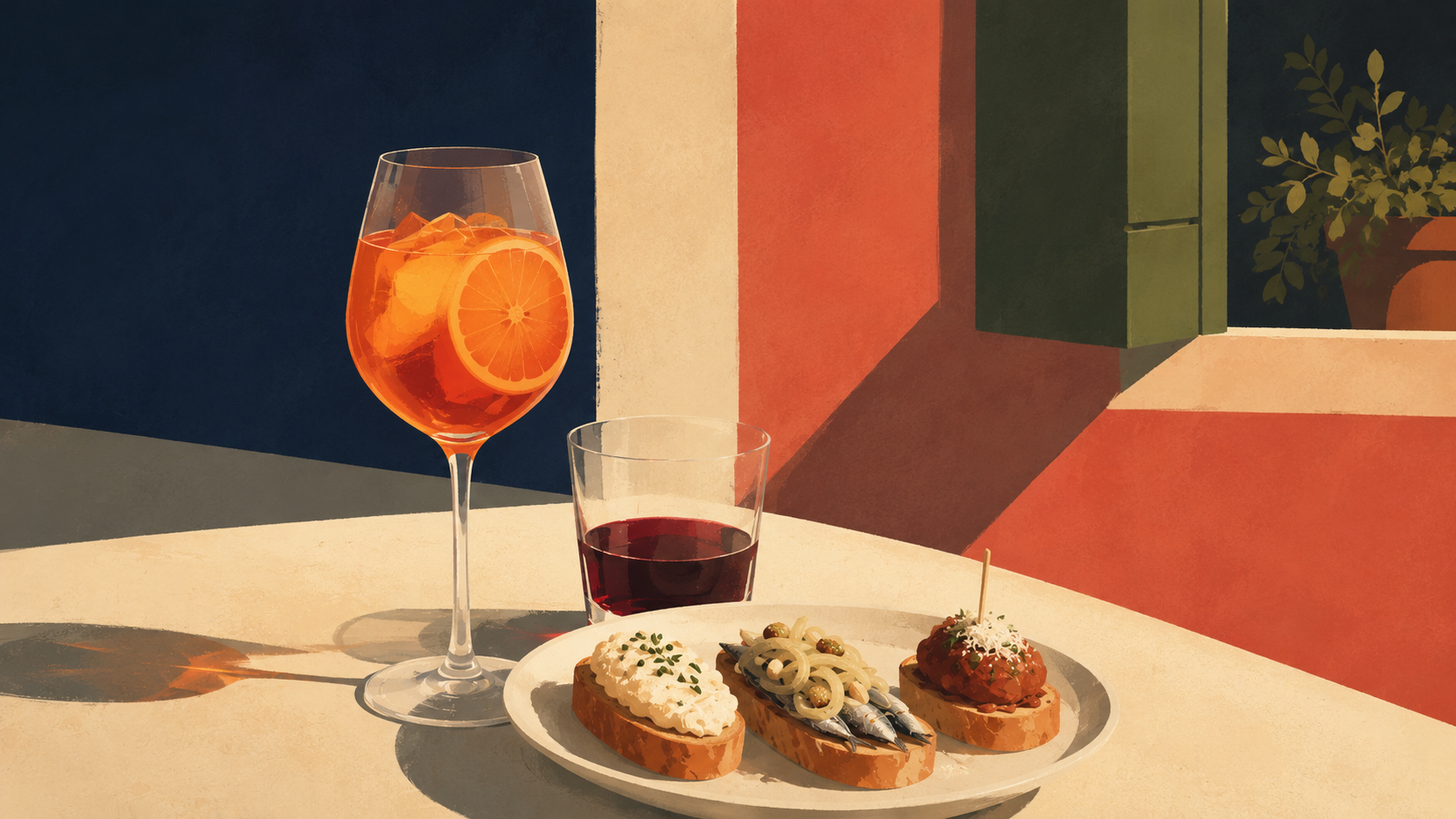
Venetian cicchetti are small savoury bites, often displayed at the counter. They can be very simple or more elaborate: crostini with baccalà mantecato, sarde in saor, meatballs, vegetables, small fried bites, fish, cured meats, cheeses and seasonal preparations.
There is no single mandatory form. Some cicchetti sit on a slice of bread, others do not. Some are eaten in two bites, others require a small plate and fork. What matters is the measure: a cicchetto should not become a full dish in disguise, but remain a taste.
That is precisely its charm. You can choose just a little, taste something, and perhaps move elsewhere. A cicchetto does not impose a long stay. It accompanies the walk, interrupts it for a few minutes and makes it more pleasant.
In a city where walking is already part of the experience, eating too can become a sequence of light pauses.
The Ombra: A Small Glass, a Very Venetian Word
Alongside cicchetti, another word often appears: ombra. In Venice, “bere un’ombra” means drinking a glass of wine, usually in a modest quantity, suited to a short pause rather than a long meal.
The origin of the term is often explained through a charming story: wine sellers are said to have moved their stalls by following the shadow of St Mark’s Campanile, in order to keep the wine cooler. As with many local traditions, the story is evocative and often repeated; rather than treating it as absolute certainty, it is better read as one of those popular explanations that help convey the character of a custom.
What is interesting, in any case, is that the word has remained. You are not simply ordering “a glass of wine”: you are entering a small Venetian code, made of words that describe a way of being together.
Today, the ombra is often accompanied by spritz and other drinks. But the logic remains the same: something to drink without turning the pause into an overly constructed event.
Andar per Ombre: The Ritual of Movement
In Venice, you may often hear the expression andar per ombre. It refers to the habit of moving from one bacaro to another, drinking a glass and eating a few cicchetti along the way.
It is not a tour in the most rigid tourist sense. At least in its most natural form, it is a way of crossing the city by stopping here and there. A bacaro near the market, one in a side calle, one along a fondamenta, one in a quieter campo. There is no need to create a ranking. What matters is listening to the rhythm of the day.
The risk, for visitors, is to turn this ritual into a performance: five places in two hours, photos of every cicchetto, a list to complete. But this is how the best part gets lost.
Andar per ombre works when it stays light. A pause before dinner. A way to discover a sestiere. An alternative to a more demanding lunch. A chance to observe the city from the counter, not only from its bridges.
Where the Ritual Makes Most Sense: Rialto, Cannaregio, San Polo and the Fondamenta
Talking about bacari without making a list of addresses may seem strange, but it is often the more useful choice. Places change, managements evolve, quality can vary, and a truly useful article should help you recognise an experience, not only reach a point on a map.
There are, however, areas where the bacaro ritual fits particularly naturally.
The area around Rialto has an obvious connection with the city’s commercial history. The presence of the market, the nearby calli, the constant movement of people and goods make this one of the most intuitive places to imagine the Venetian pause as part of a day of work, exchange and movement.
San Polo offers many interesting detours, especially when you move just a little away from the busiest routes. Here, a bacaro can become a pause between one campo and another, before continuing towards the Frari, Santa Croce or the Grand Canal.
Cannaregio, especially between Ormesini and Misericordia, tells a more relaxed story. The long fondamenta, the water beside you, the side bridges and the life of the neighbourhood make the pause feel less monumental and more everyday.
Dorsoduro can also work well, particularly when a walk between the Accademia, the Zattere and the internal calli leaves you wanting to stop without necessarily entering a restaurant.
The rule is simple: a bacaro works best when it fits into the route, not when it interrupts it artificially.
How to Order Without Feeling Out of Place
Entering a bacaro for the first time can feel slightly intimidating. The counter is full, people seem to know exactly what to do, and the person serving moves quickly. In reality, there is no complicated ritual to master.
The best thing is to look at the counter first. Many cicchetti are visible, so you can choose by pointing or asking simply. If you do not recognise something, just ask. It is better to avoid overly elaborate requests when the place is very crowded: the bacaro lives through quick, direct and essential service.
You can order a couple of cicchetti and a glass, then add more if you wish. There is no need to take too much at once. Part of the pleasure lies precisely in keeping the pause light.
Another useful detail: not all bacari work in the same way. Some have tables, others are almost entirely counter-based. Some are suited to a quiet pause, while others become very full at aperitivo time. Observing the atmosphere before entering is more useful than any guide.
What to Taste at Least Once
Every counter has its own selection, but some flavours appear often and help you enter the vocabulary of Venetian food.
Baccalà mantecato is one of the great classics: creamy, savoury, often served on bread or polenta. It tells the story of Venice’s relationship with trade routes, preserved fish and a cuisine able to transform ingredients that are not immediately local into something deeply Venetian.
Sarde in saor are another important taste. Saor, with onion, vinegar, raisins and pine nuts in its most recognisable versions, speaks of preservation, balance between sweet and sour, and a cuisine shaped by travel and the lagoon.
Polpette, or meatballs, may seem less solemn, but they are often very revealing. They can be made with meat, fish or vegetables, and they show how the bacaro remains connected to a concrete kind of cooking, not necessarily elegant in a formal sense.
Then there are small fried bites, crostini, seasonal vegetables, cheeses, cured meats, cuttlefish and other seafood preparations. You do not need to try everything. Better to choose two or three things, taste them carefully and leave space for curiosity.
The Counter as a Small Everyday Theatre
In a bacaro, the counter is almost a stage. Not in a spectacular sense, but in a daily one: the hands serving, glasses being placed down, small plates passing by, people entering for a short time, others remaining outside to talk, regulars ordering the same thing as always.
For visitors to Venice, observing this small choreography can teach more than many explanations. You understand that the city is not made only of views. It is also made of repeated gestures, shared narrow spaces and habits that survive by adapting.
Of course, one should observe without invading. A bacaro is not a photo set. Taking a picture of the counter may be natural, but turning every cicchetto and every person into content to publish risks removing spontaneity from a place that lives precisely through immediacy.
The best rule is simple: if the pause remains pleasant even without photographing it, then you are probably experiencing it in the right way.
Bacari and Tourism: How to Experience the Ritual Respectfully
In recent years, the bacaro ritual has become increasingly well known among visitors. This has brought attention, curiosity and new interpretations, but also some less pleasant effects: overcrowded places, pauses turned into rapid consumption, and narrow calli blocked in the most famous spots.
Experiencing this ritual well also means respecting its context. Do not stand in a way that blocks a narrow calle. Do not place glasses or plates where they should not be left. Do not treat the staff as though they had to explain everything at the pace of a private tasting, especially when the counter is full.
A little is enough: speak at a normal volume, let people pass, order attentively, do not occupy tables for too long if you have only had a small bite, and avoid turning a bacaro crawl into a drinking competition.
Venice is a fragile city even in its everyday details. The way you experience a bacaro is part of the way you visit the city.
A Famous Bacaro or One Found by Chance?
The most honest answer is: it depends on the moment.
The best-known bacari can be worth a stop, especially when they have a history, a solid selection or a strong connection with their neighbourhood. But the best experience does not always match the name most often mentioned online. Sometimes a famous place is simply too crowded at the time you arrive. Sometimes a less talked-about counter offers a more enjoyable pause.
Use lists as orientation, not as obligation. Knowing which area to explore is useful; trying to complete every recommended address can turn the day into a tiring exercise.
A good bacaro can also be recognised through simple signs: a counter that is cared for but not overly staged, a natural flow of people, cicchetti that do not look as though they have been sitting there too long, and an atmosphere that feels consistent with the neighbourhood.
And then there is a very Venetian criterion: if it feels like the right moment to stop, perhaps it is.
When to Include Bacari and Cicchetti in a Day in Venice
The cicchetti ritual can work at different moments of the day.
In the late morning, near Rialto, it can be a quick pause after the market or after a long walk. At lunchtime, it can replace a more demanding meal, especially if you prefer to keep walking. In the late afternoon, it becomes a natural passage before the evening, when the city changes light and the campi fill with different voices.
There is no need to dedicate an entire day to it. It often works better as a short interruption: the time to stop, taste, drink something and then set off again.
If you are visiting Venice in two days, you can include it after Rialto, during a walk through Cannaregio or towards the end of an itinerary in Dorsoduro. If you already know the city, you can build an entire walk around the theme, choosing one sestiere and letting the stops shape the route.
A Simple Ritual, If You Do Not Complicate It Too Much
Bacari and cicchetti tell the story of a concrete Venice. Not the Venice of grand monumental entrances, but the Venice of short pauses, local words and habits that adapt to the pace of walking.
Their charm lies in measure. A small glass, a bite, a few minutes at the counter, a conversation, then back outside, between a calle and a bridge. It is a way of experiencing the city that does not require long explanations, only attention.
This is why the bacaro ritual still works: because it is simple, mobile and convivial. And because it resembles Venice more than it may seem. It cannot be understood all at once. It has to be crossed in small steps, one pause after another.
Related Posts
Venice on a budget but without clichés: simple experiences worth more than many attractions
Slow and concrete ideas for experiencing Venice while spending little: calli, campi, bacari, stops and details outside the usual automatisms.Venice Beyond St Mark’s Square: 12 Details to Notice While Walking Slowly
Venice invites a different kind of exploration – one that uncovers its identity through painted street names, ancient wellheads, quiet bridges, and hidden courtyards, all…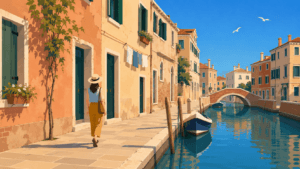
What to See in Cannaregio: A Slow Walk Through Venice’s Most Everyday District
Cannaregio reveals Venice’s quieter, more lived-in side with its historic Ghetto, vibrant fondamenta, and relaxed campi where daily life and visitors coexist without the postcard…Questions Answered
What exactly is a bacaro in Venice?
A bacaro is a small wine and snack spot centered on quick, convivial pauses.How do cicchetti differ from typical tapas?
Cicchetti are small bites, never full dishes, designed for tasting and accompanying a walk.How can tourists experience the bacaro ritual respectfully?
By keeping pauses light, ordering attentively, and avoiding overcrowding narrow spaces.When and where is best to include bacari visits in a Venice itinerary?
Natural stops in areas like Rialto, Cannaregio, and San Polo during light pauses in the day.
From the dish to the Venetian ritual
Which other flavours explain the link between the lagoon, preservation and everyday life?
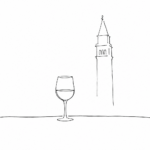 Why in Venice They Say “ombra”: history and legend of the most Venetian glass of wineOrigin, legend and everyday use of the ombra, the glass of wine linked to Venetian bacari.
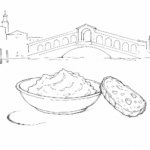 Baccalà mantecato: why a fish from the North became one of the most Venetian flavorsHistory, technique and places of baccalà mantecato, from Nordic cod to Venetian tables.
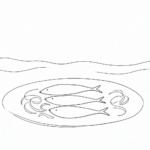 Sarde in saor: the sweet-and-sour dish that tells of sailors, preservation and the lagoonHistory, taste and everyday use of sarde in saor, a Venetian dish born among fishing, onions, vinegar and long preservation.
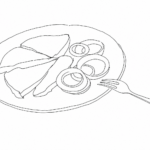 Venetian-style liver: onion, sweetness and character in a dish more refined than it seemsHistory, balance and a local reading of Venetian-style liver, among onions, bacari and city taste.