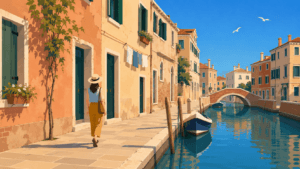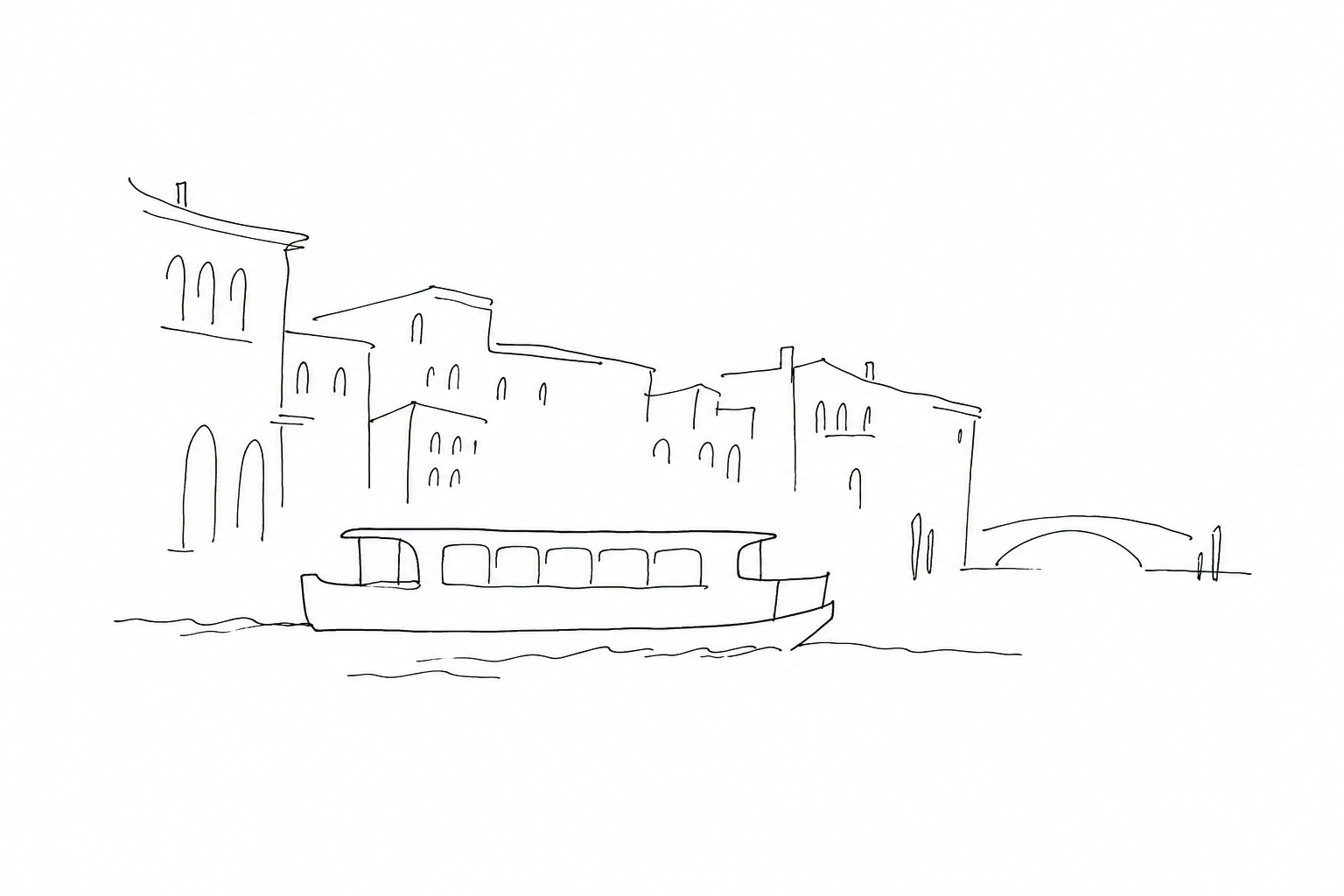
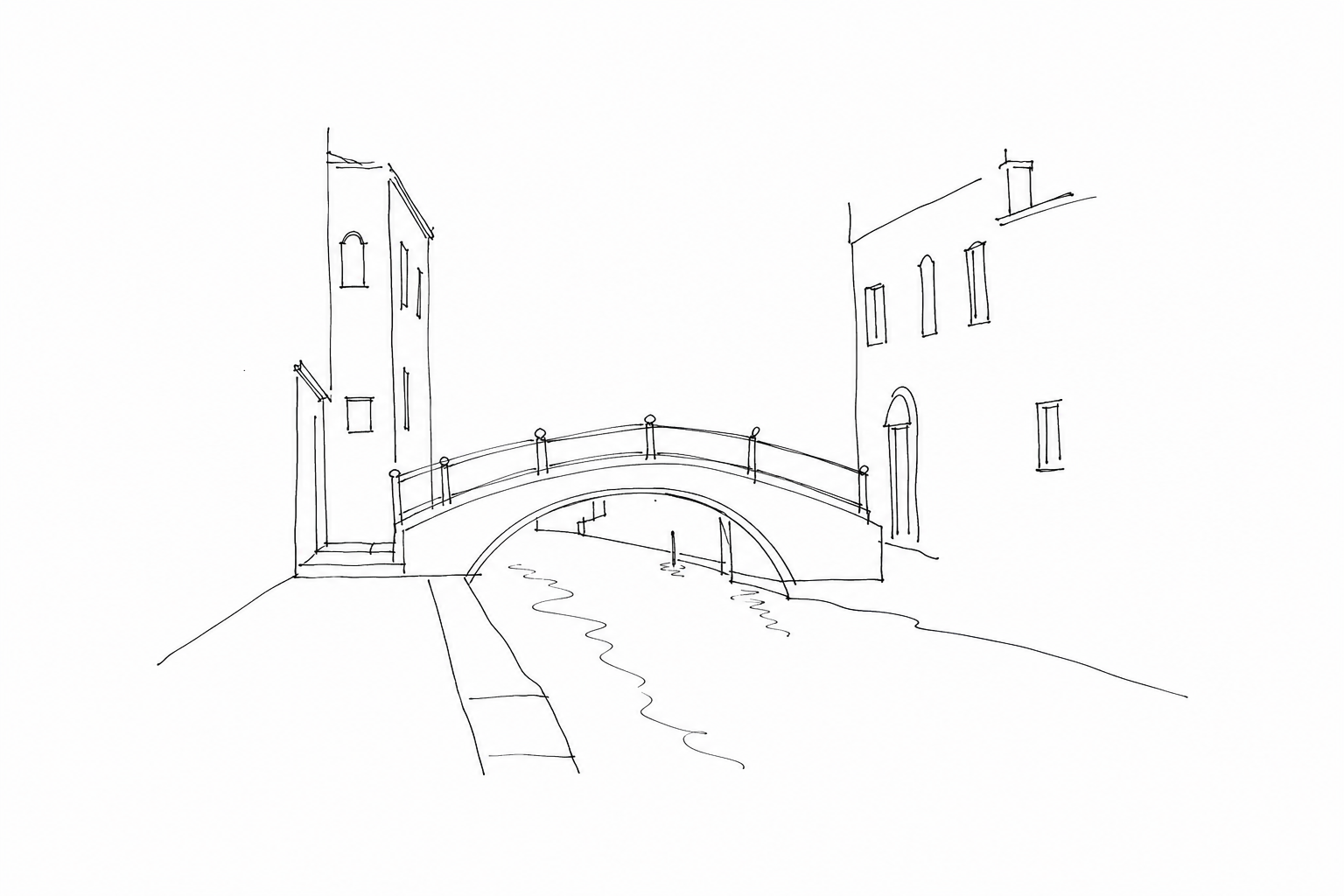

Arriving in Venice from Santa Lucia often means being immediately absorbed by the flow toward Lista di Spagna and Strada Nova. Rio Marin offers another entrance into the city: more lateral, slower, less predictable. In just a few minutes from the station you move toward Santa Croce, among waterfront walkways, small bridges, lived-in façades and glimpses of water that tell of an everyday Venice, not separated from its history. This route does not avoid the center: it reaches it at a different pace, crossing an urban fabric where shops, campi, churches and houses overlooking the canal help you read the city better as soon as you arrive.
Why choose Rio Marin as soon as you get off at Santa Lucia
As soon as you leave Venezia Santa Lucia station, the most instinctive choice is to follow the flow toward Lista di Spagna and then Strada Nova. Taking the direction of Rio Marin instead means entering the city with a different rhythm: not an escape from the railway area, but a more legible passage into everyday Venice.
Rio Marin flows through the sestiere of Santa Croce and accompanies a route that remains close to the station, but immediately breaks away from the most crowded axis. It is useful for those who want to reach the heart of the city without beginning the journey among continuous shop windows and obligatory passages. Here the first impact is made of minor bridges, fondamente, small squares and views over the water, with a more intimate urban scale.
This detour also helps with orientation: instead of relying on the mass of passers-by, you begin to read Venice through its canals, side calli and internal connections between Santa Croce and San Polo.
The start of the route: from the Scalzi to Santa Croce
Leaving Santa Lucia, the first useful gesture is to stop for a few seconds in front of the Grand Canal and identify the Ponte degli Scalzi. It is the passage that allows you to immediately leave the Lista di Spagna direction: instead of following the pedestrian current toward Cannaregio, you cross the stone bridge designed by Eugenio Miozzi in the 1930s.
From the top of the bridge you can already sense the change of register. Behind you remain the station and the commercial route; ahead appear Santa Croce, the cylindrical mass of San Simeon Piccolo and a less straight network of calli. Descending on the opposite side, it is not worth looking for large signs: orientation comes from the edges of the water, the sottoportego passages and the small turns that lead toward the inner fondamente.
Rio Marin is reached by entering this mesh, without aiming either for Piazzale Roma or for Strada Nova. The logic is simple: cross the Grand Canal, leave it behind and follow the urban route that penetrates Santa Croce, where the walk immediately becomes less obligatory and more Venetian in its rhythm.
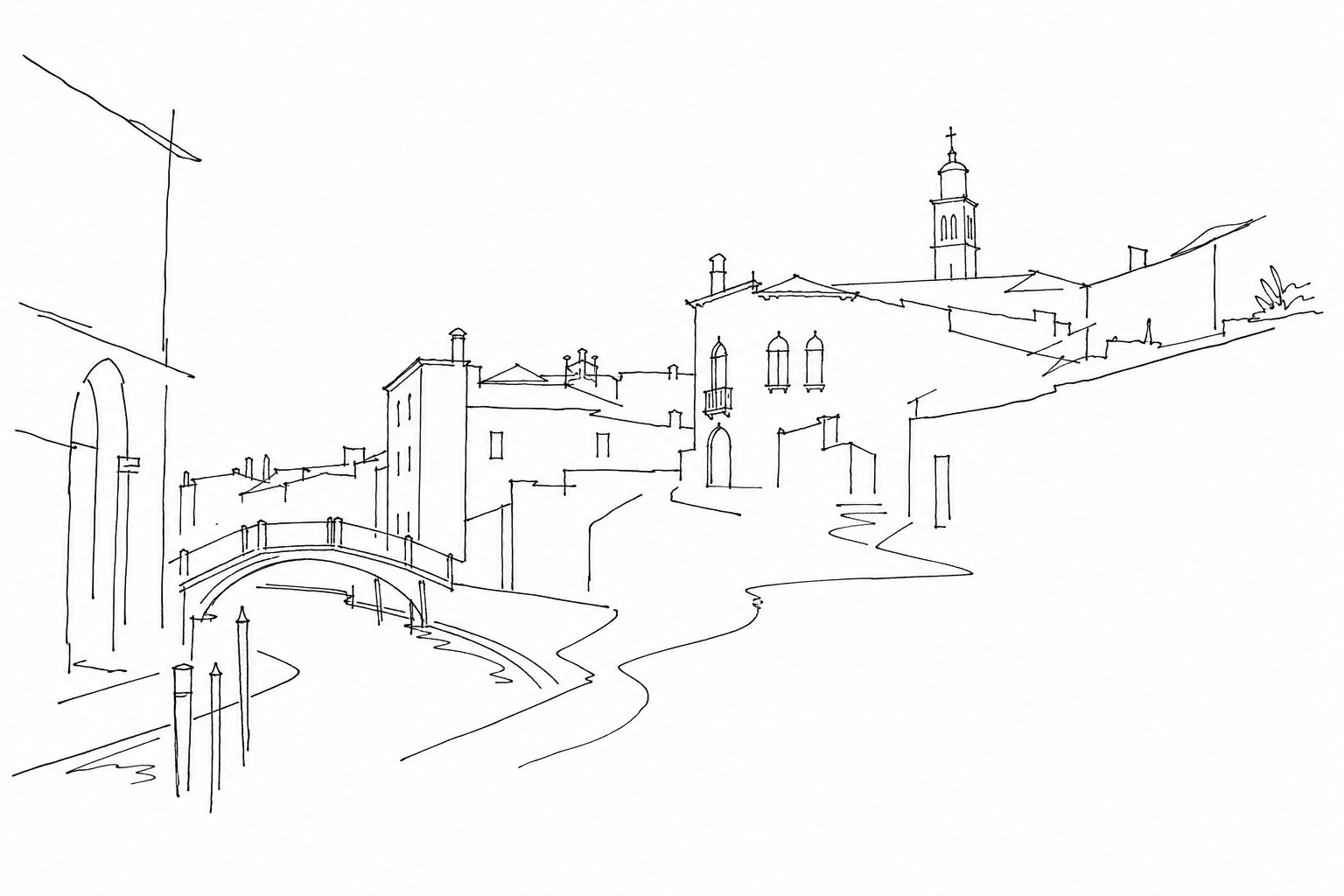
Rio Marin: waterfront walkways, bridges and everyday life
Here the canal is not a picturesque backdrop, but a water street with precise margins. The fondamente allow you to walk beside the houses, observing low thresholds, ground-floor warehouses, steps worn by use and small landing places where cargo once arrived directly by boat. It is a very concrete reading: façades, water doors and parapets tell of a city built to serve both pedestrian passage and water traffic.
Bridges have an essential role. They are not just crossings: they break up the view, change elevation for a few meters and force you to look at the canal from different angles. From one you grasp the curves of the route; from another emerge chimneys, rooftop terraces, inner courtyards and small squares connected by narrow calli. This alternation of banks and crossings makes the entrance into Santa Croce less straight than the main commercial direction.
Everyday life can be recognized in ordinary details: laundry at the windows, doorbells, house numbers, moored boats, doorways marked by salt air. Following Rio Marin, you thus enter the Venetian fabric without being immediately absorbed by the flow of Strada Nova.
Where it leads: San Giacomo, San Polo, Dorsoduro
Once Rio Marin has been chosen as the first axis after arrival, orientation becomes simple: you are not aiming for a single destination, but for three natural exits from the sestiere of Santa Croce. The first is the campo of San Giacomo dall’Orio, recognizable for its unusual breadth and for the ancient church, with a medieval layout and later Gothic and Renaissance interventions. It is a useful urban landing point for stopping, reading the map and deciding without pressure.
From there, toward the east, you gradually enter San Polo: narrower calli, smaller campi and connections that bring you closer to the area of the Frari and the Scuola Grande di San Rocco, two strong historical reference points for understanding the city beyond the main commercial axis.
If instead you bend toward the south, the route prepares the entrance into Dorsoduro, passing over bridges and canals that lead in the direction of San Pantalon, San Barnaba and Ca’ Foscari. In this way the canal becomes a practical hinge between the railway arrival, lived-in districts and cultural itineraries.
Choosing Rio Marin as soon as you get off the train is not only a way to sidestep Strada Nova: it is a change of rhythm. The route accompanies you toward San Giacomo dell’Orio, San Polo and Dorsoduro without forcing the visit, leaving room for short detours and close observations. It is an effective threshold for those who want to enter Venice attentively, immediately grasping the relationship between water, pedestrian routes and neighborhood life. In a city often crossed in a hurry, Rio Marin reminds us that even arrival can become part of the experience, not just a stretch to get through.